 小影邮箱
邮件炸弹是什么?Thousands of Signups in a Minute
Key Takeaways
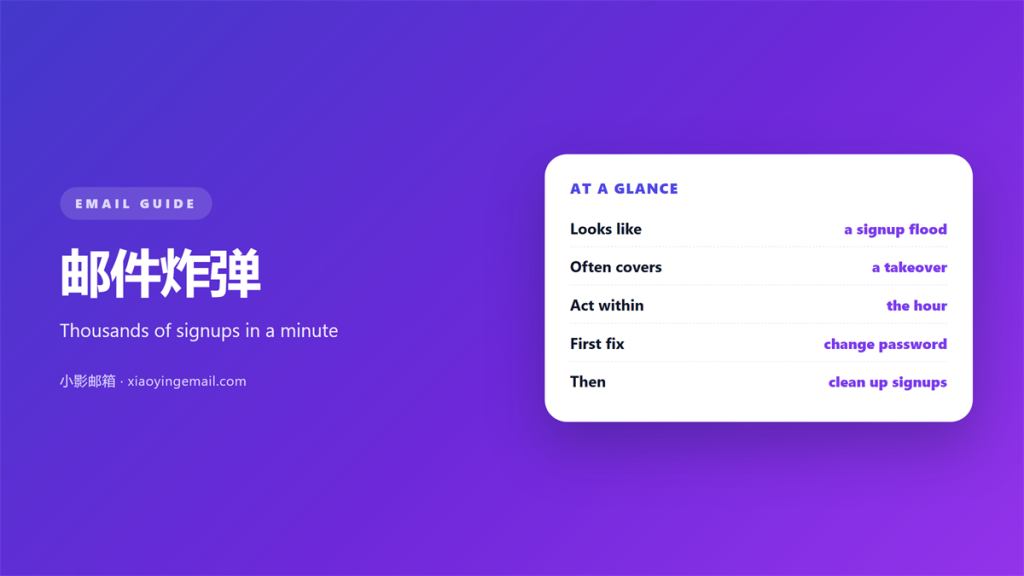
- 邮件炸弹 is a flood of signup and newsletter mail aimed at one address.
- The flood is often cover for a real account takeover happening at the same moment.
- Your inbox may hit its storage limit before you can read anything.
- Do not unsubscribe from every message while thousands are still arriving.
- Find the important account first, then filter the rest.
What 邮件炸弹 actually is
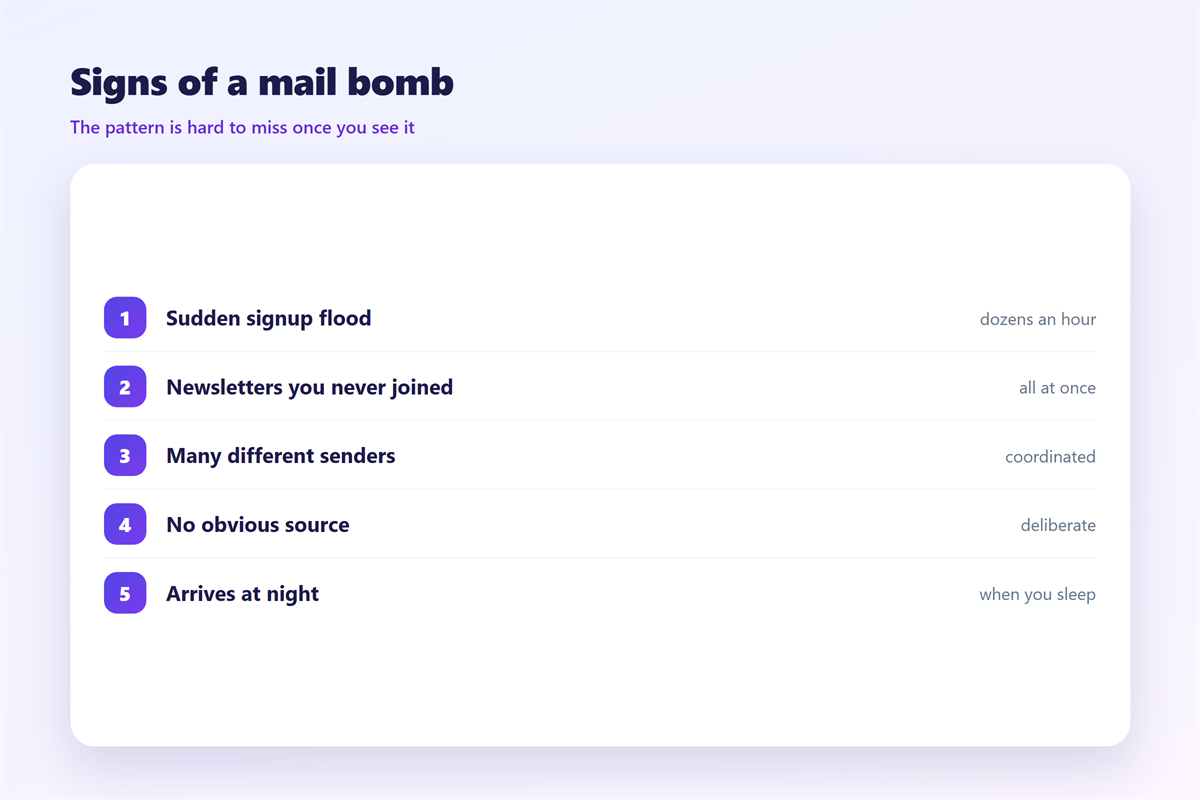
邮件炸弹 is a sudden flood of messages, usually subscription confirmations, that buries the mail you actually need. The senders are ordinary sites caught in the middle. Moreover, the person behind it rarely writes a single message.
I watched this happen to a colleague on a Tuesday morning. Within twenty minutes her inbox held more than eight hundred new messages, and the confirmation she was waiting for was nowhere near the top.
Therefore, the 邮件炸弹 itself is rarely the real attack. It is a smokescreen, and the real damage is whatever it was built to hide.
How 邮件炸弹 works
The method behind 邮件炸弹 is simple to run and hard to trace. Notably, it needs no special access, only your address and a long list of signup forms.
The signup flood
An automated script submits your address to hundreds of newsletter forms. Each site then sends a legitimate confirmation, so no filter can label them all as junk. Consequently, the volume alone does the work, and your real mail sinks out of sight.
The hidden purpose
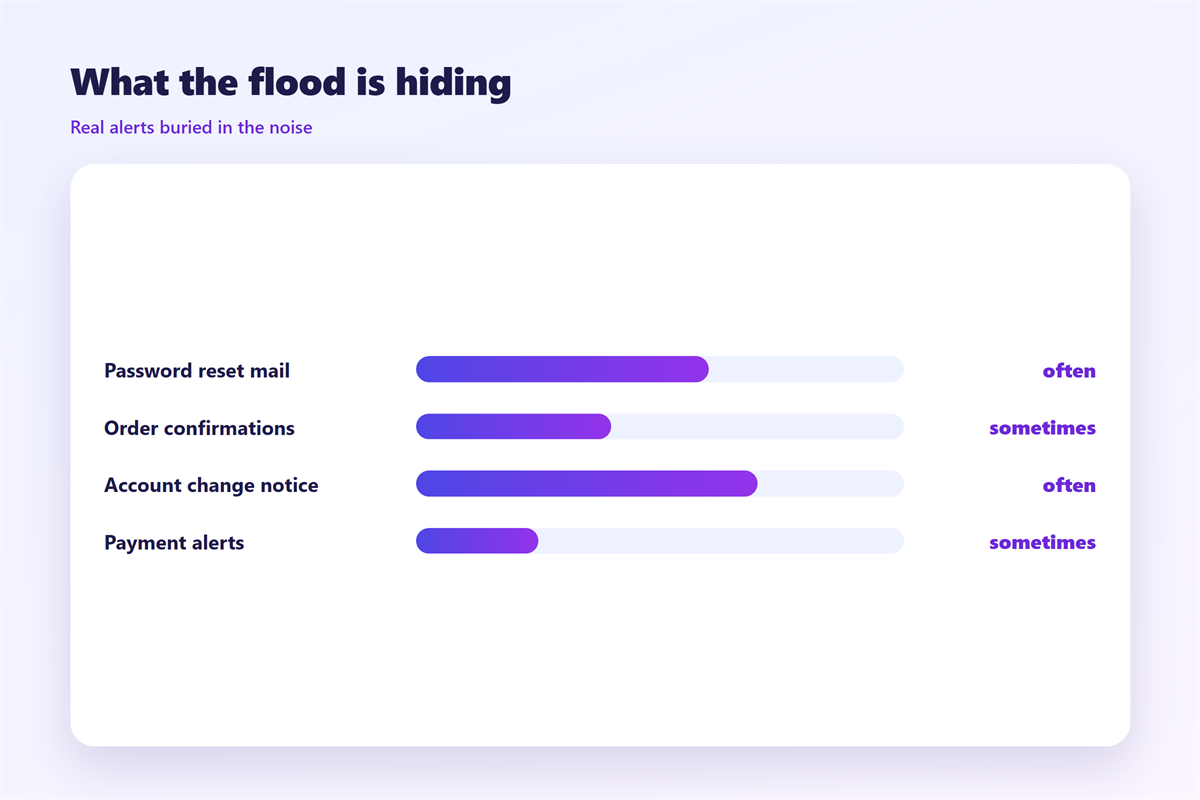
The flood is often scheduled around a password reset at a bank or a shop. While you are swamped by 邮件炸弹, the attacker confirms a login or a transaction inside the noise. That timing is the strongest clue that the flood is not random.
Why 邮件炸弹 is dangerous
The first risk is missed mail. A password reset, a fraud alert or a work contract can disappear under thousands of confirmations. By the time you notice, the window to act may already be gone.
The second risk is storage. A large 邮件炸弹 can fill a quota in hours, and once the mailbox is full, new mail is rejected. In other words, a full 邮箱容量 turns a noisy day into a silent blackout.
There is a third risk that people miss. Some services lock an account after unusual activity, so the flood can trigger a lock on top of everything else.
Five rules to survive 邮件炸弹
A calm order of operations matters more than raw speed. I would follow these steps rather than react to each message as it lands.
- Do not unsubscribe from messages you never requested.
- Search for bank, payment and work senders by name.
- Change the passwords of any accounts you find under attack.
- Free space by archiving old mail, not by mass deleting the flood.
- Turn on a filter that files the confirmations out of the inbox.
The first rule feels wrong and is still correct. A click on unsubscribe proves the address is live and can invite more mail. The filtering habits behind our 垃圾邮件 guide are more useful here, because they move the noise without touching the important mail.
Where 邮件炸弹 responses go wrong
The worst response is to unsubscribe from everything at once. Each click confirms the address, and some of those sites will pass it along to other lists. As a result, the flood can grow rather than shrink.
A second mistake is deleting the flood before reading it. Hidden in the noise may be the very alert that explains the attack. Therefore, keep a copy of the sender list before you clear anything.
Panic unsubscribing
Panic unsubscribing treats every message as a mistake. Instead, mark them as junk in bulk and leave them alone for a day. This keeps the volume out of your inbox while preserving the evidence you may need.
How to test and clean up after 邮件炸弹
Cleanup starts with the question the flood was built to distract you from. Ask which important account could be at risk, then check it directly rather than through email. Additionally, review recent sign-in activity for anything you do not recognise.
| Signal | What to check | Priority |
|---|---|---|
| Flood started suddenly | Bank and payment accounts | High |
| Password reset mail seen | That exact account | High |
| Storage nearly full | Archive old mail | Medium |
| Sender list available | Keep it as evidence | Medium |
Check for a real takeover
Assume nothing until you have looked. Check the sent folder, the forwarding rules and the recovery settings, because an intruder often edits one of them. If the flood targeted a single service, our notes on 邮件订阅 explain how to clean that list without losing real mail.
Finally, reduce the surface you expose. The rate limits described in our 邮件发送限制 notes show how many messages arrive per minute, and a filter can absorb most of a sudden 邮件炸弹 burst. A second address kept only for signups keeps the main inbox out of the target zone entirely.
FAQ
Is 邮件炸弹 the same as spam?
Not quite. Ordinary spam tries to sell you something, while an 邮件炸弹 is meant to overwhelm you. The goal is distraction, not persuasion.
Should I change my password?
Change it on any account that may be involved, and never reuse it elsewhere. This is the step that neutralises a takeover hiding behind the flood.
Will the 邮件炸弹 stop on its own?
Usually within a day or two, as the script finishes its list. However, the risk it covered lasts longer, so check your accounts first.
Can I prevent this completely?
You cannot stop someone from typing your address into forms. A separate signup address and strong filters reduce how much reaches you.
评论
还没有评论,来说两句吧。
评论功能已关闭。