 小影邮箱
邮件回复全部该不该用?When Reply All Helps
Key Takeaways
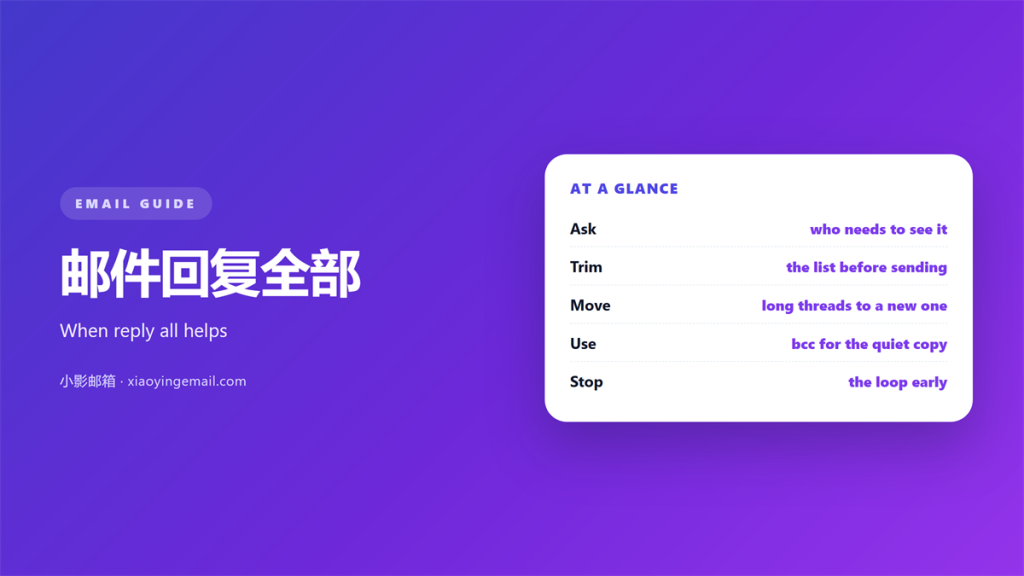
- 邮件回复全部 sends one answer to every recipient.
- It helps when the whole group needs the news.
- It hurts when only one person must act.
- A growing list of names is a warning sign.
- A short pause before you click prevents regret.
What 邮件回复全部 does
邮件回复全部 copies your answer to everyone on the message.
The sender, the copied names and you all receive the reply.
One click can reach a small team or a large room.
The button sits beside the ordinary reply. They look almost the same.
That closeness causes most of the trouble.
So 邮件回复全部 is useful and risky at once.
The tool is neutral. The choice belongs to you.
A good habit starts with a glance at the names.
Count them before you write a single word.
A small number is often safe. A large number rarely is.
The subject line tells you who will see the answer.
A strange name in the list deserves a second look.
Ask yourself who really needs to read your words.
A short list is a quiet gift. A long list is a small burden.
When in doubt, choose the smaller list. A private note is easy to forward.
A quick question can save a long thread. Ask before you assume.
The best reply often fits in three lines.
When 邮件回复全部 helps
The whole group needs the same answer. Everyone should stay informed.
A decision lands and the team must know. One reply beats five separate ones.
A schedule changes for a shared meeting. All guests need the new time.
A manager asks for a status update. The wider team may want to see it.
In these cases 邮件回复全部 saves effort.
It keeps one thread instead of many.
So 邮件回复全部 can replace a dozen private notes.
That single thread is easier to find later.
A shared record also prevents confusion. Everyone reads the same words.
A clear reply ends the questions fast.
Fewer separate notes also mean fewer mistakes.
One thread keeps the whole story in one place.
A short answer to everyone is often enough.
A single reply also saves the reader time. No one must hunt for the answer.
A clear group reply ends a small worry early.
A shared answer also keeps a record for the team. A later reader can follow the story.
A single note keeps everyone in step.
When 邮件回复全部 hurts
The group is large and only one person must act.
A simple thank you reaches a hundred strangers. None of them needs it.
A private detail lands in the wrong hands. The list grows with every answer.
A long thread fills every inbox. People stop reading the important parts.
So 邮件回复全部 can bury a real message.
The reply also copies people by accident. A name you never noticed is now included.
A quiet reply is the safer choice in these cases.
Ask who truly needs the answer before you send.
A small mistake here can cost a client. Trust is hard to win back.
A rushed click can leak a private note.
A crowded inbox hides the messages that matter.
The wrong reply can also annoy a quiet reader. A private word should stay private.
A single stray click can reach a whole company.
A careless word can reach a stranger by mistake.
A private joke can look odd to a wide audience.
Stopping 邮件回复全部 problems
Check the recipient list before every reply. Count the names.
Remove anyone who does not need the message.
Switch to a fresh message when the topic changes.
Write a clear subject line in the new thread.
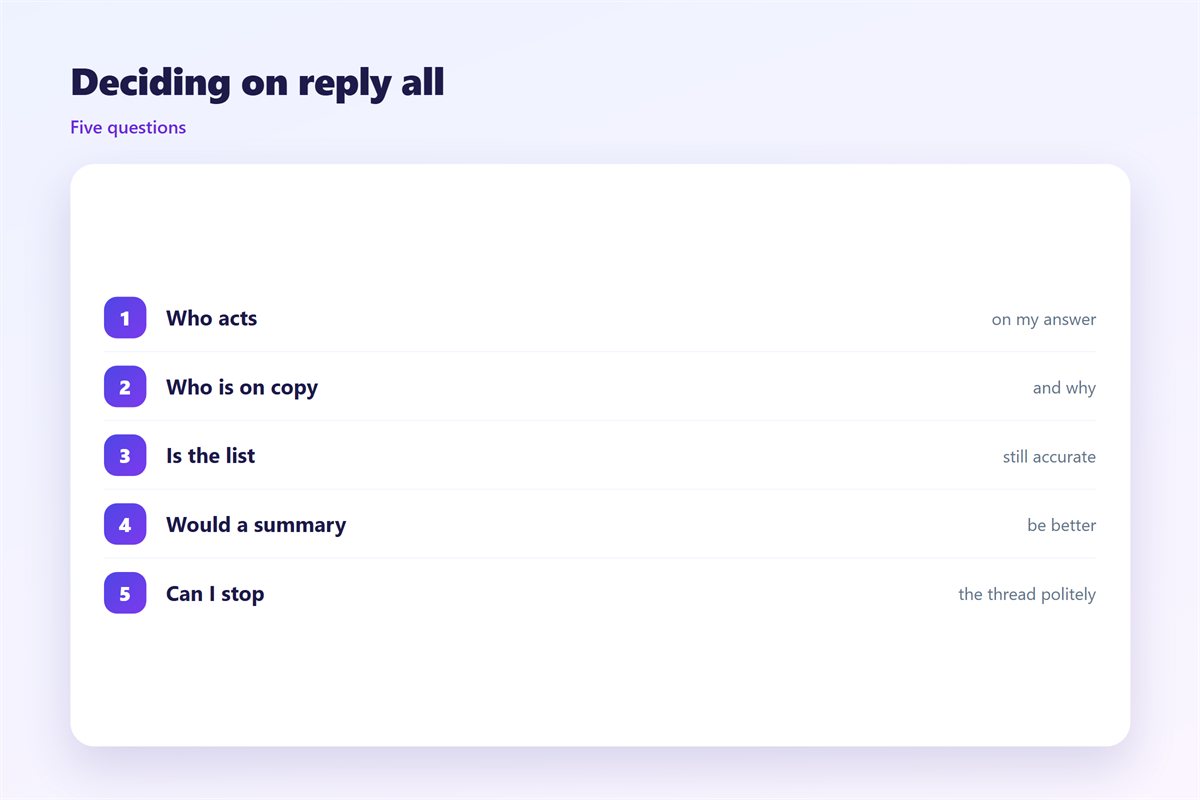
邮件回复全部 should serve the message, not the habit.
When a thread grows too long, start again. A new subject stops the pile.
Tell the group when you move the talk elsewhere.
A short note prevents a confused silence.
Slow down for one second before you click.
That single pause catches most mistakes.
A calm habit beats a quick apology.
A short subject change tells everyone the topic moved.
A calm tone keeps a busy thread under control.
Using 邮件回复全部 well
Read the whole thread before you answer. The point may be settled.
Answer the question and nothing more. Short replies keep the list calm.
Drop the copied names when they are not needed.
A meeting note goes to the guests. A personal word goes to one person.
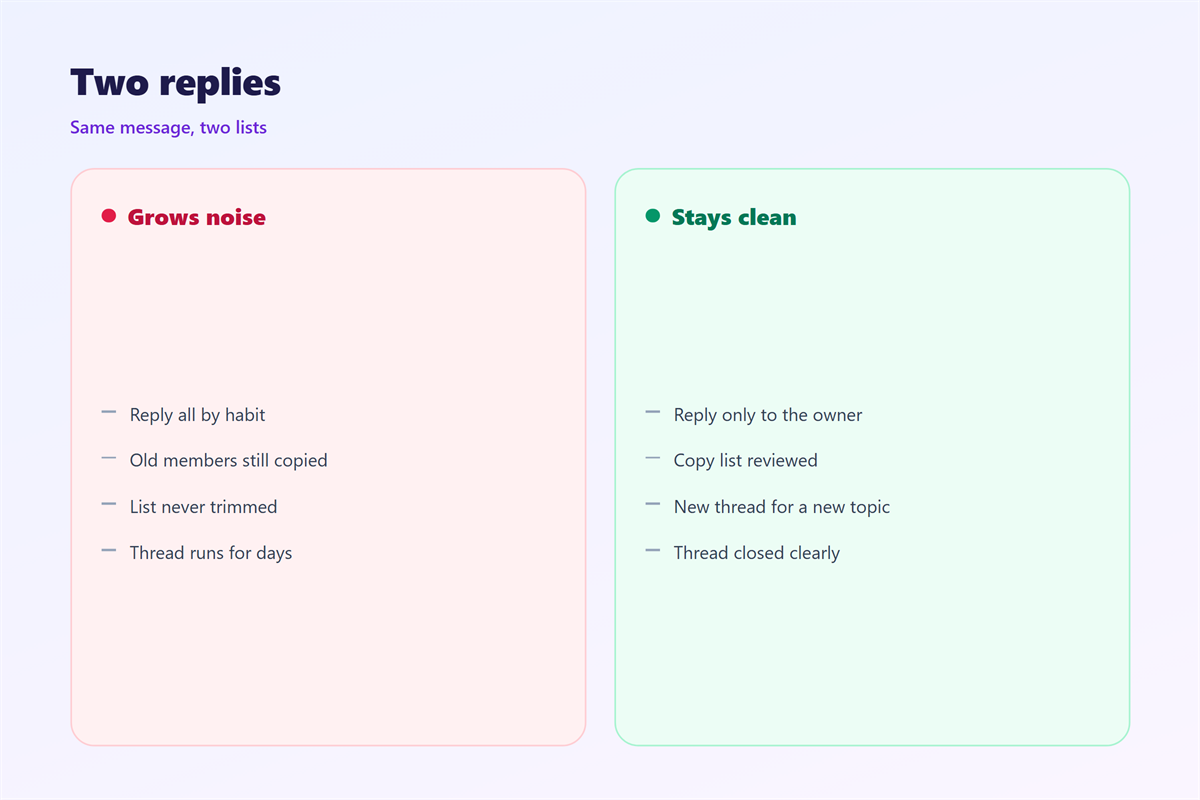
邮件回复全部 is best when the group shares one need.
Our notes on 邮件收件人 explain the address fields. The difference between open and hidden copies sits in 邮件抄送. Hidden copies are covered under 邮件密送. How threads split is described in 邮件会话.
A calm reply protects the whole group.
A little care here saves a lot of noise.
A tidy thread is a gift to the reader.
Keep the reply close to the question. A short answer is easy to scan.
A calm writer makes a calm thread.
Write the answer as if the whole group will read it.
A tidy reply earns trust over time.
FAQ
Is 邮件回复全部 rude?
Not by itself. It turns rude when the answer wastes time. Send to the group only when the group needs it. A short pause helps you decide.
Can I undo 邮件回复全部?
Sometimes. Some clients offer a short delay before sending. Use that window if you catch the mistake. Act fast once you send.
Why does 邮件回复全部 add new names?
The list grows as more people answer. Each reply can add its own recipients. Check the names before you send. Remove anyone who does not belong.
Should I use it for a simple thank you?
Usually no. One line to one person is enough. A group does not need a private note. Keep it quiet and short.
评论
还没有评论,来说两句吧。
评论功能已关闭。