 小影邮箱
邮件候补名单怎么写?A Waiting List That Works
Key Takeaways
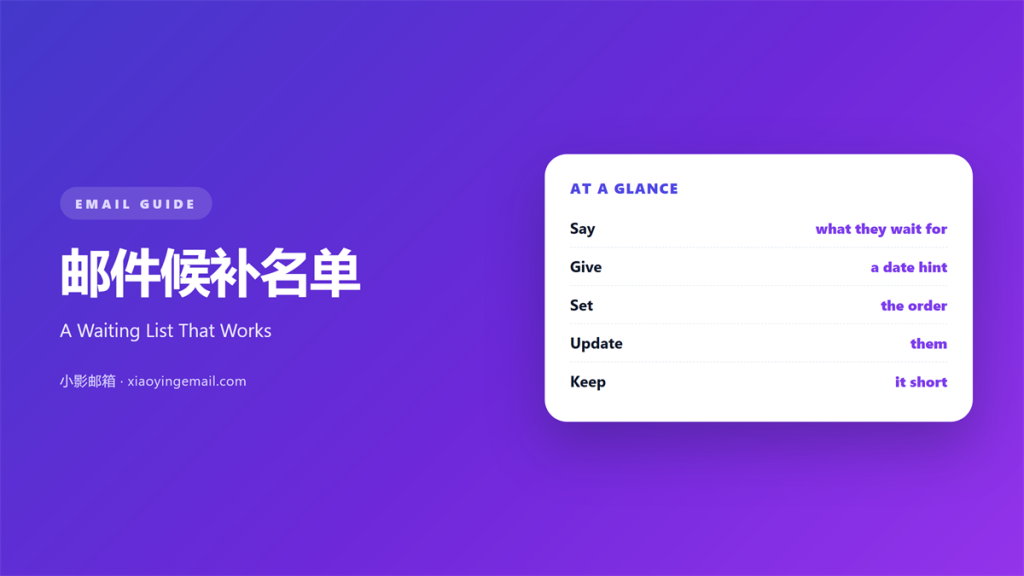
- 邮件候补名单 keeps a fair order when a spot is full.
- Confirm each spot and state the deadline clearly.
- Tell people where they are and when they will hear back.
- Send one clear update instead of many small ones.
- Remove people who no longer want the place.
What 邮件候补名单 means
邮件候补名单 is a queue of people who want a place.
The place may be an event, a class, or a product.
The list opens when the first spots fill up.
Each name waits for a turn in a fair order.
So the list is really a promise about sequence.
A good note tells each person where they stand.
It also says what happens next.
Without that promise, the queue feels like a dead end.
A short honest note keeps the wait bearable.
The name of the list should be plain and clear.
A clear name helps people trust the queue.
Why 邮件候补名单 matters
Demand often beats supply for a popular event.
Without a list, late arrivals are simply turned away.
A clear 邮件候补名单 keeps those people close.
They stay interested instead of drifting off.
The list also fills cancelled spots fast.
One good note can rescue a seat that would sit empty.
That keeps a full room and a happy host.
It also rewards people who cared enough to wait.
The list also shows a host how many people really want in.
That number helps plan the next event better.
Where the list lives
Keep the list in one place that everyone can see.
A shared sheet or a mailing tool both work.
Two separate lists will drift apart within a week.
So choose one home for the names.
When 邮件候补名单 helps
A list helps whenever a fixed number of spots exist.
Use it for workshops with limited seats.
Use it for a product that is not ready yet.
Use it for appointments with one busy expert.
Use it when a free event fills faster than expected.
And keep the rules the same for everyone.
Use it when you must cap the room for safety.
A cap is fair when you explain it early.
A fair ordering rule
Pick one rule and write it down.
First come, first served is the simplest choice.
Or rank people by the day they joined.
Whatever you pick, apply it without favour.
When 邮件候补名单 hurts
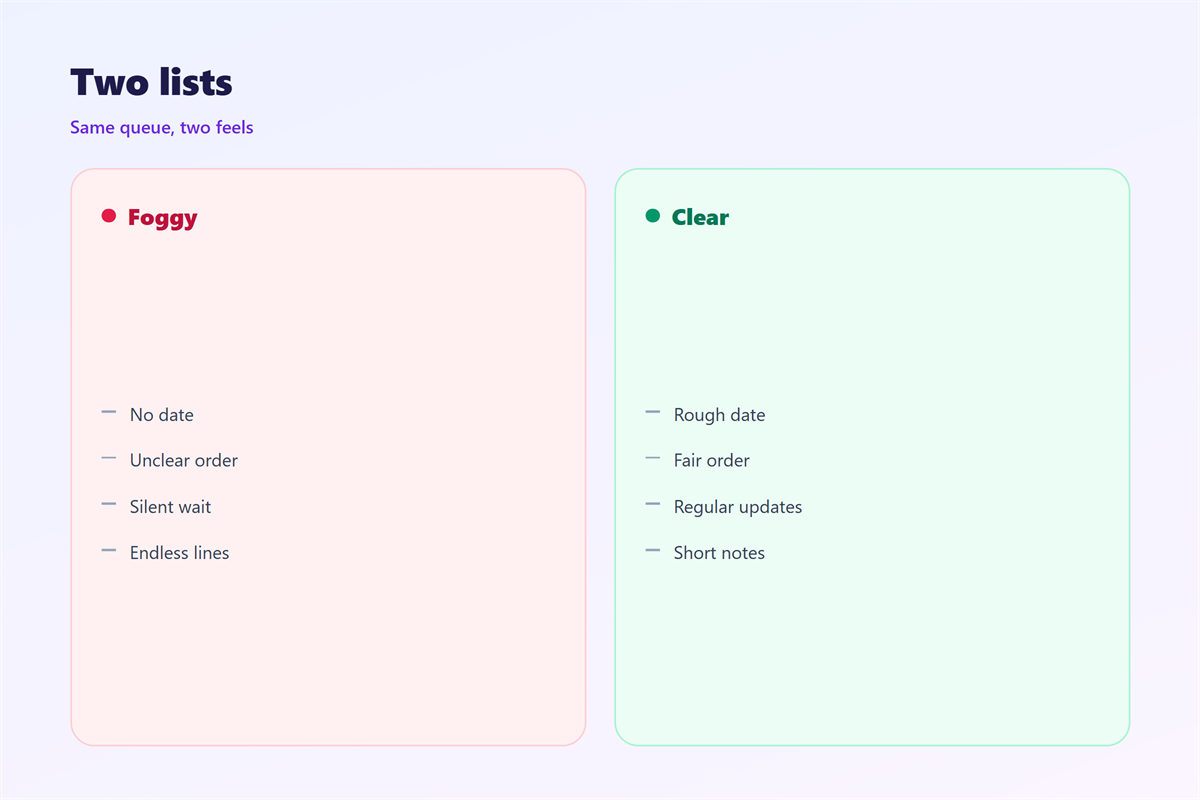
A list with no updates slowly turns people cold.
Silence reads as rejection, even when it is not.
An unfair jump in the queue breeds real anger.
A list nobody trims grows stale and useless.
Names of people who lost interest still sit there.
So a list needs a clear owner and a date to review.
A queue that never moves at all tests patience.
So set a date to review the whole list.
The two-update rule
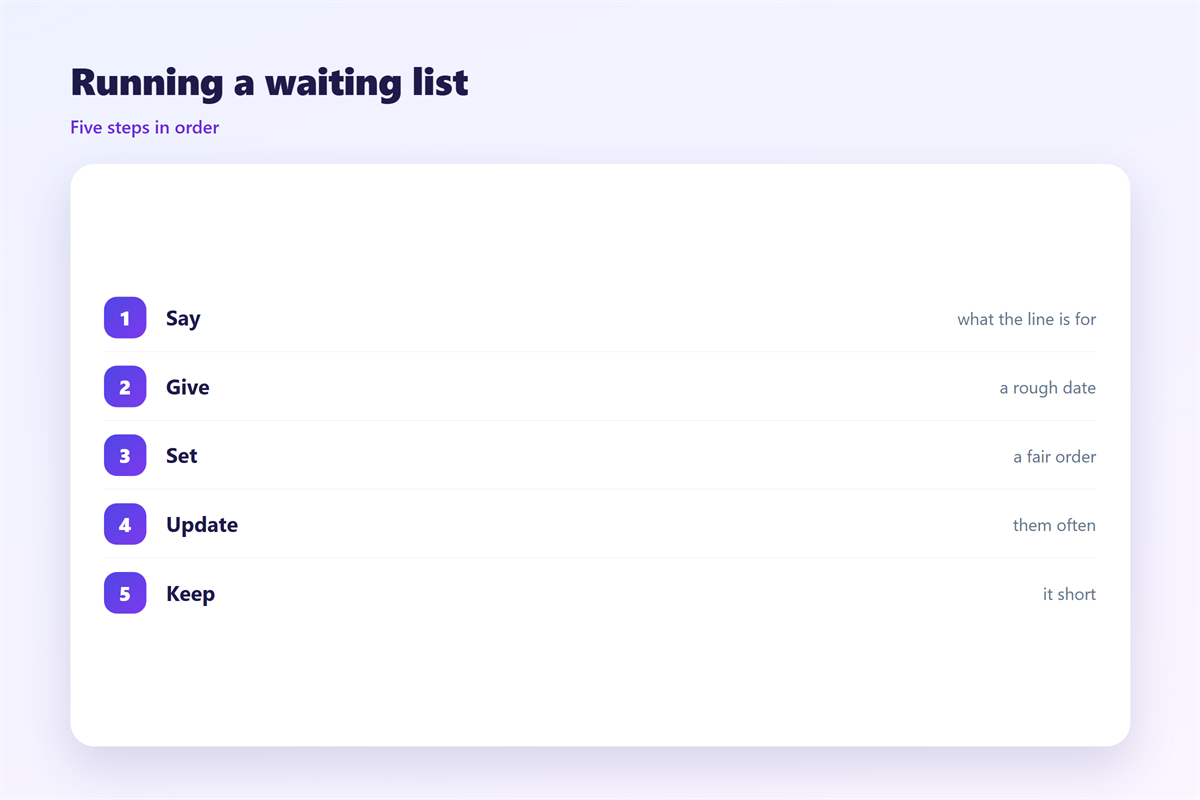
Send one note when a person joins the list.
Send one more when their spot opens.
More than that starts to feel like noise.
邮件候补名单 or first come first served
A list is one way to manage demand.
You can also open spots to everyone at a fixed time.
Each method fits a different crowd.
First come, first served rewards speed and luck.
A list rewards patience and a fair turn.
Pick the method that matches your values.
Often that method is a calm 邮件候补名单.
Neither method is wrong on its own.
The mistake is mixing the two without a rule.
How to use 邮件候补名单 well
Ask for the least information you really need.
A name and an email are usually enough.
Confirm the position in the queue right away.
Give a rough date for the next update.
Keep the subject line short and plain.
Put the action in the first line.
Send the first note the same day they join.
That quick reply confirms the list is alive.
Good 邮件候补名单 is quiet and honest.
The reader knows exactly where they stand.
When a spot opens, give a firm deadline to reply.
Then release the seat if that time passes.
A short note beats a long apology.
邮件候补名单 and privacy
A 邮件候补名单 collects names and contact details.
Say why you need each field before you ask.
Never put the whole list in a visible cc line.
Use a blind copy so addresses stay private.
Let people leave the list with one click.
Follow the rules that protect personal data where you live.
That care builds trust over many events.
Tell people how long you will keep their details.
Then delete the list when the event ends.
Keeping 邮件候补名单 consistent
Consistency keeps a queue fair over time.
Pick one rule and hold it at every event.
The note that invites people is drafted in 邮件邀请函.
The step that locks a time is described in 邮件预约.
The plan behind the date appears in 邮件日程.
The invite that reaches a calendar is explained in 邮件日历邀请.
Agree on who owns the list and who sends the notes.
Then keep the same promise for every event you run.
A team that agrees on 邮件候补名单 runs calmer events.
FAQ
How many 邮件候补名单 updates should I send?
Two are usually enough: one on joining and one when a spot opens.
How do I keep the queue fair?
Pick one ordering rule and apply it to everyone without exception.
Should I share the full list?
No. Use a blind copy so no one sees the other addresses.
When do I drop a name?
Remove anyone who says no or never answers a firm deadline.
References
- Mailchimp: Email marketing basics
- Litmus: Email best practices
- Harvard Business Review: Email that gets a reply
评论
还没有评论,来说两句吧。
评论功能已关闭。