 小影邮箱
邮件售后怎么做?After-Sale Mail That Keeps
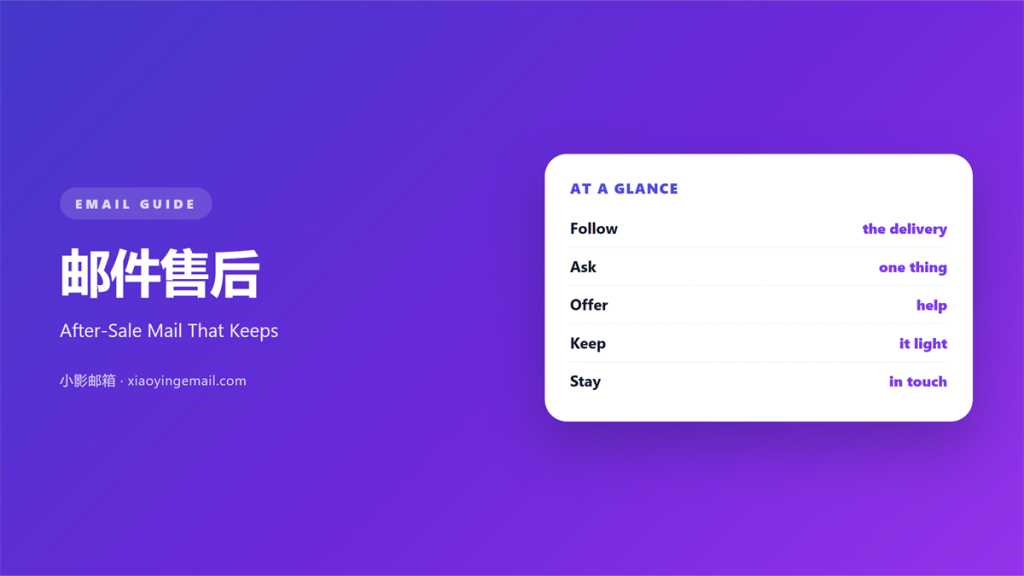
Key Takeaways
- 邮件售后 is the mail you send after a purchase.
- It answers one simple question for the buyer.
- Did the product arrive and work as promised?
- A short check-in note can keep a buyer close.
- Offer real help, not another discount.
- Follow up once, then stop.
What 邮件售后 means
邮件售后 is the mail you send after a purchase.
It answers one simple question for the buyer.
Did the product arrive and work as promised?
That question sits behind every order.
A buyer wants to feel the choice was good.
邮件售后 is not a sales pitch in disguise.
It is a short check that costs little to send.
Think of it as the second half of a sale.
The order closes the money side.
The mail opens the trust side.
Trust is what brings the buyer back.
A small reply early beats a complaint later.
So the note protects the next order too.
Keep it plain and it will always work.
It costs nothing to be kind in writing.
And kindness is easy for a buyer to remember.
That is the quiet power of a short note.
Why 邮件售后 matters
A cheaper way to keep a buyer
Keeping a buyer costs less than finding one.
It is one of the cheapest ways to do that.
It shows the seller still remembers the order.
That memory turns a receipt into a relationship.
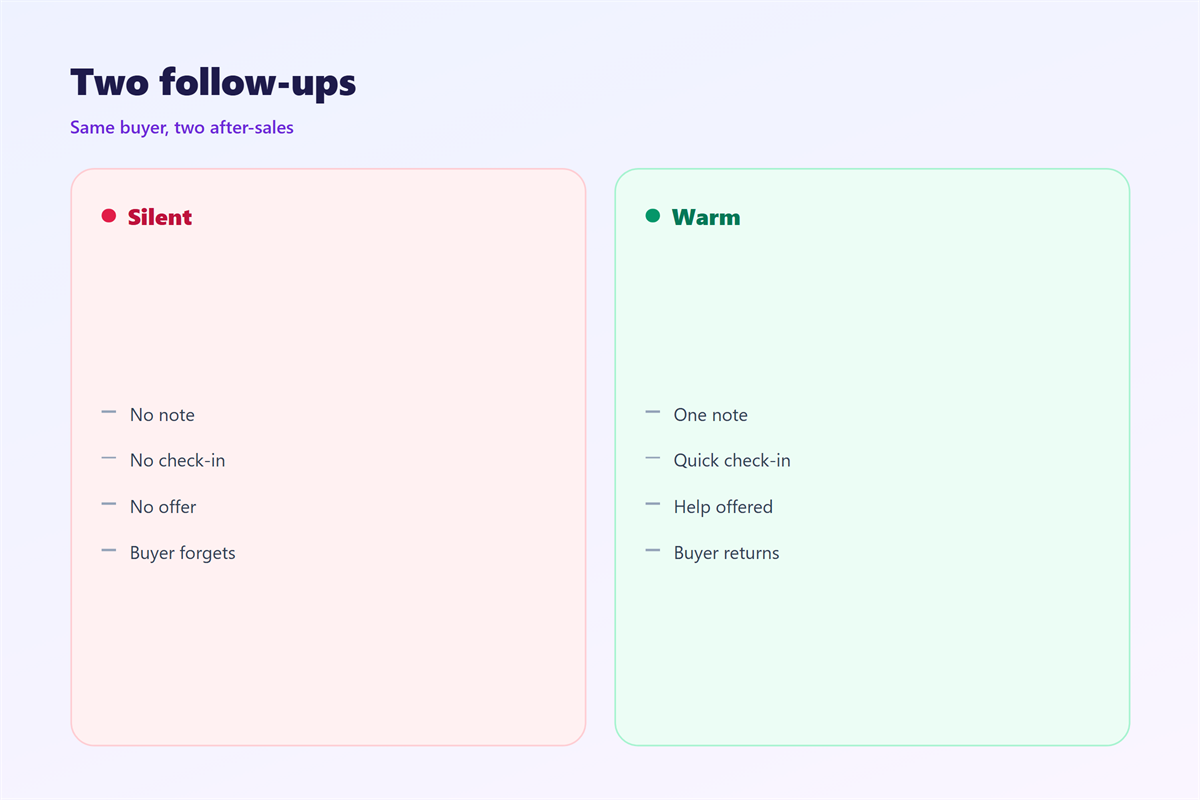
Buyers who feel remembered return more often.
They also tell friends about the experience.
A silent seller feels like a vending machine.
A quick note makes the seller human.
So the mail shapes how the brand is remembered.
It also softens a small problem before it grows.
A calm word early saves a hard word later.
A warm reply also lowers the chance of a bad review.
People forgive a fault when they feel heard.
When 邮件售后 helps
Timing the check-in
Timing decides whether the note lands well.
Send it a few days after delivery.
That is when the buyer has first tried the product.
邮件售后 helps most at that exact moment.
It also helps after a support ticket.
A follow-up there can close a worry.
And it helps when a buyer goes quiet.
One friendly line can restart the talk.
It helps too after a returned item.
A warm note can keep the customer anyway.
It helps most when the buyer is unsure.
A single clear offer can end the doubt.
When 邮件售后 hurts
Too much 邮件售后 becomes a nuisance.
Nobody wants mail every week after one order.
A pushy tone can feel like begging.
A fake check with a hidden offer reads badly.
Buyers notice when care is only sales.
So keep the count low.
One note is usually enough.
Two is the most for a big purchase.
After that, wait for a reply.
Silence is an answer too.
A heavy hand can also spoil a good mood.
So read the note again before you send it.
Ask if the words sound like a friend.
If not, cut them and start again.
邮件售后 and the refund
邮件售后 often meets the refund question.
A calm reply can save a sale.
Ask what went wrong before you defend.
Then offer one clear path.
A replacement, a fix, or a refund.
Each option should be simple to accept.
The rules for returns live in a separate guide.
Link it once and let the buyer choose.
Good mail keeps the door open.
Then the buyer decides without pressure.
A gentle question also keeps the record clean.
Both sides know what was offered and when.
How to use 邮件售后 well
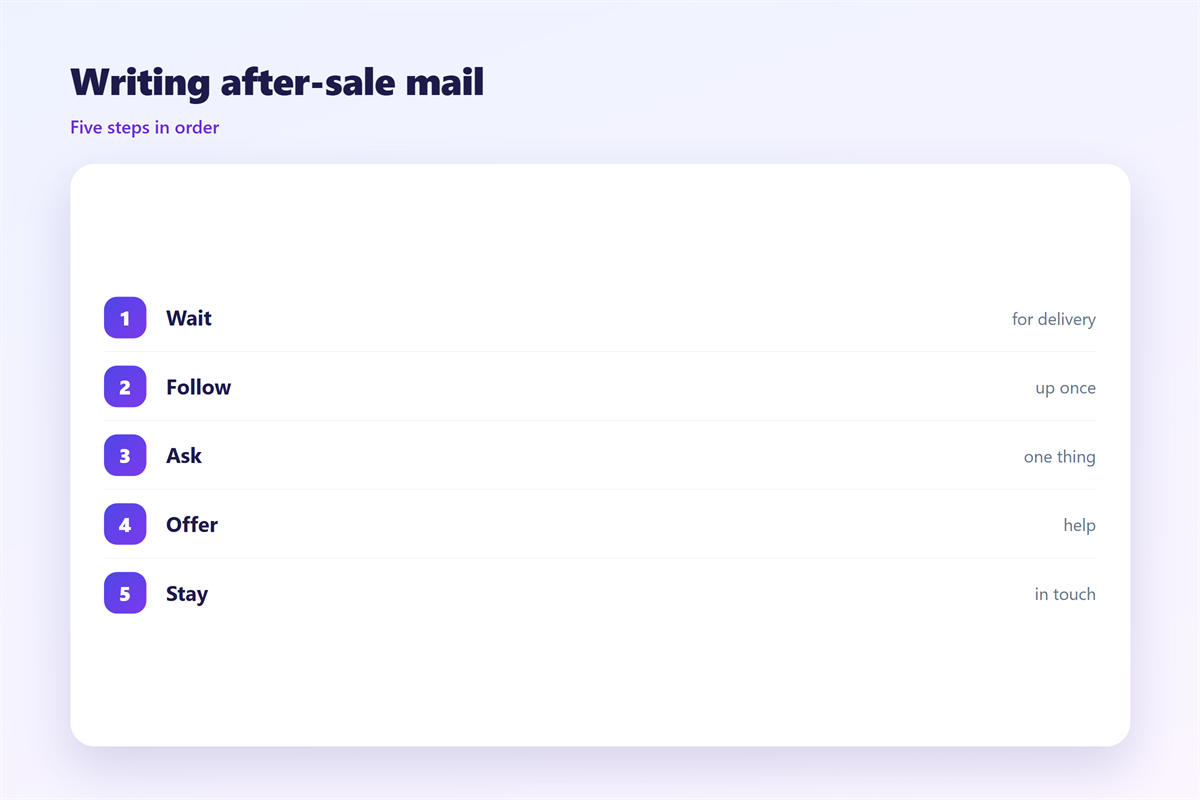
Writing the note
Start with the order and the date.
Keep the first line warm and plain.
Ask one question about the product.
Offer one way to get help.
Then stop writing.
A short note gets a short reply.
A long note gets ignored.
So aim for four or five lines.
Sign it with a real name.
Avoid the word survey in the first note.
That word can feel like homework.
Save it for a later message.
Good mail reads like a person wrote it.
Read it aloud once before sending.
If a line feels stiff, make it simpler.
邮件售后 on the first week
The first week decides the tone.
邮件售后 on day three often works best.
The buyer has tried the product by then.
A short line is enough at that point.
Ask if everything is working.
Leave a name and a reply address.
Then wait.
If the buyer answers, help fast.
If not, send one gentle second note.
That is the whole routine.
It takes two minutes and returns a lot.
Save the two dates in your own notes.
Then you never guess when to write again.
Keeping 邮件售后 consistent
A simple team rule
Consistency keeps the tone steady across a team.
Agree on when the note is sent.
Agree on who signs it.
Agree on what it may offer.
Then the same care reaches every buyer.
The wider care ideas sit in 邮件客户关怀. The check-in call sits in 邮件回访. The return path sits in 邮件退货. The survey that follows sits in 邮件满意度调查.
Write the rule down and keep it short.
Then review it every few months.
A team that agrees on care writes calmer mail.
A shared note template saves time too.
Fill the blanks and the tone stays even.
FAQ
How soon should 邮件售后 go out?
Three to five days after delivery is a good window.
How many follow-ups are too many?
Two is the usual limit. Stop after the second if nobody replies.
Should the note mention a discount?
No. A discount turns care into a pitch.
What if the buyer never replies?
That is fine. One clear note has already done its job.
评论
还没有评论,来说两句吧。
评论功能已关闭。