 小影邮箱
邮件退订原因有哪些?Why Readers Leave
Key Takeaways
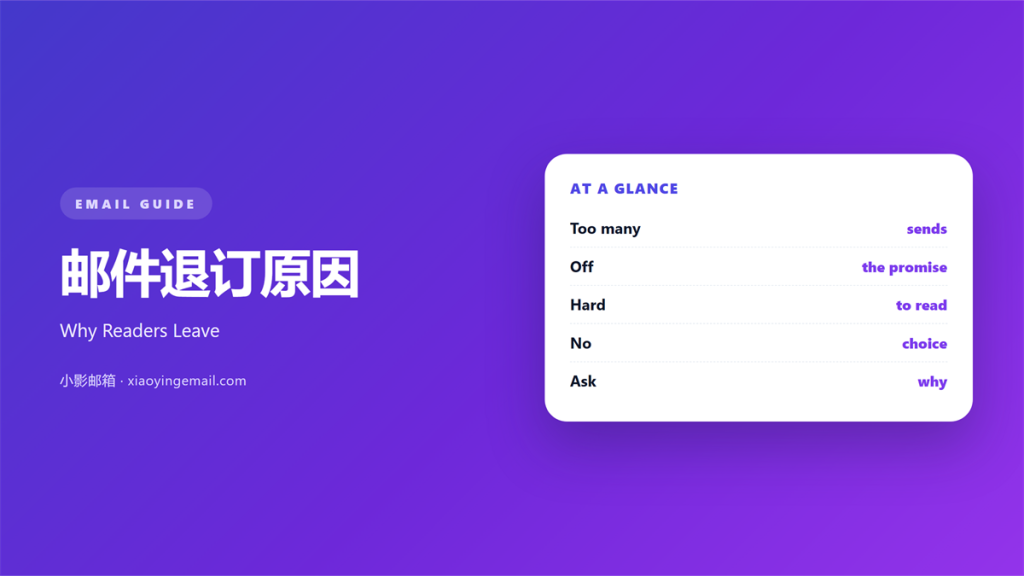
- 邮件退订原因 usually repeat across lists and years.
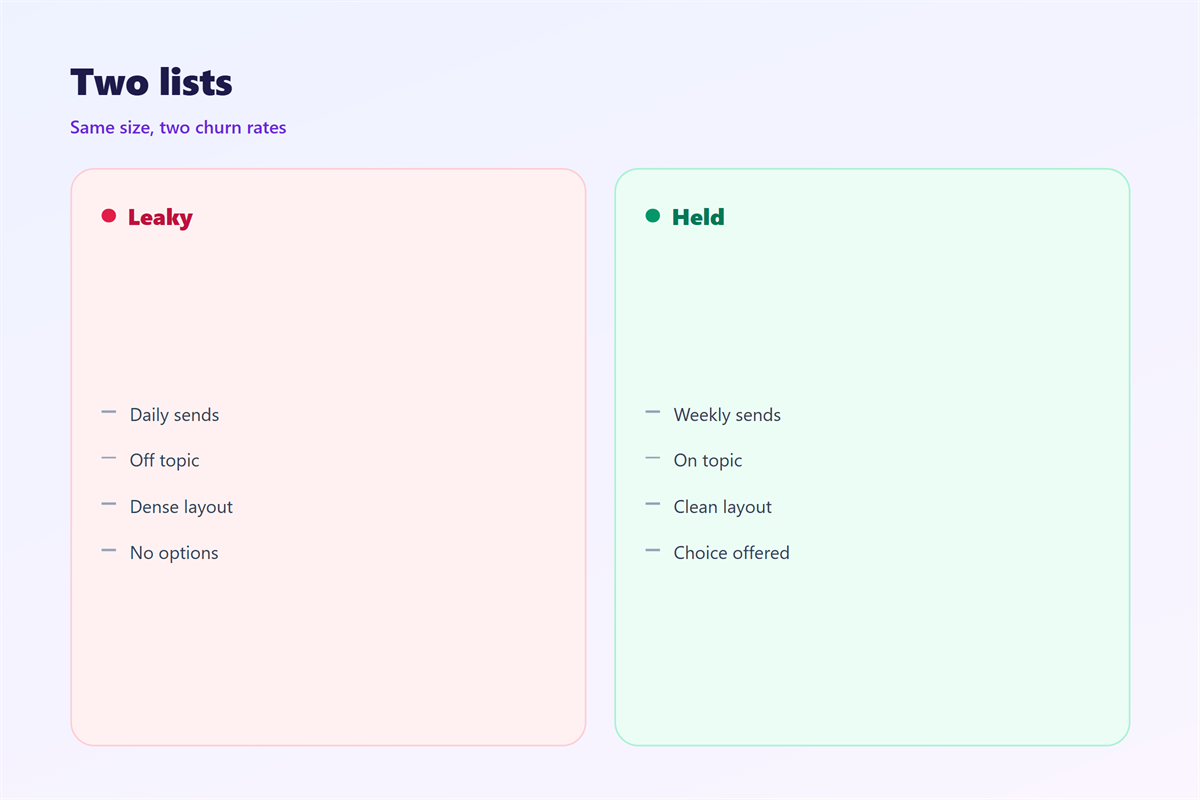
- Too many sends is the most common cause.
- Content that breaks a promise drives readers away.
- A hard-to-find exit link pushes people to spam.
- Ask exit questions and read the answers.
What 邮件退订原因 means
邮件退订原因 is the set of reasons a reader leaves a list.
Some reasons are about volume. Others are about content.
A few are about trust or simple list hygiene.
The reasons are rarely mysterious. They repeat.
Most lists lose people for three or four familiar causes.
Understanding them turns a loss into a lesson.
It also stops teams from blaming the audience.
The reader is not the problem. The experience is.
Good teams treat each exit as feedback.
Feedback only helps when someone records it.
Why 邮件退订原因 matters
Every lost subscriber costs money and reach.
A list that shrinks needs more new names to stay flat.
That raises the cost of every campaign.
邮件退订原因 also predicts future losses.
If one cause repeats, it will keep repeating.
Fixing it is cheaper than buying new traffic.
Small changes often stop the leak.
Send less. Write better subjects. Make the exit easy.
Each fix protects the people who stay.
They notice when the list improves.
That keeps the remaining audience warm and willing to open.
The hidden cost of one bad send
One poor campaign can push a group to leave at once.
The loss shows up weeks later in lower open rates.
By then the cause is harder to see.
Record each spike and the send behind it.
When 邮件退订原因 helps
邮件退订原因 helps most during planning.
Before a campaign, list the ways it might annoy people.
Then remove one or two of them.
It also helps after a sudden drop.
A short survey can name the cause quickly.
Ask one question and offer five answers.
Reading the exit survey
Keep the survey to one screen.
Offer plain options like too many emails or no longer relevant.
Add one open box for comments.
Then read every comment for a month.
Patterns appear faster than you expect.
Small lists can use the same method. A single question still names the cause.
When 邮件退订原因 hurts
邮件退订原因 hurts when it becomes an excuse.
Teams sometimes blame fickle readers and change nothing.
It also hurts when the data is ignored.
A survey nobody reads is just extra friction.
Do not ask for a reason and then argue with it.
And do not hide the exit link to slow people down.
That turns a clean exit into a spam complaint.
One complaint costs more than ten quiet exits.
Respect the choice and keep the door open.
A clean exit today leaves room for a return later.
Most people leave quietly, so the survey is your only signal.
邮件退订原因 and the content promise
Most 邮件退订原因 trace back to a broken promise.
Readers join for a specific promise.
They leave when the promise breaks.
A welcome offer followed by daily sales is a common break.
So is a newsletter that turns into a product feed.
Keep the mix close to what people signed up for.
If the plan changes, say so early.
Then let people adjust their settings.
That small step saves more names than a discount.
Promise, proof, and pace
Promise tells the reader what to expect.
Proof shows the value in each send.
Pace sets how often it arrives.
All three must match the sign-up page.
One mismatch is enough to lose trust.
Write the promise in one sentence. Then check each send against it.
How to use 邮件退订原因 well
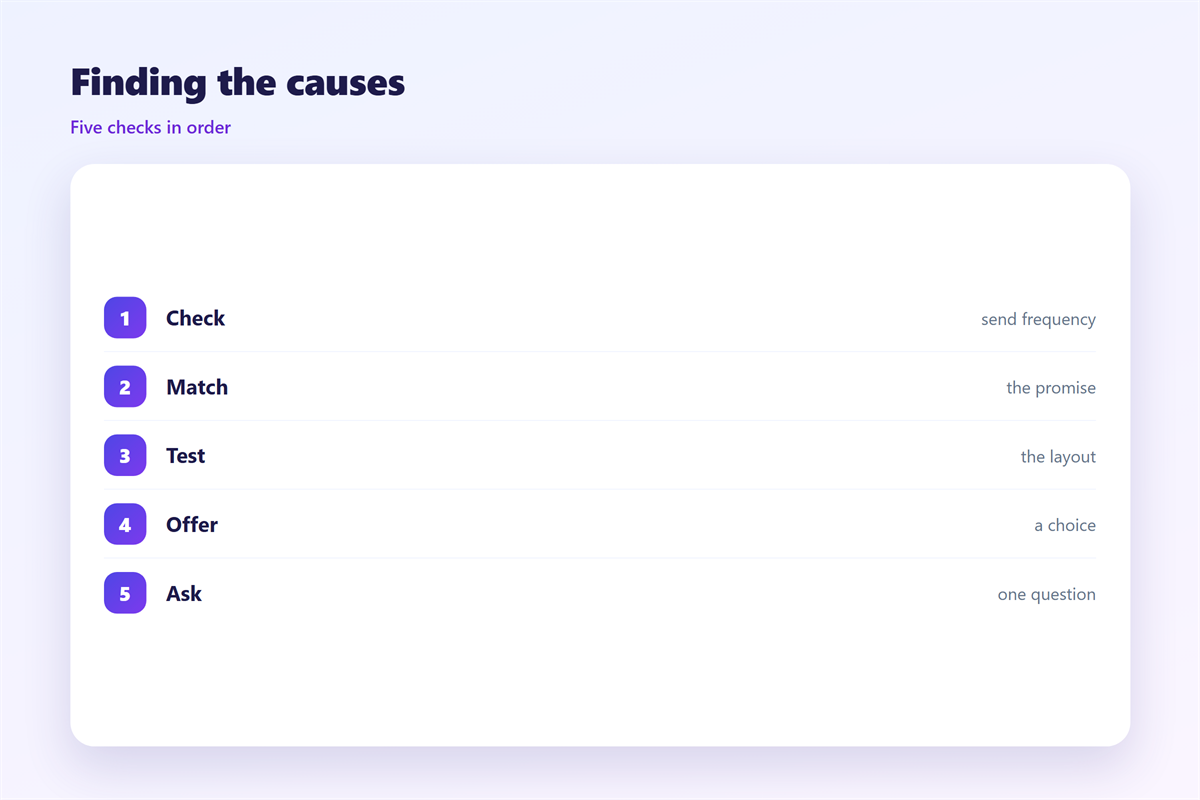
Start with a short exit survey on the unsubscribe page.
Keep it to one question and five choices.
Then tag every exit with the answer.
Review the tags once a month.
Pick the top cause and fix it for one quarter.
Measure again after the change.
Share the result with the whole team.
Good 邮件退订原因 work is quiet and steady.
The one-change rule
Change one thing at a time.
If you cut volume and rewrite content together, you learn nothing.
Give each change four weeks.
Then compare the exit rate with the month before.
邮件退订原因 across the lifecycle
The reasons change as a subscriber ages.
New readers leave after a weak welcome.
Long-term readers leave after a boring stretch.
Quiet readers leave when they forget why they joined.
So match the fix to the stage.
A welcome series helps the first group.
Fresh topics help the second.
A short reminder of value helps the third.
Segment before you guess
Look at tenure before you read the survey.
New and old readers rarely give the same answer.
Treat them as two groups with two plans.
Keep the survey short at every stage. A tired reader will skip a long form.
Keeping 邮件退订原因 visible
Put the exit data where the team meets.
One chart on the wall is enough.
Related guides cover 邮件退订率, 邮件退订页, 邮件订阅, and 邮件偏好中心.
Review the list every month, not every year.
Add new answer options when new causes appear.
Then test the sign-up page against the current promise.
A visible number keeps 邮件退订原因 from being ignored.
FAQ
What is the most common 邮件退订原因?
Volume. Most people who leave say they hear from a brand too often. Frequency is also the easiest cause to fix.
Should I ask why people unsubscribe?
Yes, but keep it optional and short. One question and five choices works well. Do not block the exit.
Does a discount stop people from leaving?
Rarely for long. It may delay the exit by a month. Fixing the cause works better than buying time.
How often should I review exit data?
Once a month is enough. Look for one repeat cause. Then change one thing and measure again.
评论
还没有评论,来说两句吧。
评论功能已关闭。