 小影邮箱
邮件沟通怎么做?Clear and Calm
Key Takeaways
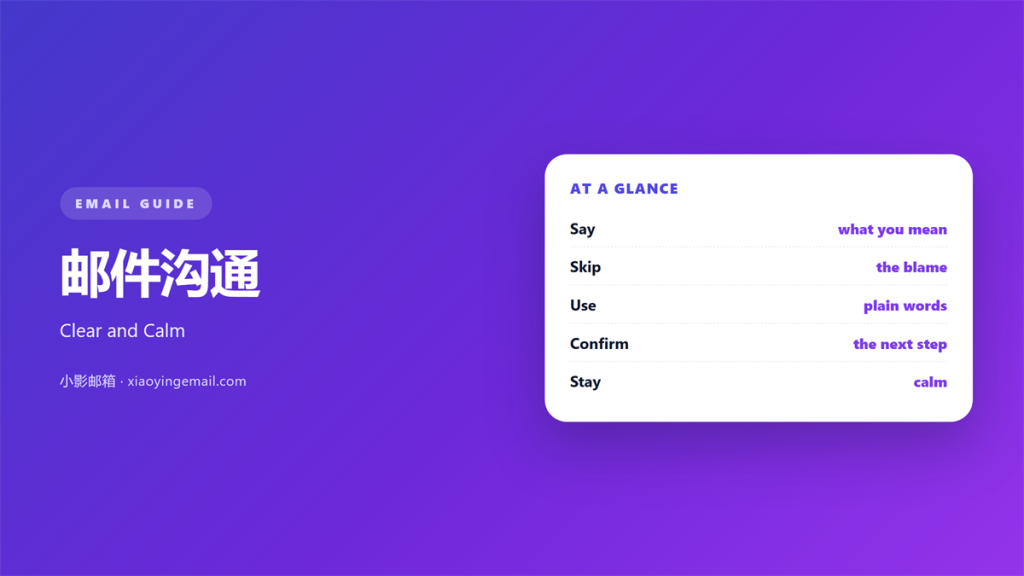
- 邮件沟通 is the daily work of moving information by mail.
- Say what you mean in the first line.
- Keep the tone calm, even when the topic is not.
- Skip blame and describe the facts.
- Confirm the next step before you close.
What 邮件沟通 means
邮件沟通 is the daily work of moving information by mail.
It covers requests, updates, questions, and answers.
The goal is shared understanding, not perfect prose.
Most problems at work start with a small gap.
One person assumed. The other did not.
Clear 邮件沟通 closes that gap early.
It uses plain words and short lines.
It names who does what and by when.
It also leaves a record both sides can check.
That record prevents the same debate later.
A short record is easier to find than a memory.
That is why the written version matters.
A clear subject also sets the tone.
It tells the reader what to expect.
A clear note is easier to answer.
Why 邮件沟通 matters
Most work runs on written messages.
A clear note saves a meeting.
A vague note creates one.
A calm note also carries the relationship.
A calm tone keeps a tense thread from breaking.
A sharp line can damage trust for weeks.
The words stay in the thread.
People reread them when they are upset.
So write for the second read, not the first.
The second read is where trust is won.
A calm thread also saves time later.
People answer faster when the note feels safe.
That speed keeps a project moving.
Say the thing plainly
Name the topic in one line.
Then add the detail that matters.
Skip the long preamble.
Readers skip it too.
When 邮件沟通 helps
The habit helps when the facts must be shared.
Several people need the same answer.
It helps when a decision needs a record.
The thread becomes the proof.
It also helps across time zones.
People reply when their day starts.
A clear note waits well.
It does not demand an instant answer.
A written answer can be shared at once.
That saves the same question twice.
Skip the blame
Describe the event, not the person.
Write “the file arrived late” instead of “you were late”.
Then ask what can fix it.
Blame invites defence, and defence takes time.
When 邮件沟通 hurts
邮件沟通 hurts when the topic is emotional.
Anger reads colder in writing.
It hurts when a call would be faster.
Ten replies can replace one short talk.
It also hurts when the thread grows too wide.
Too many names on copy slow every answer.
And it hurts when nobody owns the next step.
The thread ends with everyone waiting.
Name one owner before you close.
A clear owner also prevents a silent delay.
A tense thread can pull in the wrong people.
Then the message reaches someone it should not.
邮件沟通 and tone
Tone is the part readers hear.
The same words can sound helpful or sharp.
Short sentences can feel rude if they lack warmth.
Add one human line to soften them.
A simple thank you often does the work.
Match the reader’s level of formality.
Here the craft of 邮件沟通 meets plain manners.
Warmth does not weaken a clear request.
It only makes the request easier to take.
Confirm the next step
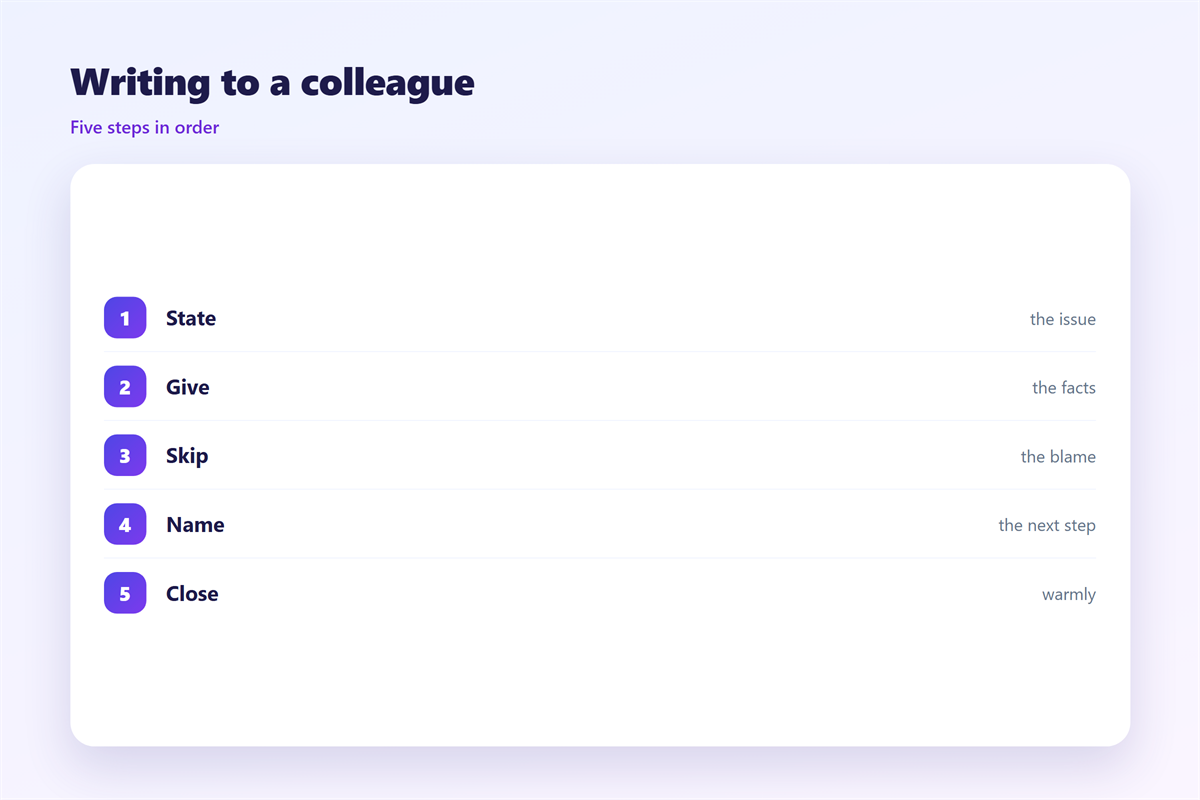
End with who does what and by when.
Ask the reader to confirm it.
That one line prevents most follow-ups.
It also gives the thread a clean end.
How to use 邮件沟通 well
Decide the channel first.
Use mail for facts and decisions.
Use a call for conflict or bad news.
Then write the point in the first line.
Keep each paragraph to three lines.
Use a short list when the items differ.
Close with the next step and a date.
A clear subject helps the reader sort the note.
Then keep the body shorter than the subject promises.
Good 邮件沟通 leaves nothing to guess.
A cooling-off rule
Never send a reply written in anger.
Save it and wait one hour.
Then read it as the other person.
Most drafts shrink by half.
A shorter draft is usually a kinder one.
邮件沟通 across teams
Teams use different words for the same thing.
Define a term the first time you use it.
Name the team that owns the task.
Then state what you need from them.
Do not assume shared context.
A short background line saves a reply.
Copy only the people who must act.
A clear 邮件沟通 crosses team lines without friction.
That makes handoffs faster for everyone.
It also keeps the record in one place.
A shared term list saves many small replies.
It also helps new people join the thread.
Keeping 邮件沟通 calm
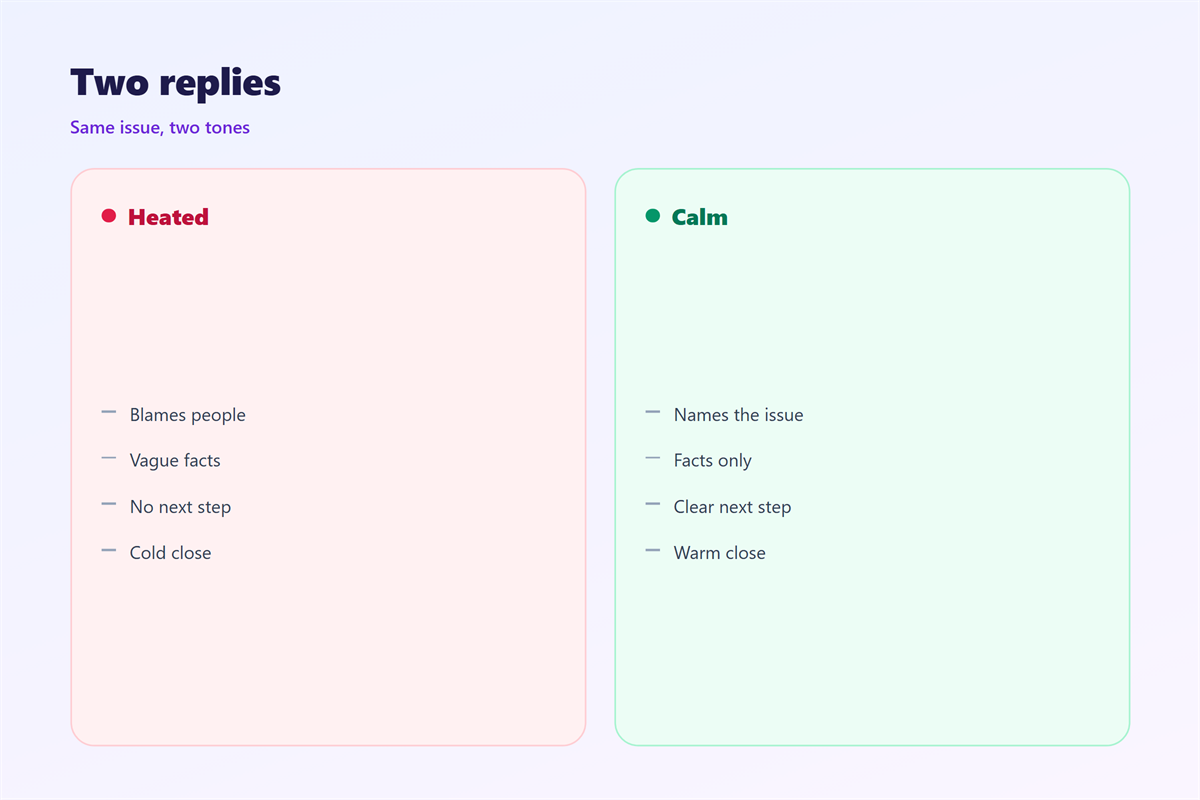
Calm is a habit, not a talent.
Use plain words and neutral verbs.
Remove words like always and never.
They invite an argument about the exception.
Internal notes are covered in 邮件内部沟通.
Cross-team habits sit in 邮件跨部门.
The right tone is explained in 邮件语气.
Everyday manners appear in 邮件礼仪.
Then reread one sent note each week.
Steady 邮件沟通 makes a team easier to work with.
It also makes hard news easier to hear.
A calm writer is easier to trust.
That trust makes the next note easier too.
FAQ
What is 邮件沟通?
It is the exchange of work information by email. Clear wording and a calm tone matter most.
How do I keep an email calm?
Describe facts, not motives. Remove absolute words. Wait an hour before sending a heated reply.
Does 邮件沟通 change across teams?
Yes. Each team has its own words and habits. Define terms and name owners to avoid confusion.
When should I stop emailing?
When the thread repeats itself. Switch to a short call. Then send one note that records the result.
评论
还没有评论,来说两句吧。
评论功能已关闭。