 小影邮箱
邮件签到怎么做?Check-In Mail That Works
Key Takeaways
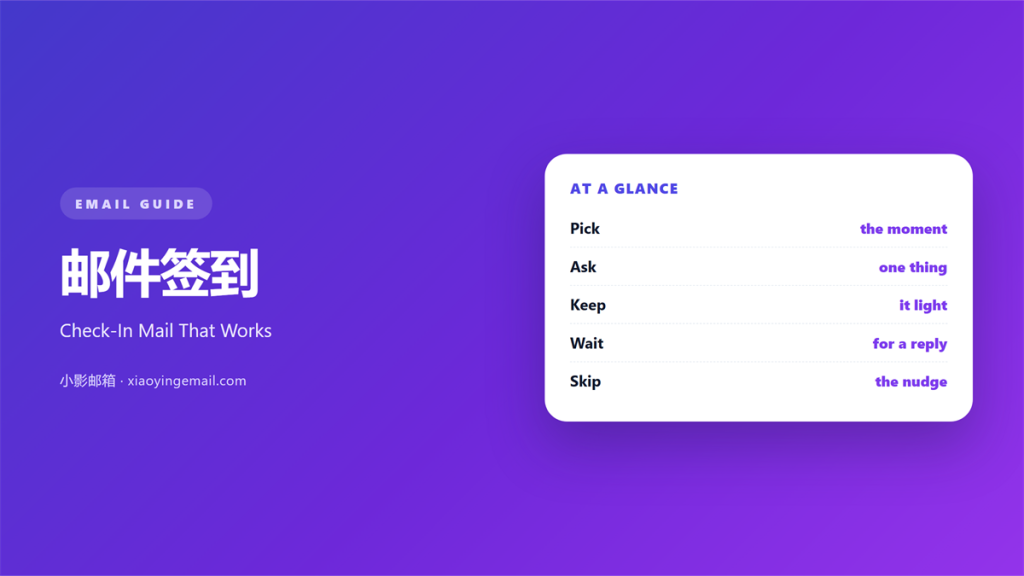
- 邮件签到 confirms that a plan is still on.
- Ask one short question, not three.
- Keep the note friendly and brief.
- Wait a few days before you nudge again.
- Silence is an answer too. Respect it.
What 邮件签到 means
邮件签到 is a short note that checks on a plan.
It asks whether a decision is still moving.
It is not a sales push and not a reminder.
It is a light touch that keeps a thread warm.
People use it after a meeting or a proposal.
The note usually carries one small question.
It ends with an easy way to reply.
A good check-in never demands an answer today.
So 邮件签到 works best when the stakes are low.
It simply asks if anything has changed.
The goal is a clear yes, no, or later.
Any of the three is a useful result.
Short notes are easier to answer.
So keep yours to a few lines.
Why 邮件签到 matters
Plans usually stall in silence.
People get busy and forget to reply.
A quiet week can look like a no.
But it is often just a busy week.
邮件签到 separates the two cases.
It gives the other person an easy prompt.
It also keeps you from guessing.
Guessing wastes time and goodwill.
One short note can clear a whole week.
That is why teams build it into a habit.
They check in before the deal goes cold.
A stalled plan wastes the first meeting too.
All that good work slowly goes to waste.
One note can bring it back to life.
Timing the check-in
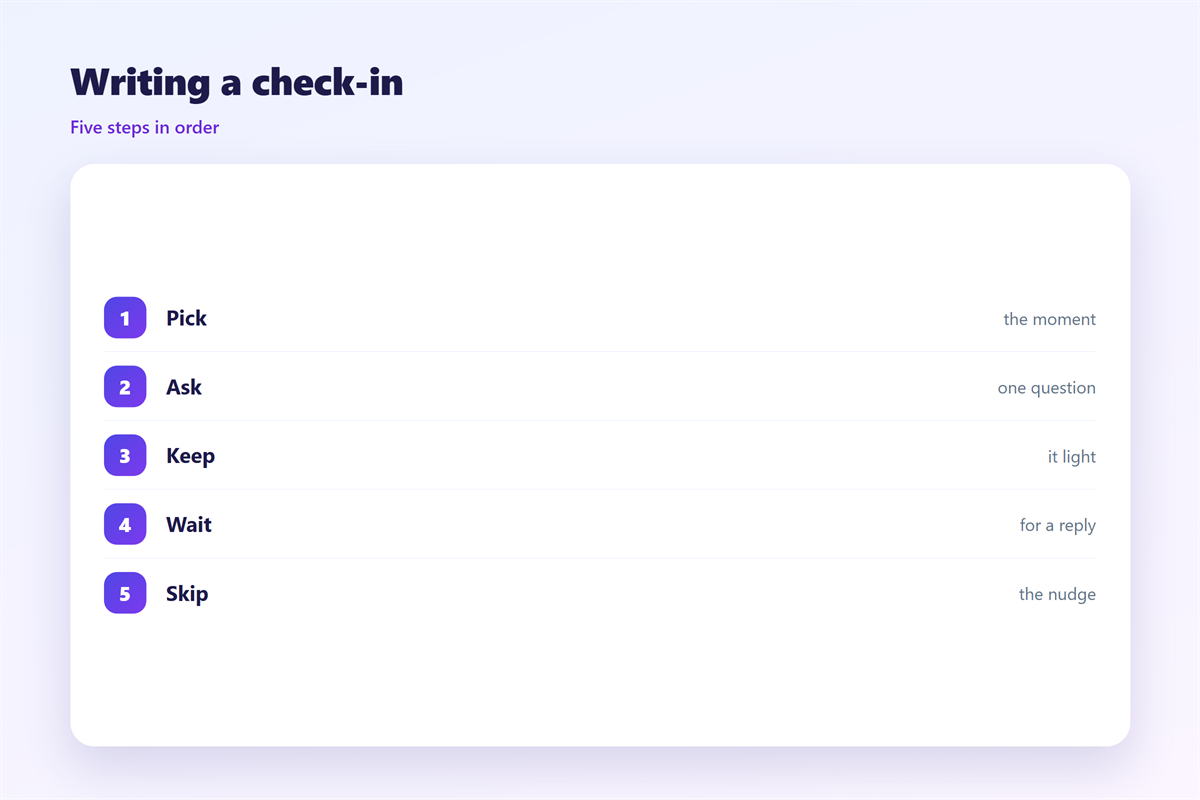
Wait three to five working days.
Then send one short note.
If there is still no reply, stop.
Try again only when you have news.
When 邮件签到 helps
A check-in helps in a few clear cases.
It helps after a meeting with no clear owner.
It helps after a quote that went quiet.
It helps before you close a thread for good.
In each case, one question is enough.
Ask whether the plan is still alive.
Then offer a simple next step.
That pairing keeps the note useful.
It also protects your own time.
You stop chasing and start confirming.
It also works before a big launch.
You check who is ready and who is not.
One question, one step
Two questions double the work.
So pick the most important one.
Then name the step you hope for.
When 邮件签到 hurts
A check-in can also hurt.
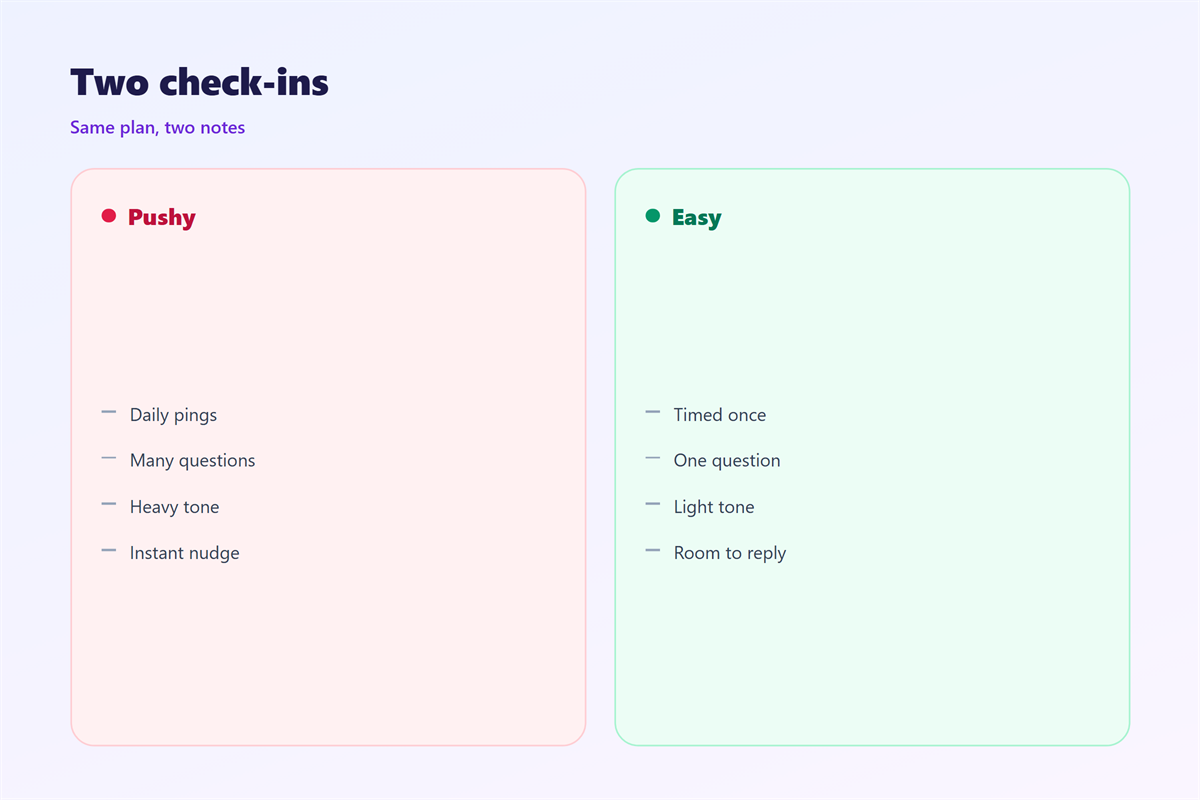
Repeated notes start to feel like pressure.
Three in a week reads as impatience.
So send one and then wait.
A vague question helps nobody.
Ask about a decision, not a mood.
Also avoid a hidden second agenda.
A check-in that sells is not a check-in.
Keep the note short and plain.
Then move on with your day.
A check-in with no clear point confuses.
So write your question before you open.
The quiet-reply rule
No reply is not always a no.
It is often a maybe that needs time.
Let time work before you push.
邮件签到 in practice
Open with a line of context.
Remind the reader what you discussed.
Then ask your one short question.
Offer two options to make replying easy.
Keep the whole note under five lines.
A short note respects their inbox.
End with your name and nothing else.
That is the whole pattern.
Write it once in a template.
Then adapt two words each time.
Small personal touches raise reply rates.
So never send a blank template.
Keep a copy of the last note.
Then you never repeat the same line.
This pattern works for clients and teammates.
How to plan 邮件签到
Pick the points where you will check in.
Most threads need only two.
Choose the day and the rough hour.
Then add it to your task list.
A fixed date removes the daily decision.
After a month, read the reply rate.
If replies fall, change the question first.
Then change the timing, not the tone.
Good 邮件签到 changes slowly.
Next, check your notes for clashes.
Two check-ins in one day should be rare.
If they collide, move the smaller one.
Then set a reminder for the next two.
Write the two dates into the calendar.
A calendar beats memory every time.
Then let the dates do the work.
邮件签到 and the reader
Readers open notes that respect their time.
They skip notes that ask for too much.
So keep your question easy to answer.
A yes or no takes one second.
A paragraph takes a day.
What breaks the habit is surprise.
A silent month and then a chase is a surprise.
So keep the gaps roughly even.
Test a different day if you like.
Then keep the day that works.
Move the timing in small steps.
Big shifts reset the reader’s habit.
Give the reader a reason to reply today.
A small deadline is often enough.
Keeping 邮件签到 steady
A steady habit turns into second nature.
The note that starts the thread is covered in 邮件邀请函.
The time you confirm in advance appears in 邮件预约.
The nudges that follow sit in 邮件提醒.
The invite that fills the calendar lives in 邮件日历邀请.
Review the habit once a quarter.
Then keep the same rule for every thread.
A team that agrees on 邮件签到 wastes less time.
Keep one owner for the whole habit.
That owner reviews it each quarter.
FAQ
How soon should I send 邮件签到?
Three to five working days after the last message.
Is a check-in the same as a reminder?
No. A check-in asks; a reminder tells.
Can I use 邮件签到 with a client?
Yes, if the question stays small and calm.
What if they never answer at all?
Send one last note, then close the thread.
评论
还没有评论,来说两句吧。
评论功能已关闭。