 小影邮箱
邮件赘词怎么删?Cut the Filler Words
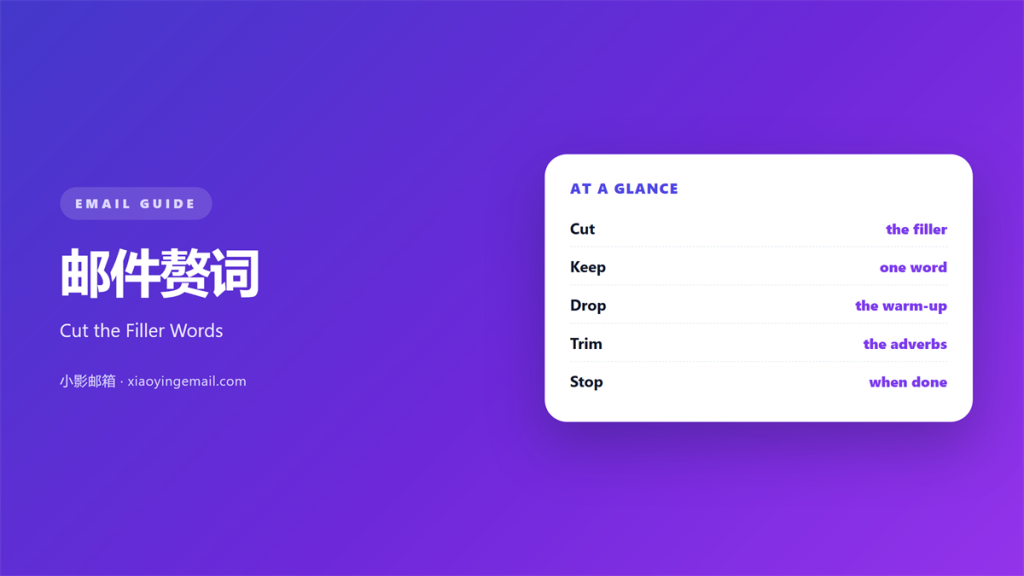
Key Takeaways
- 邮件赘词 are words that add no meaning.
- They hide a clear thought under clutter.
- Cutting them sharpens the message.
- Read the note aloud to catch them.
- A tighter note is easier to answer.
What 邮件赘词 means
邮件赘词 are the filler words in a sentence.
They carry little information.
Examples include very, really, and just.
Others are actually, basically, and quite.
Phrases like I think and sort of qualify too.
Each one softens or pads the idea.
None of them change the facts.
They simply take up space.
A note full of them reads slowly.
The reader works harder for less.
So the goal is not to ban every word.
It is to keep only the ones that matter.
Most filler can go without loss.
A clean sentence often reads better.
The meaning stays the same.
The line just moves faster.
So start by naming the filler.
Then decide which ones to keep.
Why 邮件赘词 matters
Every extra word costs the reader time.
Small costs add up over a long note.
A note full of 邮件赘词 feels vague.
It can also hide your real request.
The reader may miss the point.
So cutting filler is not just tidiness.
It is a way to be clear and kind.
Short, plain notes get faster replies.
They also look more confident.
A firm sentence needs no padding.
Filler also weakens a strong verb.
It spreads the meaning thin.
A padded line also hides your intent.
So trim before the reader has to.
The confidence test
Read the sentence without the filler.
If the meaning holds, keep it cut.
If it still reads well, you are done.
When 邮件赘词 helps
Filler rarely helps a business note.
Yet a soft word can ease a hard request.
Please and thank you are not filler.
They carry real warmth.
So separate politeness from padding.
A single hedge can soften bad news.
Two hedges just sound unsure.
Use one when the tone needs it.
Then cut the rest without guilt.
A gentle word can also lower tension.
That is tone, not filler.
One soft word can do real work.
Two of them undo the effect.
Keep the polite words
Keep please, thanks, and sorry.
Cut just, very, and really.
The first group helps; the second does not.
When 邮件赘词 hurts
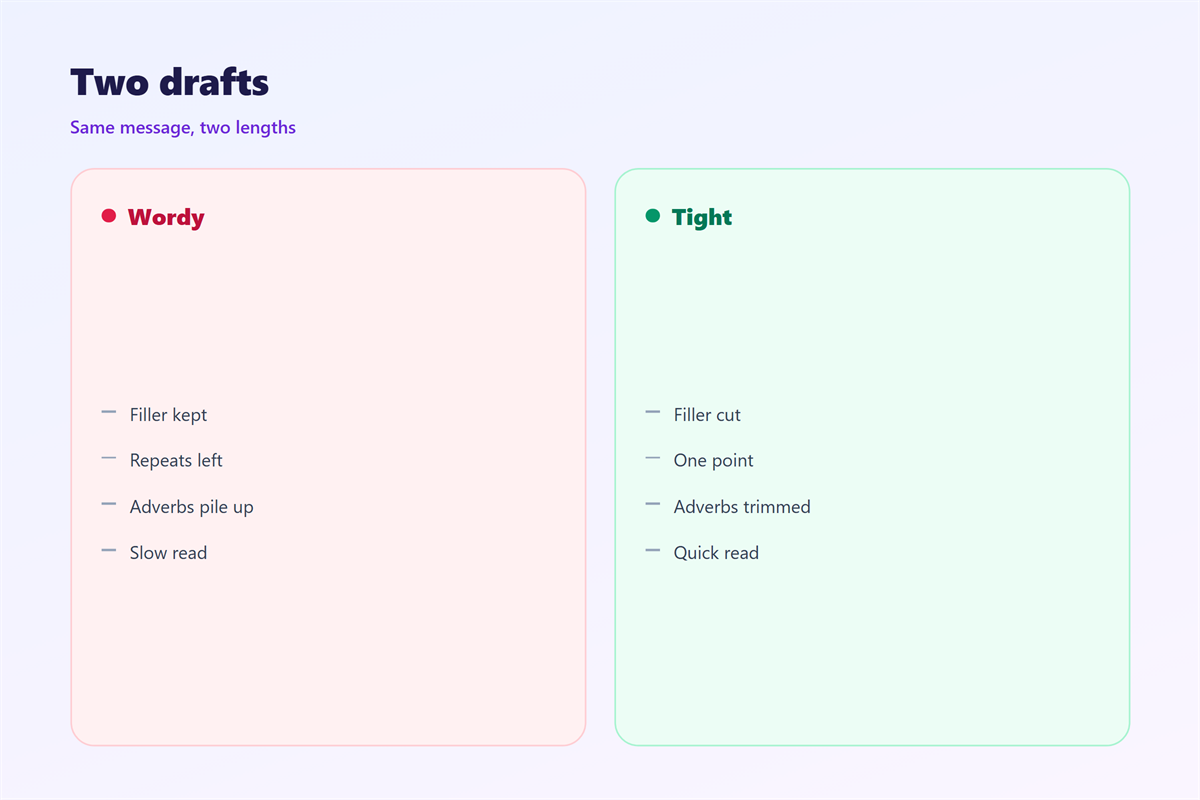
Too much 邮件赘词 buries the point.
The reader has to dig for the ask.
It also makes you sound less sure.
A vague note invites a vague reply.
Filler can also break the word limit.
Long notes often get skimmed.
So the padding costs attention.
Worse, it can hide a key number.
A date lost in filler may be missed.
Then the reader has to guess.
A guess can lead to a mistake.
So the cost is not just time.
A cluttered note also looks careless.
So keep the sentences lean.
邮件赘词 and word count
Cutting filler lowers the word count.
A shorter note is easier to scan.
But short is not always clear.
Some detail must stay.
So cut padding, not facts.
The goal is weight, not just length.
Read the note and remove the fluff.
Then check what remains.
So watch the 邮件赘词 as you trim.
A tight note still needs the facts.
Keep those and drop the rest.
A lower count is a side benefit.
Clarity is the real target.
How to spot 邮件赘词 fast
Search the draft for common filler words.
Highlight very, really, just, and actually.
Remove each one and reread the line.
If the meaning holds, leave it out.
Then search for phrases like I think.
Most add doubt, not value.
Next, count the adverbs in a row.
Two or three usually signal padding.
Keep the strongest one.
Then read the whole note aloud.
Your ear will catch what the eye misses.
Mark every word you stumble over.
Most 邮件赘词 hide in plain sight.
They sit right before the verb.
Or they trail at the end of a line.
They also gather around weak verbs.
So check each verb for strength.
Cut in passes
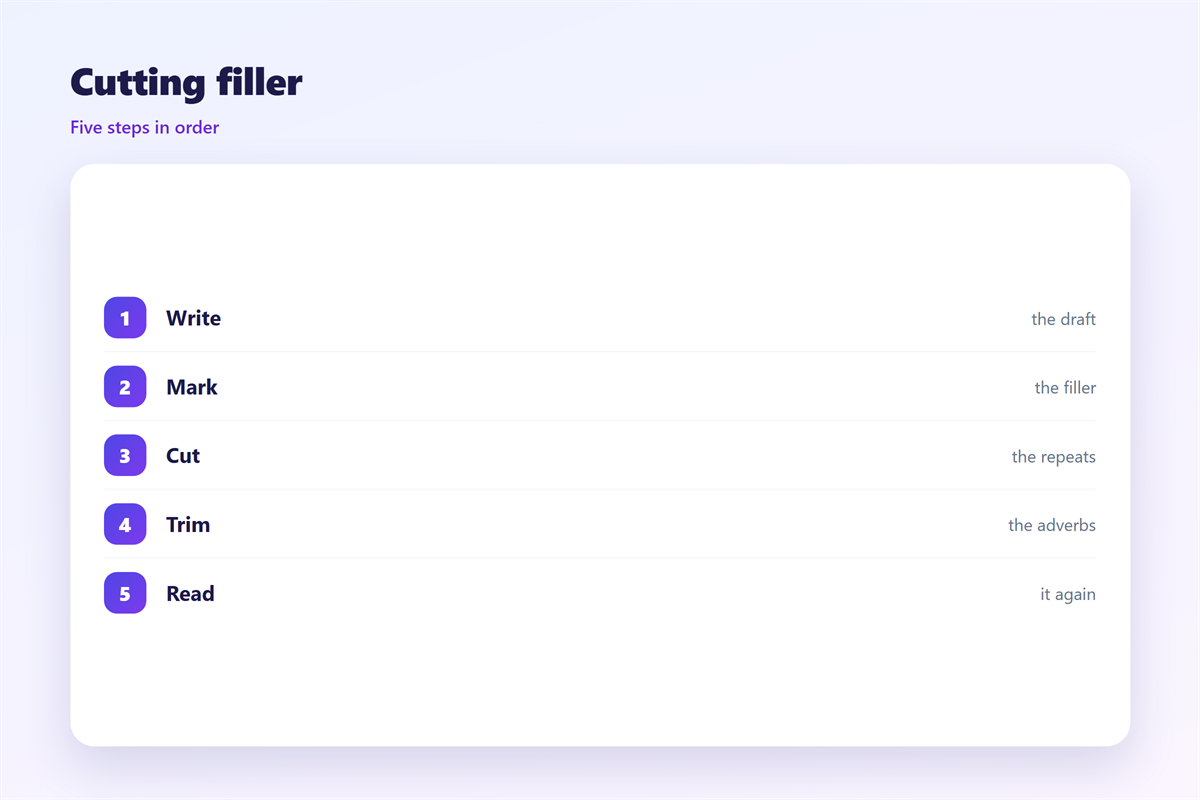
Make one pass for single words.
Make a second pass for long phrases.
Two passes are usually enough.
邮件赘词 in the subject line
The subject line hates filler most of all.
Space there is very tight.
Cut words like just and quick.
A short subject reads faster.
Every 邮件赘词 pushes the real words out.
So trim it before you send.
Keep the noun and the verb.
Then check the length on a phone.
A clean subject wins more opens.
It also sets the right tone.
A vague subject feels like spam.
So make every word count.
Then preview it on a small screen.
Cut anything that spills over.
Keeping 邮件赘词 out
Train the habit with a short list.
The wider rules are covered in 邮件字数, 邮件撰写, 邮件段落, and 邮件标题.
Add each new filler word you find.
Then run the list before sending.
Over time, you stop adding them.
The habit keeps 邮件赘词 out for good.
Share the list with your team.
Then everyone writes more clearly.
A short checklist saves many edits.
So keep the list close at hand.
Then review it every few months.
FAQ
Are all short words safe?
No. Words like just and very are short but empty.
Is filler ever useful?
Rarely. A single soft word can help, but two weaken the tone.
How do I find filler quickly?
Read aloud and search for common words like very, really, and just.
Does cutting filler change the meaning?
Usually no. If the meaning holds without it, leave it out.
评论
还没有评论,来说两句吧。
评论功能已关闭。