 小影邮箱
邮件发送窗口怎么定?Timing That Fits
Key Takeaways
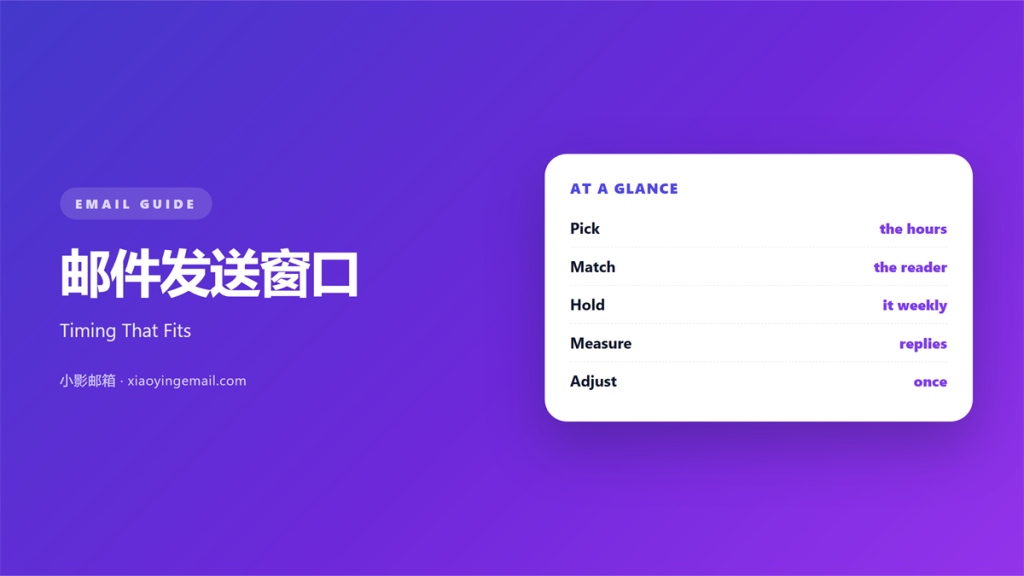
- 邮件发送窗口 is the block of hours you choose to mail.
- Match the window to the reader’s working day.
- One window per list beats many random sends.
- Check opens by hour before you change it.
- Keep the same window for at least a month.
What 邮件发送窗口 means
邮件发送窗口 is a chosen block of hours for sending.
It is not a single moment. It is a range.
Most teams pick two or three hours in the morning.
Others prefer the early evening.
The window sets an expectation for the reader.
Mail that always lands at nine feels familiar.
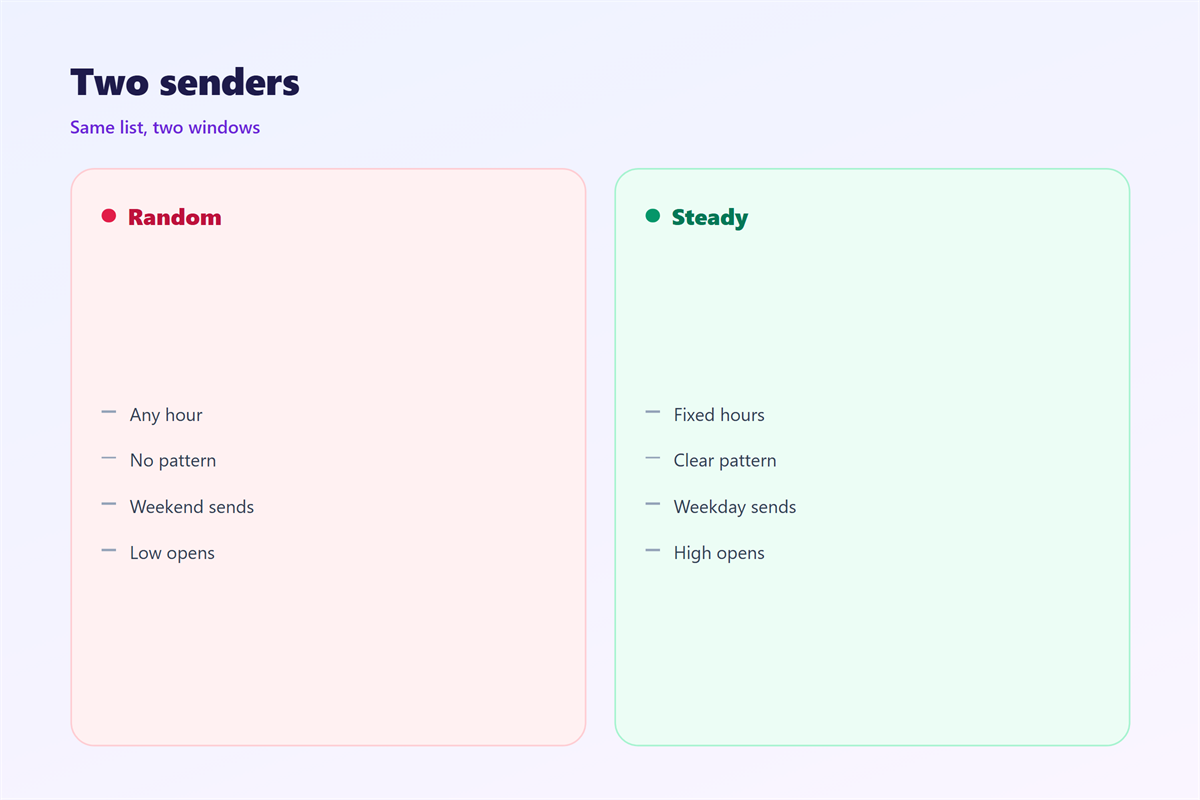
Mail that lands at random hours feels like noise.
A window also protects the sender.
It stops late-night sends that look careless.
It forces one clear decision each week.
That decision is when the list should hear from you.
Write the window down and share it with the team.
Why 邮件发送窗口 matters
Timing changes how many people open a note.
The same message can win or lose by hours.
A steady window builds a small habit.
Readers start to expect you at a certain time.
Expectation is a quiet form of trust.
A 邮件发送窗口 is a promise the list can learn.
It also makes your reports easier to read.
When sends share a window, comparisons make sense.
You can compare Monday nine with Monday nine.
Random sends hide the effect of the message.
You never know whether timing or words caused the change.
One variable at a time
Test the window only when the message is stable.
Change both at once and you learn nothing.
That rule saves months of confused analysis.
When 邮件发送窗口 helps
邮件发送窗口 helps when the list is new.
New readers have no habit yet.
A steady time gives them one.
It helps again when opens start to slip.
A move of two hours can revive a flat list.
It also helps around a launch.
A launch needs a shared moment of attention.
Pick the hour when your readers are usually at a desk.
Match the reader, not the office
Your office clock is not the reader’s clock.
Check where most of the list lives.
Then set the window in that local time.
A send at nine your time may arrive at midnight elsewhere.
The send report will show that mistake clearly.
When 邮件发送窗口 hurts
A window hurts when it is too narrow.
One hour leaves no room for a failed send.
A 邮件发送窗口 that drifts is worse than none.
It hurts when the team ignores it.
Half the list gets morning mail. Half gets night mail.
Readers notice the gap even if reports do not.
It also hurts when the window never changes.
Reader habits shift with seasons and jobs.
Review the window twice a year.
Lastly, avoid a window that clashes with the weekend.
Saturday mail often waits until Monday anyway.
邮件发送窗口 and the working week
Most replies come early in the week.
Tuesday and Wednesday are steady choices.
Monday mornings are crowded with other mail.
Friday afternoons are quiet, but so is the reader.
A Friday send may be read on Sunday night.
That delay distorts your open numbers.
The 邮件发送窗口 should sit inside the working week.
Pick a weekday and hold it for a month.
Then compare it with one other weekday.
Use the same subject style for both tests.
Only the day should change.
How to use 邮件发送窗口 well
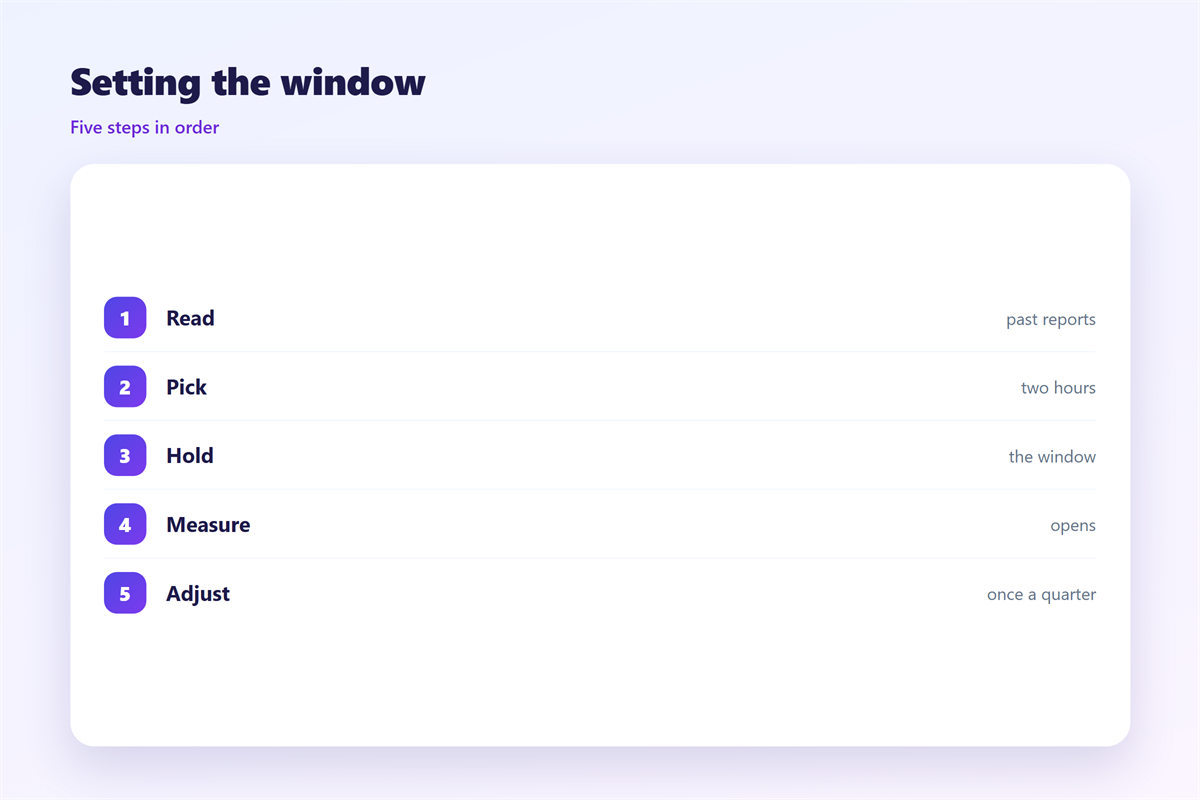
Start with your last three months of data.
Group opens by hour in the reader’s time zone.
Look for a two-hour block that repeats.
A good 邮件发送窗口 comes from your own data.
Set the window around that block.
Then schedule the next four sends inside it.
Do not chase a single lucky send.
One strong hour can be pure chance.
Write the window as a rule, not a wish.
Put it in the campaign brief.
Leave a margin for failure
Queues can delay a send by minutes.
Start the window early enough to absorb that.
Keep a backup hour on the same day.
If the first attempt fails, the second still fits.
Then tell the team which hour was used.
邮件发送窗口 across time zones
A global list cannot share one clock.
Split the list by region before you set the window.
Then send each group at a sensible local hour.
That may mean three sends, not one.
Three smaller sends can beat one large one.
Check that the split does not double-count people.
Store the zone with each contact record.
Then the window follows the reader, not the sender.
One 邮件发送窗口 per region is the simplest rule.
Keep the same local hour for every region.
This makes the schedule easy to explain.
It also makes late replies easy to spot.
Keeping 邮件发送窗口 honest
A window is a promise about when you send.
Break it often and readers stop watching for you.
The hour-by-hour view sits in 邮件发送时间.
The right number of sends each week is covered in 邮件发送频率.
The queue itself is explained in 邮件定时发送.
Scheduling across regions is handled in 邮件时区.
Then review the window with the people who answer replies.
They hear the complaints before the report does.
Ask them which hour feels busiest.
Their answer often explains a drop in opens.
Keep the rule simple enough to remember.
A window nobody follows is only a note in a file.
FAQ
What is a good 邮件发送窗口?
For most lists, a two-hour block mid-morning works well. Test it for a month before judging it.
Should I send at the same time every week?
Yes, while you are learning. A steady hour builds habit and makes reports easier to compare.
Can I use different windows for different lists?
Yes. Separate lists often have separate habits. Keep one window per list and write it down.
How often should I review the window?
Twice a year is enough for most teams. Review sooner if opens fall for three weeks in a row.
评论
还没有评论,来说两句吧。
评论功能已关闭。