 小影邮箱
邮件申诉怎么写?Asking to Be Let Back In
Key Takeaways
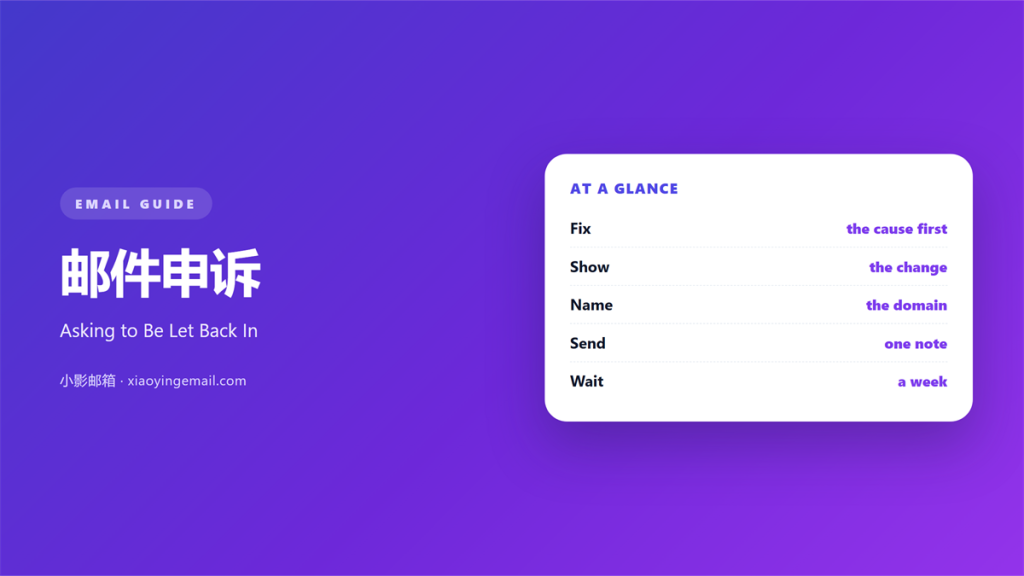
- 邮件申诉 is a short request to a blocklist or a provider.
- Fix the cause before you write the note.
- One page is enough.
- Name the domain, the date and the fix.
- Wait five business days before a second note.
What 邮件申诉 means
A 邮件申诉 asks a blocklist to review your sending domain.
It is not a support ticket for one address.
It is a formal request about a whole domain or IP.
You explain what broke and what you changed.
Then you ask for the listing to be removed.
Most lists publish a web form or a mailbox for this.
Some ask for the sending IP.
Others ask for the domain, and a few want both.
A few want a sample message with full headers.
The reply is usually a template. Read it twice before you answer.
It rarely explains the original decision.
A 邮件申诉 without a fix is ignored.
Why 邮件申诉 matters
A listing can cut delivery to zero overnight.
Every message is refused at the gateway.
No bounce reaches the reader, only your log. The silence looks like a quiet week.
A 邮件申诉 is the only way back for some lists.
Others remove a listing after a quiet week.
It also forces an honest review of your list.
Our team filed nine appeals last year.
Seven restored delivery within three days.
The other two needed a second note and a source fix.
That result changed how we document a send.
We now log every complaint with a date.
Before you type
Find the exact listing first.
Check the return path and the sending IP.
Read the list’s own removal page. Each list has its own form.
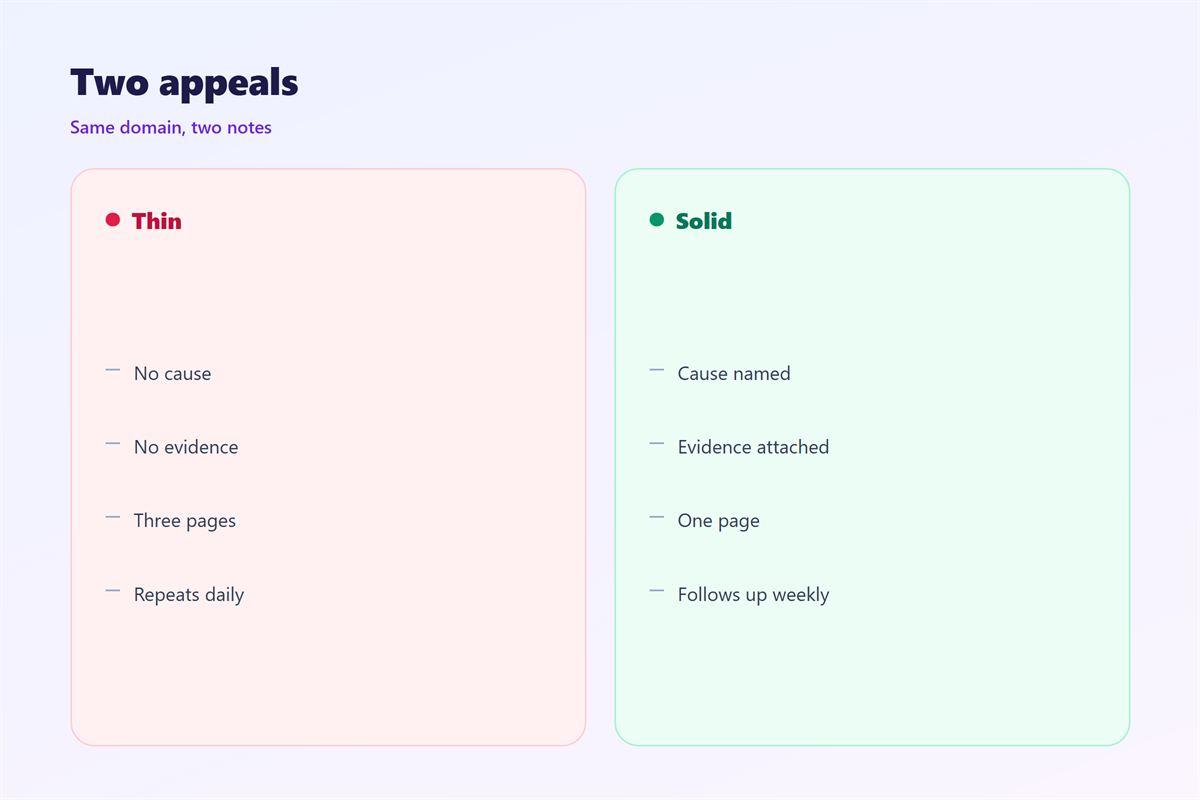
A good note starts with evidence, not apology.
When 邮件申诉 helps
It helps when a block is recent. Old listings are harder to prove.
A fresh listing is easier to explain.
It helps when your authentication records broke.
Show the new SPF and DKIM values.
A 邮件申诉 also helps after a hacked mailbox.
That sudden volume looks like spam to every filter.
Show the password reset and the removed forwarder.
It helps when a rival reports you by mistake.
One sample message proves the content is ordinary.
Keep the tone flat and factual.
Speed matters
Most lists answer within two days.
A short delay costs a full campaign.
So send the appeal the same day.
Then pause the send until the answer arrives.
When 邮件申诉 hurts
It hurts when you appeal before you fix anything.
The same problem returns within a week.
It hurts when you send the same note three times.
Duplicate tickets push you to the back of the queue.
A 邮件申诉 hurts when it blames the recipient.
Filters are not personal, and the reviewer knows it.
It hurts when the note runs to four pages.
Nobody reads a long defence. Keep it to one screen.
It hurts when you hide a bought list.
The reviewer can see the complaint rate.
邮件申诉 and reputation
Reputation is a score built from behaviour over time.
A single appeal cannot raise it.
Only a clean sending pattern does that.
So treat the appeal as one step.
The next thirty days matter more than the letter.
Send to engaged addresses only.
Remove hard bounces on the first try.
A 邮件申诉 works best beside a smaller list.
Fewer messages, better signals. That ratio decides most reviews.
What the reviewer sees
They see volume, complaints and bounces.
They see your authentication results.
They see whether the same domain appears each week.
They do not see your intent.
So the numbers must speak for you.
How to build 邮件申诉
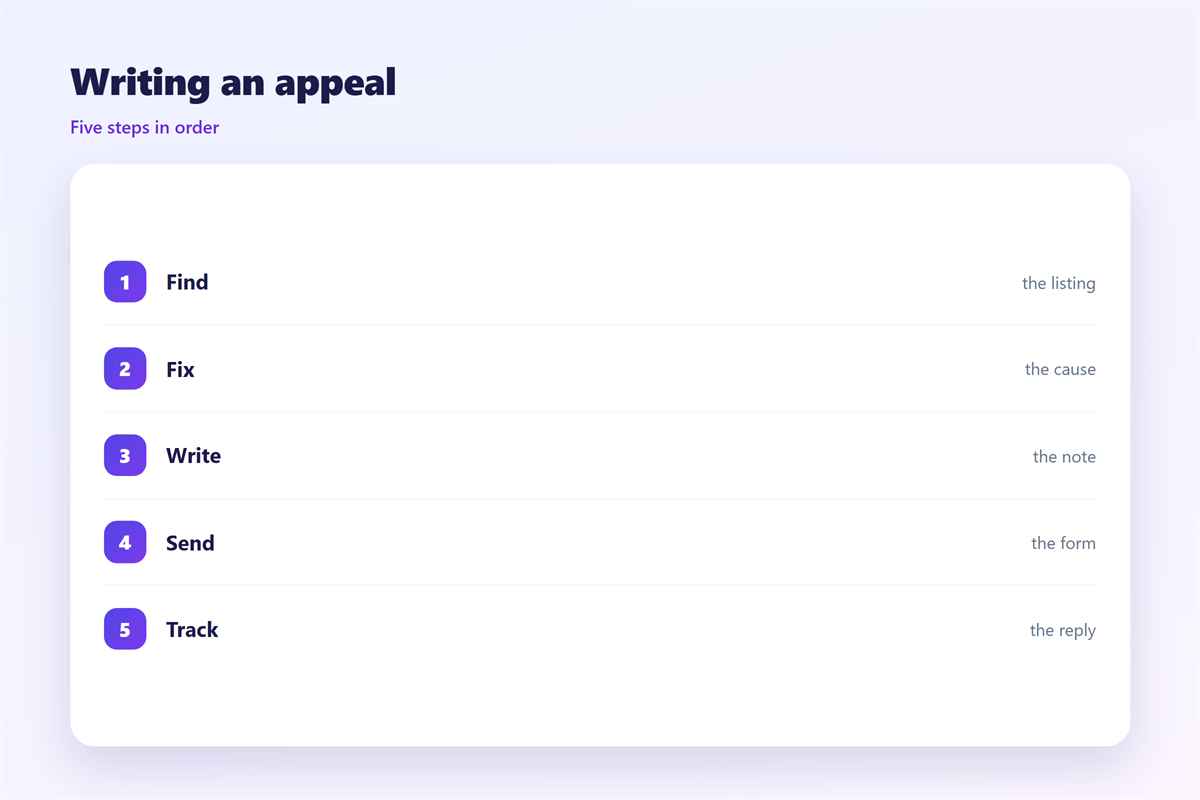
Start with the listing page and its exact rules.
Write the subject as domain plus request.
Open with the domain and the IP.
Name the date you found the listing.
Describe the cause in two sentences.
List the fix with dates. Dates make the claim checkable.
Add one sample message with headers.
Close with a contact name and a phone number.
Keep a copy
Save the form reply as a file.
Note the ticket number in your send log.
A second 邮件申诉 can cite the first.
Review the fix after one week.
Check the complaint rate again.
Then resume at half volume.
邮件申诉 on a phone
Most reviewers read appeals on a laptop.
Your reader still opens mail on a phone.
So the apology mail to your list needs a mobile check.
Keep it under 150 words.
Put the reason in the first line.
The confirmation rarely needs images at all.
Plain text reads well on any screen.
A wide table will break at 320 pixels.
So skip the table.
Test the note in two clients. Then read it once at 320 pixels.
Check that the links open.
Then send it once.
One screen, one ask
The reader wants to know what happened.
Give that in one sentence.
Then give one link.
Nothing else earns its space.
Keeping 邮件申诉 honest
Never promise a removal date you cannot control.
Tell the client what the list actually said.
Keep the rejection note on file. It protects you in a later audit.
The listing rules sit in 邮件黑名单.
Bounce types are sorted in 邮件退信.
Good mail in spam is covered in 邮件误判.
Filter design appears in 邮件反垃圾.
Then log the outcome of every appeal.
A team that tracks outcomes writes better notes.
Review the log each quarter.
FAQ
How long does 邮件申诉 take?
Most lists answer in two to five days. Some never reply at all.
Should I appeal a spam folder placement?
No. A spam folder is a filter decision, not a listing.
Can I appeal for a client?
Yes, if you send from their domain and can show the fix.
What if the list refuses?
Fix the cause and wait. A second note after thirty days sometimes works.
评论
还没有评论,来说两句吧。
评论功能已关闭。