 小影邮箱
邮件寒暄怎么写?A Warm First Line
Key Takeaways
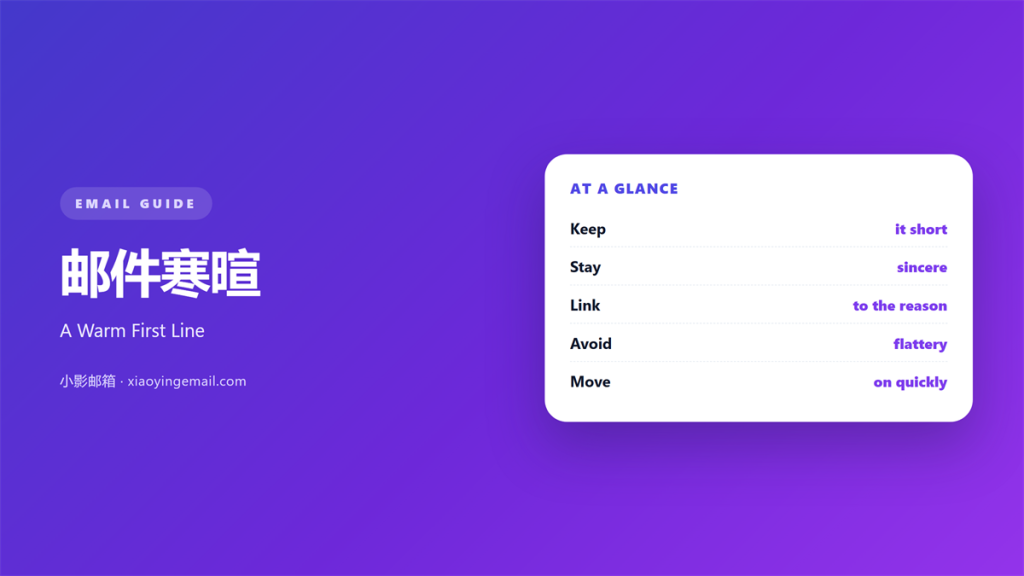
- 邮件寒暄 is one warm line before the point.
- Keep it short, sincere, and specific.
- Never open with a request.
- Match the tone the reader uses.
- Then move to the reason you wrote.
What 邮件寒暄 means
邮件寒暄 is a brief greeting at the top of a note.
It is not small talk and not a speech.
It is one human line before the business.
The line should fit the reader and the moment.
It can mention a recent event or a shared task.
It should never feel copied from a template.
Most readers decide in seconds whether to continue.
A warm start buys those seconds.
It also sets the tone for everything after it.
Good 邮件寒暄 is quiet, not clever.
It sounds like something you would say at a desk.
It does not try to impress.
It simply shows that a person is writing.
That small signal changes how the rest lands.
Why 邮件寒暄 matters
A cold email arrives without context.
The first line decides how the rest is read.
A short greeting turns a stranger into a person.
It also signals that you see the reader’s time.
People answer notes that feel human.
They ignore notes that feel automated.
The greeting is the cheapest way to sound human.
It costs one sentence and earns attention.
That attention is the point.
Without it, the best offer goes unread.
With it, a modest offer gets a fair look.
Warmth is not flattery
Praise sounds false when it is too broad.
A specific detail works better than a compliment.
Mention the work, not the person’s greatness.
One accurate line beats three kind ones.
When 邮件寒暄 helps
邮件寒暄 helps when you write to a stranger.
It also helps after a long silence.
A short line can reopen a thread that went quiet.
It helps when you reply to a favour.
Thank the person before you ask for more.
It helps when a team has just shipped something.
Name the release and say one true thing about it.
Keep the praise small and exact.
Then ask your question in the next line.
Three good moments to write
First, when a new contact replies to your note.
Second, when a project reaches a visible milestone.
Third, when you return after a long absence.
Each moment gives the line a real reason to exist.
When 邮件寒暄 hurts
邮件寒暄 hurts when it delays the point.
Three lines of greeting become a wall.
It hurts when the greeting is clearly fake.
Readers notice copied warmth very fast.
It also hurts when it asks a personal question.
Health and family are not safe openers.
They put the reader in an awkward spot.
Weather is safe but says nothing.
Skip jokes unless you know the reader well.
A failed joke is hard to repair in writing.
Finally, never let the greeting replace the ask.
邮件寒暄 and tone
Tone depends on the reader and the history.
A first note should stay neutral and polite.
A long contact can take a lighter line.
A senior reader usually prefers fewer words.
Match the formality you see in their reply.
A short reply usually invites a short answer.
A detailed reply invites more context.
Read the last message before you write.
Match the reader
Formal does not mean stiff.
Warm does not mean casual.
Pick one level and hold it through the note.
A steady tone is easier to trust.
How to use 邮件寒暄 well
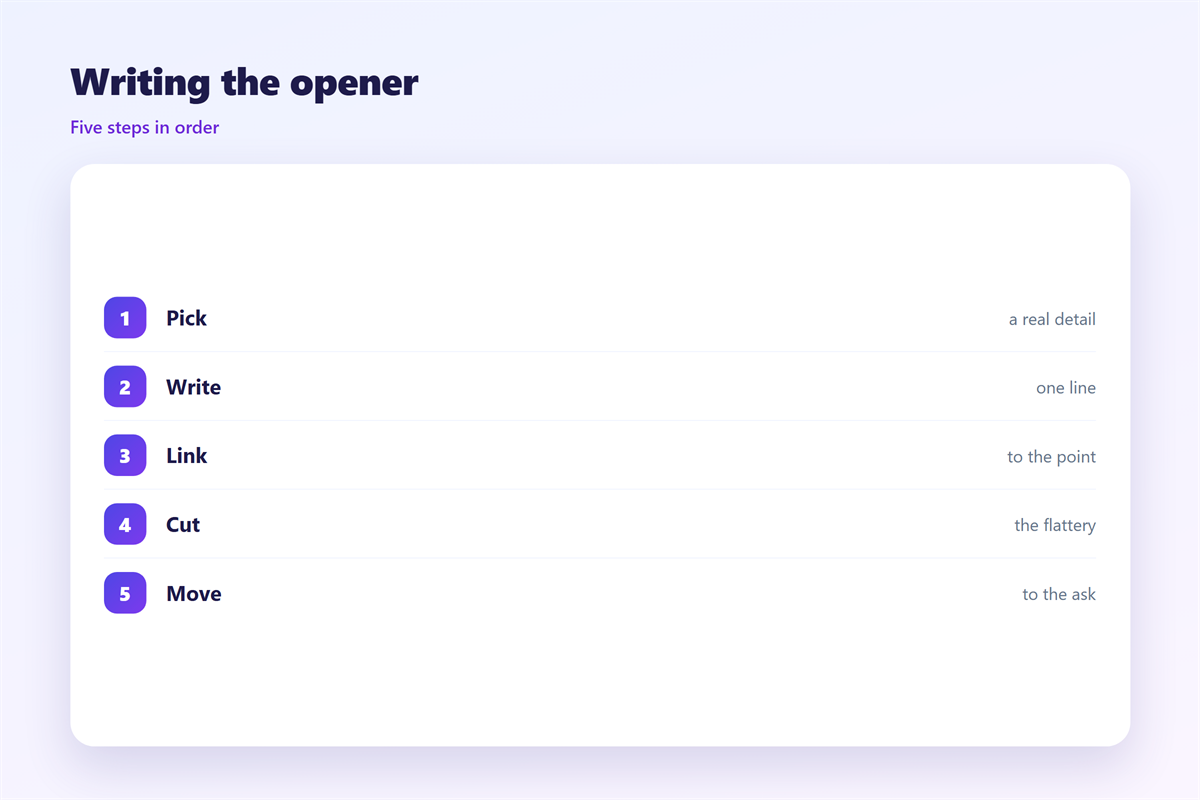
Write the 邮件寒暄 after the body.
Then you know what it needs to set up.
Keep it to one sentence of twelve words or less.
Use the reader’s name once, not twice.
Refer to something real and recent.
Then start a new paragraph for the reason.
Do not put the request in the same line.
Let the greeting stand alone.
One line is enough
A single line shows good manners.
Two lines still work if both carry meaning.
Three lines usually mean the writer is nervous.
Cut the extra lines and keep the warmth.
邮件寒暄 in a reply
A reply needs a lighter greeting than a first note.
One short thanks is often enough.
Then answer the question you were asked.
Do not repeat the greeting in every message.
In a fast thread, skip it after the second reply.
Readers value speed more than ceremony there.
A short 邮件寒暄 still fits the first reply.
If the thread turns difficult, return to a neutral line.
That small reset can cool a tense exchange.
Keep the greeting consistent with your last message.
A sudden shift in tone reads as anger.
Keeping 邮件寒暄 honest
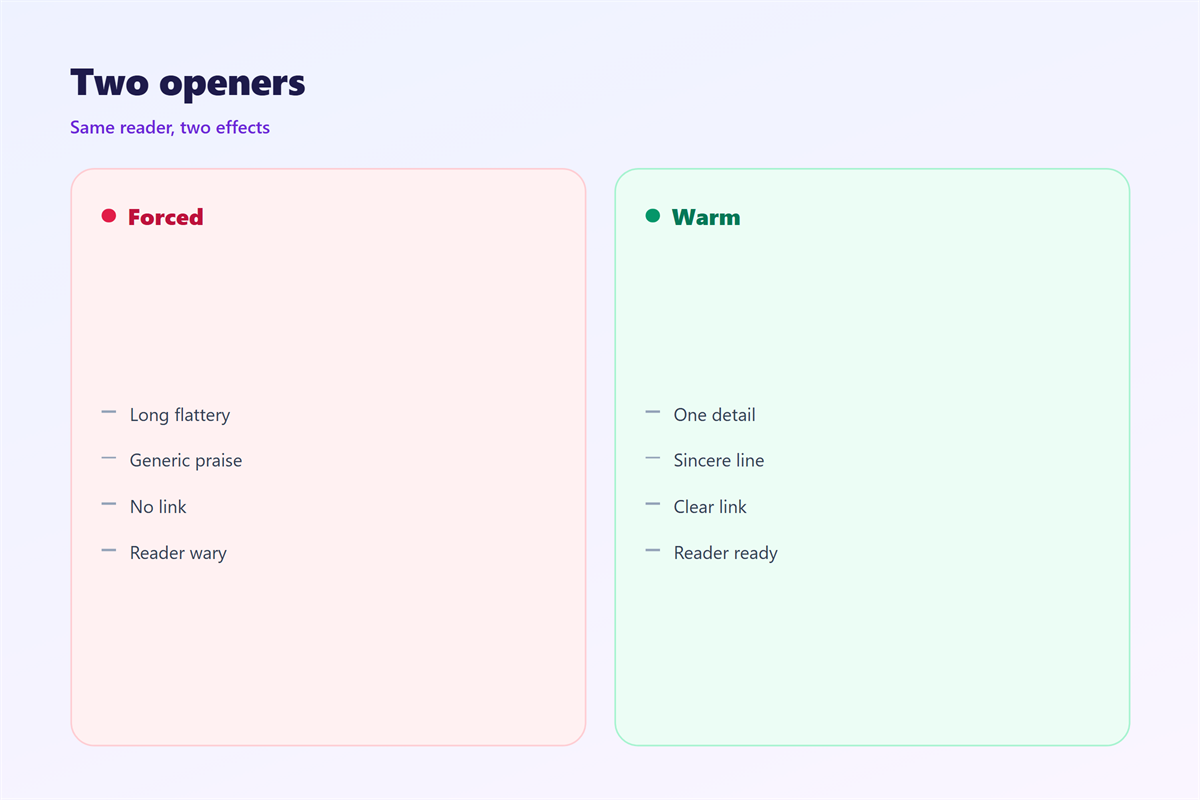
Only greet in ways you would use in person.
If a line feels wrong aloud, do not send it.
The opening line is covered in 邮件开场白.
Common greetings sit in 邮件问候语.
The overall tone is explained in 邮件语气.
Polite forms appear in 邮件敬语.
Never invent a shared history.
Never pretend to know a person’s news.
A plain, accurate hello is always enough.
People forgive plain. They do not forgive false.
Keep a short list of openers you actually use.
Then retire the ones that feel tired.
FAQ
How long should 邮件寒暄 be?
One line of twelve words or less. Two short lines are fine if both add meaning.
Can I open with “How are you”?
Yes, but keep it brief. It works best when you have met before.
Should I use the reader’s first name?
Yes, when you know it. Use it once and spell it correctly.
What if I have nothing to say?
Then skip the greeting. A clear first sentence is better than empty warmth.
评论
还没有评论,来说两句吧。
评论功能已关闭。