 小影邮箱
邮件推荐信怎么写?Ask Well, Write Better
Key Takeaways
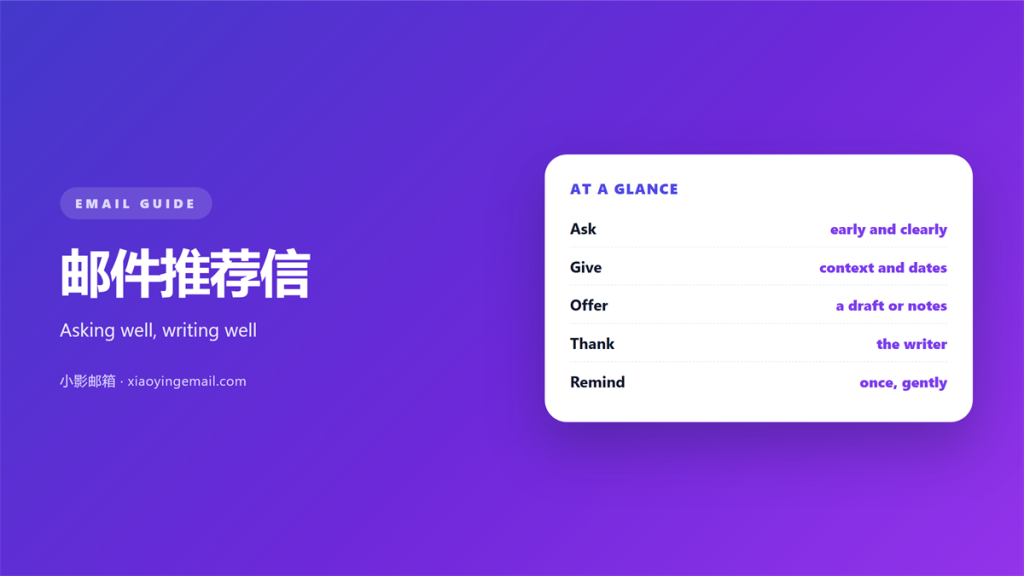
- 邮件推荐信 asks a person to vouch for you.
- A clear request makes the reply easy.
- Give facts, dates and a firm deadline.
- Always send a short thank you note.
- Keep the final letter in a safe place.
What 邮件推荐信 actually means
邮件推荐信 is a message that asks someone to support you.
It may be for a job, a course or a licence.
The writer speaks from direct experience. They describe your work and your character.
A good request makes their task simple. A vague one leaves them guessing.
Most people are glad to help. They simply need the details.
邮件推荐信 works best with a short, clear ask.
The writer is busy. Respect for their time shows in your message.
Your request should stand on its own. Never make them chase you for facts.
邮件推荐信 is common for jobs and for study.
A short note is easier to answer than a long one.
Keep the request to one clear purpose. Two asks in one note cause delay.
The writer may not recall every detail. A small reminder helps them.
A polite 邮件推荐信 never pressures the writer.
A good 邮件推荐信 respects a busy schedule.
How to ask for a 邮件推荐信
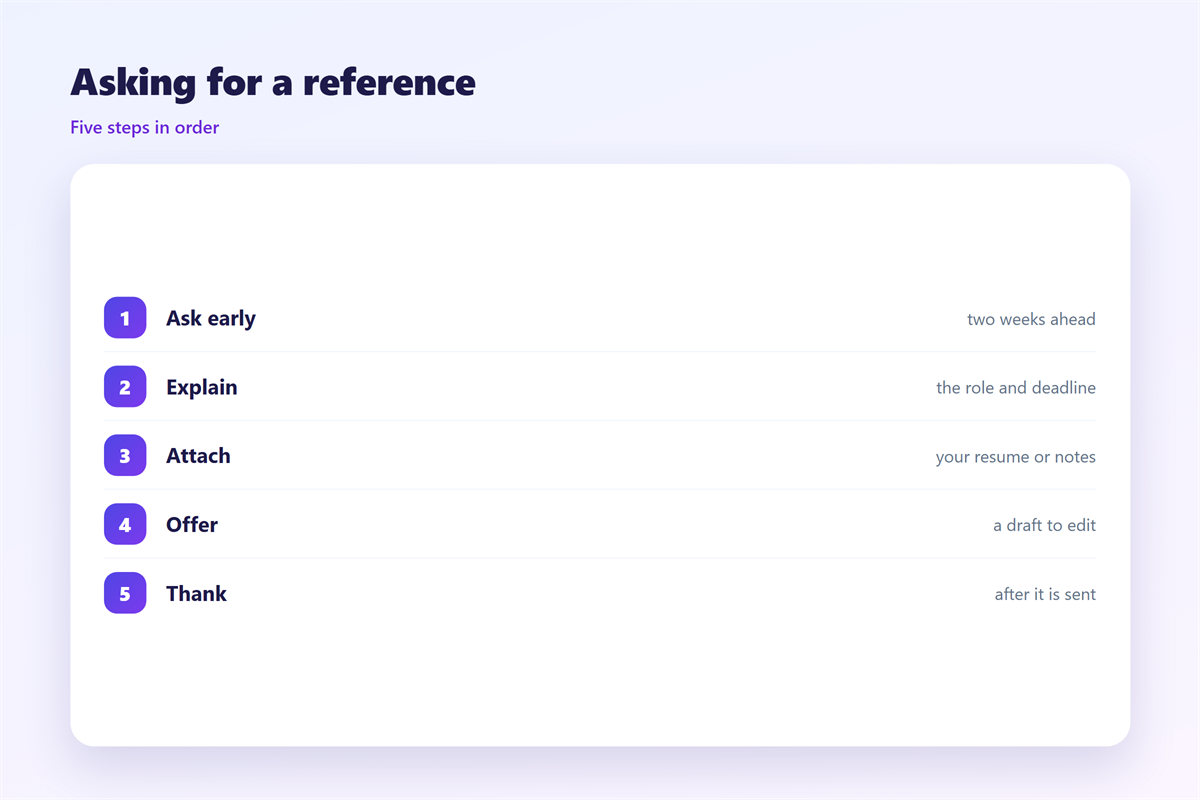
Ask early. Give the writer at least two weeks.
Say why you chose them. One honest line is enough.
State what the letter is for. Name the role or the course.
Give the deadline and the format. Say whether a form or a file is needed.
- Subject: name yourself and the purpose.
- Context: one line about the goal.
- Facts: dates, projects and results.
- Deadline: a clear date and time.
Understanding 邮件推荐信 starts with this structure.
A short list of your points helps a lot. The writer can reuse them.
Choose the right person first. Rank matters less than knowledge of your work.
A direct manager knows your habits. A teacher knows your thinking.
If the first choice declines, ask another calmly.
Do not ask the same person twice in one week.
What to include in a 邮件推荐信
The writer needs material, not flattery.
List the projects you shared. Add the dates and your role.
Name one or two results. Numbers are easier to trust than adjectives.
Mention the skills the reader cares about.
Offer to provide more if needed.
A draft is sometimes welcome. Keep it as a suggestion, not a script.
Attach your resume and the job description.
Give the exact link for the submission. A wrong link wastes a day.
Confirm the writer’s title and spelling. Small errors look careless.
Offer to draft the facts only. Never write the whole letter for them.
A short 邮件模板 keeps the notes tidy.
Writing a 邮件推荐信
If you are the writer, start with your relationship.
Say how long you have known the person.
Then give one clear example of their work. A single story beats a list of praise.
Match the letter to the goal. A course and a job need different emphasis.
Keep it to one page. The reader will thank you.
End with a clear statement of support.
A closing block helps the reader verify you.
Use plain language and short sentences.
Avoid vague praise without an example. One real story carries more weight.
Address the reader’s needs directly. Say why this person fits.
A careful 邮件推荐信 takes about half an hour.
When a 邮件推荐信 goes wrong
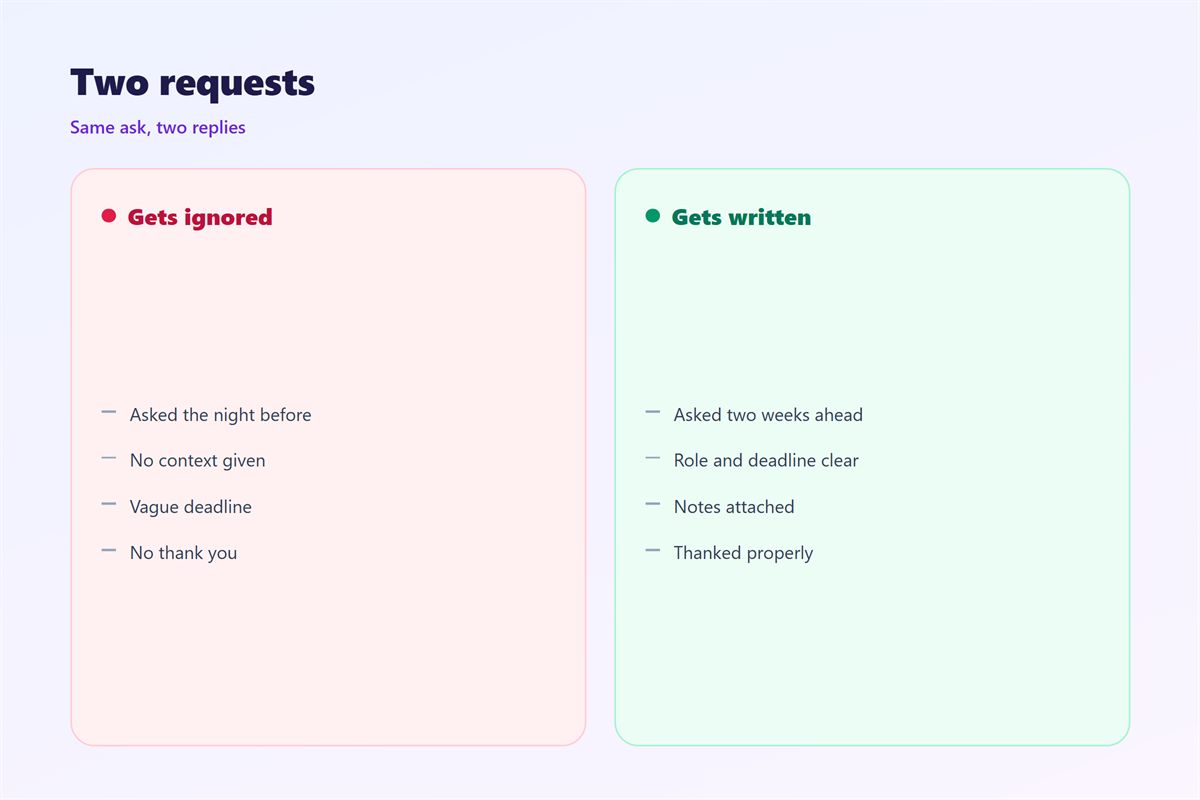
Problems usually come from missing details.
The writer guesses and the letter feels thin.
Another fault is timing. A late letter can lose the chance.
A third fault is tone. A rushed note sounds like an order.
Check the deadline twice. Time zones cause quiet misses.
Send a reminder a few days early. Keep it short and polite.
Thank the writer either way. They gave you their time.
A missing name in the subject line hides the request.
Some requests arrive with no context at all.
Others demand an answer the same day.
Each of these mistakes lowers the chance of a yes.
A clear 邮件推荐信 avoids all three traps.
Storing and sending your letters
Keep a copy of every letter you receive.
Store them in one folder with clear names.
Our notes on 求职邮件 explain the one page rule. The follow up is described under 邮件致谢. Reusable wording is covered in 邮件模板, and the closing block sits under 邮件签名.
A tidy archive saves time later. You will ask for more letters in the future.
Ask before sharing a letter. The writer should know where it goes.
Name each file with the date and the writer.
A shared folder helps a team track its letters.
Check the file opens before you send it.
A locked file is useless to a reader.
Keep a second copy on a backup drive.
An old 邮件推荐信 may still be useful later.
Ask for a fresh letter when the goal changes.
An old letter for a different role may confuse a reader.
Proofread your note before you send it.
A small typo can change the tone.
Send the request from a personal account.
A friendly tone invites a friendly reply.
FAQ
How long should a 邮件推荐信 be?
One page is plenty. A focused letter reads better than a long one.
Can I write my own recommendation?
Some writers ask for a draft. Offer facts and let them decide the wording.
How do I follow up politely?
Send a short reminder a few days before the deadline. Thank them again.
Should I send a thank you note?
Yes, always. A short note is enough. It also keeps the contact warm.
评论
还没有评论,来说两句吧。
评论功能已关闭。