 小影邮箱
邮件流转怎么做?Passing Mail Along
Key Takeaways
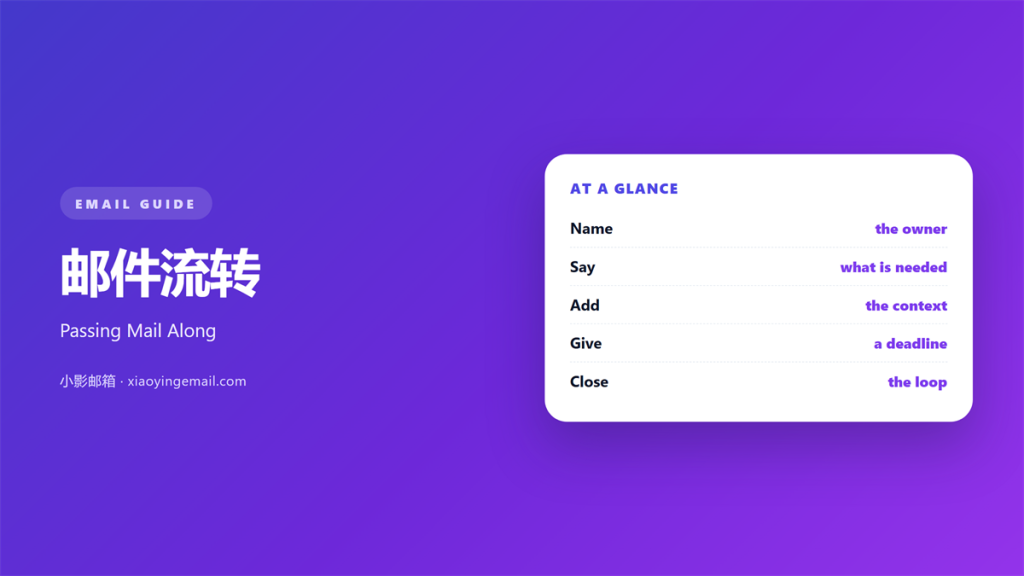
- 邮件流转 keeps every message moving toward one owner.
- A clear route beats a fast reply with no owner.
- Name the next person in the first line.
- A stalled thread quietly blocks a whole team.
- Automate the boring steps and leave a trail.
What 邮件流转 means
邮件流转 is the path a message takes after it arrives.
It covers every handover from one person to the next.
The path may be a shared inbox, a rule or a simple forward.
Each step should move the note closer to a decision.
Good 邮件流转 is invisible when it works well.
You only notice it when a message goes missing.
So the goal is simple. Keep mail moving and owned.
An owner is one clear person, not a whole group.
The route can be short or surprisingly long.
In a small team it may be one step.
In a large one it can cross three desks.
A route is a quiet promise to the sender.
Every hop should add value, not delay.
Either way, the basic rule stays the same.
Why 邮件流转 matters
Work slows when messages sit in the wrong place.
A stalled note blocks the people waiting behind it.
Clear 邮件流转 keeps decisions on schedule.
It also shows who is responsible at each step.
That clarity saves arguments later on.
Poor routing creates quiet delays that slowly pile up.
Over a month, those delays become missed goals.
So routing is not busywork. It is the engine of a team.
Clients feel the delay even when they cannot name it.
They simply see a slow reply.
A tidy route protects the customer relationship too.
That is worth the small effort up front.
A message that stalls costs the team
One stuck note can hold an entire project.
The cost rarely shows on any report.
It appears as a late launch or a lost deal.
Fixing the route is cheaper than fixing the fallout.
Mapping the route of 邮件流转
Every team can draw its main routes on one page.
Start with where messages arrive.
Then note who reads them first.
Finish with who holds the final answer.
A 邮件流转 map makes gaps easy to spot.
Two people often think the other owns a thread.
The map shows that empty space at once.
Update it whenever a role changes hands.
Keep the map where everyone can find it.
A shared page beats a folder on one laptop.
One page is plenty for most teams.
Revisit it when the team grows or shrinks.
Common breaks in 邮件流转
A few breaks show up again and again.
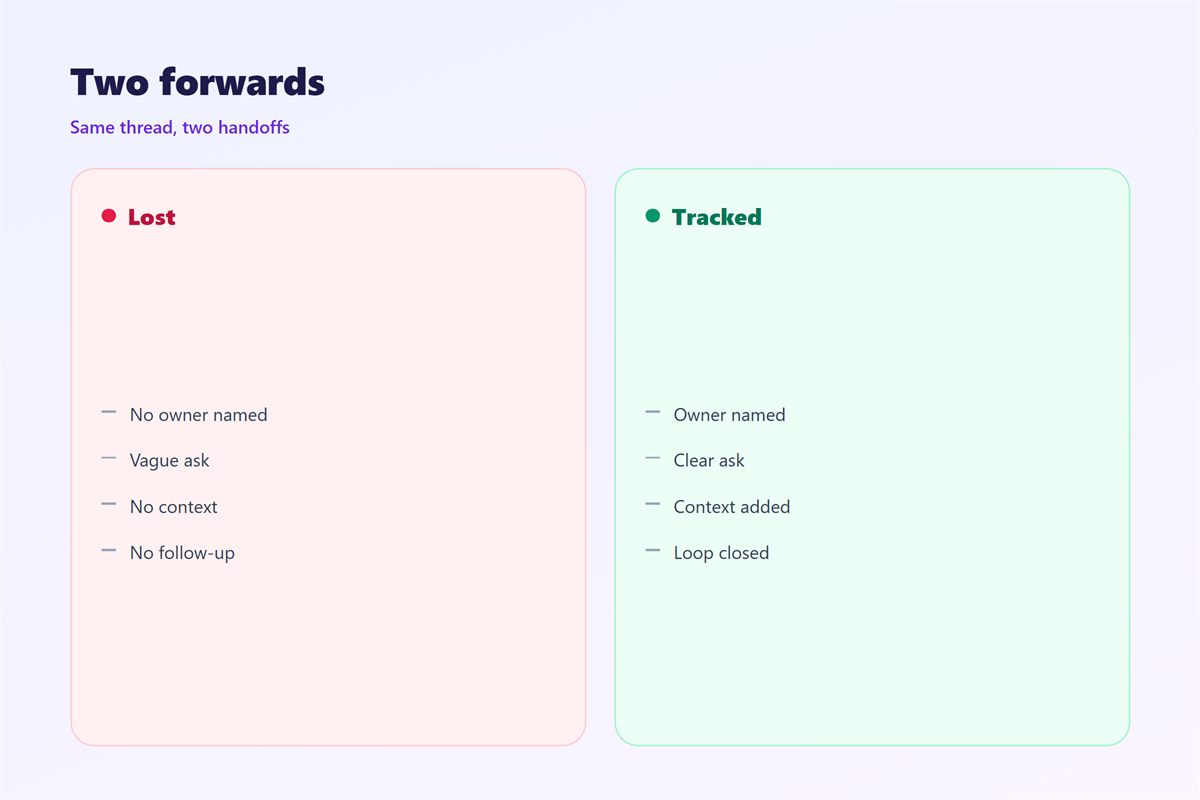
The first is a reply that ends the chain.
The second is a forward with no new owner.
The third is a rule that sends mail to a silent box.
Each break has a simple fix.
Add a name, a date or a short instruction.
Then confirm the note reached the right desk.
The dead-end reply
A message that ends with “any thoughts?” often dies.
It asks a question without naming a reader.
Add a name and the note starts moving again.
The endless forward
Forwarding without context just passes the problem.
Write one line about what you need.
That small step turns a forward into a request.
Look for these breaks in your own threads.
Most are easy to fix in a minute.
A monthly review catches the rest.
Small fixes keep the whole chain healthy.
Handovers inside 邮件流转
Most delays happen at the handover point.
So make each handover explicit.
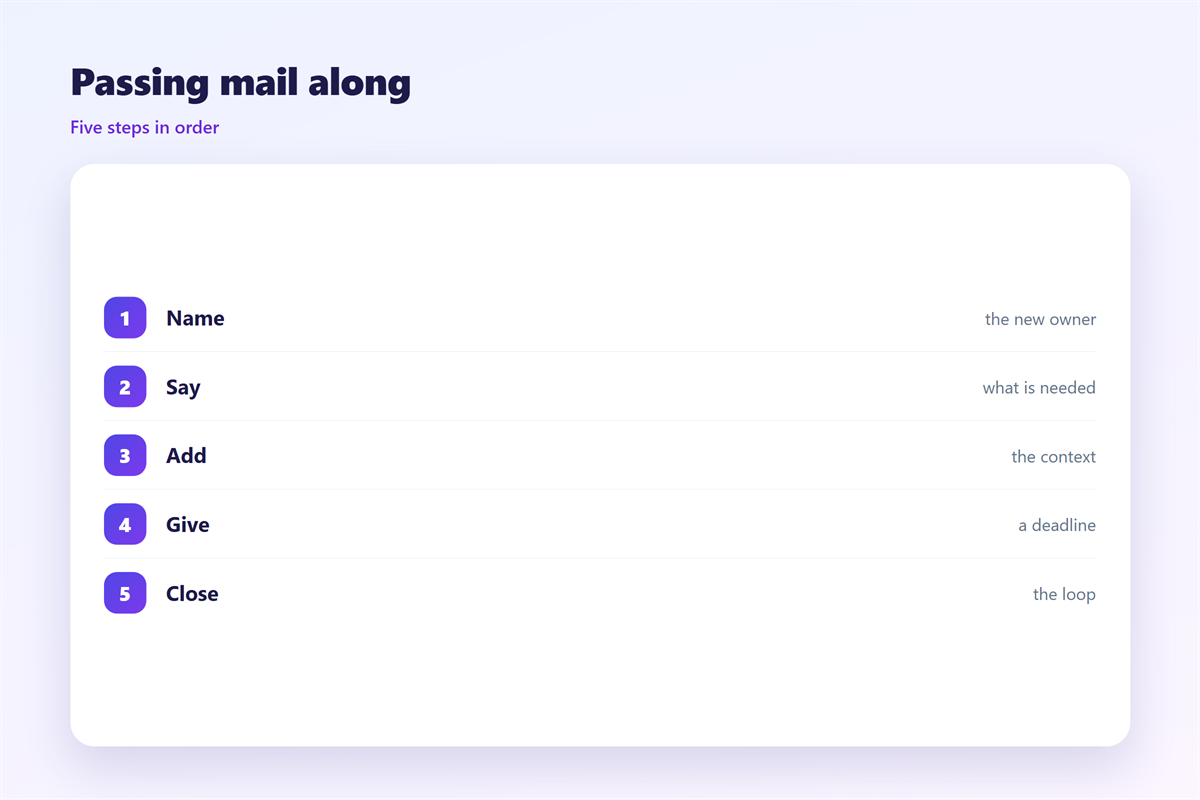
Say who does what and by when.
A short sentence removes all doubt.
Keep the full history in the thread below.
Say who does what next
Use names, not job titles alone.
Name the action and the deadline.
Then the next reader knows the drill.
This habit alone speeds up most 邮件流转.
Write the request as a small task.
Then the other person can accept or ask.
That tiny format removes endless questions.
Speeding up 邮件流转 safely
Speed and safety can work together.
Automate the steps that never change.
A rule can label, sort or forward a note.
Keep a human check at the final step.
That balance keeps the work fast and safe.
Test a new rule on a small group first.
Watch it for a week before you widen it.
Keep a log of what the rules catch.
Delete any rule that adds more noise.
A light set of rules beats a heavy maze.
Then measure the time you save.
Keeping 邮件流转 consistent
Consistency turns good routing into a habit.
A shared set of rules keeps 邮件流转 predictable.
The basics of a smooth sequence are set out in 邮件工作流.
Giving a thread a clear owner is covered in 邮件分配.
Working from one shared inbox is explained in 邮件协作.
Rules that run on their own are described in 邮件自动化.
Review the map once a quarter.
A team that agrees on 邮件流转 loses fewer messages.
Write the shared rules in plain words.
Add one example for each common case.
Then let new joiners read the page.
A simple page is far easier to follow.
Keep the whole guide to one short page.
FAQ
What is 邮件流转 in simple terms?
It is the path a message takes from arrival to answer.
Who owns a message during 邮件流转?
One named person should own it at every step.
Can 邮件流转 be automated?
Partly. Rules handle the routine parts, while people decide.
How do we stop messages getting lost?
Name an owner and confirm each handover.
评论
还没有评论,来说两句吧。
评论功能已关闭。