 小影邮箱
邮件警告怎么写?Warnings With Evidence
Key Takeaways
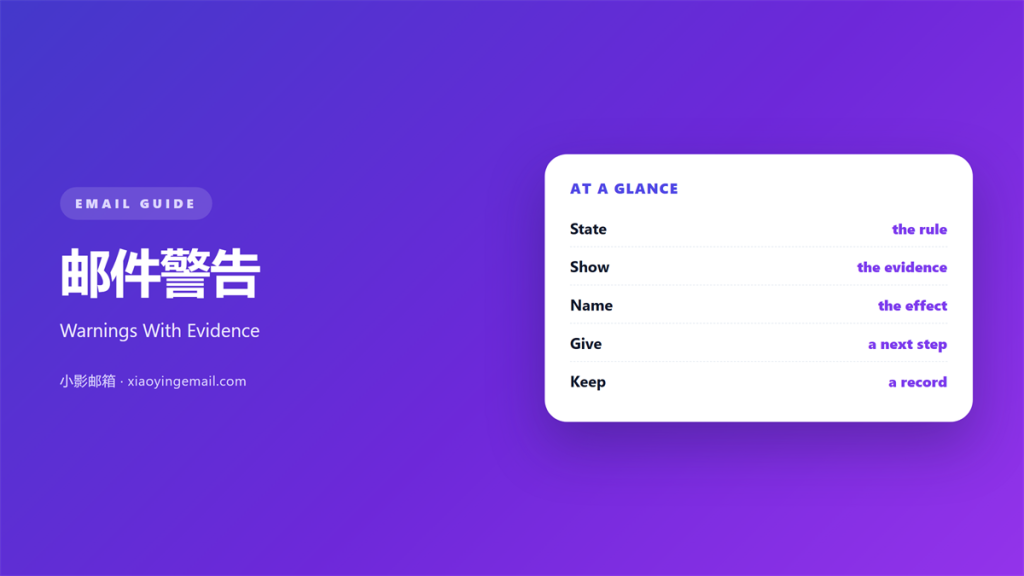
- 邮件警告 is a formal note about a rule that was broken.
- State the rule, the evidence, and the next step.
- Keep the facts exact and the tone flat.
- Send it to the right people and keep a copy.
- A clear warning protects the team and the record.
What 邮件警告 means
邮件警告 is a written notice about a serious problem. It names a rule and the evidence behind it.
It is not a threat. It is a record with a purpose.
The purpose is to correct the problem and prevent a repeat.
A warning usually follows a spoken conversation.
It confirms what was said and what must change.
That written step makes the expectation official.
Most warnings fail because they mix fact with feeling.
That mix gives the reader something to argue with.
A clean record leaves little room for dispute.
Why 邮件警告 matters
Serious problems need a written record.
Memory is unreliable when a dispute arises weeks later.
A dated note settles the question of who knew what.
It also protects the person who raised the issue.
And it protects the reader from an unfair surprise.
Clear records reduce the chance of a legal claim.
They also make a fair process visible to everyone.
Fair process also protects the company.
It shows that rules apply the same way to everyone.
That consistency is the base of trust in a team.
The cost of an informal warning
A verbal warning can be forgotten or denied.
The problem then returns without a trail.
A short written note closes that gap.
When 邮件警告 helps
邮件警告 helps when a safety rule was broken.
It helps when the same error has already been discussed.
It helps when money or client data is at risk.
It also helps when a policy requires a formal step.
In each case, the note should be factual and short.
It helps when a supplier ignores a safety clause.
It helps when a deadline breach affects a client.
A written note moves the issue to a clear process.
Three signals to write one
The issue is serious, repeated, or already discussed.
The team needs a record for later review.
The reader needs a clear date to respond.
When 邮件警告 hurts
邮件警告 hurts when it is used as a threat.
A warning should inform, not frighten.
It hurts when the facts are only half checked.
One wrong detail can weaken the whole note.
It also hurts when the warning is public.
Serious notes belong in a private thread.
And it hurts when no next step is named.
The reader is left with fear and no direction.
A warning sent in anger is hard to defend later.
It may also weaken a case you could have won.
Wait until the facts and the tone are ready.
邮件警告 and evidence
Evidence is the centre of a fair warning.
Use dates, times, and exact quotes where you can.
Attach the screenshot or the report number.
Describe what happened, not what you assume.
Keep opinions out of the evidence block.
Four facts to record
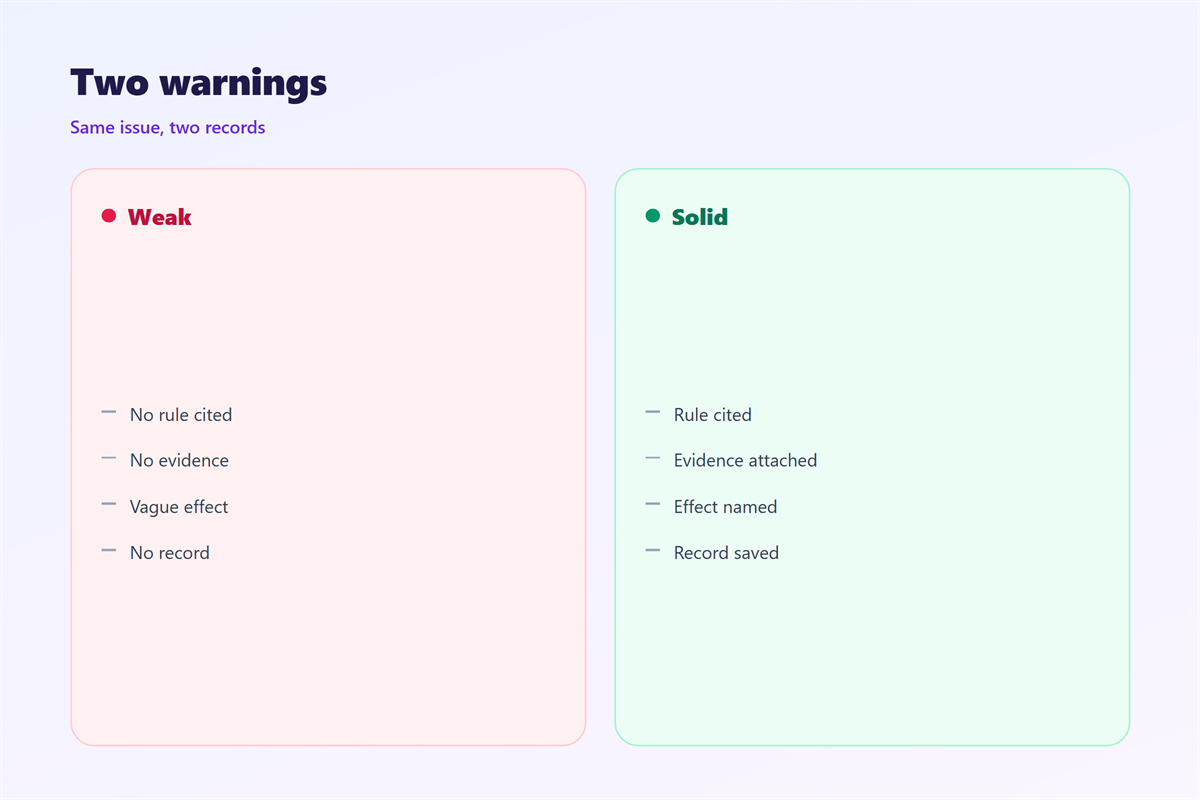
The rule, the event, the date, and the impact.
Add the person who saw it if that matters.
Then keep a copy in the case file.
A complete record is hard to dispute.
Keep the original file, not just a screenshot.
Store it where the team can find it later.
Number each item so the note can refer to it.
How to use 邮件警告 well
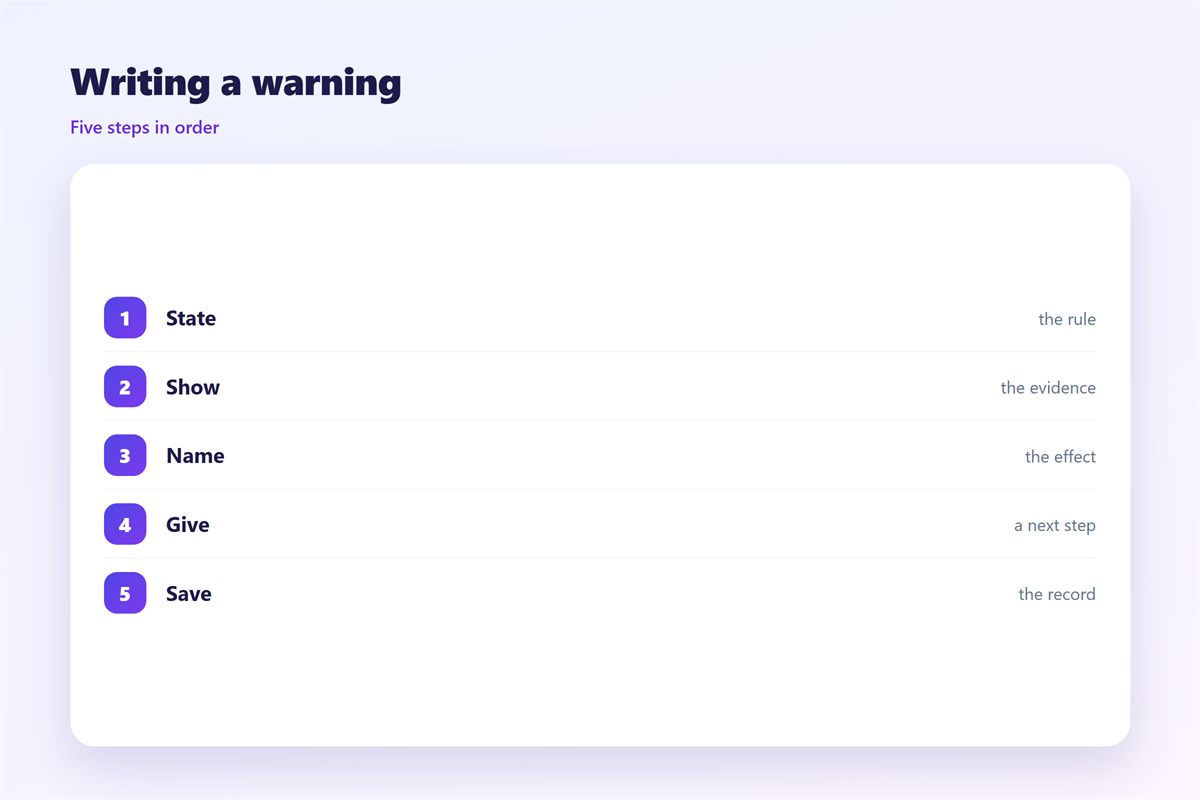
Write the note after you have checked the facts.
Ask a second person to read the evidence.
State the rule in plain words.
Then describe the event in time order.
Name the impact on the team or the client.
Give one clear step and one deadline.
Offer a channel for the reader to respond.
Keep the tone flat and the length short.
Send a copy to the person named in the policy.
Then keep the original message in the case file.
Never edit a sent warning. Add a new note instead.
A five-line structure
Line one: the rule.
Line two: what happened.
Line three: the evidence.
Line four: what must change.
Line five: the response date.
邮件警告 after the warning
A warning is not the end of the process.
Record the reply and the date it arrived.
Then check whether the change actually happened.
If it did, write a short closing note.
If it did not, follow the policy step by step.
Keep every message in the same file.
That file becomes the history of the case.
A short review meeting can confirm the change.
Record the date and the people present.
Then attach that record to the file.
When the reader improves
Say so in writing and close the case.
A clear close removes the shadow of the warning.
It also rewards the change you asked for.
That fairness makes the next warning easier to accept.
Keeping 邮件警告 consistent
Consistency makes warnings fair across the team.
Agree on the five-line structure.
Agree on who may send a formal warning.
Agree on where the records are stored.
The policy behind these notes is covered in 邮件合规. The legal footer appears in 邮件免责声明. The response habit is explained in 邮件反馈. The results review sits in 邮件绩效.
Then review one case together each quarter.
A shared standard makes 邮件警告 credible for everyone.
FAQ
Is 邮件警告 a legal document?
It can become one, so keep it accurate. Write facts only and store a copy.
Should I send a warning without a prior talk?
Usually no. A short conversation first is fairer and often enough.
How long should 邮件警告 be?
One page at most. Five short lines and the evidence are enough.
Can the reader reply?
Yes, always offer a reply date. A fair process listens before it decides.
评论
还没有评论,来说两句吧。
评论功能已关闭。