 小影邮箱
邮件锚文本怎么选?Words That Hide a Link
Key Takeaways
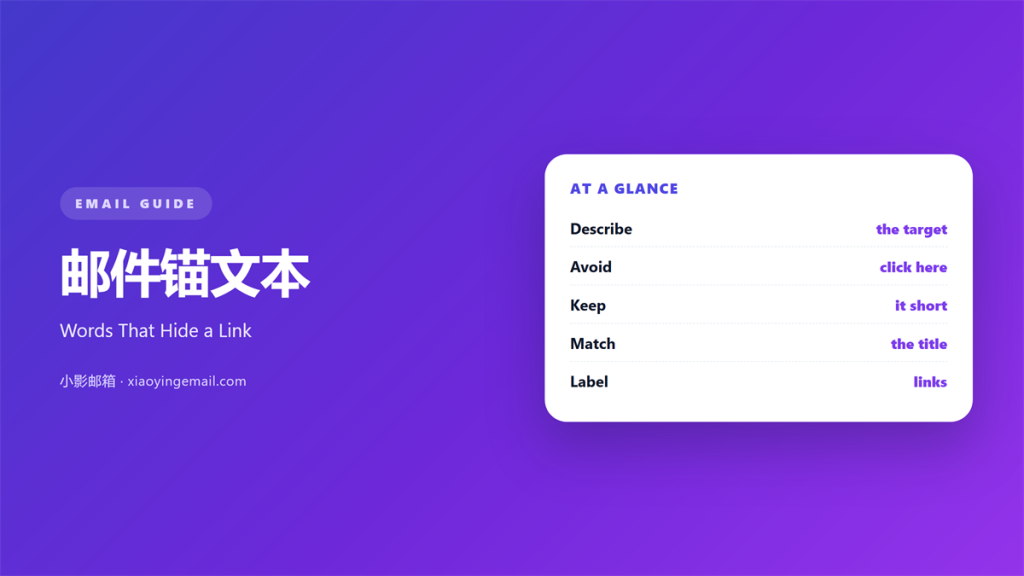
- 邮件锚文本 is the words that hide a link.
- Name the destination instead of writing “click here”.
- Keep the anchor short and genuinely useful.
- Match the link words to the page they open.
- Read every 邮件锚文本 aloud before you send.
What 邮件锚文本 means
邮件锚文本 is the visible text that carries a link.
It tells the reader where a click will lead.
Good anchor text reads as part of the sentence.
Bad anchor text stands out as a hollow phrase.
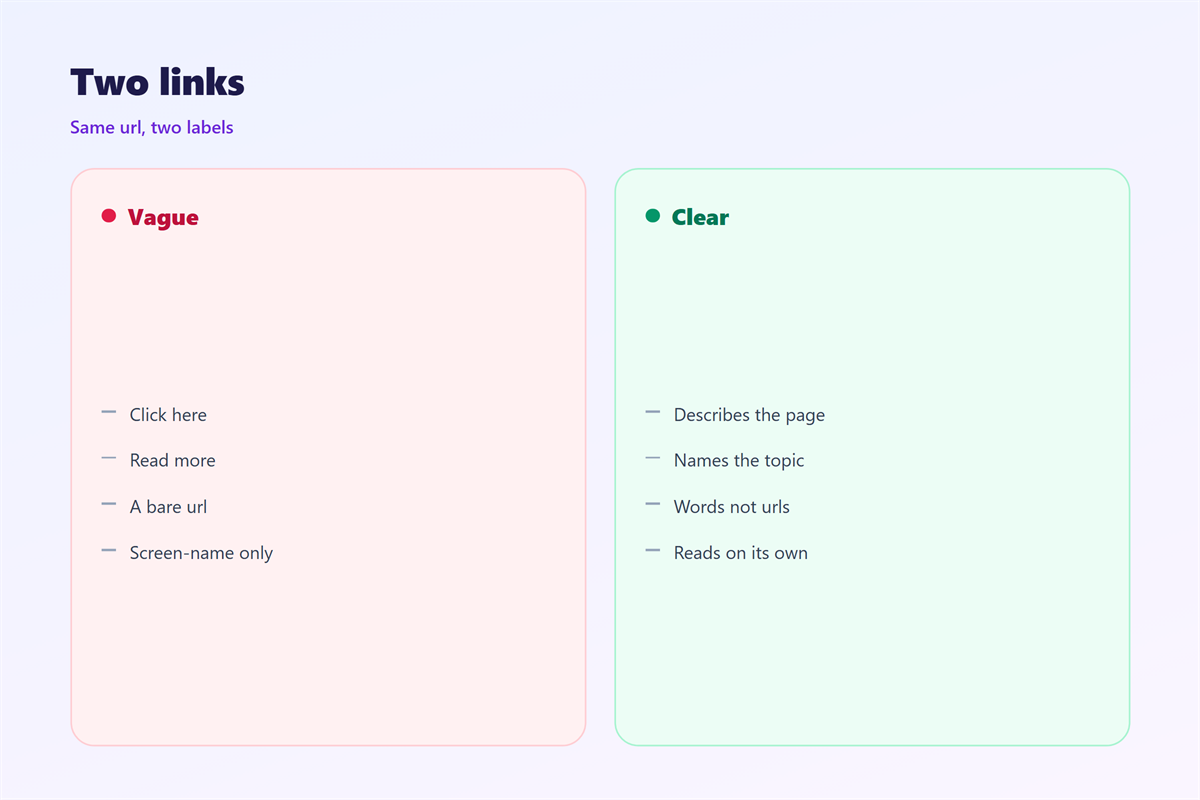
Compare “click here” with “see the full guide”.
The second phrase promises something specific.
That promise is what earns the click.
So 邮件锚文本 is a small choice with a large effect.
It shapes both the look and the meaning of a line.
A weak label forces the reader to guess.
A strong one makes the choice easy.
Readers often decide on the link alone.
Why 邮件锚文本 matters
Readers scan mail before they read it fully.
Many spot the link and skip the rest.
Anchor text decides whether that glance is enough.
Clear 邮件锚文本 also helps people who use screen readers.
Such a reader may list every link on a page.
A list of “click here” tells them nothing.
A clear label also helps on a crowded phone screen.
It lets the thumb decide fast.
A tidy label speeds up every reply.
The cost of vague words
A vague anchor adds a moment of doubt.
The reader pauses to guess where it goes.
Some skip the link and never return.
That single pause can cost a sale.
邮件锚文本 that describes the page
The best anchor names the page it opens.
Write “Read the pricing page” rather than “learn more”.
A reader can then decide before the click.
Keep the phrase to a few clear words.
Place it where the sentence naturally needs it.
Avoiding repeated anchors
Two links should never share one label.
If they point to the same page, merge them.
If they differ, give each its own words.
Then each anchor stands on its own.
A number in the words helps too.
Write “see step three” when a step matters.
Then the reader knows exactly where to land.
Keep the anchor close to the idea it supports.
邮件锚文本 and accessibility
Screen readers can jump from link to link.
They read the anchor text and nothing else.
So the words must make sense on their own.
Skip phrases like “read more” with no context.
A named target helps every reader, not just one.
Length that works
A short anchor is easier to scan.
A long one can bury the useful part.
A clear 邮件锚文本 stays short and specific.
Let the words describe the action or the page.
Vague phrases frustrate a reader who cannot see the page.
So test the links with a screen reader helper.
It reads only the anchor and skips the rest.
Then anyone can follow the link with ease.
邮件锚文本 inside the layout
Anchor text lives inside the wider design.
Colour, spacing and size all affect how a link looks.
A link should look like a link at a glance.
Keep a clear contrast between text and background.
Do not rely on colour alone to mark a link.
Links that survive the inbox
Some clients strip styling from a message.
A plain, underlined link still works there.
Test the layout in more than one client.
Then the anchor survives the journey intact.
A link wrapped in heavy styling may break.
Keep the anchor plain when you can.
Then it looks the same in every inbox.
Contrast keeps the anchor visible in every theme.
邮件锚文本 that earns the click
Put the most useful anchor near the top.
Repeat it once near the closing line.
Keep the surrounding sentence simple and short.
A tidy paragraph lifts the value of the link.
Then let the words carry the promise.
A calm and specific anchor rarely fails.
Track which words get the most clicks.
Then reuse the labels that already work.
Small habits like this lift results over time.
Let the data, not a hunch, choose the words.
Fixing 邮件锚文本 before you send
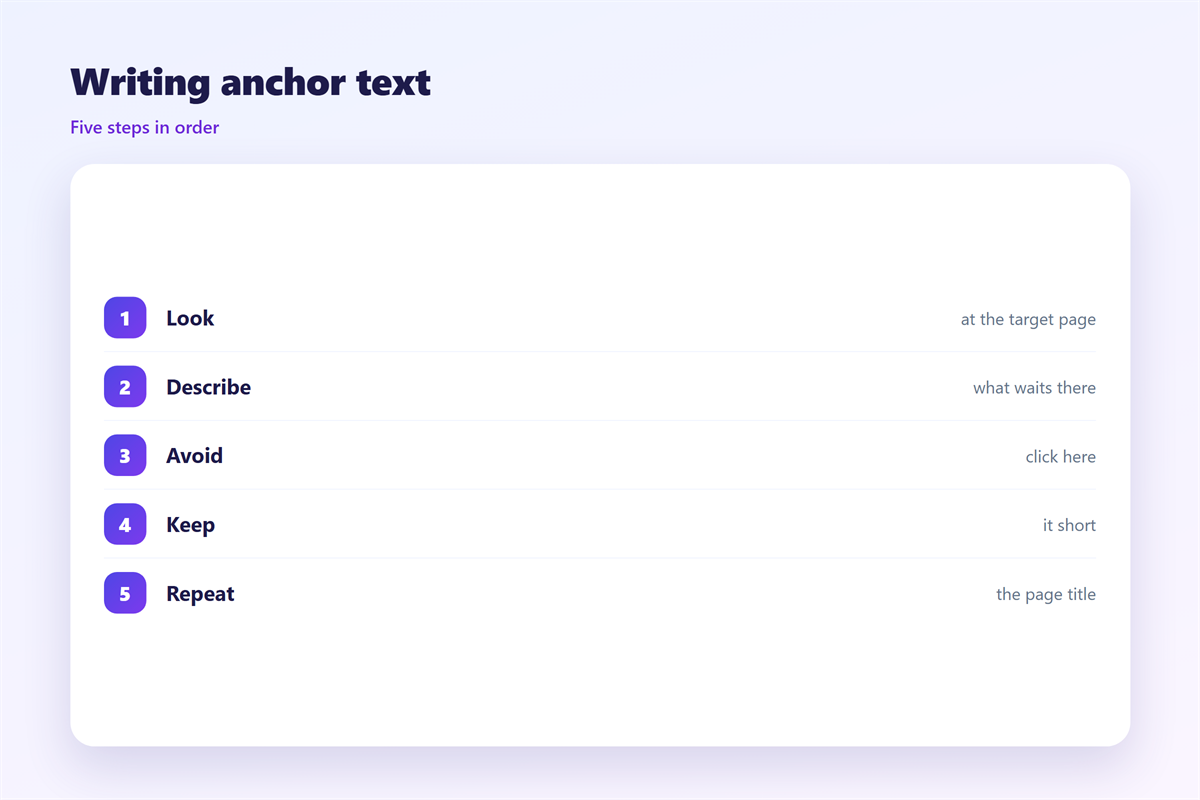
A quick read will catch most anchor slips.
List every link and read its words aloud.
Check that each label names its target.
Break any sentence that runs past twenty words.
Look for repeated or hollow phrases.
Then open each link to confirm the page.
Clean 邮件锚文本 is the last check before sending.
One calm pass saves a confused reader later.
Read the list of links as a stranger would.
Each word should point to a clear place.
A last check keeps every anchor honest.
Keeping 邮件锚文本 consistent
Consistency matters more than any single rule.
Pick one style and hold it across every message.
The shape of a clear call to action is set out in 邮件按钮.
The page behind a link is explained in 邮件落地页.
The sentences around it are covered in 邮件正文.
The wider design is described in 邮件排版.
Then keep a short link style for the whole team.
A team that agrees on 邮件锚文本 sends cleaner mail.
The same rule covers every campaign and notice.
A shared list of labels keeps everyone aligned.
Review the shared list once a quarter.
FAQ
Is 邮件锚文本 really that important?
Yes. It is the one part of a link every reader actually sees.
Should I use “click here”?
No. Name the destination so the reader can decide first.
How long should an anchor be?
Keep it to a few words that name the target.
Do anchors affect search engines?
A clear anchor helps readers most, and good habits travel well.
评论
还没有评论,来说两句吧。
评论功能已关闭。