 小影邮箱
邮箱被盗怎么办?When an Account Is Taken
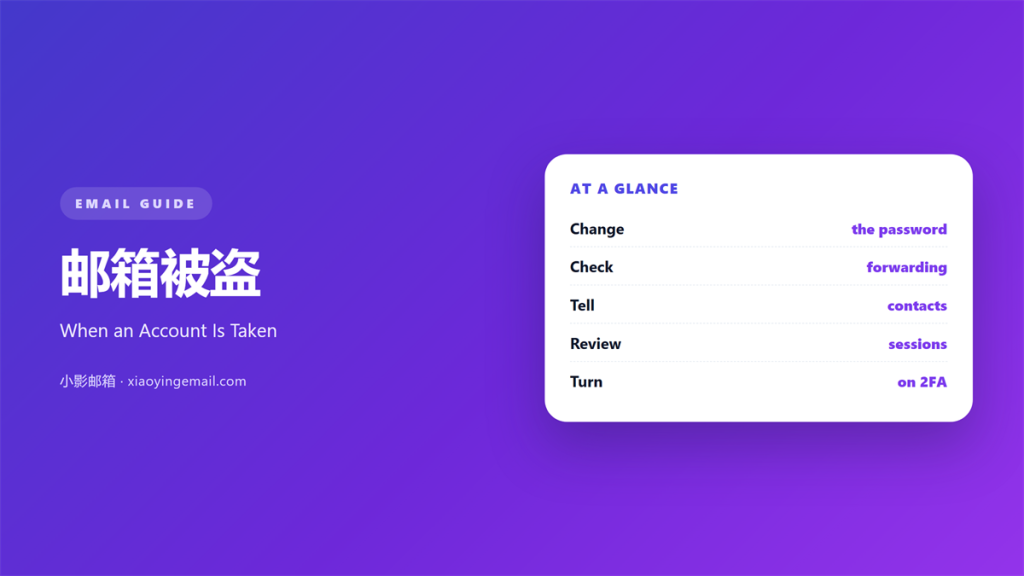
Key Takeaways
- 邮箱被盗 means someone else controls your mailbox.
- The first sign is often a message from a friend.
- Change the password from a clean device.
- Then check forwarding rules and active sessions.
- Tell your contacts before they are tricked.
What 邮箱被盗 means
邮箱被盗 means another person has your login details and uses them.
They can read old mail, send new mail, and delete the evidence.
Most victims learn about it from a colleague.
The colleague received a strange request from the account.
That request usually asks for money or a file.
Sometimes it asks for a code sent by text.
The account still looks normal from the outside.
邮箱被盗 rarely starts with a loud alarm.
That is what makes the theft so effective.
The owner sees nothing until a reply bounces.
By then the attacker has had hours to work.
Why 邮箱被盗 matters
邮箱被盗 is a trust problem before it is a technical one.
A mailbox holds years of context and trust.
Every contact in it believes the next message is real.
That trust is the attacker’s main tool.
One stolen account can reach an entire address book.
It can also reset other passwords.
Most services send reset links to the mailbox.
So one lost mailbox can become five lost accounts.
The damage also reaches the company name.
Readers remember who sent the strange request.
Repairing that memory takes months.
When 邮箱被盗 signs appear
邮箱被盗 signs appear in small details.
A message sits in the sent folder that you never wrote.
New rules move certain mail to an unseen folder.
Your phone stops receiving new mail.
That happens when sessions are revoked elsewhere.
Contacts reply to a message you never sent.
The login history shows a new city.
Mail from the provider warns about a blocked sign-in.
Any one of these is worth a check.
Check the rules first
Forwarding rules are the quietest form of theft.
The attacker forwards a copy and reads it for weeks.
Open the rules page on every platform you use.
Delete anything you did not create.
Then check the auto-reply and the filter list.
When 邮箱被盗 hurts
邮箱被盗 hurts most in the first hour.
That is when the fake requests reach friends.
It hurts again when the owner delays the password change.
Every extra hour gives the attacker more reach.
It hurts when the same password protects other sites.
Then one breach becomes a chain of breaches.
The harm also lasts after the account is back.
Some contacts will doubt the next real message.
Rebuilding that trust takes a personal note.
So act fast, and then explain clearly.
邮箱被盗 and forwarding rules
Most guides start with the password.
That is correct, but the rules matter too.
A new password does not remove an old rule.
The rule keeps copying mail to the attacker.
So clear the rules before you relax.
Look at the signature and the display name as well.
A changed signature spreads a link to everyone.
Also check the recovery address and phone.
An attacker who adds a recovery address can return.
Remove anything unfamiliar and save the change.
Write the steps down
A short checklist beats panic.
Keep it on paper, outside the mailbox.
A stolen mailbox cannot hold its own recovery plan.
Give the list to one other person.
That person can start the work while you call support.
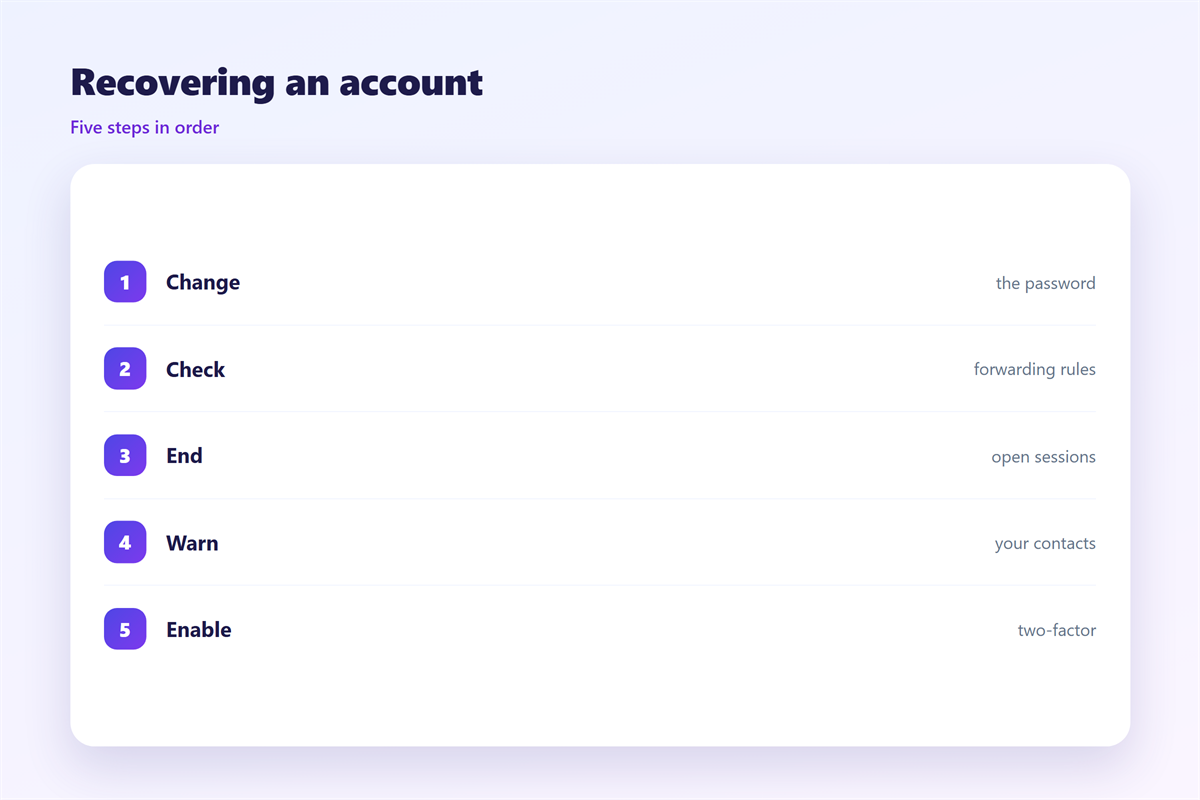
How to answer 邮箱被盗
Begin on a device you trust.
Change the password to a new and unique phrase.
Then sign out of every session.
Most providers offer a single button for that.
Turn on two-factor login before anything else.
Use an app or a key, not a text message.
Text codes can be intercepted when a number moves.
Next, read the sent folder for the past week.
Note every address that received a strange message.
Send those people a short, plain warning.
Then check bank details and payment settings.
Attackers often change an invoice while they are inside.
Tell people in plain words
Write one paragraph and reuse it.
Say what happened, and say what is now fixed.
Do not blame the reader for trusting the message.
Add the phone number they should call to confirm.
A calm note does more than a long apology.
邮箱被盗 on a shared mailbox
A shared mailbox makes the theft harder to see.
Five people may notice five different oddities.
None of them owns the whole picture.
So name one person to hold the account.
The risk of 邮箱被盗 falls when one list names every reader.
That person reviews the rules each month.
Shared mailboxes also need their own password.
Never let the password live in a group chat.
Use a vault that logs who opened it.
When someone leaves, change the shared password.
That single habit blocks a common route in.
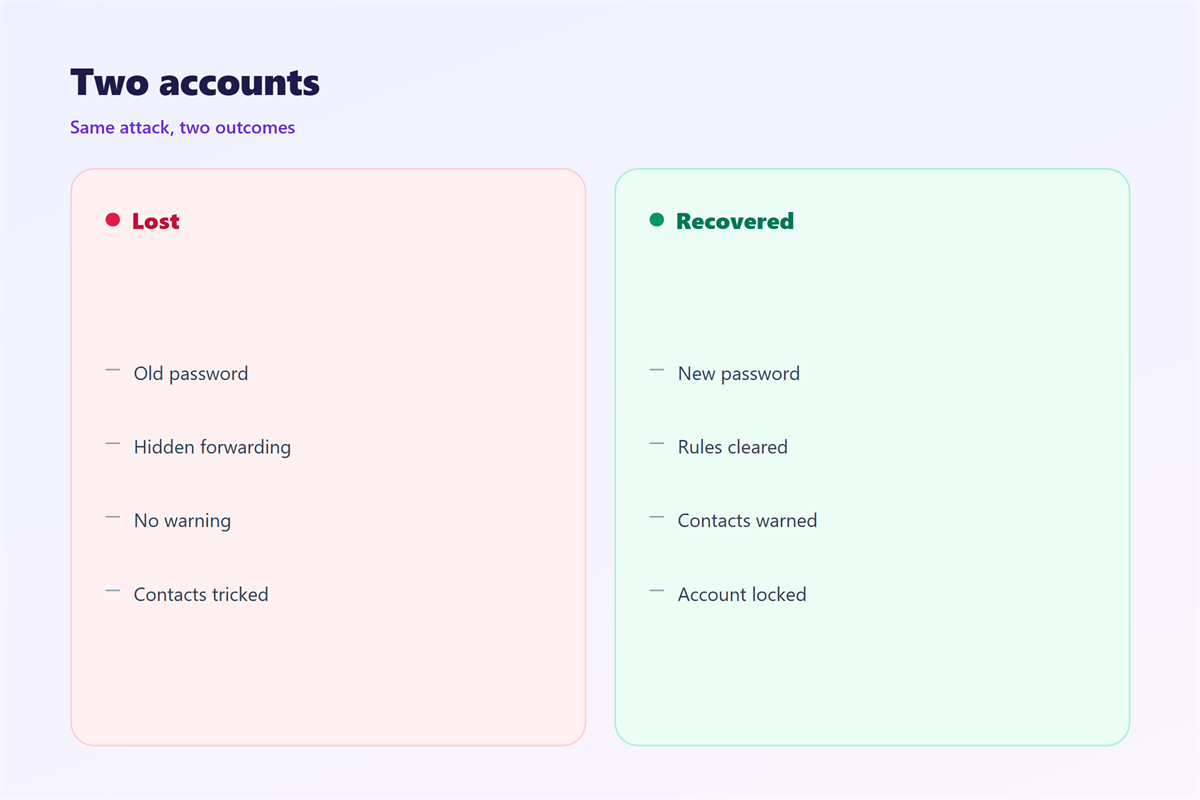
Keeping 邮箱被盗 risk low
Good habits cost less than a recovery.
Use a different password for every important account.
A manager tool makes that practical.
Turn on two-factor login everywhere it is offered.
Then keep the recovery address current.
An old phone number is a door left open.
Check the login history once a month.
That page shows the truth faster than any alert.
The basics sit in 邮箱密码, 邮箱异地登录, 邮箱安全, and 邮箱找回.
Then write one rule for the team.
A rule that nobody reads protects nobody.
FAQ
How fast should I act after 邮箱被盗?
Within minutes. The first hour decides how far the fake requests travel.
Can the provider restore deleted mail?
Sometimes. Ask early, because backups expire.
Should I close the account?
Usually no. A closed account loses the history that proves what happened.
What if the password reset fails?
Use the recovery form and the backup contact. Then call support.
评论
还没有评论,来说两句吧。
评论功能已关闭。