 小影邮箱
邮件话术怎么用?Words You Can Reuse
Key Takeaways
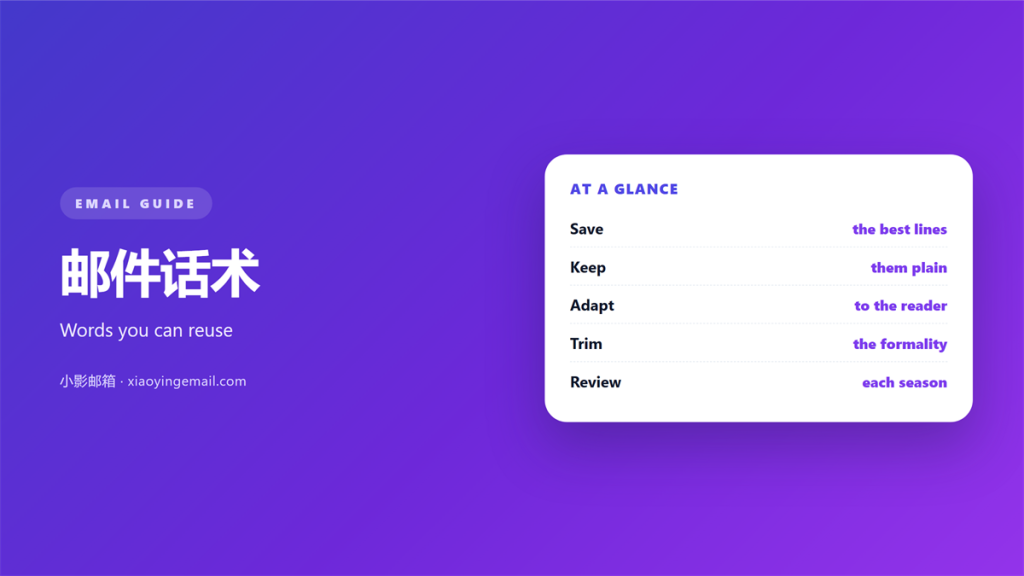
- 邮件话术 is reusable wording you can trust.
- Save phrases that sound like you at your best.
- Adapt each line to the reader and the moment.
- Keep a short bank, not a long script.
- Refresh your phrases as your role changes.
What 邮件话术 means
邮件话术 is a set of ready phrases you reuse in email.
It is not a rigid script. It is a starting point.
You save the lines that work and reach for them later.
Then you adjust each one to fit the person and the day.
The goal is speed without sounding robotic.
A good phrase disappears into the message.
A bad one feels copied and cold.
Most people already reuse a few lines without noticing.
The trick is to choose them on purpose.
That choice is what makes 邮件话术 useful.
A phrase is a tool, not a rule.
You stay free to change every word.
The bank simply removes the fear of the blank page.
Start with the messages you send most often.
Those are the ones worth saving first.
Why 邮件话术 saves time
Writing from scratch is slow and tiring.
A phrase bank removes the blank page.
You start with a shape and adjust the details.
That saves minutes on every message you send.
Over a busy week, those minutes add up.
Less stress
A saved phrase lowers the pressure of a hard reply.
You already know how to open and close well.
More consistency
Reused wording keeps your tone steady.
Readers learn what to expect from you.
A consistent 邮件话术 also protects you on rushed days.
When time is short, the saved line holds the quality.
You still read it once before sending.
But the shape is already there.
That small advantage adds up across a busy month.
It also keeps your replies from sounding hasty.
How to build your 邮件话术
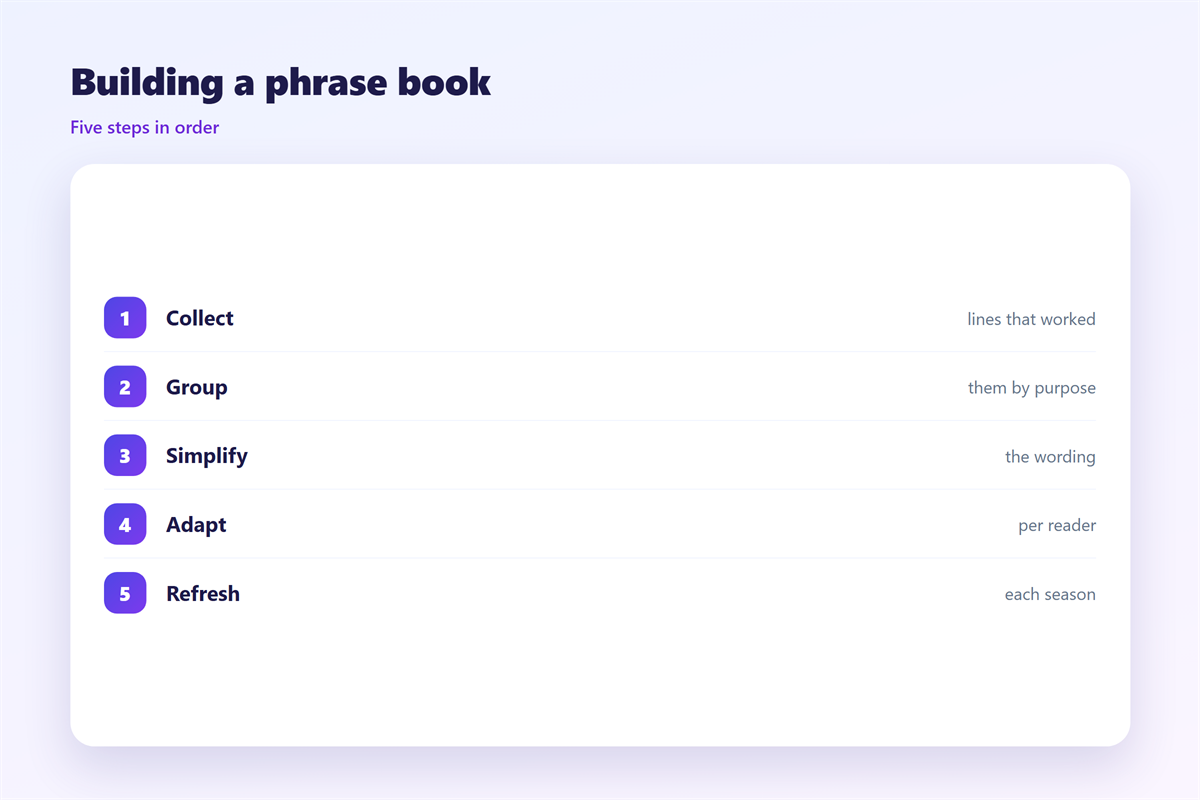
Start small. A few strong lines beat a long list.
Collect phrases as you notice them working.
Open with care
Save two or three greetings for different readers.
Match the warmth to how well you know them.
Handle the middle
Keep phrases for asking, agreeing and declining.
Each one should sound clear and polite.
Close cleanly
Save one short sign-off for routine notes.
Add a next step whenever the message needs one.
Group your phrases by purpose, not by client.
A small set of headings keeps the bank tidy.
Label the openers, the replies and the closes.
Then you can find the right line in seconds.
A tidy bank is one you will actually use.
Examples of good 邮件话术
Good phrases are short and specific.
They name the action and the person clearly.
Asking for a reply
Could you confirm by Friday? That beats a vague nudge.
It gives the reader a clear date and a clear task.
Declining politely
I am not able to take this on this week. That is honest.
It sets a limit without sounding harsh.
Following up
Just checking in on the note below. That stays gentle.
Keep follow-ups light and infrequent.
A calm 邮件话术 keeps the tone even under pressure.
Notice the phrases other people use well.
Write them down before you forget them.
Then make them your own by changing the wording.
A borrowed line always needs your voice.
That small edit keeps it from sounding copied.
Mistakes in 邮件话术
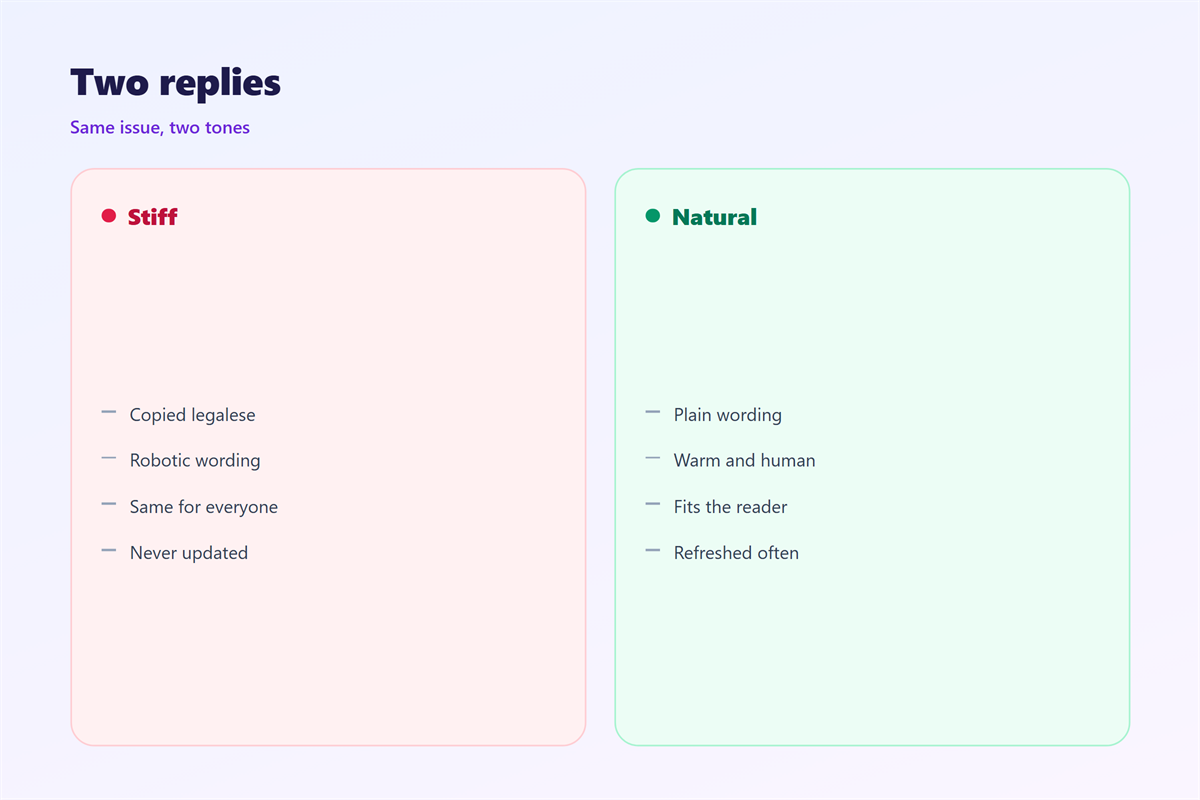
The first mistake is copying language from a stranger.
Borrowed phrases often clash with your real voice.
The second is using the same line for everyone.
A note to a client reads very differently from one to a peer.
The third is leaning on empty filler phrases.
They add length and remove warmth.
Avoid any 邮件话术 that sounds like a script.
Read every saved phrase aloud before you keep it.
If a line feels stiff in your mouth, cut it.
Your voice should survive the edit.
The best phrases sound spoken, not written.
Test each one on a colleague for an honest view.
Keep the lines that pass and drop the rest.
Sending and improving 邮件话术
A strong first line sets the tone for the rest. The patterns are collected in 邮件开场白.
Repeated replies can be stored for later. See 邮件快捷回复 for the setup.
Care for regular readers pays off over time. The habits are set out in 邮件客户关怀.
Every phrase still needs the right feel. The range is described in 邮件语气.
Review your phrase bank once a month.
Remove anything you never use.
Then add one new line from a message that worked as your 邮件话术.
Keep the bank short and honest.
Add a phrase only when it earns its place.
Remove a phrase the moment it stops helping.
A living list stays useful for years.
A neglected one goes stale in a month.
FAQ
Is 邮件话术 the same as a template?
No. A template is a full message. 邮件话术 is a set of single lines.
How many phrases should I save?
Start with ten. A short bank stays easy to use.
Will 邮件话术 make me sound fake?
Not if you adapt each line. A phrase is a start, not a cage.
Where should I keep them?
Any note or shortcut you can reach in one step.
Keep it open while you write your replies.
The closer it is, the more you will use it.
Then update it whenever a new phrase proves itself.
That small upkeep keeps the bank fresh.
Fresh wording is the whole point of the habit.
References
- Harvard Business Review: Write email that gets results
- Atlassian: Productivity and communication templates
- Litmus: Email copy and tone best practices
评论
还没有评论,来说两句吧。
评论功能已关闭。