 小影邮箱
邮件提纲怎么写?Plan Before You Write
Key Takeaways
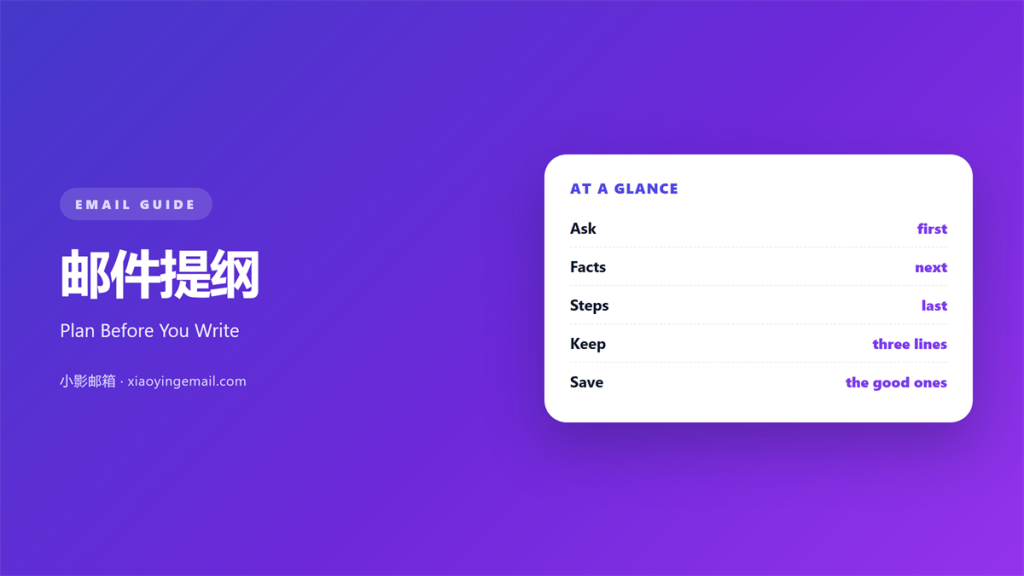
- 邮件提纲 is a short plan written before the message.
- It fixes the ask before you polish the words.
- Three lines are usually enough.
- A plan stops the long rewrite later.
- Save good ones to reuse as templates.
What 邮件提纲 means
邮件提纲 is a short plan you write before the message itself.
It lists the point, the facts and the action you want.
It is not the final text. It is the skeleton under it.
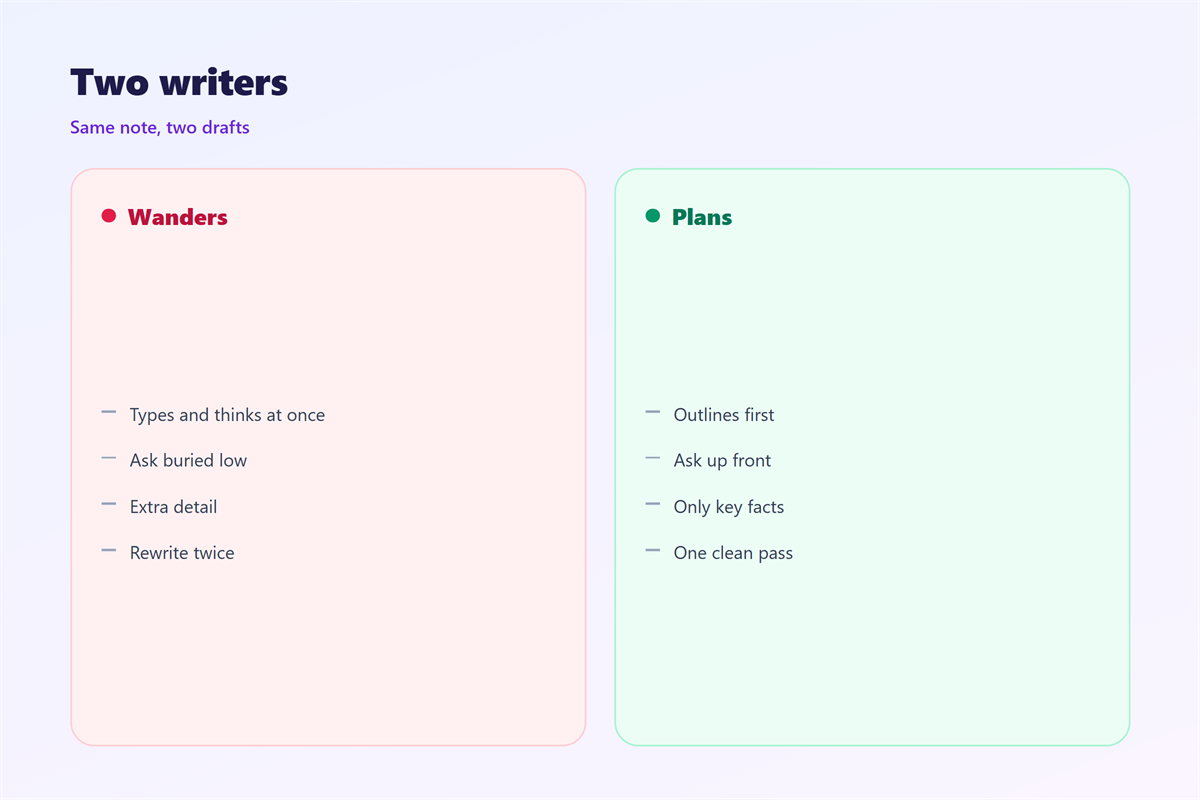
Most people skip this step and start typing straight away.
Then they rewrite twice and still miss the point.
A plan takes two minutes and saves twenty.
It works for a two line note and for a long report.
The longer the message, the more a 邮件提纲 pays off.
Why a 邮件提纲 helps
Writing is slow when you think and type at the same time.
A plan separates the two jobs. First decide, then write.
It also keeps the ask in view. Busy readers miss buried requests.
A clear 邮件提纲 stops you adding things that do not matter.
It makes the message shorter and calmer to read.
A short 邮件提纲 also sets the tone you want to use.
It also lowers the fear of a blank page.
With a plan in front of you, the first sentence is easy.
The hidden benefit
A plan shows gaps. You notice a missing date or name early.
That is far cheaper than a correction sent an hour later.
It also keeps a nervous writer from rambling.
Building a 邮件提纲
Keep one shape every time. A familiar shape is fast to fill.
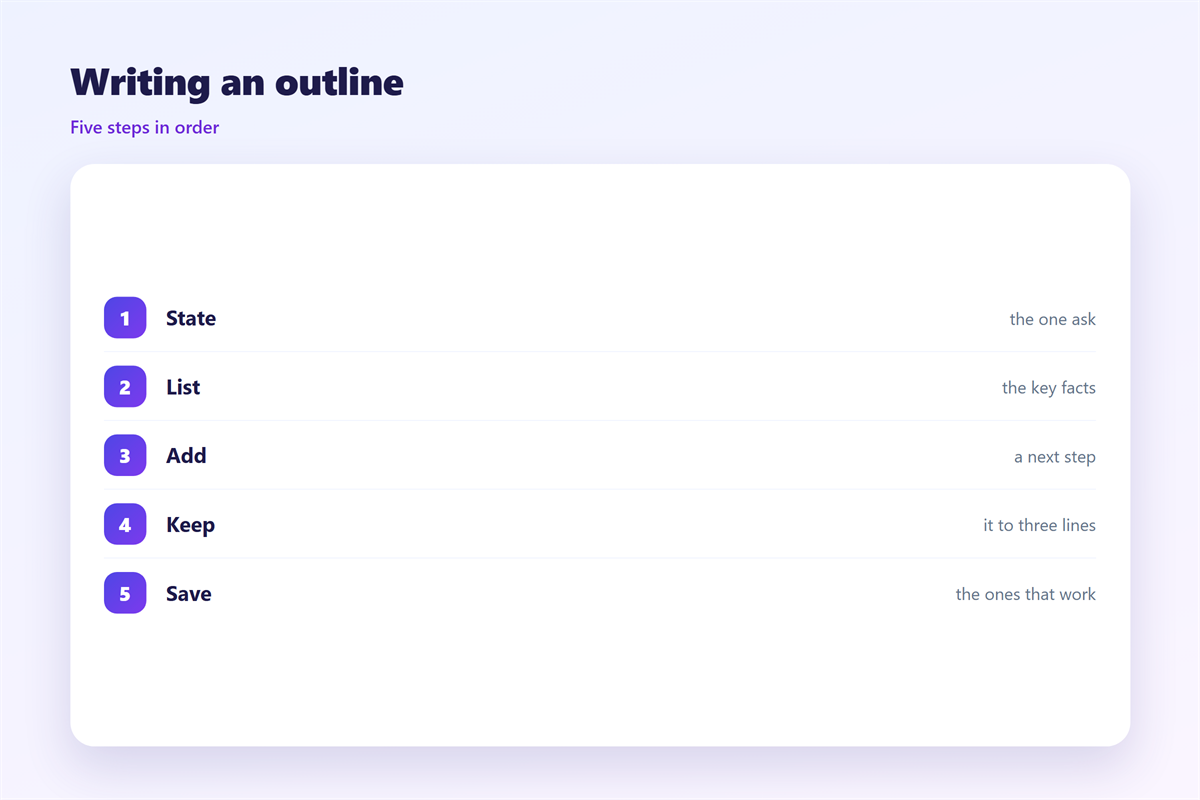
Write three lines and stop. More than five is usually too many.
Write the 邮件提纲 in the order the reader will read it.
Start with the ask
Put the action first. What do you want the reader to do?
One clear request beats three vague ones.
Add the facts
List the few details the reader needs to decide.
Dates, numbers and names belong here.
Close with a next step
Say what happens after they reply. A date or a person is enough.
That line turns a polite note into a plan.
邮件提纲 for replies
Replies need a plan too, but a shorter one.
Read the question first. Then note the one answer it needs.
Quote only the line you are answering.
A reply with one clear point gets a faster answer back.
Do not plan a reply while you are angry. Wait, then outline.
Keep the same three part shape, just shorter.
One line for the answer, one for the reason, one for thanks.
Turning a 邮件提纲 into text
Expand each line into one short paragraph.
Keep the order you planned. Do not reshuffle on the fly.
Write the greeting and the closing last.
Read the draft against the plan. Tick each point as it appears.
Then cut anything that is not on the list.
A finished 邮件提纲 leaves nothing important out.
A worked example
Suppose you need a colleague to approve a budget.
The plan has three lines.
Line one: please approve the new budget by Friday.
Line two: the total is twelve thousand and it covers two months.
Line three: reply yes and I will file the form on Monday.
That is the whole plan. Six short lines become three sentences.
The message stays under a hundred words.
Anyone can read it in fifteen seconds.
That is the point of an outline. It protects the reader’s time.
A shorter message also tends to get a faster reply.
Fewer words leave less room for a misunderstanding.
Outlines for common messages
Asking for a decision
State the choice, the deadline and the default.
If nobody replies, say what you will do anyway.
Sharing bad news
Lead with the fact, then the cause, then the fix.
Keep the sympathy to one plain line.
Following up
Remind them of the last note in one line.
Repeat the ask and offer a smaller first step.
Then stop. A third message rarely helps.
How long to spend
Spend two minutes on a routine note.
Spend ten on one that carries money or risk.
Match the effort to the stakes, not to your mood.
Speed comes with practice. The shape becomes automatic.
After a month you will outline without even noticing.
Mistakes that spoil a 邮件提纲
The first mistake is writing full sentences in the plan.
Short notes are faster and easier to rearrange.
The second is hiding the ask at the bottom of the list.
The third is planning in your head and calling that a draft.
Finally, do not plan forever. A plan is a tool, not the work.
A five minute 邮件提纲 beats an hour of nervous editing.
Keeping a 邮件提纲 handy
Save the plans that worked. They become your best templates.
The habits behind a first draft are set out in 邮件撰写.
A workable order for the body is described in 邮件正文.
Finished wording can wait safely in the 邮件草稿.
Reusable shapes are gathered in 邮件模板.
Then reuse the good ones and drop the rest.
A folder of plans is a quiet time saver over a year.
FAQ
Is a 邮件提纲 worth it for short mail?
Yes. Even two lines of plan stop a missing detail.
How long should it be?
Three to five lines. If it runs longer, split the message.
Should I save it?
Save the ones you reuse often. Delete the rest.
Does it work for replies?
Yes, and a shorter plan is enough for most replies.
References
- IETF RFC 5322: Internet Message Format
- Harvard Business Review: Writing email with precision
- Atlassian: Productivity and writing habits
评论
还没有评论,来说两句吧。
评论功能已关闭。