 小影邮箱
邮件结构怎么搭?A Structure Readers Follow
Key Takeaways
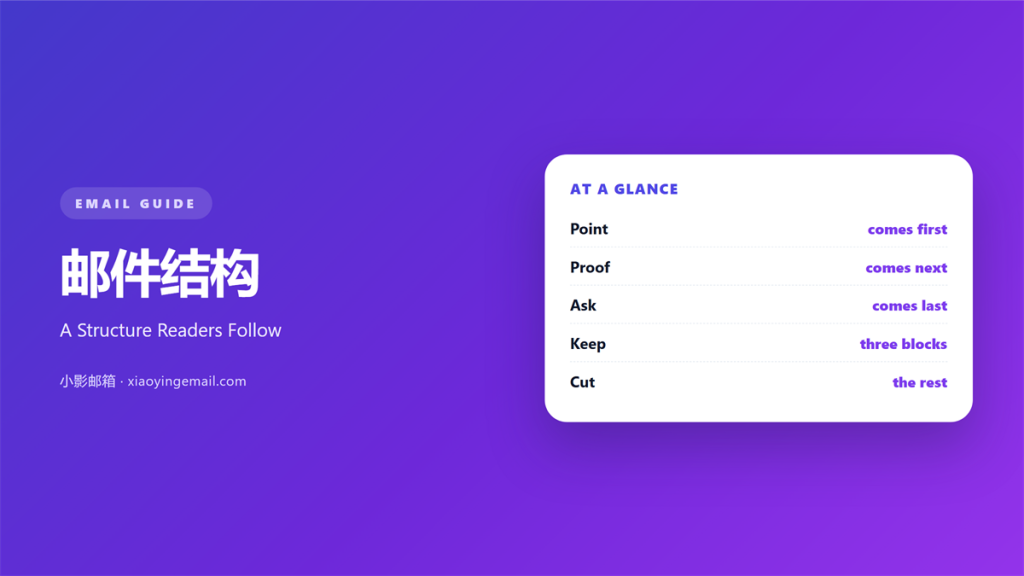
- 邮件结构 is the order of the parts inside a message.
- Put the point first and the background second.
- Three blocks are enough for most notes.
- One block should carry one idea.
- Cut any part the reader does not need.
What 邮件结构 means
邮件结构 is the order of the parts inside a message.
The reader should meet the point before the detail.
It covers the opening, the middle, and the close.
Each part has a job to do.
The opening states why you are writing.
The middle gives the facts the reader needs.
The close names the next step.
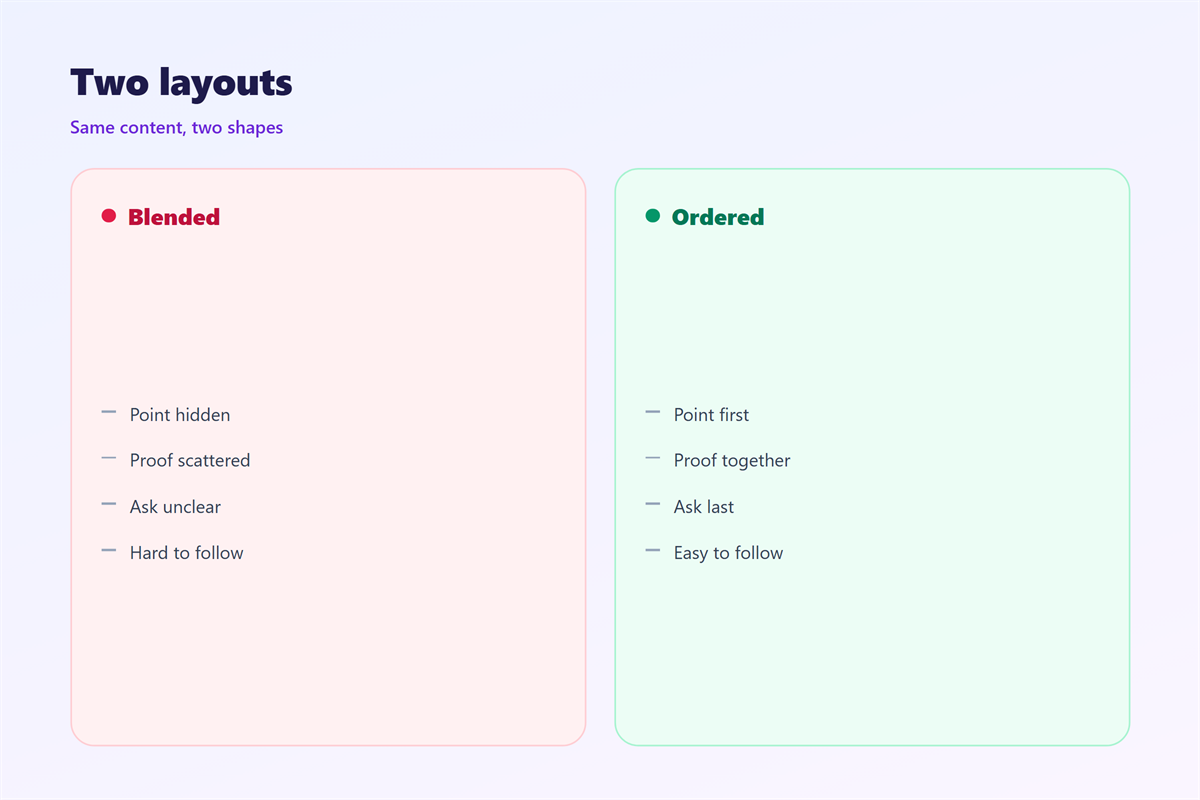
When these parts are in the right order, the note reads fast.
When they are mixed, the reader works too hard.
Good 邮件结构 hides its own design.
The reader only feels that the note was easy.
That ease is the whole goal.
It is worth more than a clever phrase.
Why 邮件结构 matters
Most readers skim before they read.
They look for the reason and the ask.
A clear 邮件结构 puts both near the top.
That saves a full round trip.
It also lowers the chance of a wrong reply.
A missing part is easy to spot in a fixed order.
You can check the opening, the middle, and the close.
Then you know the draft is complete.
Teams that share a structure review faster.
They spend less time guessing what a note means.
That time adds up across a busy week.
The savings show in every thread.
When 邮件结构 helps
The structure helps when a message carries a decision.
The reader needs the facts in a set order.
It helps when you hand work to another team.
The next owner needs to know what changed.
It also helps when you write to a stranger.
A predictable shape builds trust fast.
The reader can skim and still follow.
The three-block test
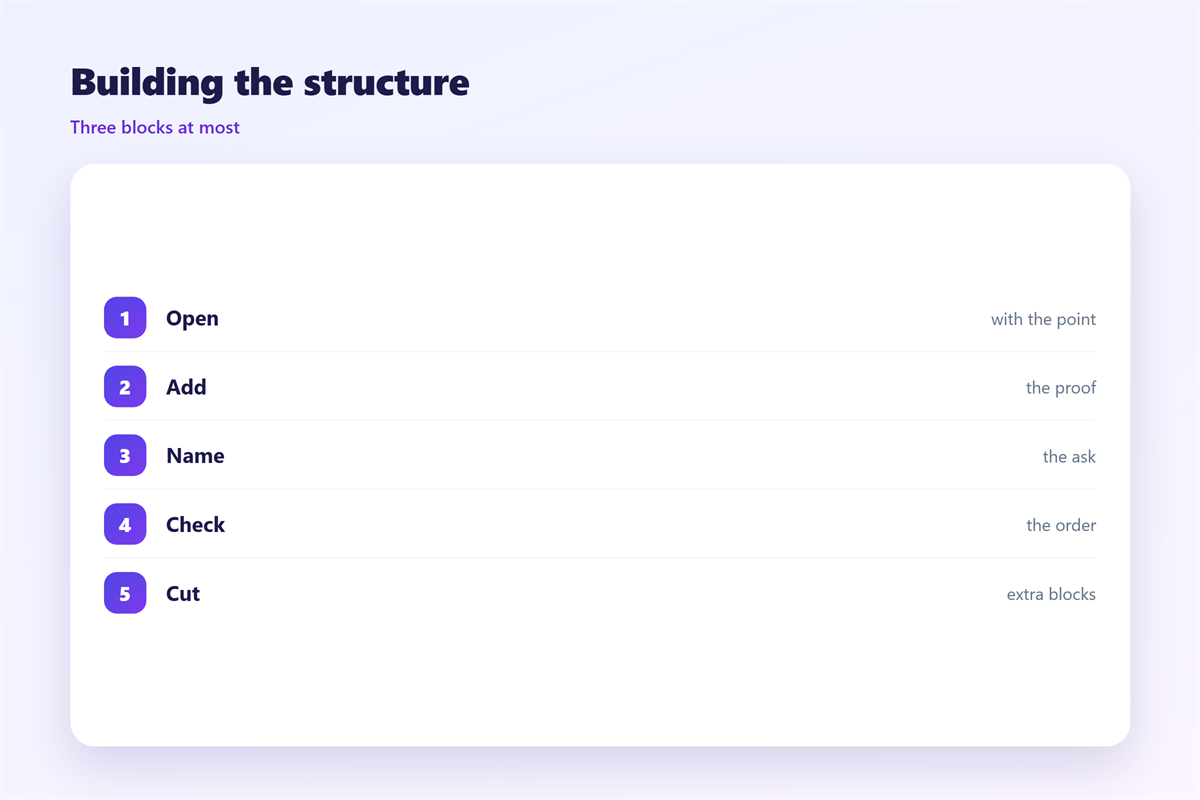
Write the note in three blocks.
Block one says why you are writing.
Block two gives the proof or the detail.
Block three states the next step.
If a block has two ideas, split it.
If a block has none, delete it.
When 邮件结构 hurts
邮件结构 hurts when it becomes a cage.
A short reply does not need three full blocks.
It may need one line and a name.
It hurts when the template outranks the reader.
A rigid order can sound cold.
It also hurts when the structure hides the ask.
Some writers save the request for the end.
Busy readers often stop before they reach it.
Move the ask up when the note is long.
Keep the shape, but bend it to the case.
A useful order serves the message, not the rule.
A short reply can keep the same order.
It simply uses fewer words.
邮件结构 and the opening
The opening decides whether the rest is read.
It should name the topic and the reason.
One sentence is usually enough.
Skip the long greeting when time is short.
A name and a clear first line will do.
Then the reader knows what follows.
Here the wider craft of layout meets 邮件结构.
One idea per block
Each block should carry one idea.
Mix two ideas and the reader must sort them.
That sorting is where mistakes start.
Give each idea its own short paragraph.
The page gets longer, but the reading gets shorter.
How to use 邮件结构 well
Start with a one-line plan.
Write the ask, the proof, and the close in that order.
Then fill each part with short sentences.
Keep the middle to the facts that matter.
Cut any detail the reader already knows.
Read the draft once for order, not for style.
Ask whether each part earns its place.
Good 邮件结构 serves the reader, not the template.
Cut before you add
Most first drafts are too long.
Remove one block before you add another.
If the note still works, the cut was right.
Then tighten the lines that remain.
A short note is easier to answer.
A short note also gets a faster reply.
So cut first and polish later.
Both habits save the reader time.
邮件结构 on a short screen
Many notes are read on a phone.
A long block looks like work.
Short blocks look like a quick read.
That difference changes the reply rate.
Keep each block to two or three lines.
Put the ask before the background.
Then test the note on your own screen.
If the point is below the fold, move it up.
A good 邮件结构 survives a small screen.
A clear first screen earns the second one.
Use one short line for the ask.
Then leave white space around it.
Keeping 邮件结构 consistent
A shared structure makes a team faster.
Agree on the order of the three blocks.
Agree on how long each block may run.
The block-by-block layout sits in 邮件正文.
The line breaks are covered in 邮件段落.
The short summary is explained in 邮件要点.
The planning step appears in 邮件提纲.
Then share two good examples with the team.
Review the shared shape once a quarter.
A shared shape saves every writer time.
It also makes the team easier to read.
New hires learn the shape in one week.
A fixed shape also speeds up review.
FAQ
What is the simplest 邮件结构?
Point, proof, and ask. Three short blocks in that order. Most notes need nothing more.
How many blocks should an email have?
Three for a normal request. Two for a short reply. One only when the answer is a single line.
Does 邮件结构 change for replies?
Yes. A reply can skip the background. Start with the answer and add only what changed.
Can a short note skip the structure?
No. A short note still needs an order. It just uses fewer words to show it.
References
- Purdue OWL: Professional writing guidance
- Grammarly: Clear writing and editing tips
- Harvard Business Review: Workplace communication
评论
还没有评论,来说两句吧。
评论功能已关闭。