 小影邮箱
邮件有序列表怎么写?Numbered Lists That Work
Key Takeaways
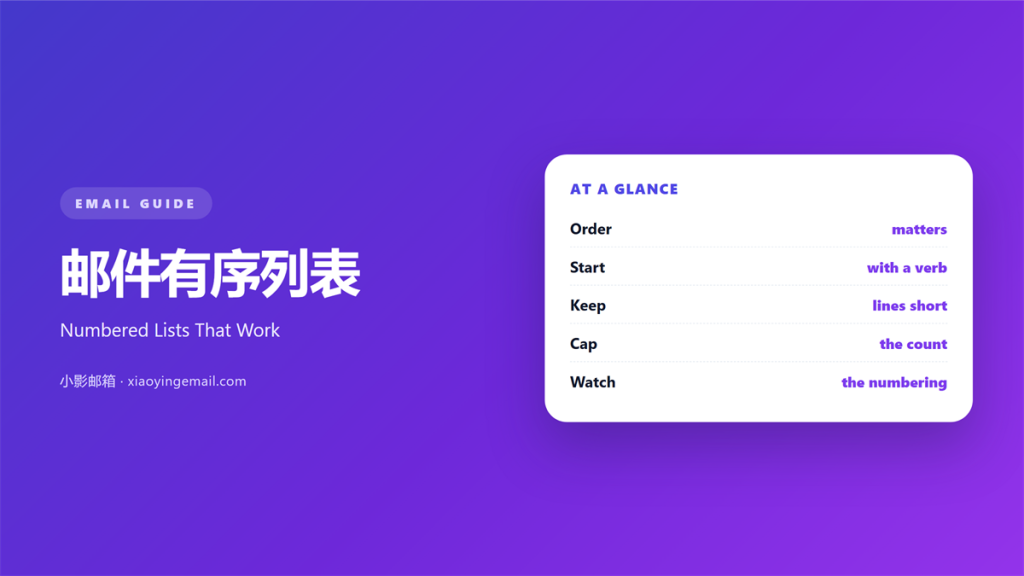
- 邮件有序列表 shows order, steps, and progress.
- Use it when the sequence truly matters.
- Keep each item to a single idea.
- Do not number a list where order is free.
- Keep the format steady from top to bottom.
What 邮件有序列表 means
邮件有序列表 is a list where the order matters.
Each item carries a number or a letter.
The number tells the reader where they are.
It also shows what comes next.
Most editors build the numbers for you.
So the skill is knowing when order matters.
Think of 邮件有序列表 as a recipe for action.
A recipe works best when the steps stay in line.
Out of order, the recipe falls apart.
So order is the whole point of this list.
Without order, a plain bullet list is better.
Why 邮件有序列表 matters
Some tasks must be done in a set order.
A numbered list shows that order at a glance.
It also shows how far the reader has come.
That sense of progress keeps people moving.
A plain paragraph hides the steps inside it.
A good 邮件有序列表 pulls those steps out.
It also makes the message easier to follow.
And it makes the next action clear.
A numbered list also sets a fair pace.
The reader knows how much work remains.
What a numbered list cannot do
It cannot fix a message with no clear point.
It cannot make a weak offer strong.
So fix the words first, then add the list.
When 邮件有序列表 helps
A numbered list earns its place in a few clear cases.
Use it for steps that must run in order.
Use it for a sequence of events over time.
Use it for a ranking where position matters.
And stop there. A few cases are plenty.
If the order does not matter, use bullets.
Each case should have a clear reason behind it.
If you cannot name the order, drop the numbers.
For steps
A short numbered list guides a reader well.
Start each step with a clear verb.
Keep each step to one small action.
A clear verb also tells the reader what to do.
For a sequence of events
Numbers show how one event follows another.
They also show a clear start and end.
That shape helps a reader plan their time.
Order matters most when time is involved.
When 邮件有序列表 hurts
A numbered list can look bossy and cold.
It can also imply a strict order that is not real.
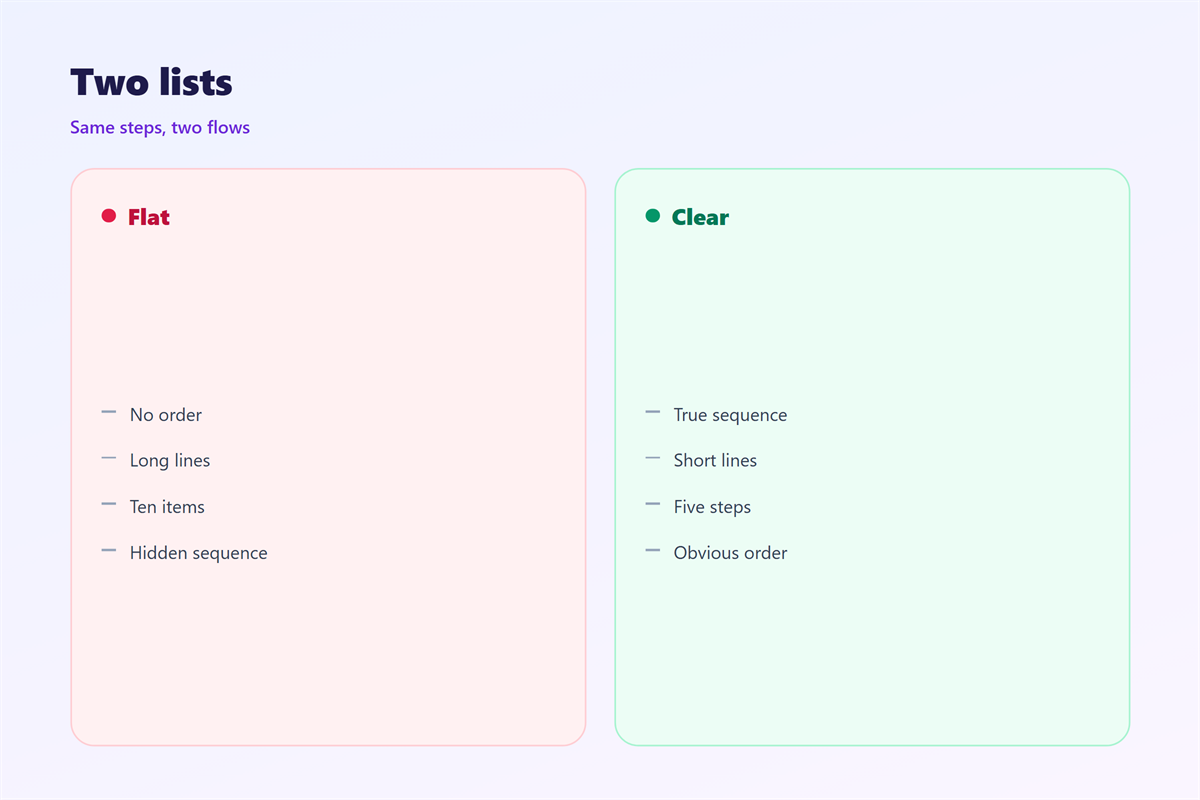
So do not number a list where order is free.
A long list can also lose the reader.
Many items in a row feel like a wall.
So keep the list short and focused.
Count your items before you send.
The short-list rule
Five items is a good working limit.
Seven is risky. Ten is a mess.
If you need more, split the list in two.
Then group the items under short labels.
A tidy group reads faster than a long row.
How to use 邮件有序列表 well
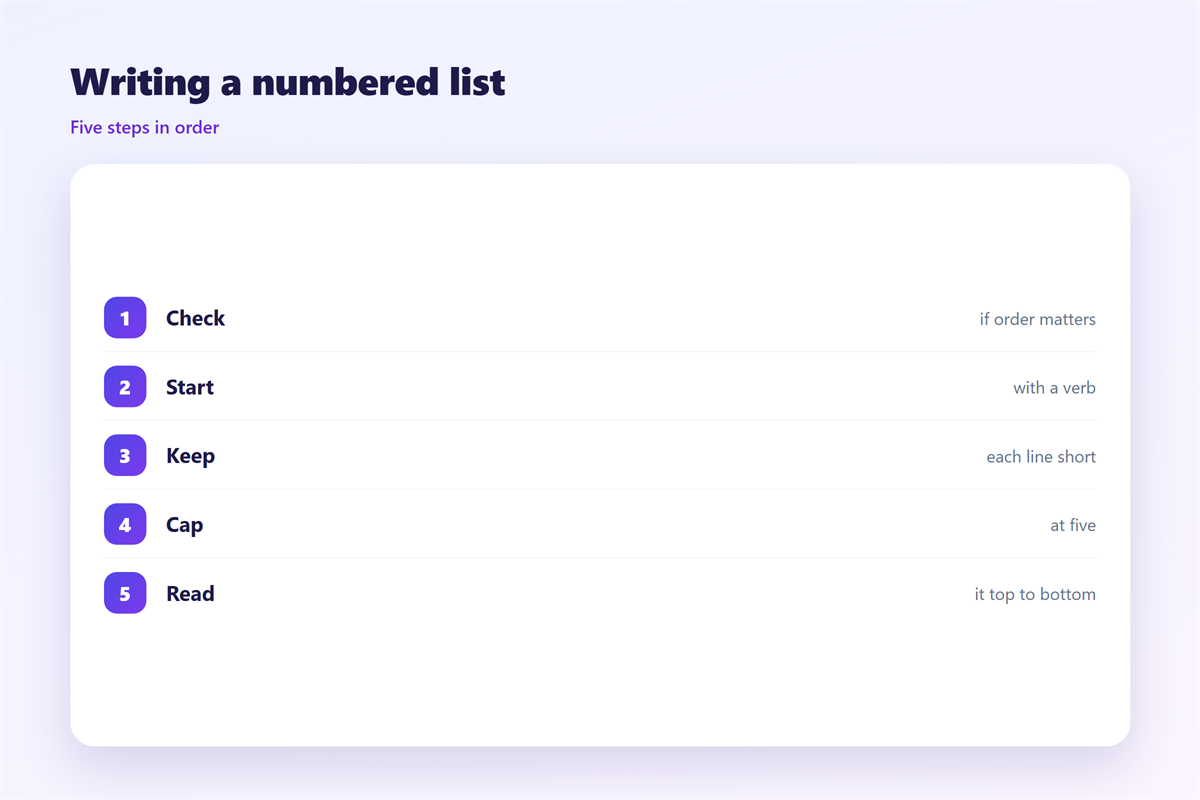
A numbered list works best with short items.
Keep each item under one line.
Start each item with a strong verb.
Then read the list again on a small screen.
If an item rambles, cut it in two.
Good 邮件有序列表 is easy to follow in one pass.
The reader just moves from one to two to three.
Next, check the whole list at a glance.
Count the items with your thumb.
If the list feels long, tighten it up.
Then send a test copy to yourself.
Check the numbering on a phone and a desktop.
邮件有序列表 and accessibility
A screen reader announces each number aloud.
So it reads the list in the right order.
That makes a real list safer than plain text.
Never type the numbers by hand in a paragraph.
Use the real list tool instead.
Then add a short lead-in sentence before it.
Test with a screen reader if you can.
A real list helps more than a typed number.
Keep the items in a logical order.
A screen reader then reads them as one unit.
邮件有序列表 across clients
Lists behave differently from one app to the next.
Some clients keep the numbers as you set them.
Others strip the tags and send plain text.
In plain text, the numbers may vanish.
So plan for the plain version too.
A message that reads well without 邮件有序列表 is safest.
Write the plain version first. Then add the list.
Test the note in two or three apps.
Note where the numbers survive and where they fade.
A simple list often keeps its shape best.
Keeping 邮件有序列表 consistent
Consistency turns a small rule into a habit.
Pick a house style and hold it across the team.
The wider idea of a list appears in 邮件清单.
The short summary at the top appears in 邮件要点.
The wider layout behind good lists is covered in 邮件排版.
The structure of the message body appears in 邮件正文.
Agree on how many items a list may hold.
Keep that rule for every message you send.
Then review the rule after a few weeks.
A short check keeps the habit from slipping.
A team that agrees on 邮件有序列表 writes cleaner mail.
FAQ
When should I use 邮件有序列表?
Use it when the order of the items really matters.
How many items should a list have?
Keep it to five items when you can.
Short lists are easier to follow and finish.
Should I number a list of options?
Only if the order matters. Otherwise use bullets.
Bullets suit options that carry equal weight.
Do numbered lists work in every mail app?
No. Some clients strip the numbers, so test first.
A plain version should still read in order.
References
- Nielsen Norman Group: How users read
- W3C WAI: Content structure and lists
- Grammarly: Email formatting basics
评论
还没有评论,来说两句吧。
评论功能已关闭。