 小影邮箱
邮件回复时限怎么定?How Long to Wait
Key Takeaways
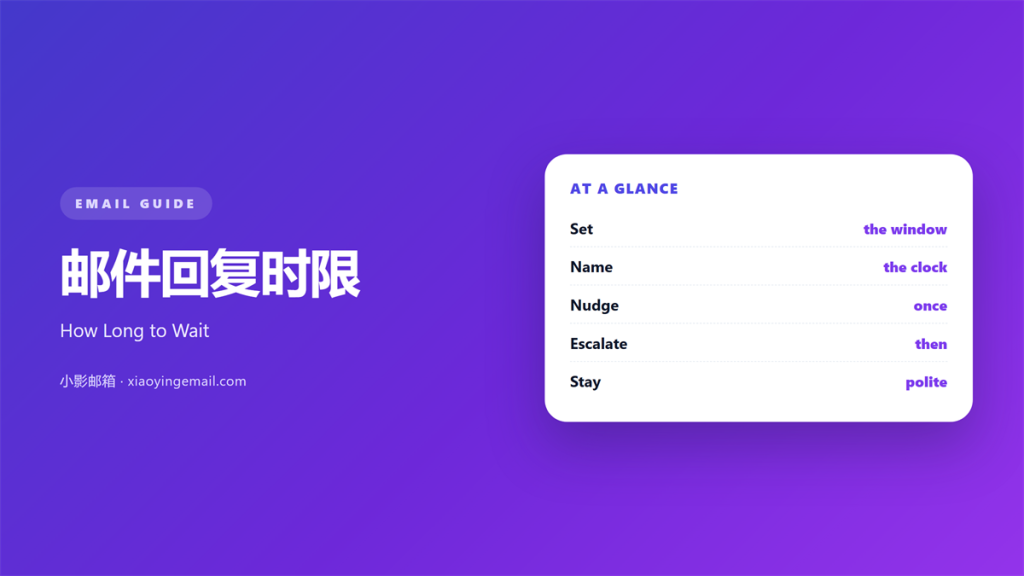
- 邮件回复时限 sets a fair window for an answer.
- Name the hour and the time zone up front.
- Match the window to the request, not to the sender.
- Send one gentle reminder, then move on.
- Let a slow period pass before you worry.
What 邮件回复时限 means
邮件回复时限 is the window you allow for a reply.
It says how long you will wait before you follow up.
The window can be an hour, a day, or a week.
It depends on the task and on the person.
A good window protects your time and theirs.
It also stops the urge to check mail every minute.
So the limit is really a rule for yourself first.
A written window turns a vague worry into a plan.
A window you never set is a window of worry.
So choose a number before the message leaves.
Write the number down where you will see it.
That small habit ends the guesswork.
Why 邮件回复时限 matters
Most people answer mail in no firm order.
Without a rule, one quiet message can nag all day.
A clear 邮件回复时限 ends that open loop.
It tells you when the waiting is over.
Then you can nudge the thread or close it.
That single decision frees a lot of attention.
It also sets a fair bar for the other side.
A shared window stops silent resentment from building.
It also stops a small delay from feeling like neglect.
A fair rule keeps both sides calm.
Working hours only
Count the window in working hours, not calendar hours.
A Friday request rarely moves over the weekend.
So a two-day window often lands on Tuesday.
Say that in the note to avoid a surprise.
When 邮件回复时限 helps
A window helps whenever a deadline depends on an answer.
Use it for a question that blocks your next step.
Use it for a request that needs a yes or a no.
Use it for a handover between two teams.
Use it for anything tied to a fixed date.
And state the window so both sides know it.
Use it when a client needs a promised answer.
A stated window builds trust before the reply.
The one-day rule
One working day is a safe default for routine mail.
Shorten it only for a true emergency.
Lengthen it for a topic that needs research.
Write the number down and keep it steady.
When 邮件回复时限 hurts
A window can turn rude if you press too hard.
Two reminders in one morning reads as panic.
A window that ignores holidays will annoy people.
An angry tone shuts down a helpful reply.
So keep the rule for yourself, not as a weapon.
A gentle note wins more answers than a sharp one.
A deadline pressed on a sick colleague looks cruel.
So read the situation before you send.
The pause before you nudge
Before you send a reminder, wait one full window.
Then write one calm line.
Assume the message simply got buried.
邮件回复时限 or an instant reply
Some people answer in minutes, and some do not.
You cannot force a fast reply from a busy person.
What you can control is your own window.
An instant reply is a gift, not a duty.
So expect a reasonable answer, not an instant one.
Then the wait feels normal, not personal.
A calm 邮件回复时限 protects the working friendship.
Respect the pace each person can keep.
A slow reply is often a busy reply.
How to use 邮件回复时限 well
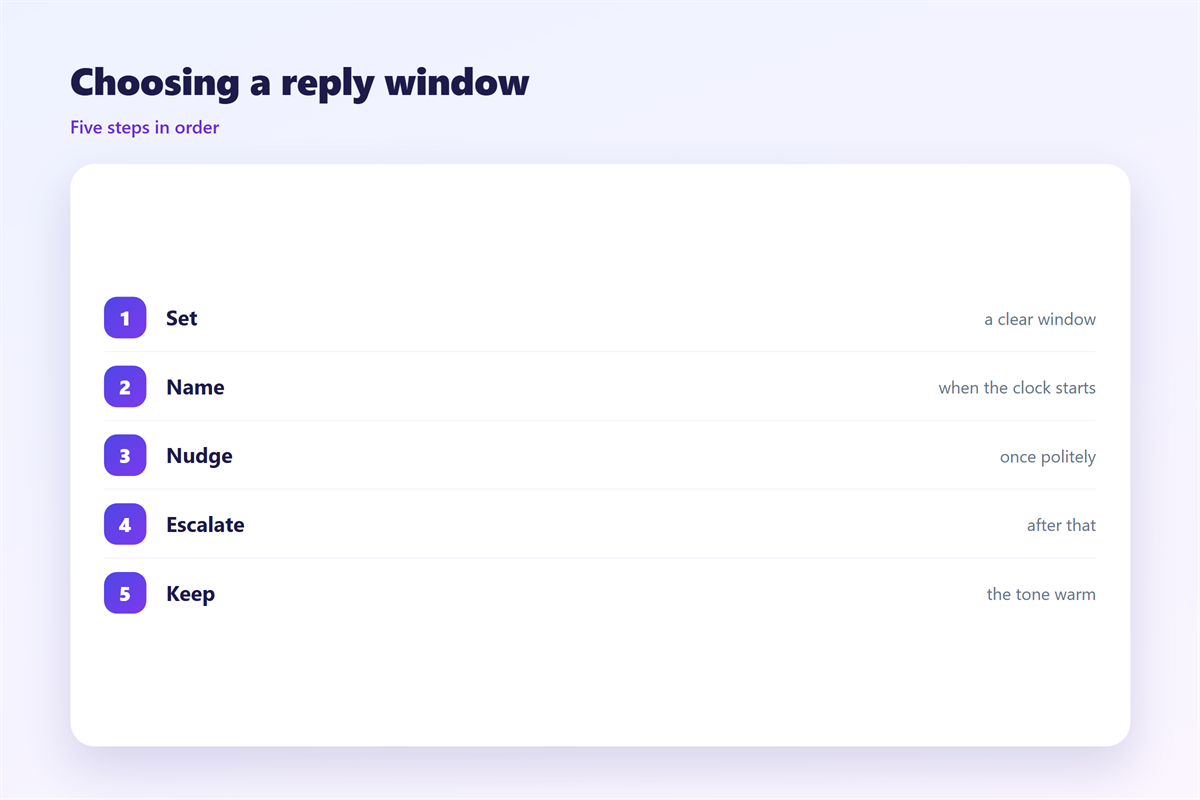
Pick a different window for each kind of mail.
Say the window when the request is urgent.
Give a reason if the ask is unusual.
Offer a nudge earlier if the date is tight.
Keep the reminder short and polite.
Then stop after one reminder and move on.
Good 邮件回复时限 is quiet and fair.
It never makes the reader feel chased.
Make the window the same for a whole team.
Then everyone knows how long the wait should be.
Check your own reply speed as well.
A fast reply from you invites a fast reply back.
A slow reply from you sets a fair bar for others.
邮件回复时限 and tone
Tone decides whether a reminder lands well.
Use the same polite voice you use in person.
State the facts and the date, without blame.
Assume the best intent until you learn otherwise.
A short apology for the pressure also helps.
A kind 邮件回复时限 earns respect at both ends.
Skip words that sound like a warning.
Ask, and do not demand.
That calm tone keeps the thread open.
It also protects the relationship for next time.
Keeping 邮件回复时限 consistent
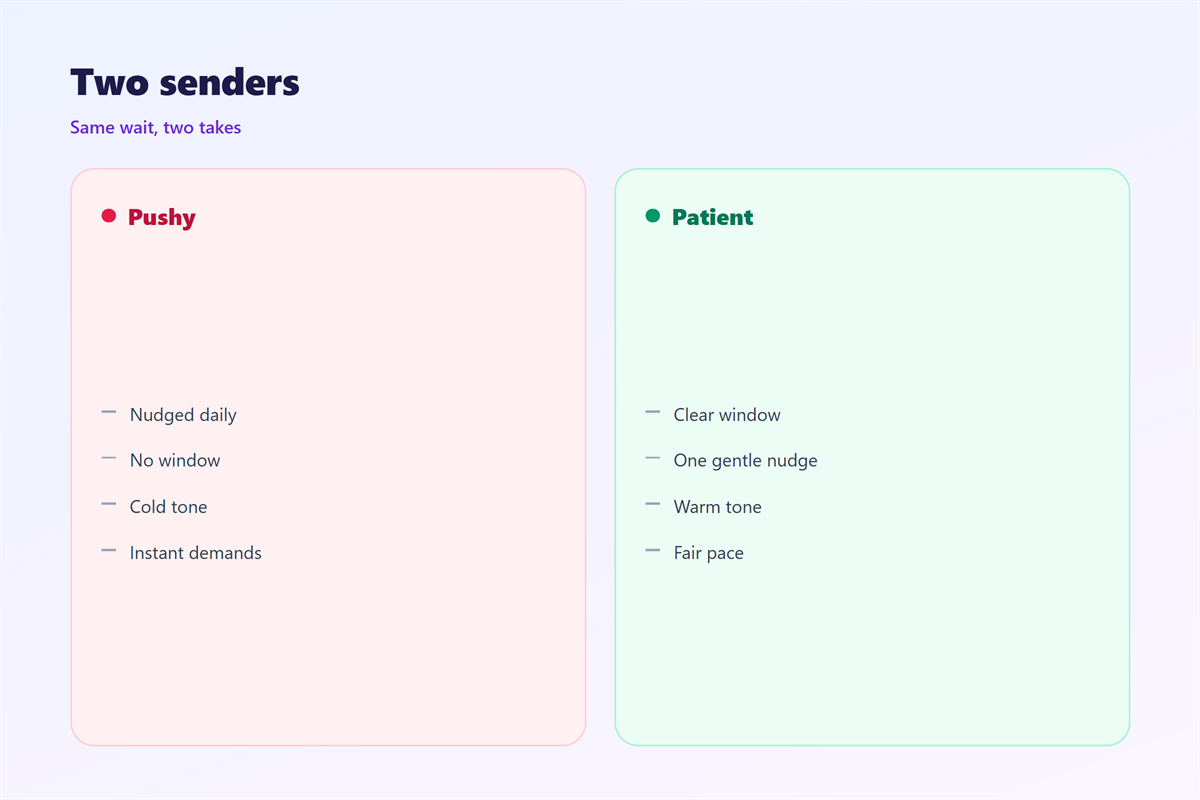
Consistency makes a window feel fair to everyone.
Pick one rule and hold it across the team.
The gentle reminder is drafted in 邮件催促.
The difference in reply buttons appears in 邮件回复.
The share of replies you get is explained in 邮件回复率.
The habit of delaying a thread is covered in 邮件稍后处理.
Agree on how long to wait before a nudge.
Then keep the same number for every message you send.
A team that agrees on 邮件回复时限 writes calmer mail.
FAQ
How long is a fair 邮件回复时限?
One working day is a safe default for most routine mail.
How many reminders should I send?
One gentle reminder is usually enough, then move on.
Should I count weekends?
No. Count working hours so a weekend does not run the clock.
Can I set a shorter window?
Only for a true emergency with a fixed and near date.
References
- Grammarly: Email formatting
- Harvard Business Review: Email that gets a reply
- The Chicago Manual of Style
评论
还没有评论,来说两句吧。
评论功能已关闭。