 小影邮箱
邮件催促怎么写?The Gentle Nudge
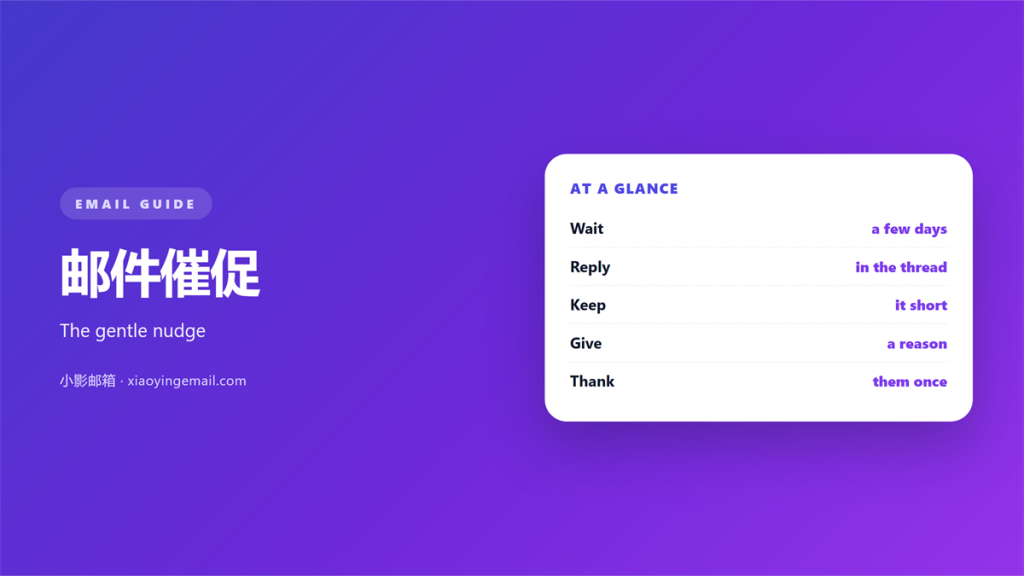
Key Takeaways
- 邮件催促 asks for one small action, not a favour.
- Send it only when the first note had a date.
- Keep the note short and easy to answer.
- Never sound annoyed at the reader.
- Know when to stop and close the loop.
What 邮件催促 means
邮件催促 is a short, polite reminder sent after a quiet gap.
It always follows a message that asked for something.
The goal is a reply, not a chase.
A good 邮件催促 sounds like help, not pressure.
It assumes the reader is busy, not rude.
That single idea changes the whole tone of the note.
A calm 邮件催促 also protects your own time.
You follow up once and then move on.
The word sounds heavier than the act.
In practice it is a small, ordinary follow up.
It carries no blame and no hidden anger.
Done well, it feels like a colleague checking in.
Done badly, it feels like a demand.
The difference is mostly tone and timing.
Why 邮件催促 matters
Most silent threads are not refusals.
People forget, get buried, or wait for a calmer day.
A quiet 邮件催促 revives the thread without blame.
It also keeps your own project moving forward.
One clear nudge can save a deal that looked lost.
A quiet thread can stall a whole project.
Every day of silence costs a little momentum.
A gentle note keeps the work on track.
It also shows the reader that you are organised.
That small signal builds trust over time.
Reading silence honestly
Silence can mean many different things.
A polite 邮件催促 tests which one it is.
If the answer is no, you learn it sooner.
Busy people rarely reply on the first ask.
A reminder gives them a second chance.
What a 邮件催促 is not
It is not a complaint about being ignored.
It is not a full repeat of the first message.
It is not a threat about a made up deadline.
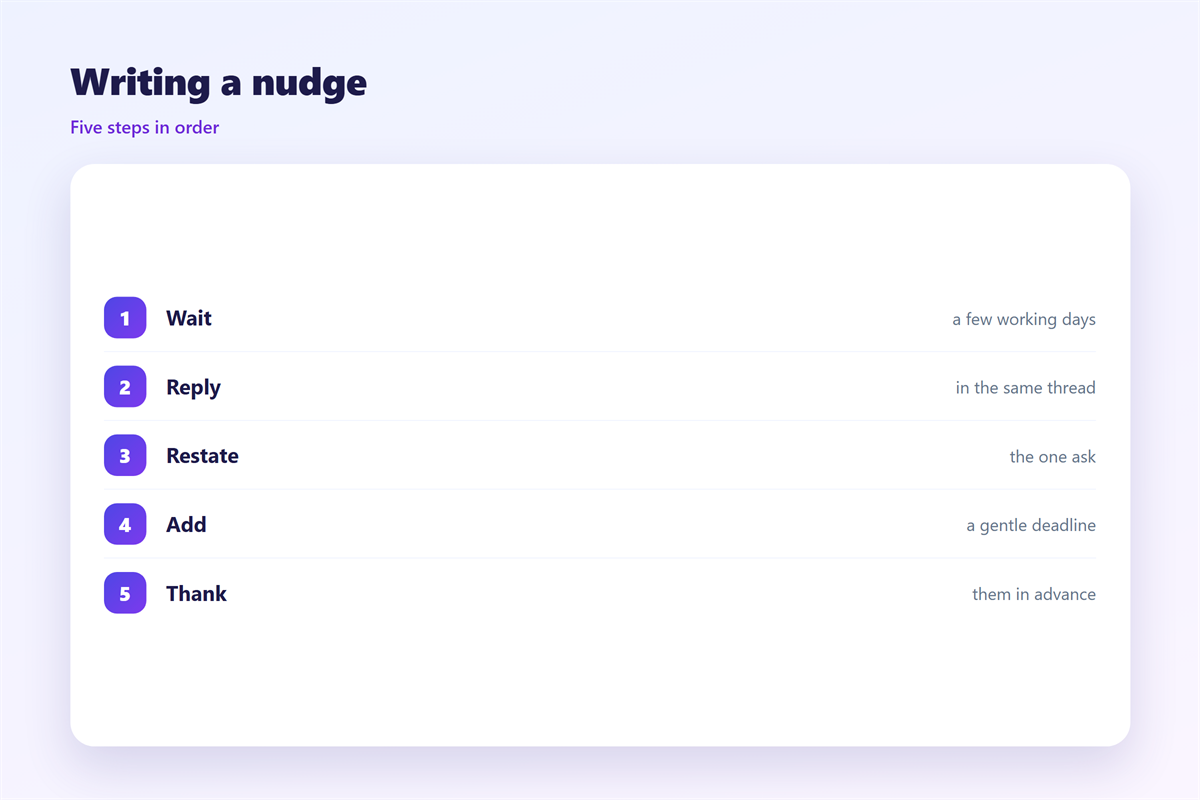
How to write 邮件催促
Open with one friendly line.
Then name the single thing you need.
Give a reason the reader can accept.
Make it easy for them to reply.
Keep the ask inside one short sentence.
Add a date only if you truly need one.
Close with thanks, not with pressure.
Start with their name if you know it.
Refer to the first note in a warm way.
Then ask your question in plain words.
Avoid long words when short ones work.
Put your question near the top of the note.
Leave the details below for anyone who needs them.
Keep 邮件催促 short
Three or four lines is plenty.
Long notes start to look like an argument.
A short 邮件催促 is easier to answer.
Cut any sentence that repeats the first email.
Read the whole note aloud once before sending.
If a line does not help, delete it.
Shorter notes respect the reader’s time.
Timing the 邮件催促
Wait a few working days before you nudge.
Three to five days suits most topics.
Send it at a calm hour of the day.
A well timed nudge feels natural to read.
Avoid Monday mornings and late evenings.
Midweek mornings often work best.
Think about the reader’s time zone too.
A short sample
A simple note might read like this.
Start with a warm greeting and their name.
Add one line about the earlier message.
Then ask your single question.
Finish with a short thank you.
That is the whole structure.
Keep the tone warm and plain.
Short beats clever every time.
Where 邮件催促 goes wrong
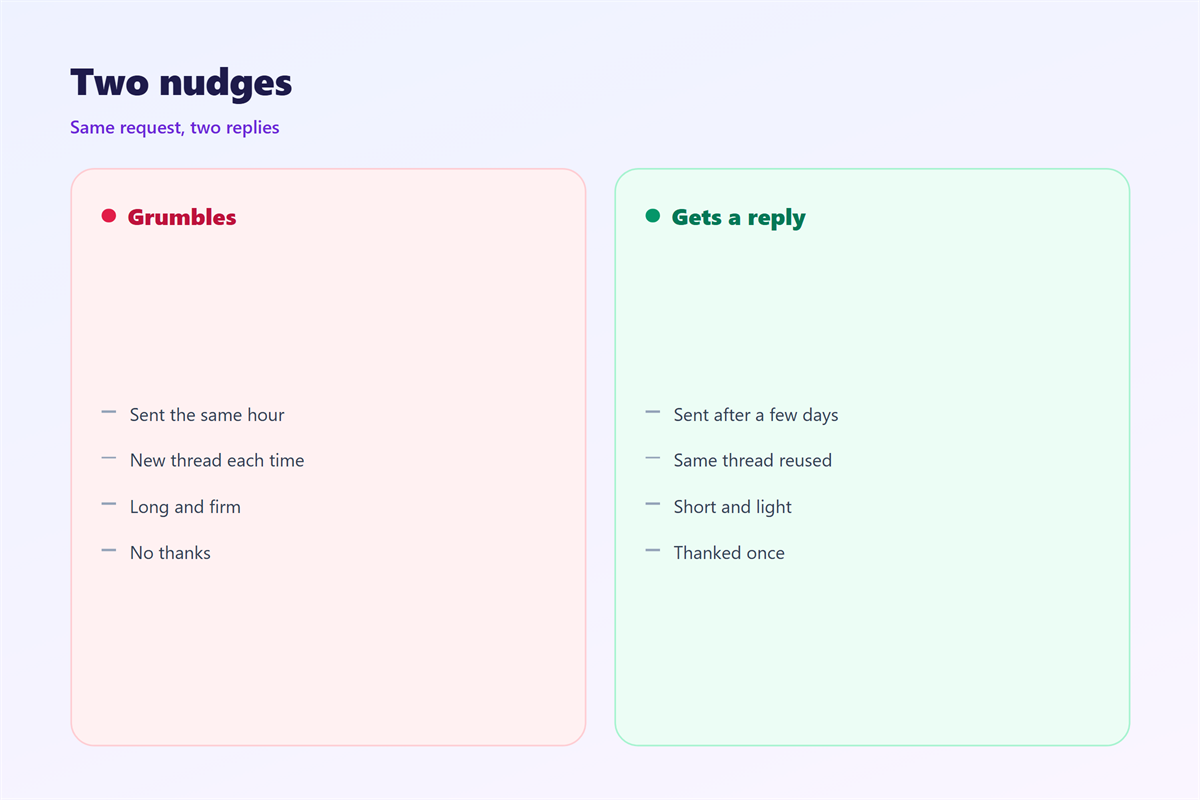
Some senders add guilt to the note.
Others copy a manager without warning the reader.
A sudden escalation kills the goodwill fast.
Another mistake is nudging far too often.
Daily notes read like a chase, not a reminder.
Also avoid a vague subject line.
Name the topic so the reader can find it.
One more trap is copying too many people.
A wide audience makes the reader defensive.
Keep the thread small while you can.
The second and third try
You can follow up more than once.
Space each note a little further apart.
Change the wording, not just the date.
On the final try, offer to close the loop.
That gives the reader a clean way out.
Then stop and wait for a reply.
Two follow ups usually cover a small task.
Bigger decisions may take one more nudge.
Never send a fourth note without a reason.
Sending and improving
Keep a simple log of what you sent.
Note the date, the topic and the reply.
After a month, read the log again.
You will see which wording earned answers.
Reuse the lines that worked well.
Write the date beside every sent note.
Mark which ones got a reply and when.
Look for patterns across the month.
Some topics may simply need more time.
Others may need a different person.
Let the log guide your next message.
Pick the right moment with 邮件跟进 and let 邮件提醒 keep the note visible. For money owed, use 邮件催款 and borrow proven wording from 邮件模板.
FAQ
How many 邮件催促 notes is too many?
Two or three is usually enough. After that, a reply is unlikely.
When should I stop sending 邮件催促?
Stop after the last note you planned. Say clearly that you will close the loop.
Should 邮件催促 name a deadline?
Only if a real one exists. A fake deadline damages trust quickly.
How long should 邮件催促 be?
Three or four short lines. If it is longer, cut it down.
References
- Litmus: Email marketing metrics and benchmarks
- Atlassian: How to get email replies
- IETF RFC 5322: Internet Message Format
评论
还没有评论,来说两句吧。
评论功能已关闭。