 小影邮箱
邮件催办怎么写?A Gentle Nudge
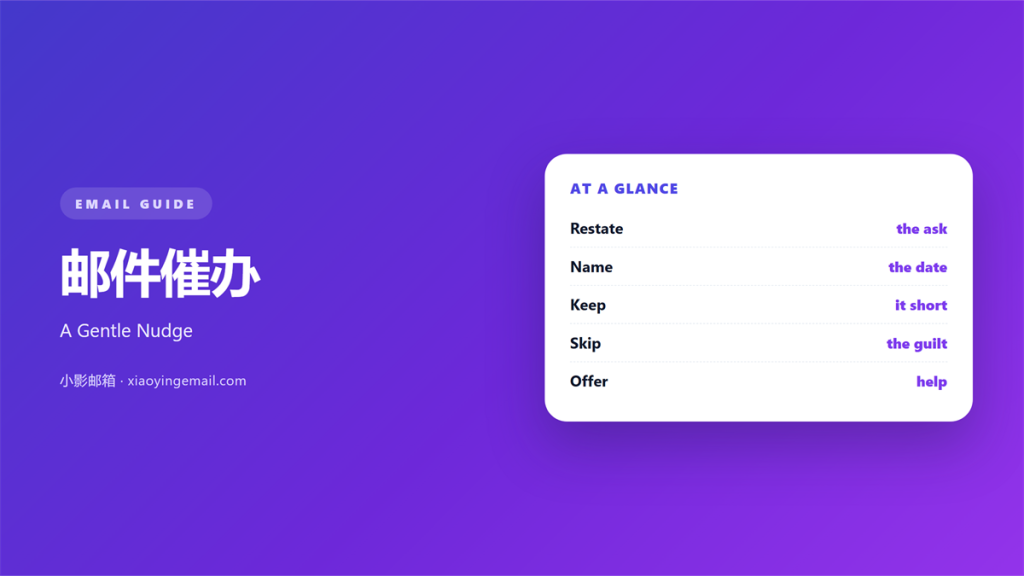
Key Takeaways
- 邮件催办 is a short reminder about work already requested.
- Restate the ask and the date in the first two lines.
- Keep the tone friendly and assume good faith.
- Send one nudge, then wait before the next.
- A reminder should make replying easy, not guilty.
What 邮件催办 means
邮件催办 is a short message that asks for an update. It follows a request that is already open.
The word 催 means to urge, but the tone should stay calm.
It is not a complaint. It is a service to the reader.
A good reminder saves the reader from a late surprise.
It also protects the deadline that both sides agreed on.
Most reminders are short. Two or three sentences often do the job.
The goal is a reply, not a confession.
Why 邮件催办 matters
Work stalls when a request sits unanswered.
Silence is rarely a refusal. It is usually a full inbox.
A polite nudge brings the thread back to the top.
It also gives the reader a clear chance to say no.
That answer is useful. A clear no frees the schedule.
Without a reminder, both sides keep guessing.
The sender wonders about progress. The reader forgets the ask.
The cost of silence
One unanswered message can block a whole task.
The delay then spreads to other people.
A two-line reminder is cheaper than a missed date.
A short update also keeps the record clean.
Everyone can see what is done and what is not.
When 邮件催办 helps
邮件催办 helps when the deadline is close and the answer is missing.
It also helps after a quiet week with no reply.
Use it when you need a simple yes or no.
Use it when the other person asked you to check back.
That last case is easy. They invited the reminder.
The three-day rule
Wait at least two working days before the first nudge.
Then wait three more days before the second.
Most replies arrive after the first gentle note.
A third message should change the channel, not the volume.
When 邮件催办 hurts
邮件催办 hurts when it arrives too soon.
A reminder sent an hour after the request looks anxious.
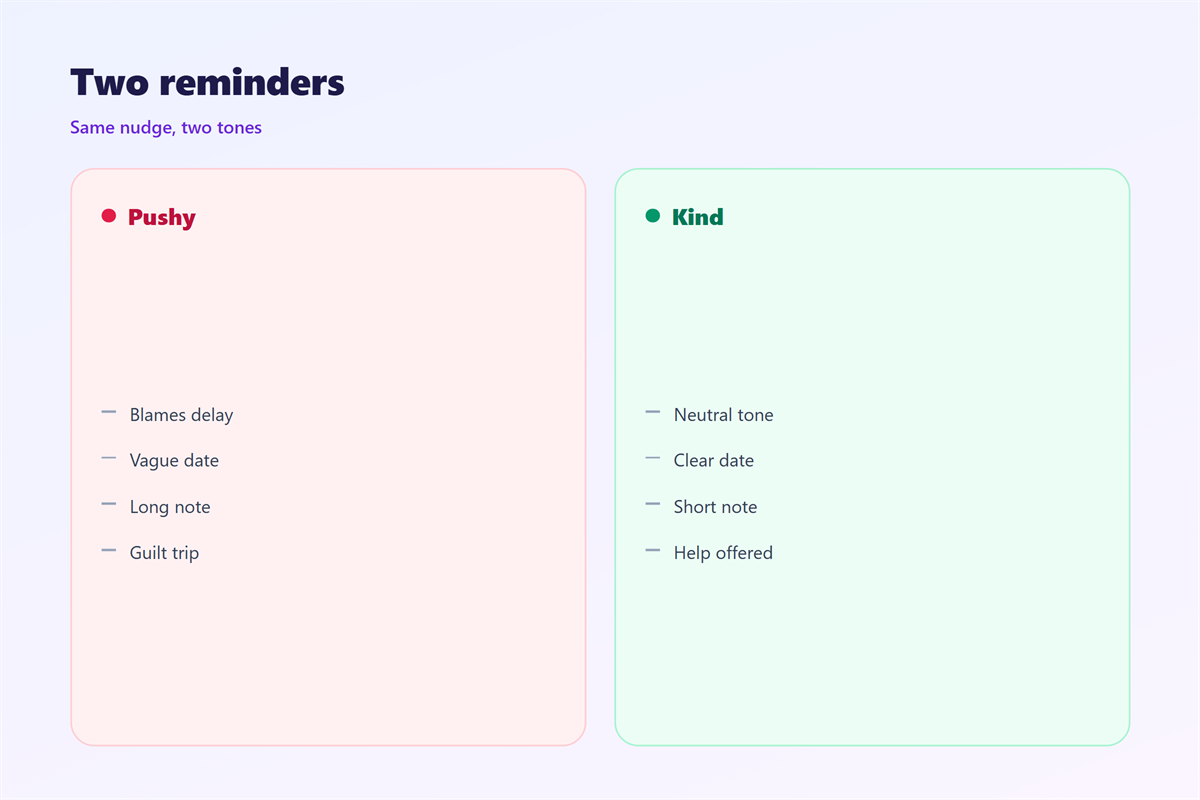
It hurts when the note blames the reader.
Words like “still” and “again” can sound sharp.
It also hurts when the ask is vague.
“Any update?” gives the reader nothing to answer.
And a daily reminder trains people to ignore you.
Pressure creates motion, but not always progress.
Ask yourself why the reply is late.
Sometimes the task is harder than it looked.
Sometimes the reader is waiting on someone else.
邮件催办 and tone
Tone decides whether a nudge feels helpful or hostile.
Assume the reader is busy, not careless.
That single belief shapes every word you choose.
Start with a small courtesy, then move to the ask.
Keep the request in the present tense.
Say “could you confirm” instead of “you have not confirmed”.
Warm, brief, and clear
Warmth comes from one short line at the top.
Brevity comes from cutting the background you already shared.
Clarity comes from naming the exact item you need.
Put all three together and the note is hard to resent.
How to use 邮件催办 well
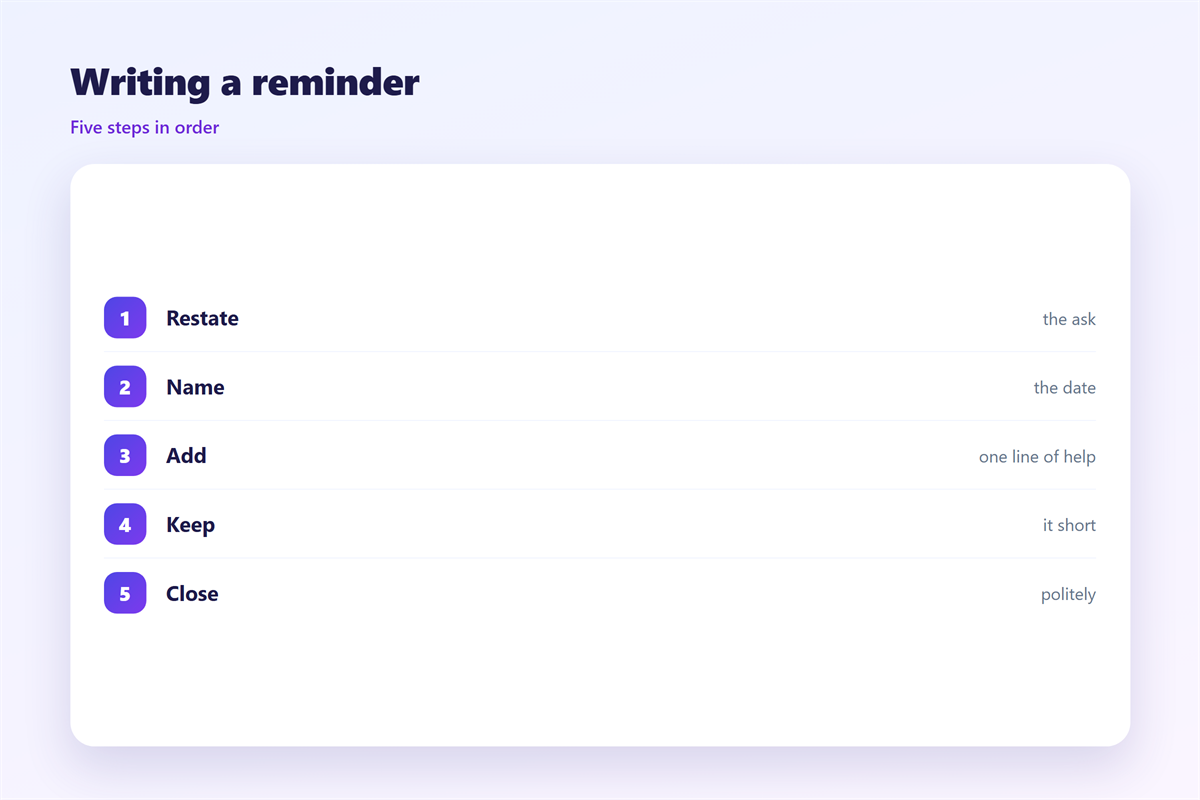
Open with the context in one line.
Name the original request and the date you sent it.
Then restate the one thing you need.
Offer an easy way to reply.
Give a new date if the old one has passed.
Close with thanks and no pressure.
Keep the whole note under five lines.
Then check the thread before you send it.
Make sure you reply to the latest message.
Remove any line that only defends you.
The reader does not need your side of the story.
Good 邮件催办 offers a new date, not just a complaint.
The copy-and-paste nudge
Write the reminder once and save it as a template.
Change the name, the item, and the date.
Read it aloud before it goes out.
A saved nudge keeps your tone steady on busy days.
邮件催办 in a busy week
Busy weeks are when reminders matter most.
Your own inbox also fills up, so keep a list.
Track the date of every request you send.
A simple column in a sheet is enough.
Then set a reminder for the follow-up day.
That habit removes the need to remember.
It also stops you from nudging the same person twice.
Batch your reminders into one quiet hour.
Group messages by person, not by project.
Two reminders to one colleague read as pressure.
One combined note reads as help.
A small tracking habit
Write three fields: who, what, and when.
Review the list every morning for one minute.
Send only the reminders that are due.
Then update the date after each reply.
Keeping 邮件催办 consistent
Consistency makes reminders feel normal, not personal.
Agree on a two-day wait before the first nudge.
Agree on the subject prefix your team will use.
“Reminder:” in front of the old subject works well.
The wider habit of chasing a thread is covered in 邮件催促. The timing question appears in 邮件跟进. The alert settings are explained in 邮件提醒. The date rules sit in 邮件截止日期.
Then share one good example with the team.
A shared style makes 邮件催办 easier for everyone.
FAQ
Is 邮件催办 rude?
No, if you keep it short and polite. A calm reminder is a normal part of work.
How soon should I send the first reminder?
Wait two working days for most requests. For urgent items, say so in the original message.
Should 邮件催办 include the original email?
Yes, quote the key line below your note. It saves the reader a search.
What if the reader never replies?
Send one final note and name a new contact. Then move the work forward without them.
评论
还没有评论,来说两句吧。
评论功能已关闭。