 小影邮箱
邮件中继怎么工作?The Handoff Between Servers
Key Takeaways
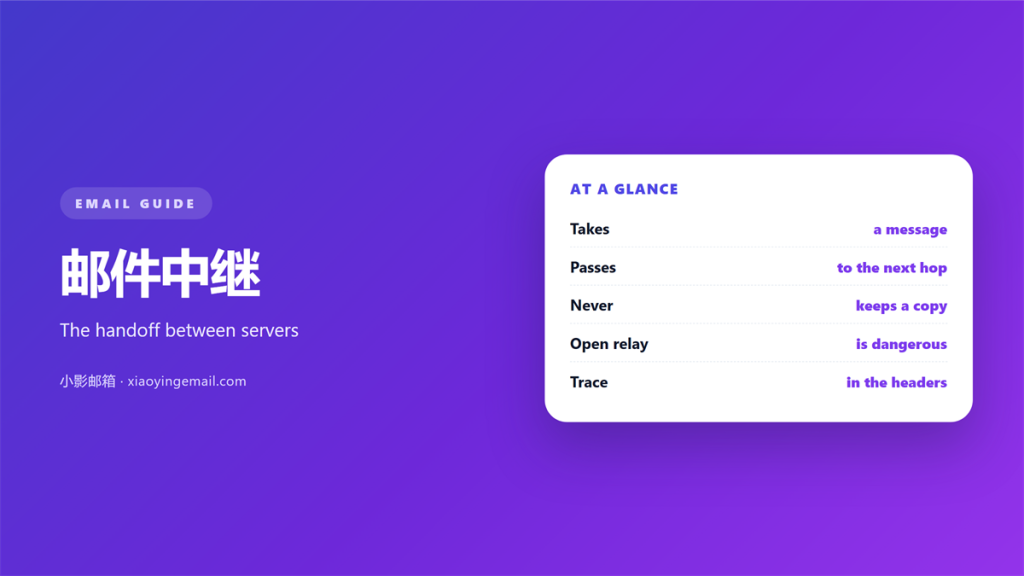
- 邮件中继 moves a message toward its final destination.
- A relay is normal on almost every delivery path.
- An open relay lets strangers send through your server.
- Filters blocklist an open relay within hours.
- Authentication is the cure for a leaking relay.
What 邮件中继 actually means
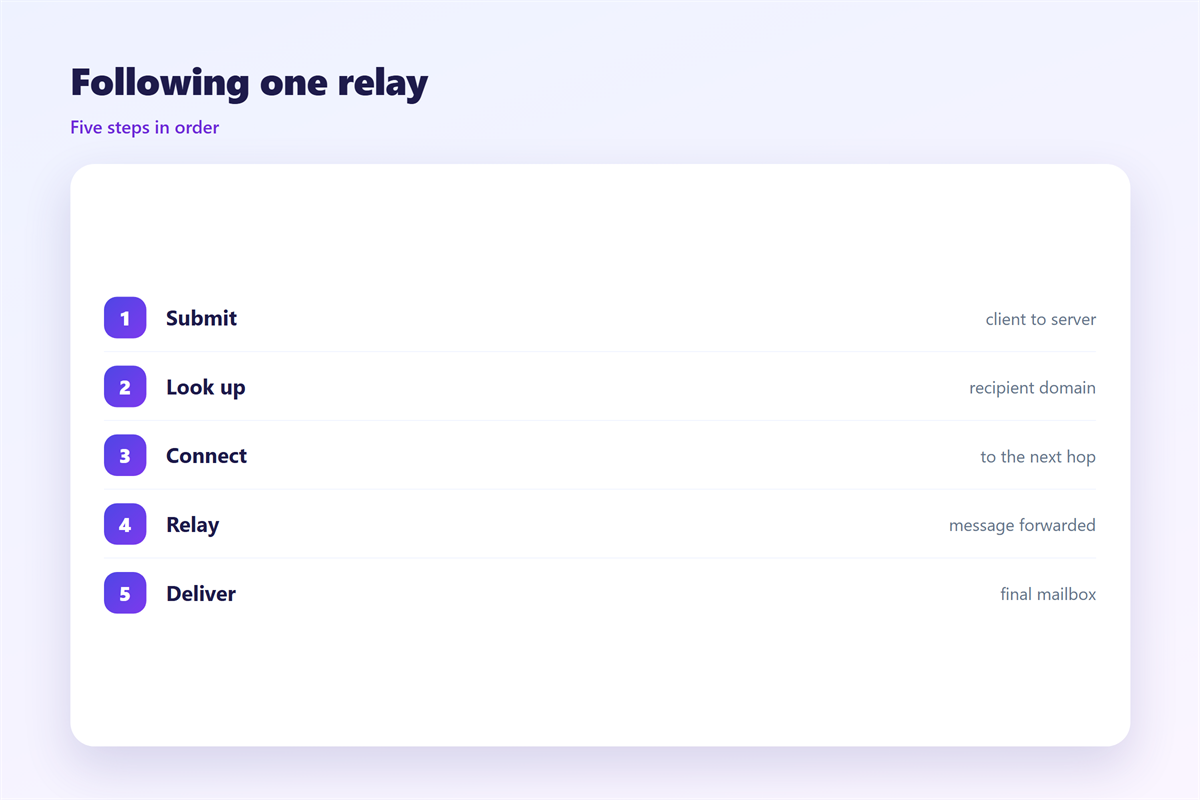
邮件中继 is the handoff of a message between two servers.
Your mail rarely travels in one jump. It hops between machines until it arrives.
Each hop is a relay. The sending server hands the message to a trusted partner.
That partner may pass it on again. The chain ends at the mailbox that holds your mail.
Most people never see this chain. It runs quietly behind the inbox.
The word relay sounds technical. In plain terms it means a server acting as courier.
A courier does not read the letter. A relay does not read your message either.
邮件中继 exists because direct delivery is fragile. One hop can fail at any time.
A relay adds a step that can retry. That retry separates a lost message from a late one.
Good relays keep a short log. The log becomes useful when a message goes missing.
A busy 邮件中继 may queue mail when the next hop is slow.
The hostname you send with should match your domain. A mismatch looks like a forgery.
That match is the whole promise of a relay. It ties an address to a name.
A relay does not guarantee delivery. It only increases the odds.
Where 邮件中继 happens
The first relay decision belongs to the sending server.
It asks the domain’s mail exchanger where mail should go.
That record points to a server that accepts mail for the domain.
Several checks run before the handoff is allowed.
- Authentication: the sender must prove who they are.
- Recipient: the server checks that the address exists.
- Reputation: a known spam source is refused outright.
- Rate: too many messages at once get slowed down.
Understanding 邮件中继 starts with those four checks. They shape every hop.
The same message may pass through two or three servers. Each one adds a header line.
Those header lines are the travel log. They record every machine the message visited.
Your own habits change the path too. A large mailing list uses a dedicated relay.
That is why 邮件中继 differs between a personal note and a newsletter.
A relay can sit inside your company or at a paid provider. Both are common.
The provider option is easier to run. The in-house option gives you more control.
When 邮件中继 goes wrong
Relaying fails in two directions. It can refuse good mail or forward bad mail.
The first failure is a delay. A misconfigured server holds mail for hours.
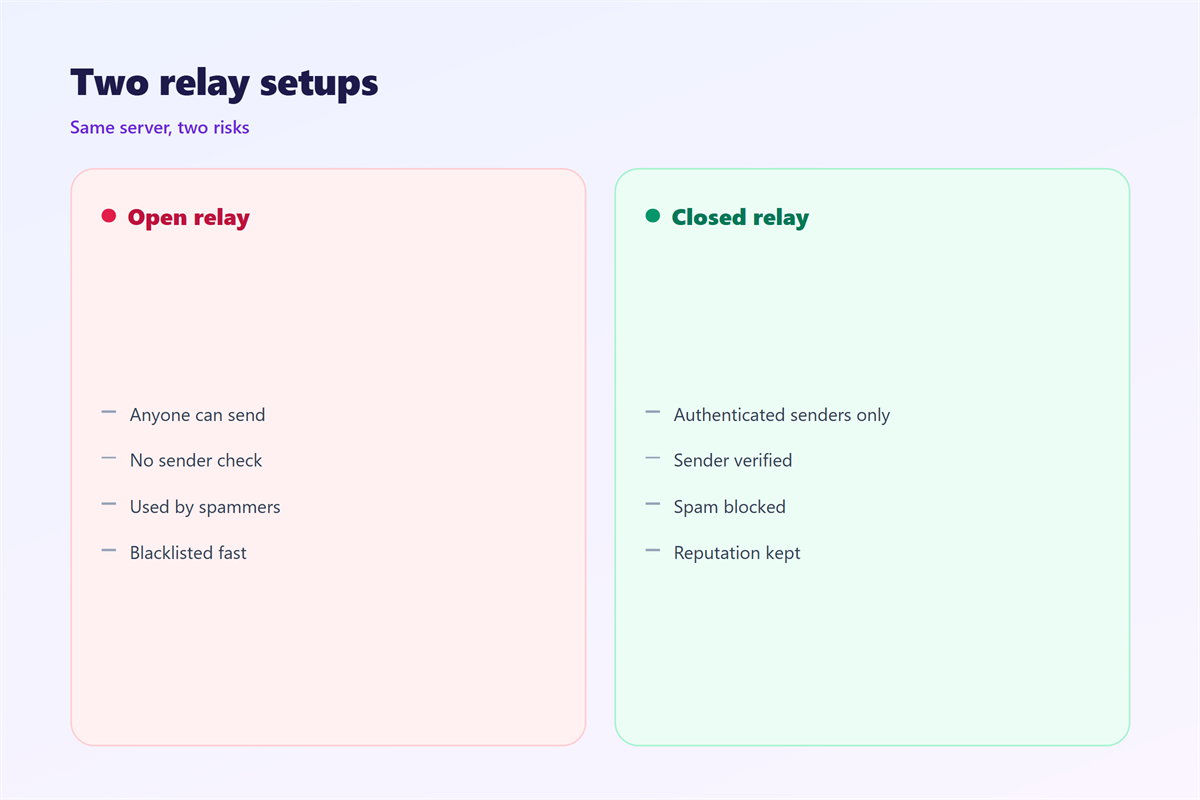
The second failure is worse. An open relay forwards anything handed to it.
An open relay is a gift to spammers. They route junk through a server they do not own.
The owner pays the price. Their domain lands on a blocklist within a day.
A log is the fix for the first failure. Most 邮件中继 systems record each handoff.
Read the log after any delivery problem. It shows exactly where the message stopped.
A truly open relay is rare today. Old appliances still keep the setting alive.
Test for it if you run your own server. One wrong line can expose the whole domain.
Cleanup takes longer than prevention. Close the relay before a spam run finds it.
A missing log makes a delay hard to explain. Keep one for a few weeks.
Testing your 邮件中继
A relay you cannot see is a risk. Test it before a stranger does.
Send a message to an address outside your domain. Check whether it leaves cleanly.
Ask a friend to send you the full headers. Read the top line carefully.
Then run a relay test from an outside network. It should refuse you.
If it accepts, close the relay at once. Authentication is the first fix.
A short test tells you more than any manual. Old servers describe their rules poorly.
Checking 邮件中继 yourself removes the guesswork.
Two tests a year keep you ahead of the surprises that 邮件中继 creates.
Write down what you changed and when. A short note saves a long search later.
Tests are cheap. A broken relay is not.
An open relay is not 邮件中继
These two terms get confused all the time. A relay is normal. An open relay is a fault.
Normal 邮件中继 requires the sender to be approved.
An open relay skips that check. Anyone on the internet may use it.
The difference is a single setting. It decides whether your server is a courier or a weapon.
If you inherit a server, inspect that setting first.
The old setting usually hides in a config file. Search for the word relay there.
Our notes on 邮件服务器 explain the machine that carries mail. The rules of each handoff are described under 邮件协议. The doors a relay listens on are covered in 邮件端口, and the result of a clean path sits under 邮件投递率.
Keep your relay list short and trusted. Every extra hop is another place to fail.
Log the handoffs you allow. A repeated refusal tells you a rule needs repair.
A tidy relay chain is boring. That is exactly what you want.
FAQ
Is 邮件中继 always safe?
No. A relay is safe only when it checks the sender. An open relay never does that.
Why does my mail relay through another server?
Direct delivery often fails. A relay retries, so the message still arrives.
How do I close an open relay?
Turn on authentication and limit the allowed networks. Then retest from outside.
What is an open relay?
A server that forwards mail for anyone who asks. Spammers abuse it and the owner is blamed.
评论
还没有评论,来说两句吧。
评论功能已关闭。