 小影邮箱
邮件副标题怎么写?A Subtitle That Adds
Key Takeaways
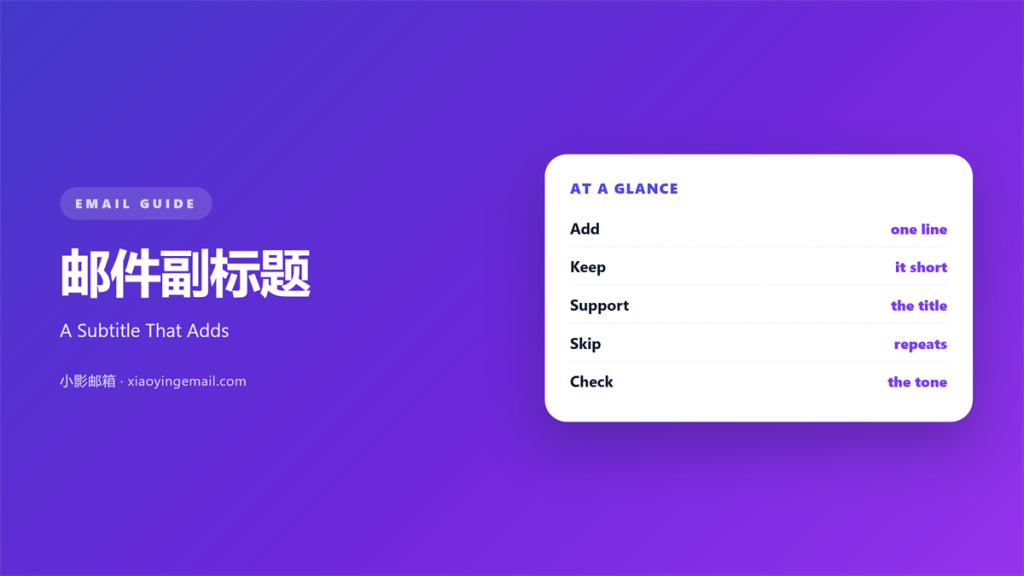
- 邮件副标题 is a short line under the main title.
- It adds a detail the title cannot fit.
- Keep it to one plain sentence.
- Never repeat the title in other words.
- Place it right under the main line.
What 邮件副标题 means
邮件副标题 is a second line that supports a heading.
It sits under the main title and above the body.
The main line states the point.
The subtitle explains it or narrows it.
It is usually smaller than the title.
It often uses a lighter colour.
The pair works like a headline and a deck.
A newspaper deck adds detail under its headline.
Mail uses the same idea in a smaller space.
A subtitle is not a second heading.
It supports the first one instead.
So it should never compete with it.
Keep it one step quieter in weight and size.
Then the two lines read as one unit.
A subtitle also sets the tone.
A plain line sounds serious.
A warm line sounds friendly.
So it does more than add facts.
It shapes how the reader feels.
It sits close under the title.
The gap between them stays small.
Why 邮件副标题 matters
A good subtitle answers the next question.
The title raises one, the subtitle settles it.
That keeps the reader moving down the page.
邮件副标题 also adds useful context.
It can name the audience or the deadline.
It can promise a clear benefit.
A strong pair cuts the reading time.
The reader knows what the note is about.
It also reduces the chance of a misread.
A clear pair leaves little room for doubt.
That saves a reply later.
So the subtitle earns its short line.
The two-second test
Read only the title and the subtitle.
If the point is still unclear, rewrite them.
When 邮件副标题 helps
邮件副标题 helps in a few clear cases.
Use it when the title is short and broad.
Use it to name a date or a group.
Use it to add one concrete detail.
Each case answers a real question.
If the title already says enough, skip it.
Then the body can carry the rest.
It helps when the title uses a short word.
The subtitle can explain that word.
Then no reader is left guessing.
One line only
A subtitle should stay on one line.
If it wraps, it is doing too much.
Then that text belongs in the body.
When 邮件副标题 hurts
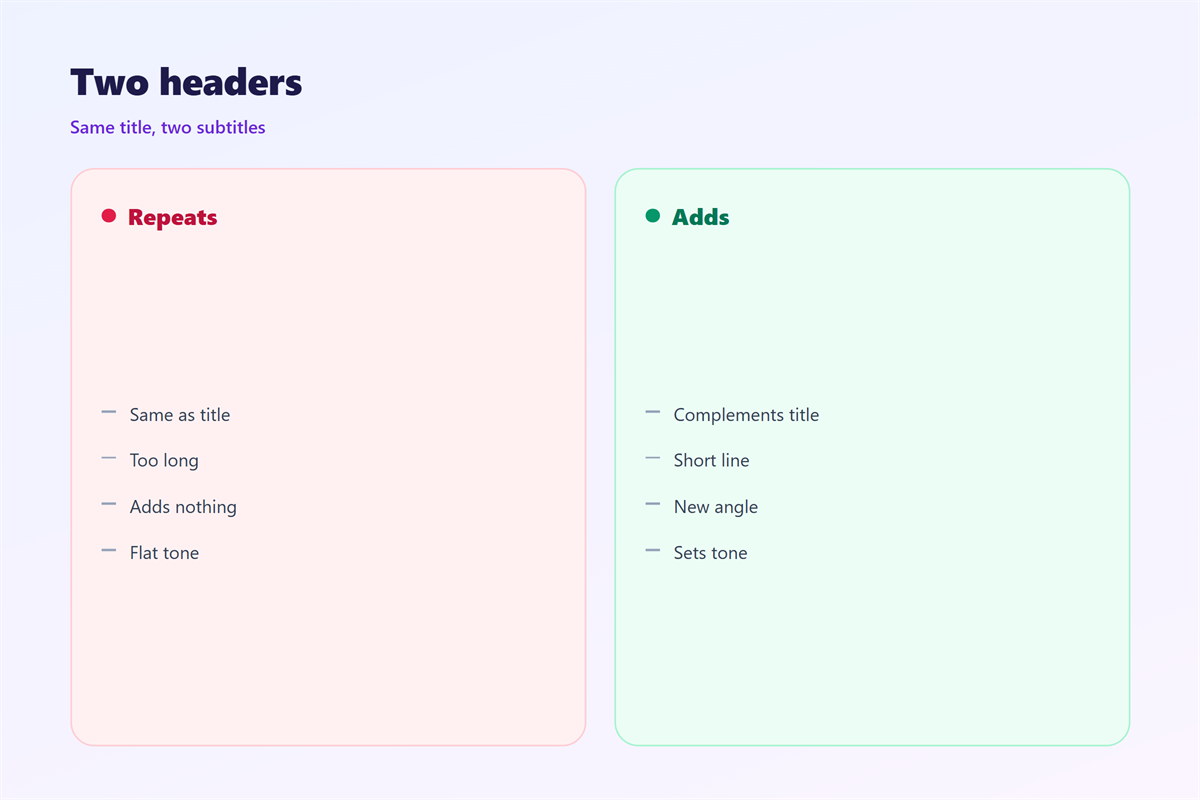
A weak 邮件副标题 repeats the title.
It says the same thing in other words.
That wastes the reader’s attention.
A long subtitle pushes the body down.
The reader may never reach the point.
Two subtitles under one title add clutter.
So keep it to a single line.
Also avoid a question in the subtitle.
Save questions for the body or the call.
A subtitle should state, not ask.
A subtitle that repeats wastes the space.
It also slows the reader down.
Two lines should do two jobs.
If they overlap, cut one.
邮件副标题 and the subject line
The subject line and the subtitle work as a pair.
The subject earns the open.
The subtitle earns the first paragraph.
Together they set the promise.
They should not use the same words.
A good 邮件副标题 adds what the subject left out.
The subtitle can carry the detail the subject lacked.
Keep the tone of both lines even.
A serious subject needs a plain subtitle.
A playful subject can carry a light subtitle.
So read them one after the other.
If they clash, rewrite the subtitle first.
The subject must survive on its own.
The subtitle can lean on the title.
So write the pair in that order.
Subject first, then the supporting line.
Together they set up the body.
How to use 邮件副标题 well
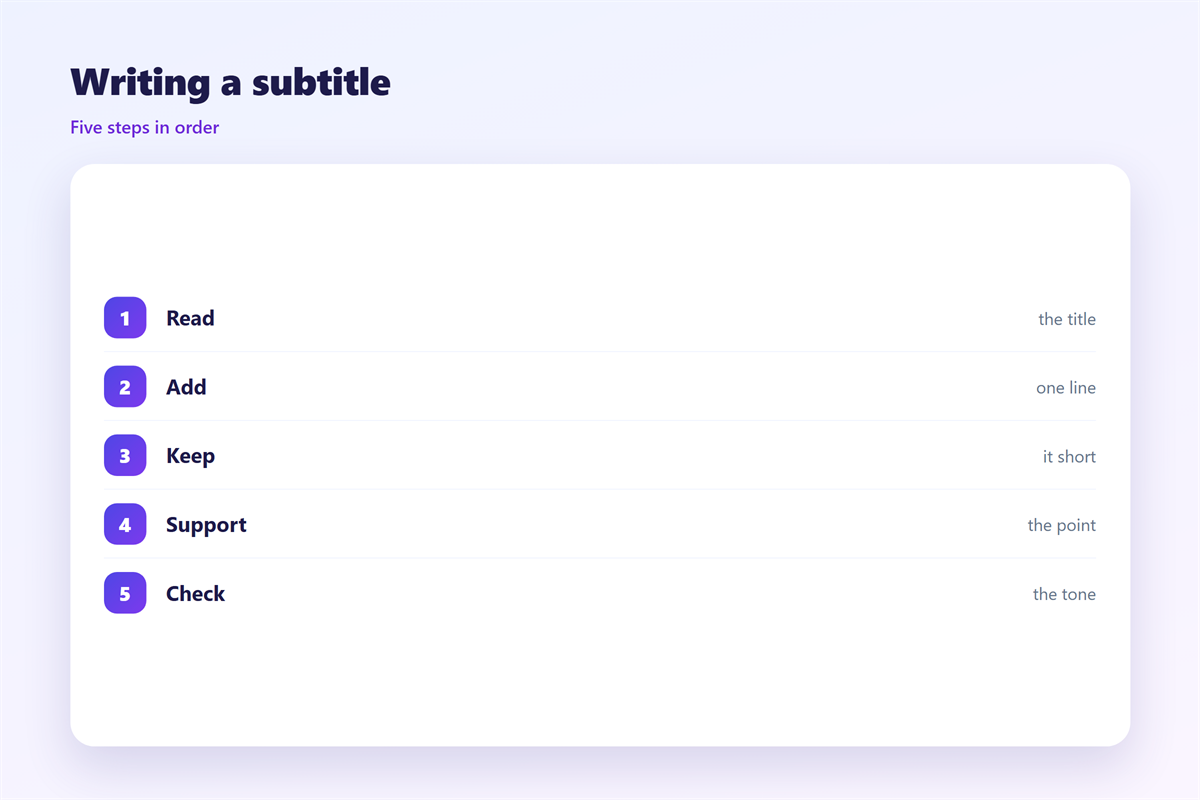
Start with the main title alone.
Ask what question it leaves open.
Write that answer as one line.
Keep it short
Keep it under ten words.
Then cut every word that repeats.
Make it smaller than the title.
Use a lighter colour or a lighter weight.
Place it right under the main line.
Next, read the pair on a phone.
Small screens show fewer words at once.
If the subtitle drops below the fold, shorten it.
Then check the plain text version.
Then shorten it by a word or two.
Read the pair out loud once.
If it sounds clumsy, rewrite it.
A clean line is easy to say.
That usually means it is clear too.
Good 邮件副标题 still works there.
邮件副标题 on small screens
Phone screens show a narrow column.
A long subtitle wraps into two lines.
That turns it into a paragraph.
So keep it shorter on mobile.
Test the pair at the smallest width.
Also check the space between the two lines.
A tight gap makes them look crowded.
A small gap keeps them together.
Then the pair reads as one block.
If it breaks apart, adjust the spacing.
Some phones also cut the title short.
Then the subtitle carries the meaning.
So it must stand on its own.
Test it without the title in view.
Keeping 邮件副标题 consistent
Consistency makes the pair feel familiar.
Pick one size and one colour for it.
The line that earns the open is in 邮件主题行.
The wider world of titles sits in 邮件标题.
The text that follows the pair is in 邮件正文.
The layout that holds them all is in 邮件排版.
Agree on where the subtitle always sits.
Then keep the same 邮件副标题 for every note.
A team that agrees on 邮件副标题 writes cleaner mail.
FAQ
What is a 邮件副标题?
It is a short line that supports the main title.
How long should it be?
One short line. Under ten words is safest.
Should it repeat the title?
No. It should add a detail, not a copy.
Can every mail have one?
Yes, but skip it if the title is already clear.
评论
还没有评论,来说两句吧。
评论功能已关闭。