 小影邮箱
邮件主题行怎么写?Get the Message Opened
Key Takeaways
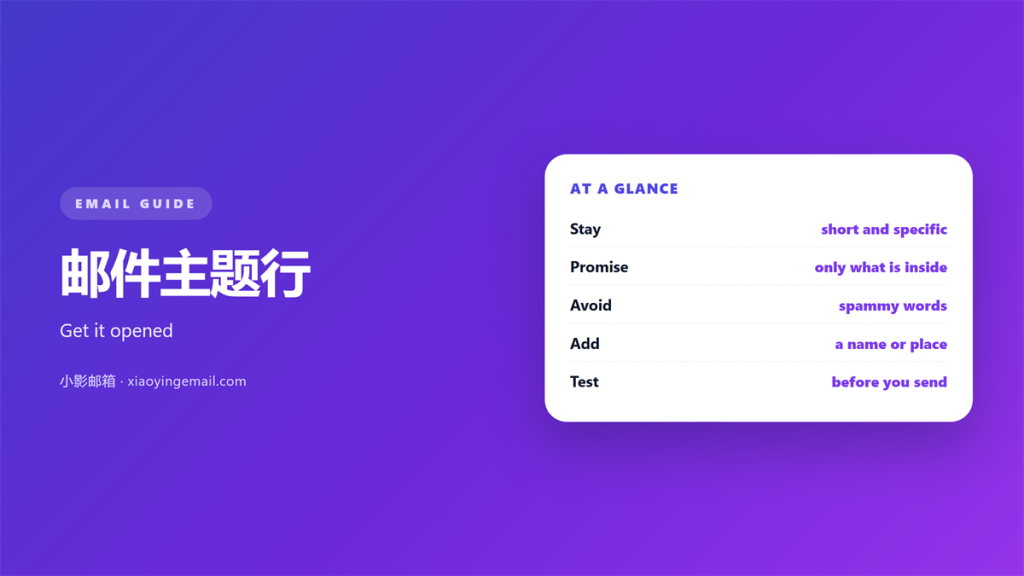
- 邮件主题行 decides whether a message is opened.
- Keep it short enough to read on a phone.
- Say what the message is about, plainly.
- Drop words that look like spam.
- Test two lines and keep the winner.
What a 邮件主题行 does
邮件主题行 is the short line that sits beside the sender name.
It is the first thing a reader sees in the inbox.
If the line is dull, the message is never opened.
If the line is honest and clear, more people click.
The line works with the preview text beside it.
Together they decide the first impression.
A strong 邮件主题行 makes one promise the body keeps.
That small promise is the heart of the whole message.
The sender name and the line are read together.
A clear line pairs well with a short preview.
That pair earns the first click.
A subject line should never make the reader guess.
Say who the mail is from and what it is about.
The preview text extends the idea of the line.
Write the two together for the best result.
A reader decides in less than a second.
Why the 邮件主题行 decides everything
Readers skim the inbox in a few seconds.
They judge each message by the sender and the line.
A weak line is deleted without a second look.
That is why this small field carries so much weight.
A clear 邮件主题行 also lowers the risk of a spam report.
It is the cheapest part of the email to change.
Small edits here move open rates the most.
An inbox is a busy and crowded place.
Standing out takes one clear idea, not many.
A good line earns the second a reader gives it.
A weak line wastes all the work behind it.
A tested 邮件主题行 is an asset you keep.
It sets the tone
A friendly line prepares a friendly read.
A cold line makes the same body feel distant.
Match the line to the mood of the body.
It filters the audience
A specific line attracts the right reader.
A vague line pulls in the wrong one.
Honesty saves everyone a wasted click.
How to write a 邮件主题行
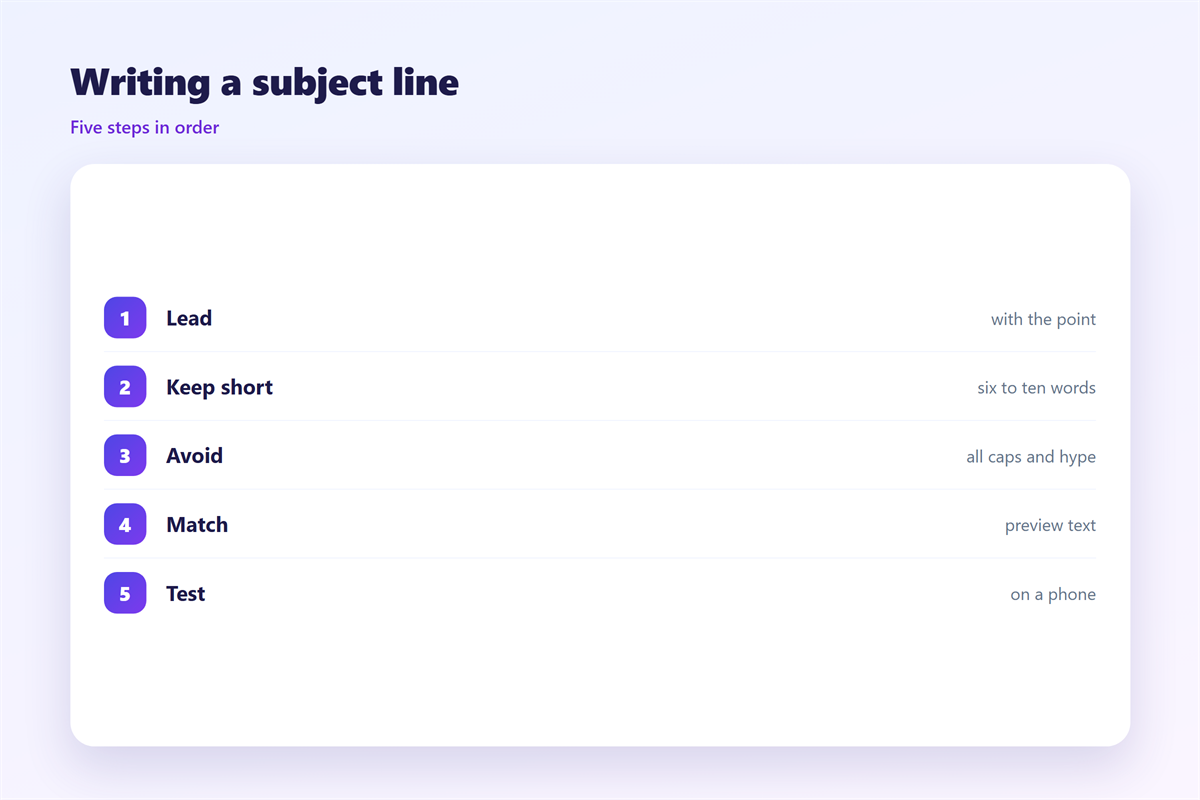
Start with the main point, not a teaser.
Front load the useful words. The ends get cut on phones.
Keep it under about six words where you can.
Use the reader’s language, not company jargon.
Add a clear reason to open, but do not over promise.
Write the subject after the body, once the point is clear.
Read it aloud. If it sounds odd, rewrite it.
Draft three 邮件主题行 options and pick the best.
Keep a swipe file of lines that worked before.
A good 邮件主题行 is specific, short and calm.
Use concrete words instead of vague ones.
Say the benefit in plain terms.
Keep one idea per line.
Keep the first word strong, since it is always visible.
Try reading the line with the sender name in front.
That is exactly how it appears in the inbox.
Keep the line free of internal shorthand.
Read it back after a short break.
Keep the promise small and easy to keep.
A clear 邮件主题行 respects the reader’s time.
Words to avoid in a 邮件主题行
Some words push a message toward the spam folder.
Free, urgent and act now are common triggers.
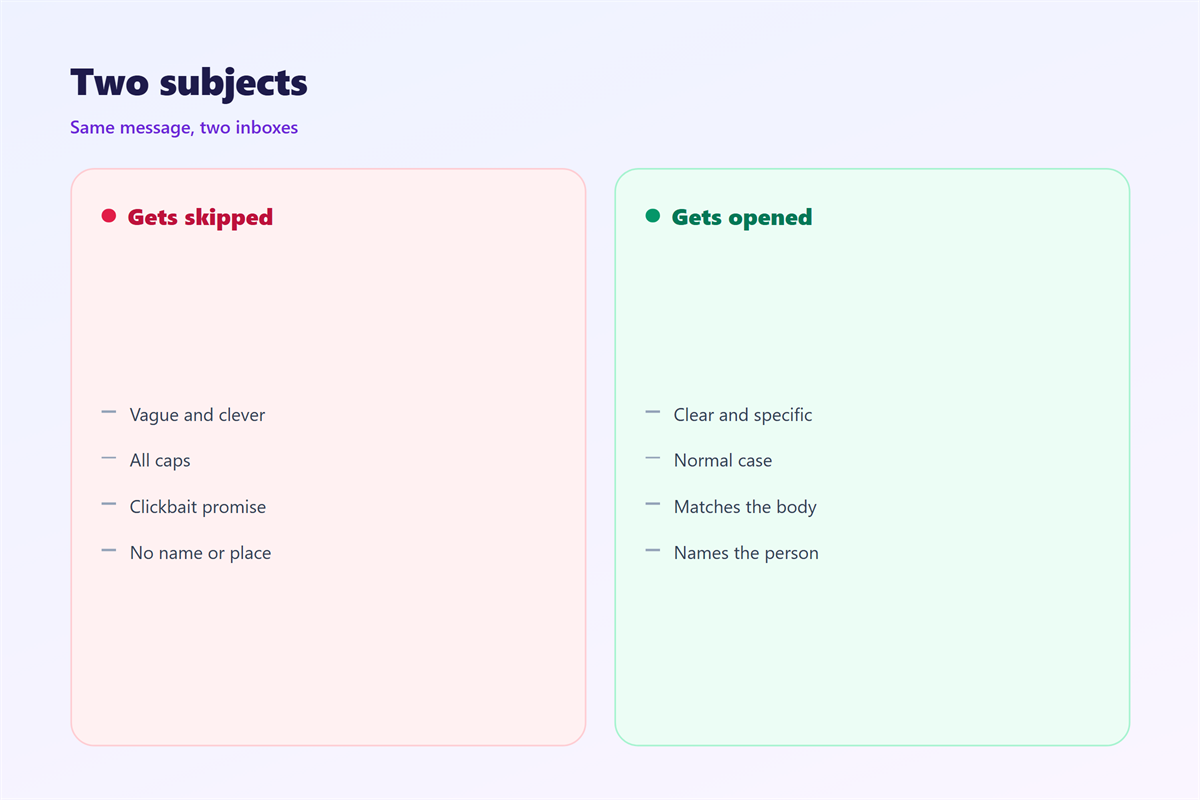
All caps look like shouting and often get filtered.
Too many exclamation marks read as a sales shout.
Fake replies such as re or fwd mislead the reader.
A misleading 邮件主题行 gets opened once, then reported.
Keep the promise in the line, and keep it true.
Honest words survive filters and keep your name clean.
Long strings of capital letters often trip filters.
Write like a person, not a billboard.
Keep punctuation simple and calm.
Avoid words that promise more than the body gives.
Money words can raise a filter flag.
Our notes on 邮件标题, 邮件预览文本, 邮件打开率 and 邮件长度 go deeper into each part.
Common mistakes in subject lines
The first mistake is length. Long lines get cut on phones.
The second is vagueness. A reader cannot tell what is inside.
The third is trickery. Clickbait wins a click and loses trust.
Another mistake is ignoring the preview text. It is read as one unit.
Do not repeat the sender name in the line. That space is precious.
Avoid testing too many changes at once. You learn nothing.
Check how the line looks on a small screen before you send.
A rushed 邮件主题行 undoes a well written body.
Another slip is a line that is too clever to understand.
Clarity wins more often than wit.
Keep a record of the best lines you have used.
The line should stand alone without the body.
If it only makes sense later, rewrite it.
Numbers add urgency when used honestly.
Avoid a number that is simply invented.
Keep the tone steady across a campaign.
One strong line is better than three weak ones.
Test one change at a time to learn anything.
Write the result down for the next campaign.
A tested 邮件主题行 can be reused for a whole campaign.
Keep a note of which lines won and by how much.
FAQ
How long should a 邮件主题行 be?
Aim for six words or fewer. Around forty characters works well.
Can I use emojis in the line?
One clear emoji can help. A row of them looks spammy.
Should the line match the body?
Yes, always. A broken promise costs a subscriber.
How do I test a subject line?
Split the list in two and compare opens. Keep the winner.
评论
还没有评论,来说两句吧。
评论功能已关闭。