 小影邮箱
邮件发货通知怎么写?Shipping Notes That Reassure
Key Takeaways
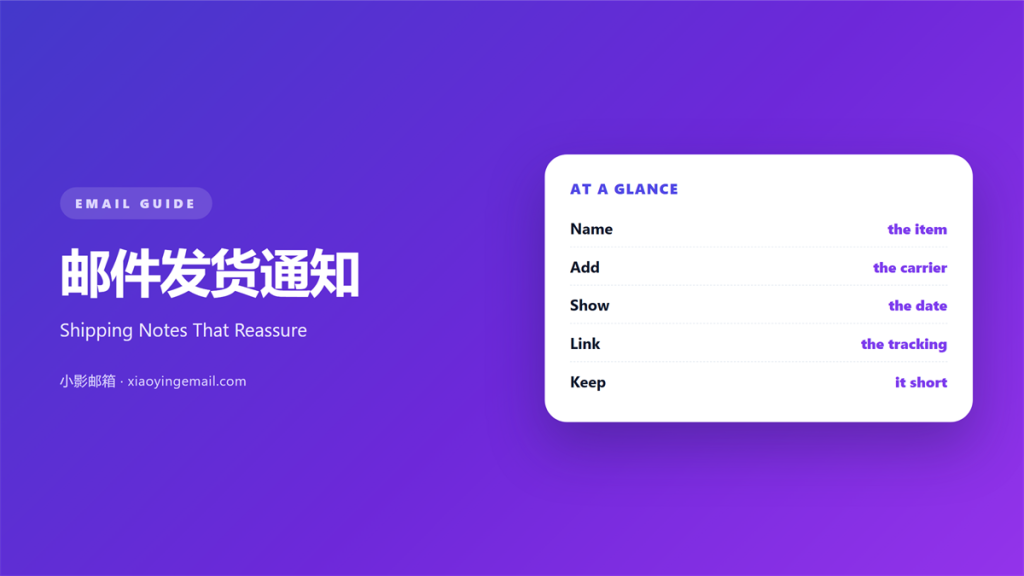
- 邮件发货通知 tells a buyer the parcel is on its way.
- Name the item, the carrier, and the send date.
- One working tracking link beats a paragraph of apology.
- Send the note the moment the shipping label prints.
- A calm, factual tone keeps buyer trust intact.
What 邮件发货通知 means
邮件发货通知 is the message a shop sends after packing an order.
It marks the exact moment the parcel leaves the warehouse.
The buyer has already paid and is now waiting.
This one note answers the only question on their mind.
Where is my order right now?
It is not a marketing email and not a receipt.
It is a short, factual update with a single job.
The job is to confirm movement, not to sell.
Keep that purpose in mind as you write.
Every extra line risks blurring the message.
A buyer reads the note in a hurry.
So the key facts must come first.
Read it once more after that.
Then shorten anything that drags.
Why 邮件发货通知 matters
Silence after payment makes people anxious.
Anxious buyers open support tickets and leave bad reviews.
A timely note removes that worry in seconds.
A clear 邮件发货通知 also cuts questions to your help desk.
Fewer tickets mean lower cost and calmer staff.
The note proves the order was real and moving.
That proof builds the trust which earns repeat purchases.
Trust is hard to win and easy to lose.
One unclear update can undo months of good service.
A buyer who feels informed rarely complains.
So treat the note as part of the product itself.
What to include
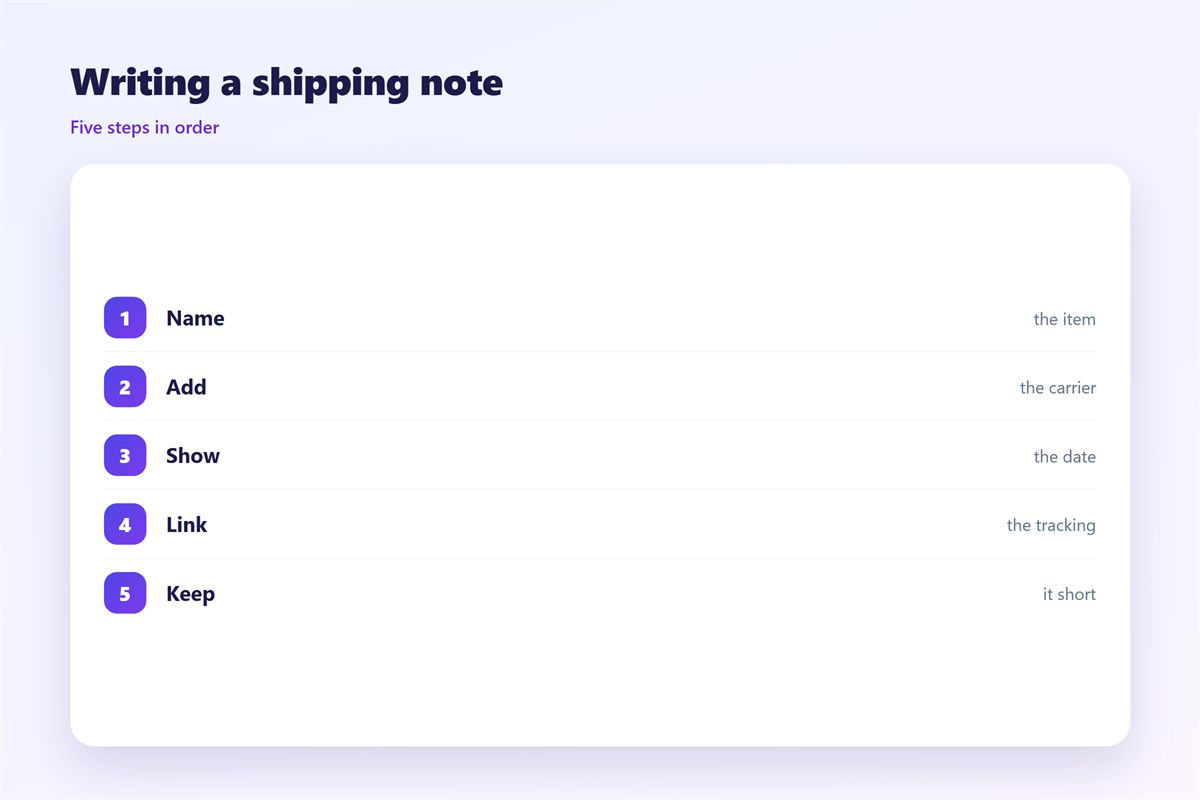
List the item name and the quantity shipped.
Add the carrier and the tracking number.
State the expected delivery window in plain words.
Close with one link and one support address.
Nothing else belongs in the first screen.
When 邮件发货通知 helps
Send one note when each box leaves the shelf.
Send a second only if the arrival date shifts.
Split shipments deserve their own separate notes.
Partial orders confuse buyers unless you explain them.
A short note per parcel keeps the record clean.
That habit also helps your support team.
Each note links to one parcel and one date.
Nobody has to guess which box is which.
Splitting a shipment
Say clearly which items went in the first box.
Name the items still waiting in the second.
Then give a fresh date for the missing part.
When 邮件发货通知 goes wrong
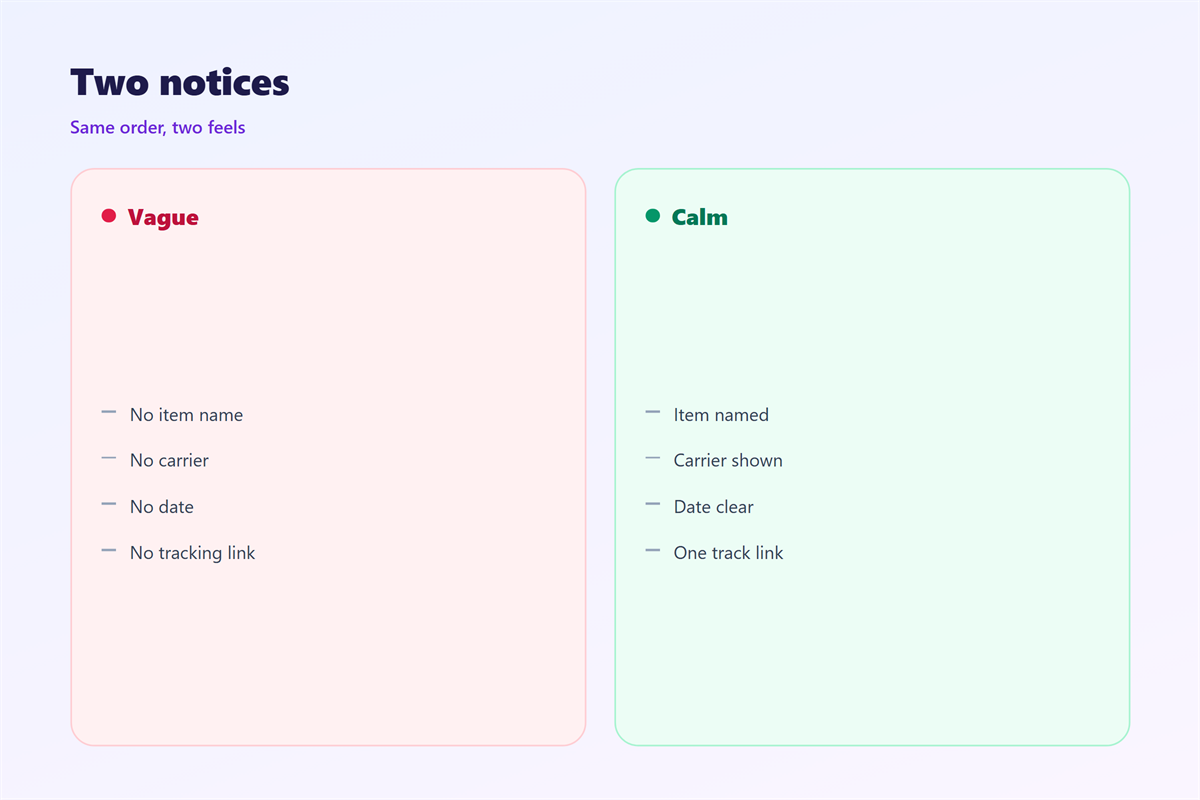
A vague note creates more questions than it answers.
Writing only “your order shipped” helps nobody.
A broken tracking link feels worse than no link.
Test every link before the message goes out.
Never bury the delivery date under marketing banners.
The update must sit at the very top.
Long disclaimers push the facts out of sight.
So trim the footer to the bare minimum.
Avoiding the apology trap
Apologise once, then move straight to the facts.
Repeated apology reads as panic, not care.
Give the buyer something concrete to act on.
邮件发货通知 in plain text
Some inboxes strip images and fancy layout.
So write the key facts in plain words first.
The item, the carrier, and the date must survive alone.
A tracking link typed as text always works.
If the plain version reads well, the rich version will too.
Build the simple version before you style anything.
Then layer colour and logos on top.
The plain base is your safety net.
It catches every client that misbehaves.
Strip it back and test the note again.
How to use 邮件发货通知 well
Start from a template your team already trusts.
Fill the fields from the order record, not by hand.
Hand typing invites typos in tracking numbers.
Then read the finished note once aloud.
Every sentence should answer one real question.
Cut any line that repeats what the buyer knows.
Keep the whole note under about one hundred words.
A short note gets read on a phone in a lift.
Add the support address for anything that breaks.
Then send the 邮件发货通知 the second the label prints.
Speed is part of the message itself.
A fast note says the shop is organised.
A slow note says the opposite.
So automate the trigger, not the tone.
邮件发货通知 and readability
Short lines are easier to scan on a phone.
Group the facts into a few tight blocks.
Put the tracking link on its own line.
Bold nothing unless it truly matters.
A calm layout signals a calm process.
That calm feeling carries into the unboxing itself.
Avoid long chains of small print.
Long blocks hide the most useful number.
White space does the sorting for you.
Read the note once on the smallest screen you own.
Keeping 邮件发货通知 consistent
Consistency turns a good note into a brand habit.
The first message a buyer reads is covered in 邮件订单确认.
The journey after dispatch appears in 邮件物流.
Where these messages live is set in 邮件通知.
Reusing the same wording safely is covered in 邮件模板.
Pick one layout and hold it for every order.
A team that agrees on 邮件发货通知 writes calmer updates.
FAQ
How soon should a 邮件发货通知 be sent?
Send it the same day the label is printed, ideally within minutes.
What must a 邮件发货通知 always contain?
The item, the carrier, a tracking link, and an expected date.
Should I send one note per item?
Send one note per parcel, even when a parcel holds several items.
Can I add a discount to the note?
Keep it minimal. One small link is fine, but a banner is not.
References
- Nielsen Norman Group: Writing useful notifications
- Litmus: Email rendering and client guides
- Mailchimp: Transactional email best practices
评论
还没有评论,来说两句吧。
评论功能已关闭。