 小影邮箱
邮件物流通知怎么写?Shipping News That Helps
Key Takeaways
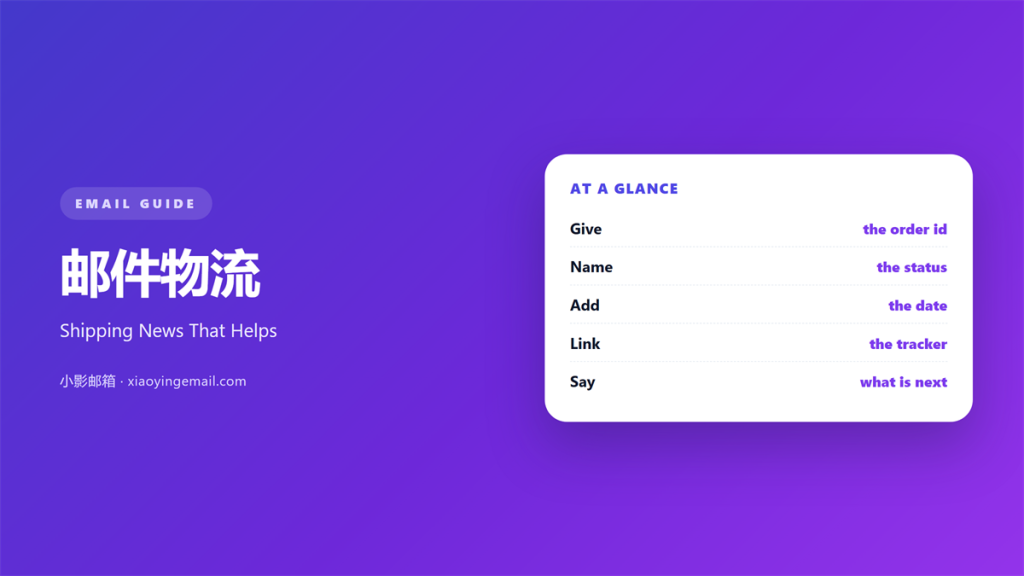
- 邮件物流 keeps a buyer calm after the payment.
- Say where the parcel is, not just that it shipped.
- One clear tracking link beats three vague lines.
- Bad news travels better with a next step.
- Write the update a worried buyer would want.
What 邮件物流 means
邮件物流 is the message that follows a shipped order.
It tells the buyer where the parcel is now.
It covers the pickup, the route and the delivery.
It also covers delays, returns and lost items.
A good note answers the question before it is asked.
A weak note repeats the order and adds nothing.
The difference is the detail inside.
A clear update names the place and the date.
It gives the buyer something to hold on to.
Silence after a payment feels like a risk.
A short note removes that feeling at once.
So this message is worth real care.
Each 邮件物流 note is a small promise kept.
A clear line can turn worry into calm.
It is service, not paperwork.
Why 邮件物流 matters
After payment, the buyer has only silence.
Every hour of silence invites a worried email.
Clear 邮件物流 fills that gap with facts.
It lowers the number of support tickets.
It also builds trust for the next order.
People remember a smooth delivery, not the price.
So this small note carries real weight.
A calm update keeps a buyer from cancelling.
It also reduces calls to the support desk.
A happy buyer often returns to buy again.
A worried buyer often leaves without a word.
The difference is often one clear email.
邮件物流 from order to door
A good update follows the parcel step by step.
Each step answers a simple question.
Keep the same order every time.
Then the buyer learns what to expect.
The pickup stage
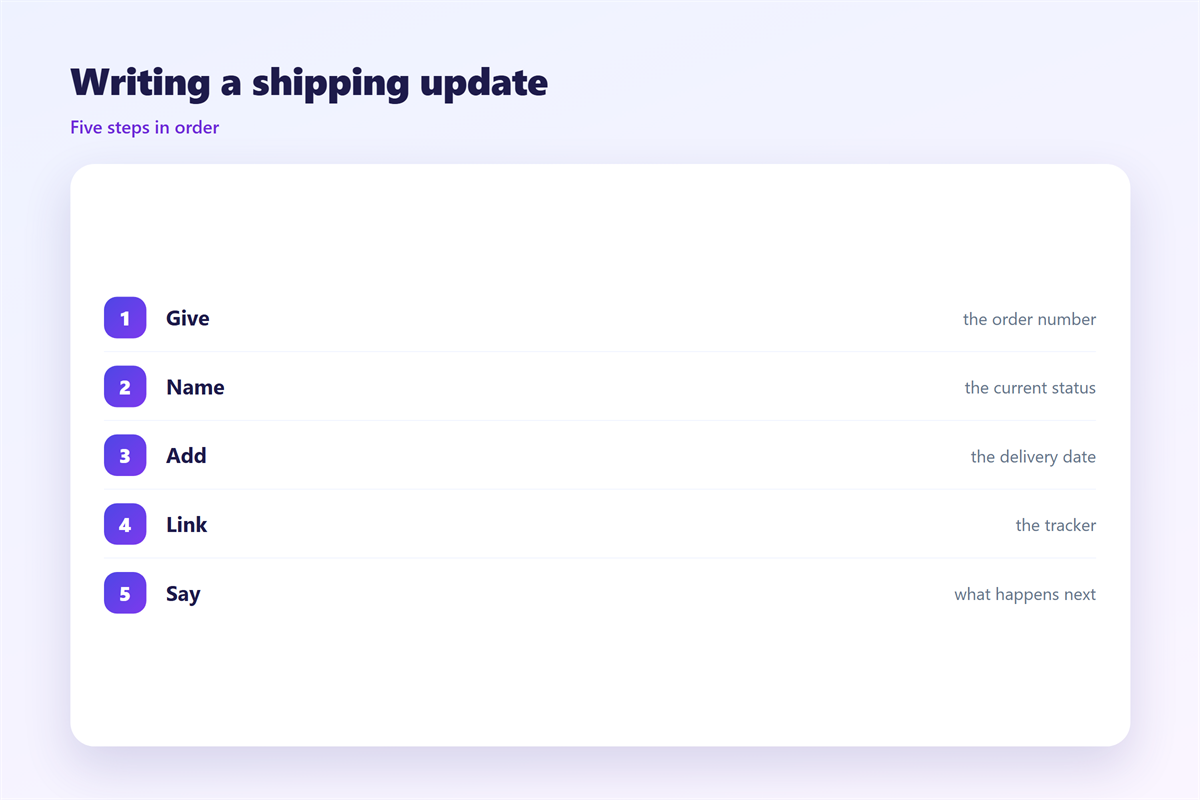
Confirm the parcel left the warehouse.
Give the date and the carrier name.
Add the tracking number in full.
The route stage
Show the current location and the next stop.
Keep the wording plain and calm.
Mention any scan the buyer might see.
The delivery stage
State the expected day and the time window.
Add what to do if nobody is home.
Give a safe place to leave the parcel.
Offer a pickup point as a backup.
A clear last step ends the worry.
Then the buyer can plan the day.
When 邮件物流 goes wrong
Delays happen. Good messages handle them well.
Tell the buyer before they ask.
What to include
Name the cause in one short line.
Give a new date you can keep.
Then offer a choice if one exists.
A refund option can calm a worried buyer.
Bad news plus a next step still reads as care.
Never hide a delay and hope it passes.
A hidden delay always becomes a bigger problem.
A calm 邮件物流 note can keep a customer close.
Own the problem and share the plan.
Honesty now saves an apology later.
邮件物流 and the customer
Every update is a small act of service.
Use the buyer’s name and the order number.
Keep the tone warm and the facts exact.
Never blame the carrier in the written note.
Keep the focus on the parcel and the plan.
Follow-up turns a delivery into a relationship.
One friendly line can lift a whole message.
Thank the buyer for their patience.
Invite them to reply with any question.
A quick reply shows the team is awake.
Small touches build a lasting habit of trust.
A loyal buyer is the real prize.
Fixing 邮件物流 before you send
Read the note as a tired buyer would.
Check the tracking link before you send.
Confirm the date and the time zone.
Check the buyer’s name and number.
Make sure the new date is real.
Remove any word that sounds like a blame.
Keep the tone warm from the first line.
A quick check
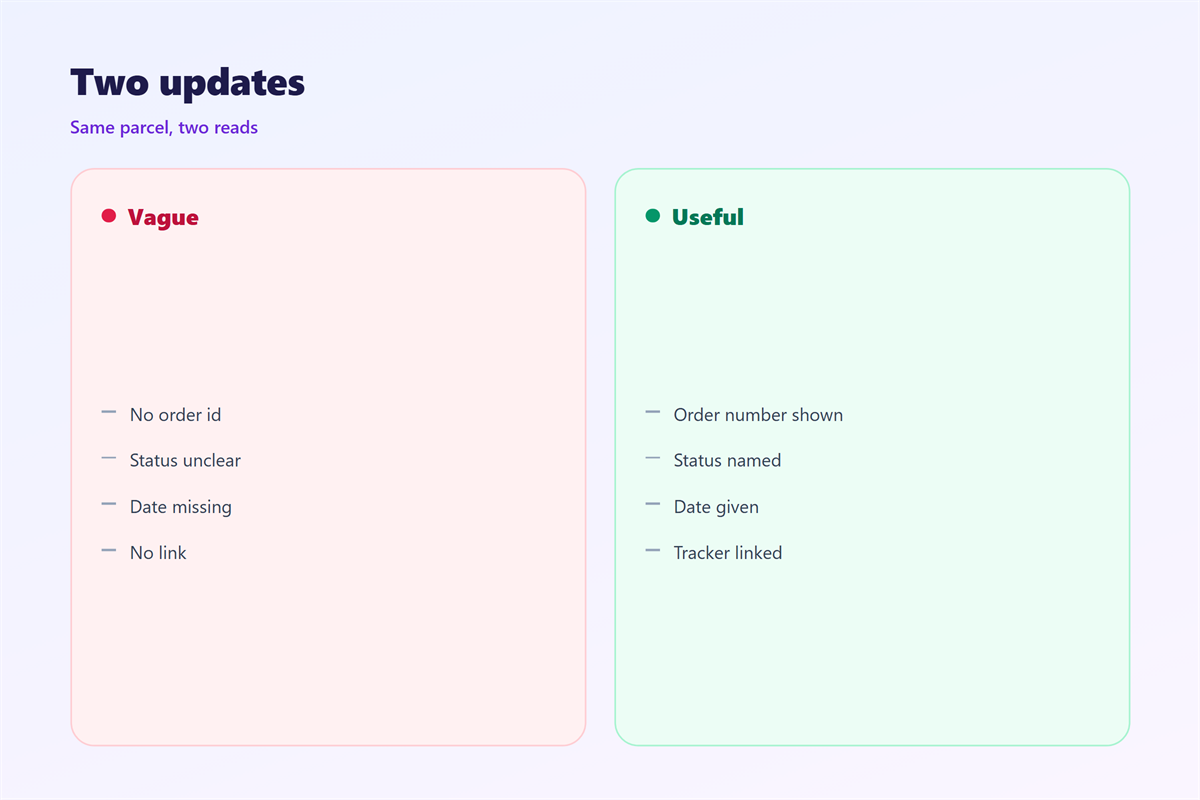
Name, number, place, date.
If a fact is missing, add it now.
A short note is easier to trust.
If the link is broken, fix it first.
Then send and keep the promise.
邮件物流 across borders
Shipping notes cross borders and languages.
Use short lines that translate well.
Spell dates in words to avoid confusion.
Give the local time, not only your own.
Keep numbers in plain digits.
A tracking link works in any language.
Avoid slang that only locals understand.
Keep the units clear for weight and size.
Name the currency beside any fee.
A simple layout travels across regions.
Then the buyer reads it without a pause.
Keeping 邮件物流 consistent
Consistency makes every update feel familiar.
Use one template for each stage.
The first note after payment is described in 邮件订单确认.
The rules for alerts appear in 邮件通知.
The way to follow a parcel is covered in 邮件追踪.
The long-term view is set out in 邮件客户关怀.
One style means less work for the whole team.
Keep the same words for each stage.
Review the template twice a year.
Add a new line only when it helps the buyer.
A shared style keeps every buyer calm.
Teams that agree on 邮件物流 write faster and read better.
FAQ
How often should I send a 邮件物流 update?
At each real step, and once more on delivery day.
What if the tracking shows nothing new?
Say so plainly and give the next expected update.
Should I apologise for a delay?
Once, briefly, then focus on the new plan.
Can one template fit every order?
Mostly. Adjust the details and keep the shape.
评论
还没有评论,来说两句吧。
评论功能已关闭。