 小影邮箱
邮件周年庆怎么发?Anniversary Mail Done Well
Key Takeaways
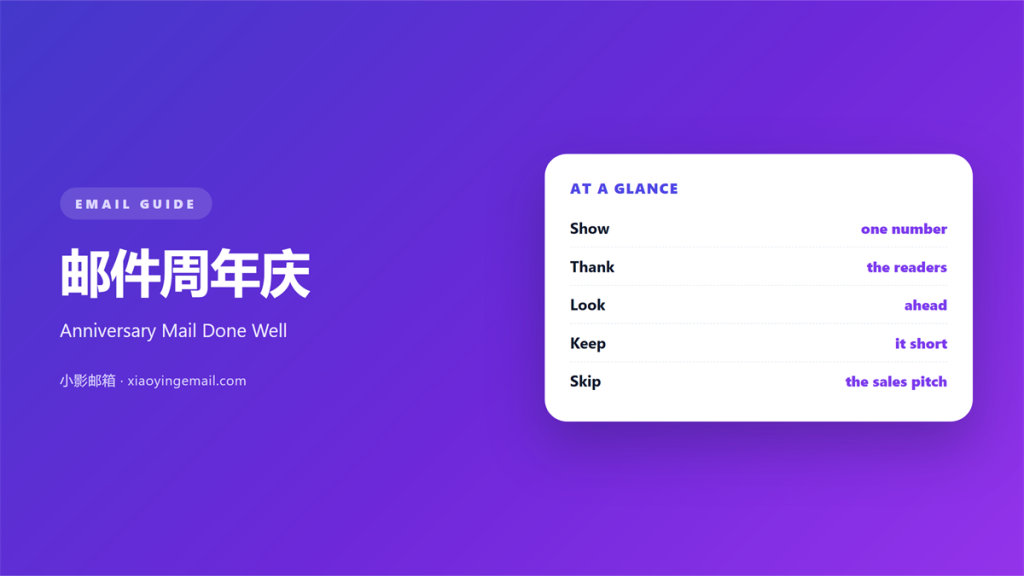
- 邮件周年庆 looks back at the year and forward to the next.
- One number that changed beats a long speech.
- Thank the readers before you ask them for anything.
- A yearly mail should keep the same shape each time.
- Check the send date against your other campaigns.
What 邮件周年庆 means
邮件周年庆 is a message that marks a fixed point in time.
It celebrates a year of work, a launch date, or a first customer.
The mail looks backward for proof and forward for a promise.
It is not a sale with a candle on top.
The point is memory. The reader should recall where you started.
So the mail carries one story and one number.
That number shows what changed since the year before.
The ending thanks the people who made the change possible.
A good 邮件周年庆 feels like a short letter, not a brochure.
It also arrives on the same date each year, so readers expect it.
Why 邮件周年庆 matters
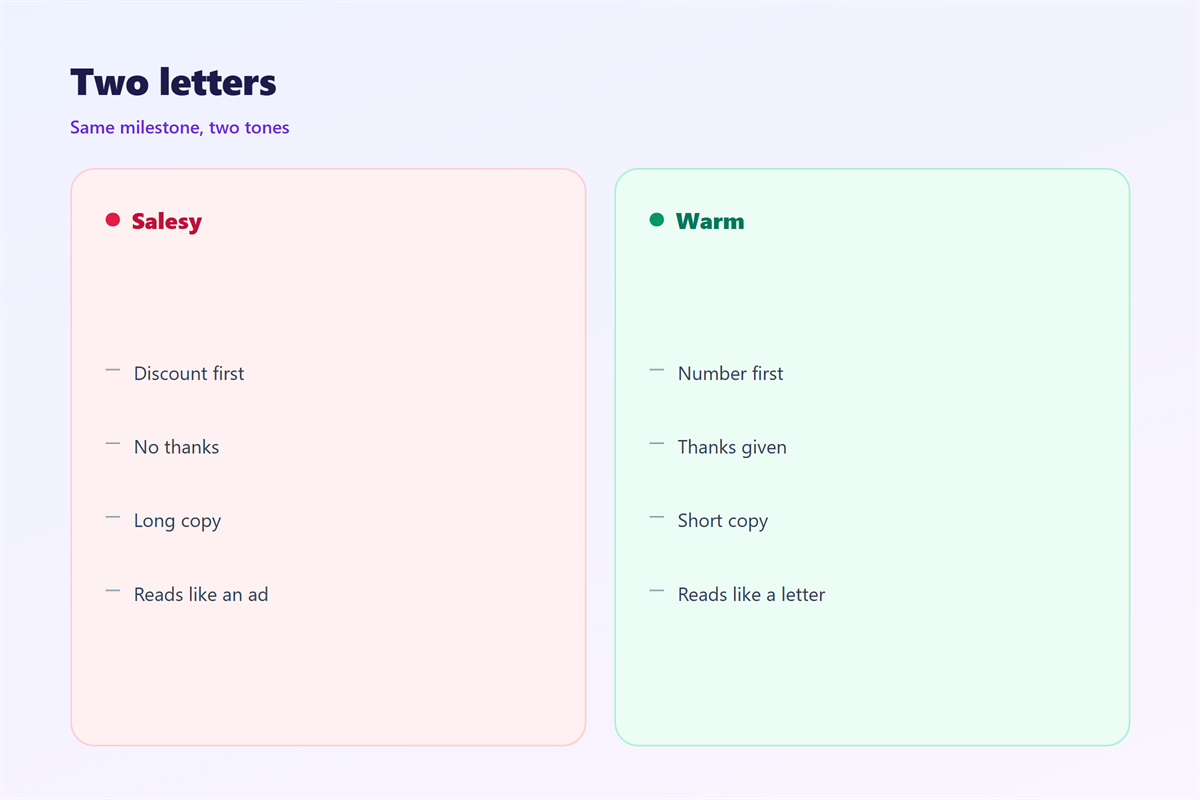
Most mail asks for something. An anniversary mail gives first.
That reversal earns attention without a discount.
A brand that remembers its own history looks steady.
Readers trust a sender who keeps a promise across years.
The mail also creates a natural moment to re-introduce the product.
New readers learn the story in one screen.
Old readers get a reason to feel part of it.
Both groups see the same proof, so the message stays simple.
A yearly page also gives your site one more useful entry point.
邮件周年庆 costs less than a campaign because the assets already exist.
One date, one story
Pick the date you will always use.
It can be the founding day or the first order.
Then write the story that belongs to that date.
Do not move the date when the calendar is inconvenient.
When 邮件周年庆 helps
邮件周年庆 helps when the brand has a visible timeline.
A shop, a newsletter, or a service all have one.
It helps most when trust is the barrier.
A hesitant reader will weigh how long you have lasted.
The mail answers that question with a date and a fact.
It helps again when you need to thank quiet readers.
People who never reply still open a friendly note.
The anniversary gives you a reason to write without a pitch.
The number that changed
Choose one number and show its movement.
Orders shipped, towns reached, or hours saved all work.
Keep the two values side by side.
Then let the reader draw the conclusion.
When 邮件周年庆 hurts
邮件周年庆 hurts when the mail is only a discount.
A coupon labelled anniversary teaches readers to wait.
They learn to ignore the other eleven months.
It hurts when the timeline is invented or inflated.
Readers can check a public date in seconds.
One wrong claim costs more than the campaign earns.
It also hurts when the mail is too long.
A full history in one message is a wall, not a gift.
Keep the memory short and let the link carry the rest.
Finally, it hurts when the send collides with another campaign.
Two messages on one day split the attention you just earned.
邮件周年庆 and brand memory
Brand memory is built by repetition, not by volume.
The mail returns at the same time each year.
That rhythm teaches readers when to expect you.
Use the same layout, the same colour, and the same opening line.
Then change only the number and the story.
Repeat the same shape
A fixed shape makes the second year feel familiar.
The reader recognises the mail before reading the subject.
That recognition is the whole reward.
So resist the urge to redesign it every year.
Keep one template and let the content do the work.
How to use 邮件周年庆 well
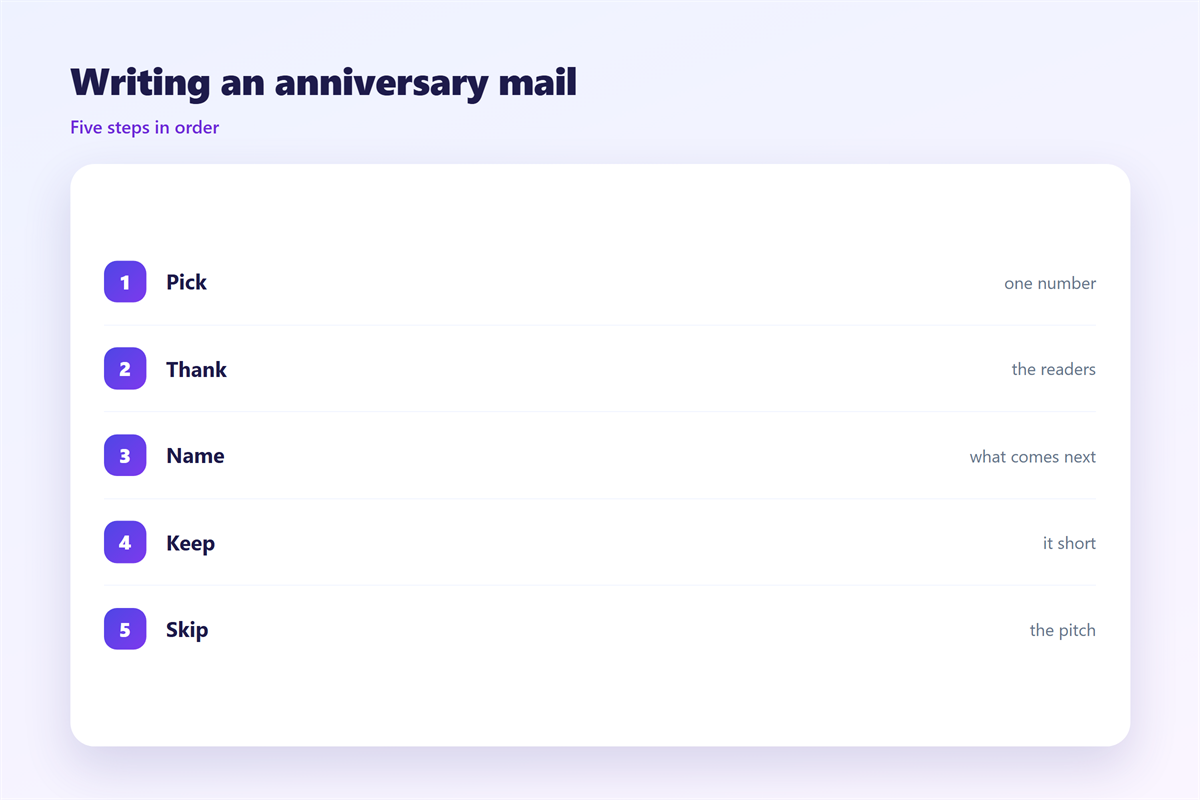
Start with the thank-you, then add the proof.
Open with one sentence that names the year.
Follow it with the single number you chose.
Then tell the reader what the number means for them.
Add one forward promise for the coming year.
Keep the body under two hundred words.
Put one link near the end, not three.
Write the subject line last.
It should mention the year, not a percentage.
Then send a plain-text version to the same list.
Write the thank-you first
The thank-you is the part readers remember.
Write it in plain words and name a real group.
Avoid the phrase valued customer, which means nothing.
Say what the readers made possible.
Then read it aloud once before you send.
邮件周年庆 on a small screen
On a phone, the mail gets one screen.
The year and the number must fit above the fold.
So cut the greeting to a single line.
Place the image after the first paragraph, not before it.
Keep the number large enough to read without zooming.
Then check that the date appears in the first view.
A long scroll hides the reason for the mail.
If the reader must hunt for the year, the design failed.
Test with images turned off as well.
The message should still make sense without them.
Keeping 邮件周年庆 consistent
Consistency is what turns a mail into a tradition.
Set one date, one template, and one tone.
The wider identity work sits in 邮件品牌.
The first-contact flow appears in 邮件欢迎系列.
The tone of the thank-you is covered in 邮件客户关怀.
The reusable layout itself lives in 邮件模板.
Then write those choices into a note the team can read.
Put the date in a shared calendar with a two-week reminder.
FAQ
How early should a 邮件周年庆 go out?
Send it on the date itself. A week early looks like a sale.
Should the anniversary mail include a discount?
Only if the discount is the story. Otherwise it undercuts the thanks.
Can a small brand send one?
Yes. A first year is a real milestone with a real number.
How do we measure an anniversary mail?
Watch replies and forwards. Opens alone will not tell you much.
评论
还没有评论,来说两句吧。
评论功能已关闭。