 小影邮箱
邮件欢迎系列怎么建?A Welcome Series That Works
Key Takeaways
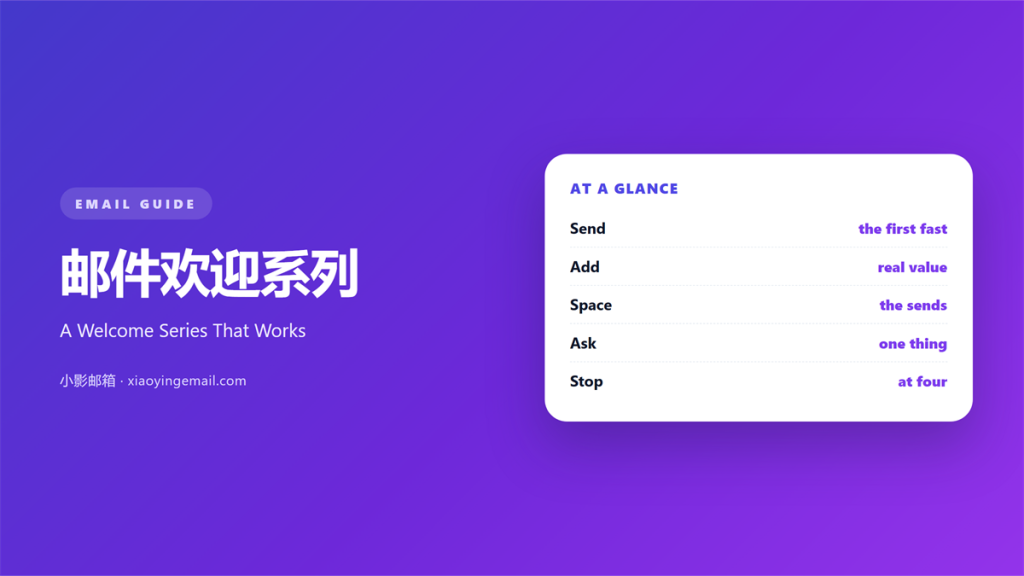
- 邮件欢迎系列 greets a new reader over a few days.
- Lead with value, then make one clear ask.
- Keep each note short and easy to skim.
- Space the emails to match the reader’s pace.
- Let one warm voice carry the whole set.
What 邮件欢迎系列 means
邮件欢迎系列 is a short set of emails for new readers.
It runs for a few days after someone signs up.
Each note shares one idea and one small step.
The set builds trust before it asks for anything.
Think of it as a guided first week.
The reader meets your voice and your reasons.
By the end, they know what to expect from you.
That clear picture keeps them from drifting away.
A clear welcome removes doubt right away.
It tells the reader they made a good choice.
Then it points to the first useful step.
That step should be small and easy.
Why 邮件欢迎系列 matters
The first days decide the whole relationship.
A new reader is curious but not yet loyal.
One lonely email can feel cold and forgettable.
A warm 邮件欢迎系列 turns a stranger into a reader.
That warmer start lifts every later send.
It also sets a useful habit for the reader.
They learn when and why you show up.
So the welcome pays off for months.
The welcome also saves you from repeating yourself.
It answers common questions before they are asked.
New readers trust a name they have met before.
A strong start makes later offers feel natural.
A first handshake
Treat the first note as a handshake.
Say hello, share your purpose, and be brief.
Then let the next note continue the chat.
How many emails in a 邮件欢迎系列
Three to five notes is a healthy range.
A short 邮件欢迎系列 often beats a long one.
Every extra email must add real value.
If it repeats the last one, cut it.
Each note should stand on its own.
A reader who misses one should still follow.
Short notes are easier to finish and remember.
Long notes often lose the reader midway.
The first note
The first note says hello and sets the tone.
Confirm the sign-up and explain what comes next.
The second note
The second note offers a quick win.
Share a tip the reader can use today.
The last note
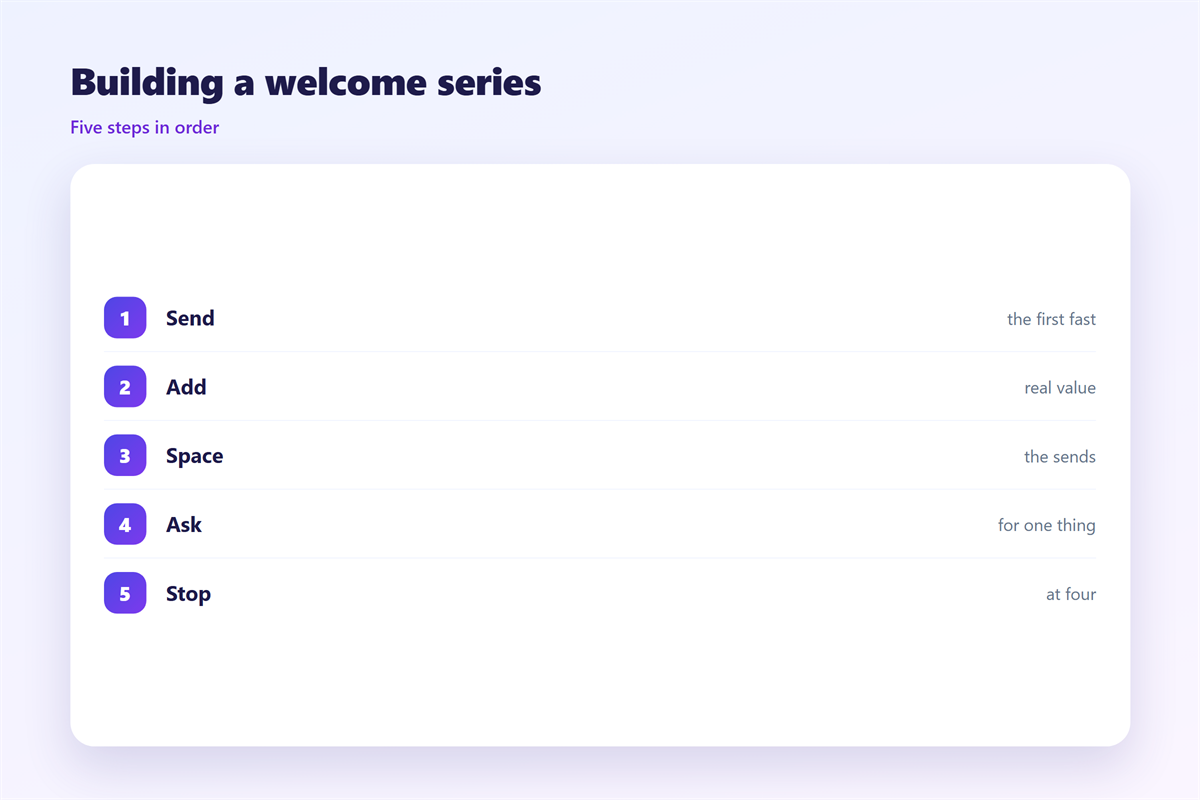
The last note makes one clear ask.
Invite them to take a single next step.
Timing the 邮件欢迎系列
The first email should arrive right away.
Then space the rest over several days.
Send the 邮件欢迎系列 across the first week.
Leave a little room between each note.
Do not send three emails in one afternoon.
A gentle pace feels calmer and more human.
A weekend gap is usually fine.
Match the pace to how often you truly write.
A rushed schedule rarely helps the reader.
Let the set breathe between each send.
邮件欢迎系列 and voice
One voice should carry the whole set.
Readers notice when the tone jumps around.
Keep the greetings and sign-offs the same.
Write like you speak to one person.
Short words usually beat long ones.
That steady voice becomes your signature.
One clear voice builds quick recognition.
Readers learn to trust a steady tone.
Avoid slang that only a few will know.
Keep the reading level simple and kind.
Mistakes in a 邮件欢迎系列
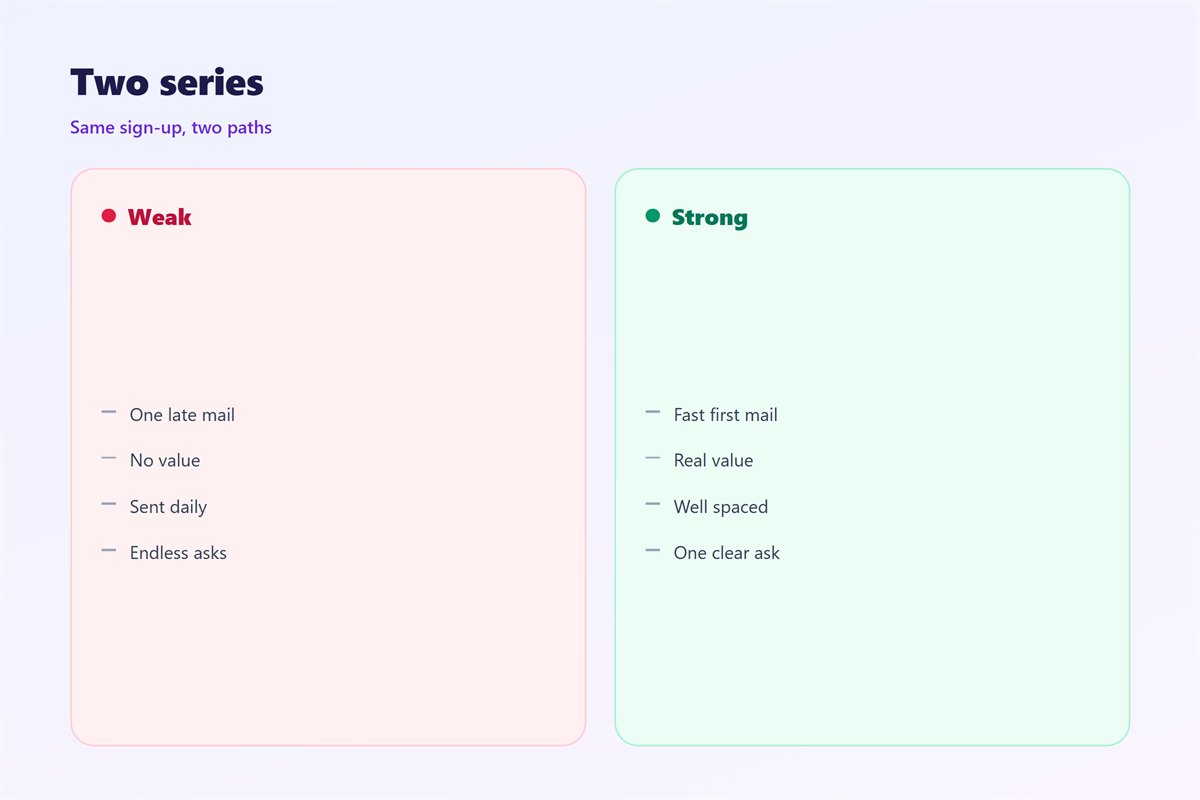
Many welcome emails ask for too much.
They push a sale before they offer help.
A rushed 邮件欢迎系列 reads like a form letter.
Others bury the point under a wall of text.
Keep each message to a single idea.
If a note has two goals, split it.
Keep the design as simple as the words.
A plain note often reads better than a busy one.
Do not hide the main point below the fold.
Put the useful line near the top.
邮件欢迎系列 in numbers
Numbers show which notes land well.
Track the open rate of each email.
Track the click rate right after it.
A falling rate marks a note to fix.
Watch how the 邮件欢迎系列 performs over time.
Small edits can lift a weak step a lot.
A small test tells you more than a guess.
Change one thing and watch the result.
Keep the change if the number improves.
Drop it quickly if the number falls.
Keeping the 邮件欢迎系列 alive
A welcome set is never really finished.
Reread it every few months with fresh eyes.
Cut any line that has gone stale.
The first hello itself is covered in 邮件欢迎信.
The long warm-up before a sale appears in 邮件培育.
The rules that run the set quietly live in 邮件自动化.
The very first week at a new job is in 邮件入职.
Then test one new subject line.
Keep the change only if it helps.
Ask a new reader what confused them.
Fix that single thing first.
Keep the set short and honest.
A reader should never feel buried in mail.
One clear change at a time is enough.
Small steps are easier to repeat.
Then let the reader rest before the next note.
Then share the set with a teammate.
Fresh eyes catch what you have missed.
FAQ
How long should a 邮件欢迎系列 be?
Three to five emails over the first week is plenty.
Should I sell in the welcome series?
Wait until you have offered real value first.
Can I send all the emails at once?
No. Space them so each note can be read.
What if a reader ignores the first email?
Keep going. The second or third may still land.
References
- Mailchimp: Building a welcome email series
- Litmus: Email design and strategy
- Harvard Business Review: Writing email that gets read
评论
还没有评论,来说两句吧。
评论功能已关闭。