 小影邮箱
邮件回复率怎么提高?Getting an Answer Back
Key Takeaways
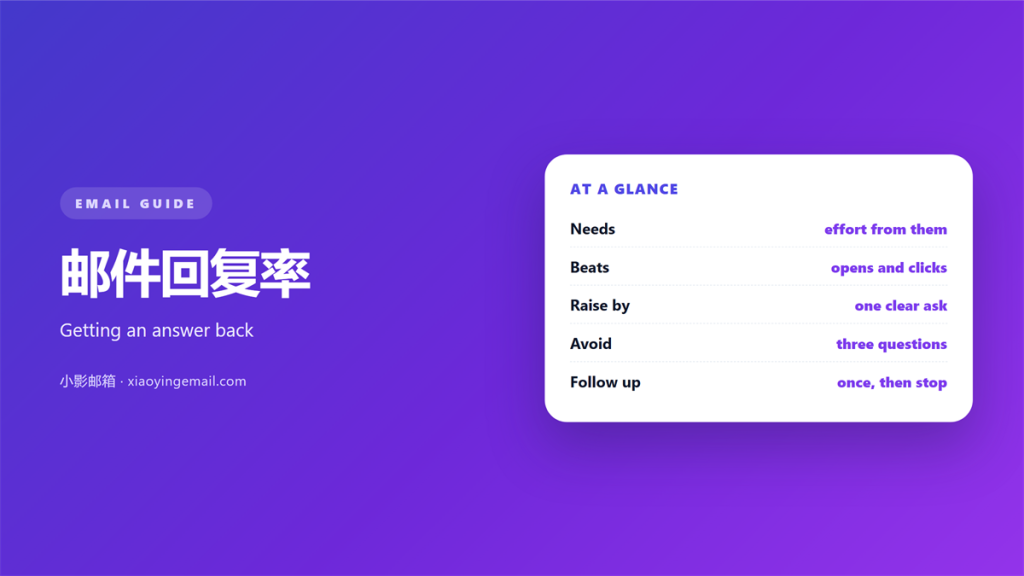
- 邮件回复率 is the only metric that needs real effort.
- Opens and clicks are cheap; a reply is not.
- One clear question beats three vague ones.
- Send to the person who can actually answer.
- Follow up once, then let it rest.
What 邮件回复率 really measures
邮件回复率 is the share of messages that get an answer back. It is simple to state and hard to fake.
An open can happen by accident. A click can be a mis-touch. A reply takes writing and thought.
That effort is the whole point. The reader must decide, type and send. Nothing else in email asks that much.
So a good 邮件回复率 is a strong signal. It means the message reached a real person and earned a real answer.
The number is also unforgiving. A clever subject line may lift opens. It does nothing if the ask is weak.
A reply is also a promise. It means the reader will spend time on your request.
A warm 邮件回复率 is easier to earn. The reader already knows you. That trust does most of the work.
The setting matters as much as the number. A support reply differs from a sales reply. Judge each one in its own context.
Why 邮件回复率 beats opens and clicks
Open rates are noisy. Image blocking and preview panes distort them. Apple’s privacy changes made them rougher still.
Click rates are cleaner but rare. Most replies never touch a link. A reader often answers straight from the inbox.
So a high open rate can hide a weak message. Plenty of people looked and nobody cared enough to answer.
邮件回复率 has no such gap. The action is the outcome. There is little room for a false positive.
This is why it fits one-to-one mail so well. When you need an answer, only an answer counts.
Track the two side by side. When opens rise and replies fall, the message is off. That gap points to a weak ask.
Machine opens distort the picture. A scanner may open mail before a person sees it. A 邮件回复率 ignores that noise.
How to raise 邮件回复率
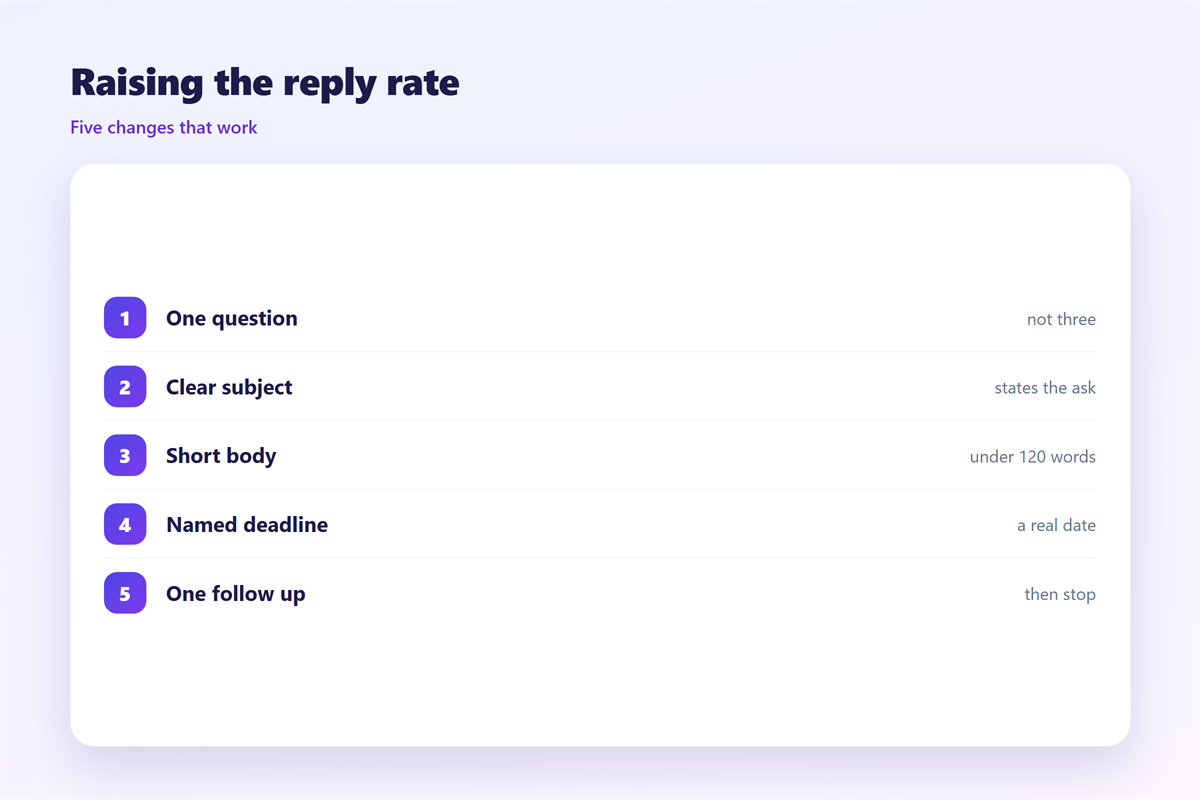
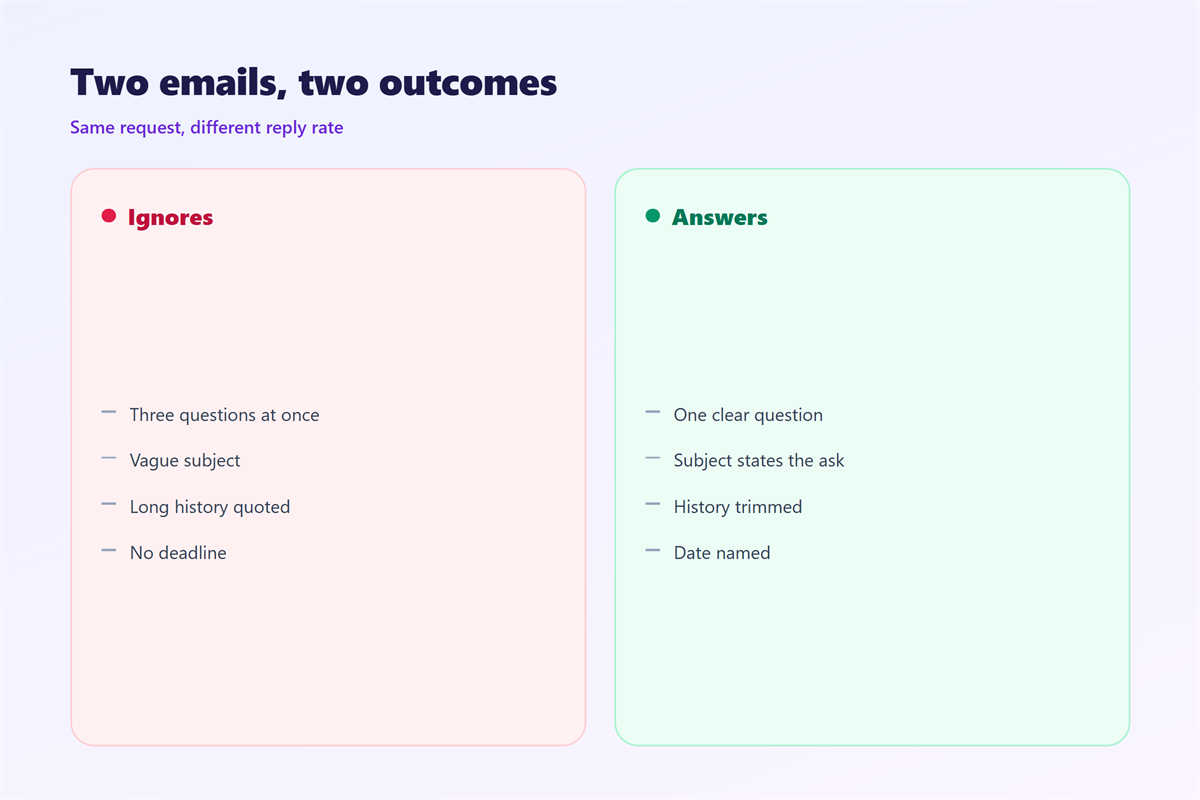
Start with a single ask. One message should want one thing. Two requests usually get zero answers.
Make the question easy. A yes or no reply is quick. An open essay takes an evening.
Name the next step. Tell the reader what happens after they answer. A clear path lowers the effort.
Write to the right person. A message to the wrong desk will not come back. Find the name who owns the answer.
Keep it short. Most good requests fit in a few lines. Long messages look like work and get postponed.
A clear 邮件回复率 habit also means one follow-up. Send a short reminder after a few days. Then stop and let it rest.
Think about the reader’s day. A busy person answers the easiest message first. Make yours the easiest one.
Offer a small choice where you can. Two clear options beat an open question. A quick pick often earns a 邮件回复率.
A short deadline can help. Say when you need the answer. Vague timing invites delay.
Match the tone to the relationship. A formal client note reads differently. Warm contacts answer a warmer line.
Measuring and improving 邮件回复率
You need a baseline before you improve. Track a small set of sent messages. Count the ones that came back.
Separate the kinds of mail. A cold request and a warm follow-up differ. Do not mix them in one number.
Tags make this easier. Mark each message by purpose. Then compare like with like over a month.
Change one thing at a time. A shorter ask, or a clearer subject, is enough. Two changes at once teach you little.
Keep the records simple. A small table is enough. Note the date, the ask and the outcome.
Look for patterns over time. Maybe one weekday works better. Maybe short asks win.
A rising 邮件回复率 rewards patience. Change rarely shows in a day. Judge it across several weeks.
Give it time. A single week is too short. A month of data shows a real trend.
Common mistakes with 邮件回复率
Do not chase an answer with volume. Three reminders in a day will not help. They push the reader away.
Do not hide the ask in a wall of text. Put the question near the top. Make it impossible to miss.
Do not blame the reader. If nobody answers, the message was unclear. Fix the message first.
Do not confuse replies with reaction. A polite note is not a decision. Count real answers, not every line.
Do not send from a no-reply address. People cannot answer a wall. That address lowers your 邮件回复率 by design.
Then check the mechanics behind the number. Understand what 邮件打开率 really tells you. See why 邮件点击率 is not the same thing. Learn how 邮件追踪 works, and when 邮件回复 should go to everyone.
FAQ
What is a good 邮件回复率?
It depends on the audience. A warm list may answer often. A cold list answers rarely. Compare with your own past, not others.
Can I improve it with a better subject?
A subject helps openings. It rarely creates an answer. The ask and the effort matter more.
Should I always follow up?
Once is usually enough. A short, polite reminder works. Repeated nudges lower your 邮件回复率 over time.
Why do people open but not reply?
The ask was unclear or too large. Make it smaller, then send again.
References
- IETF RFC 5322: Internet Message Format
- IETF RFC 8058: Signaling One-Click Functionality
- Google: Archive or delete messages in Gmail
评论
还没有评论,来说两句吧。
评论功能已关闭。