 小影邮箱
邮件版本怎么管?Which Draft Is Which
Key Takeaways
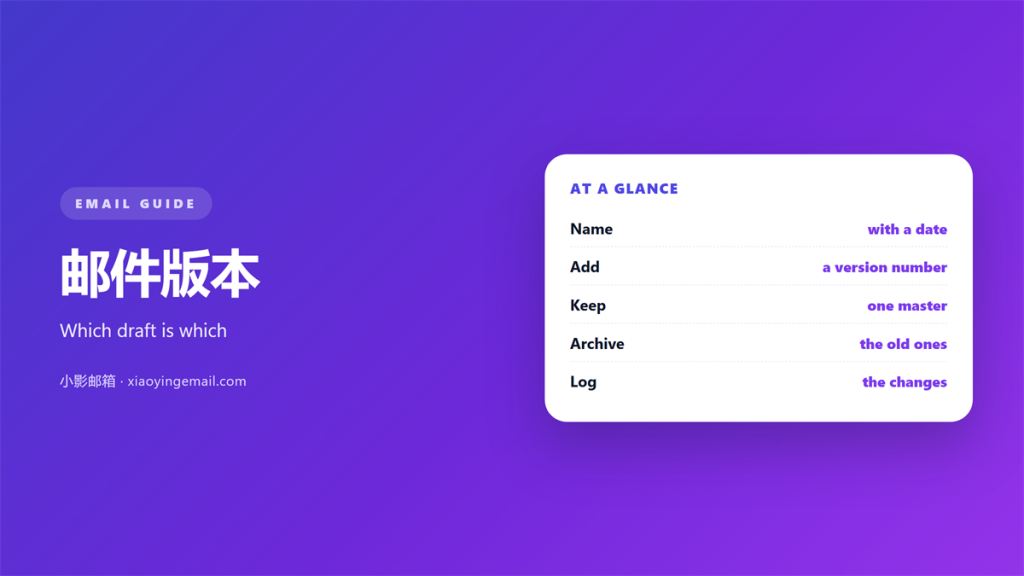
- 邮件版本 makes clear which draft is current.
- Never name two files final.
- Use one simple naming rule for the whole team.
- Keep the newest file in one shared place.
- Retire old drafts so they cannot be sent by mistake.
What 邮件版本 means
邮件版本 is the label that tracks one stage of a draft.
It tells you what changed and when. A clear name is a small gift to the next reader.
Without it, two people edit the same file and lose work.
A version number is short and clear.
It is not the same as a backup.
A backup copies a file. A label marks its place in a story.
A good 邮件版本 ends confusion before it starts.
It answers one question. Which draft is the current one?
That answer saves hours of checking. A clear label also ends the habit of asking the author.
The file speaks for itself.
The whole team benefits from one shared rule. One rule is easy to teach and easy to remember.
Two rules invite a mix up.
Why 邮件版本 matters
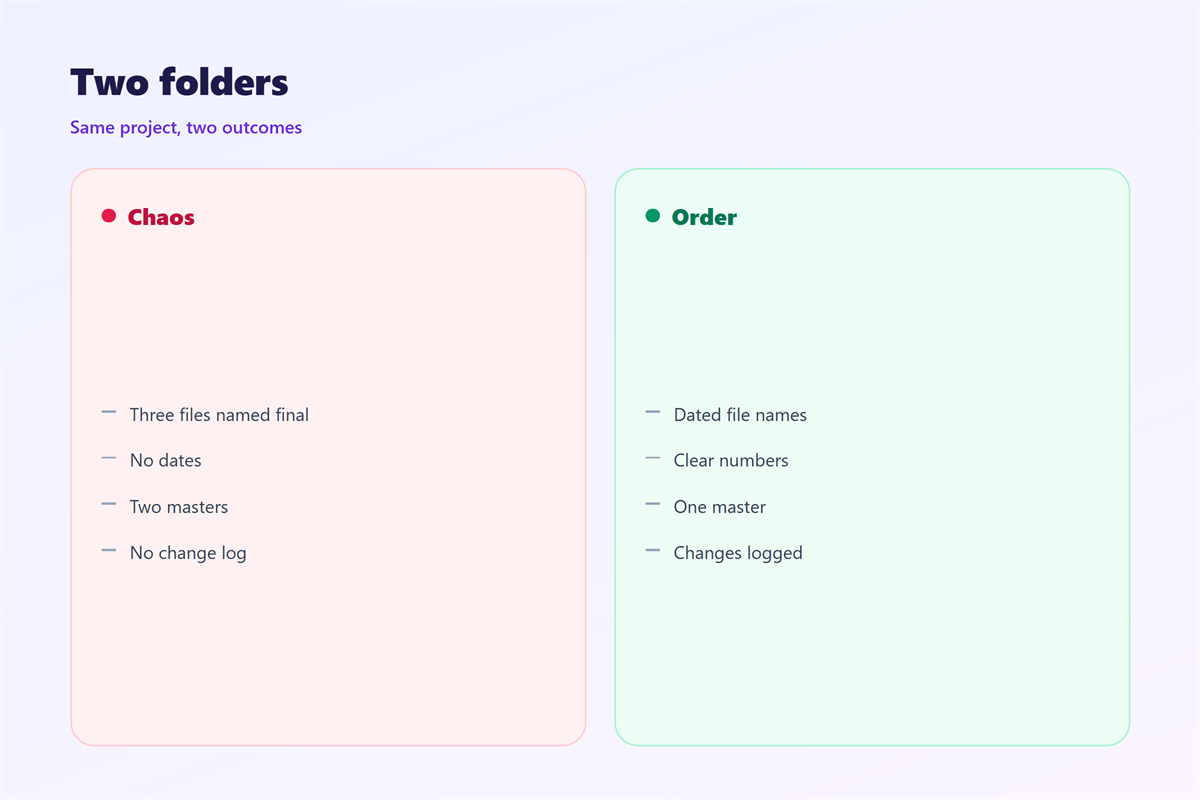
Two drafts named final is a recipe for mistakes.
Somebody sends the wrong one and the error is public.
A clear label removes that risk. A calm folder also makes a quick search possible.
A steady 邮件版本 habit also speeds up handover.
The next editor knows exactly where to start.
It shows the history of every change.
You can roll back to an earlier draft with confidence.
That safety net turns a bold edit into a safe one. A clear trail also answers any later question.
That record protects the whole team.
The quiet benefit
Clean versions keep a review calm.
Nobody argues about which file is right.
Over a long project, the trail shows the team’s progress.
That trail is useful at audit time.
It also settles any later claim about what was agreed.
How to name 邮件版本
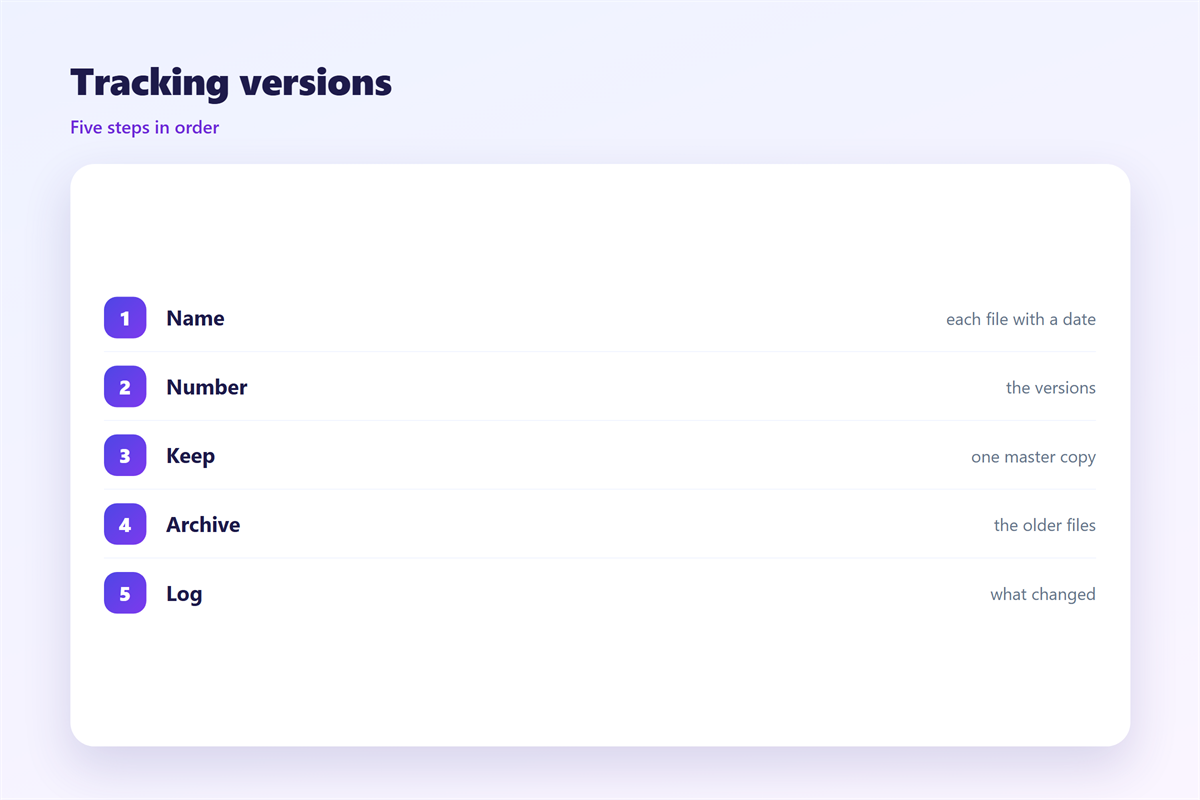
Pick one pattern and keep it.
Start with the project name.
Add the date in a fixed order. Keep the date first if your team scans by day.
Then add the version number.
End with a short note of the change.
Keep the whole name short. Short names also fit smaller screens.
Use letters and numbers together, like v2 or v3.
Avoid words like final and latest.
Those words lie as soon as a new draft appears.
A steady 邮件版本 name never needs a second look. Teach the pattern once and check the first few files.
A quick check now saves a long hunt later.
What to include
Put the newest draft at the top of the folder.
Keep a short note of what changed. A tidy folder invites careful work.
One source of truth
Keep one copy in one shared place.
Never edit a local copy.
That rule ends most lost work.
A short change log
Record the date and the editor.
One line for each change is enough.
A short log beats a long memory.
Clear ownership
Name the person who holds the current draft.
A clear owner stops two people editing at once.
That small rule prevents a large conflict. A short header in each file helps too.
Put the owner and the date at the very top.
Numbers that help 邮件版本
Keep no more than two active drafts at a time.
Retire the older ones to an archive.
A short list of live files is easy to scan.
Date each draft so the newest is obvious. A dated folder sorts itself in most tools.
Review the folder once a month.
Delete drafts that are fully replaced. Keep what the team may need again.
A tidy 邮件版本 trail stays useful for years.
Closing a 邮件版本
Mark the approved draft as the sent one.
Then move the rest to the archive.
Tell the team which file is now current.
A short message ends all doubt.
Keep the final text clean and plain. Add the date to the final note.
Then close the folder and move on.
A clear 邮件版本 ends the moment the mail is sent.
Mistakes that weaken 邮件版本
The first mistake is naming a file final.
The second is keeping many copies in many places.
The third is editing a local copy.
Another is a long name nobody can read.
Finally, do not leave old drafts where people can grab them.
A simple 邮件版本 rule beats a clever one. A clever scheme fails when people forget it under pressure.
Keep the rule dull and repeatable.
Sending and improving 邮件版本
Name the attachment after the draft. The rules are set out in 邮件附件命名.
Log each send in one list. A clear record is shown in 邮件台账.
Move old drafts to storage. The steps are gathered in 邮件归档.
Reuse a steady opening and close. A good skeleton is described in 邮件模板.
Then improve one part of the naming each round. Small edits beat a new system.
Ask the team where they felt unsure. The answer points to the next fix.
Keep the rule short and teach it once. A shared 邮件版本 habit saves the whole team time.
FAQ
Is 邮件版本 the same as a backup?
No. A backup copies a file. A version marks its place in a sequence.
How many drafts should stay active?
Two at most. Archive the rest once they are replaced. Fewer live files means fewer chances to send the wrong one.
What should a name contain?
The project, a date and a short version number. Keep it short so everyone can type it the same way.
Who owns the current draft?
Name one person. Shared ownership usually means no owner.
评论
还没有评论,来说两句吧。
评论功能已关闭。