 小影邮箱
邮件生日怎么发?Birthday Mail That Feels Real
Key Takeaways
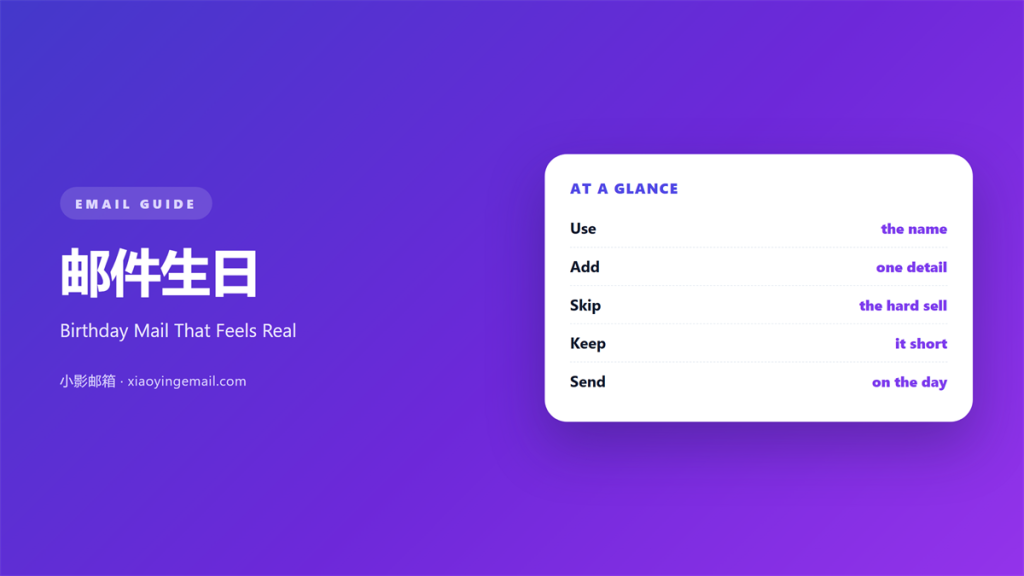
- 邮件生日 should read like a person wrote it.
- Use the name and one real detail.
- Send it on the day, in the reader’s morning.
- Skip the hard sell and keep the tone light.
- A small perk beats a loud discount.
What 邮件生日 means
邮件生日 is a short note sent on or near a reader’s birthday.
It is not a campaign in the usual sense.
Its job is to mark a date, not to move stock.
The message can be one line and one image.
It can also carry a small gift.
What matters is that the reader feels seen.
That feeling comes from detail, not from design.
A name alone is not enough.
Thousands of brands know the name.
One remembered fact is rarer.
So the note should hold something only a reader would recognise.
That detail turns a template into a message.
A good note arrives once, in the morning, and asks for nothing.
Why 邮件生日 matters
A birthday note arrives on a day with good will.
That good will is hard to buy.
It gives a quiet brand a reason to speak.
It also keeps a list warm between big campaigns.
A reader who hears nothing for a year forgets the sender.
One short note fixes that gap.
邮件生日 also lifts the small signals.
Opens rise when the subject carries a name and a date.
Replies rise when the note asks a simple question.
Those replies are worth more than a click.
That is why 邮件生日 earns more attention than a newsletter.
A date is not a campaign
Treat the birthday like a calendar event.
It repeats, it is expected, and it is small.
That rhythm builds familiarity.
Familiarity is what makes a brand feel present.
Presence is the real goal.
When 邮件生日 helps
邮件生日 helps when the list is small enough to feel personal.
A few thousand readers can still feel individual.
It helps when the product is bought once a year.
The note keeps the name in view between purchases.
It also fits a service with real people behind it.
A named agent can sign the note.
Use it when you hold a birth date with clear consent.
Consent matters more than the offer.
And use it when the reader has bought before.
A stranger’s birthday note feels odd.
The same note from a known shop feels warm.
Who should receive it
Send to people who chose to hear from you.
Send to people who gave the date themselves.
Do not guess a date from a name.
Do not buy a list to fill the calendar.
When 邮件生日 hurts
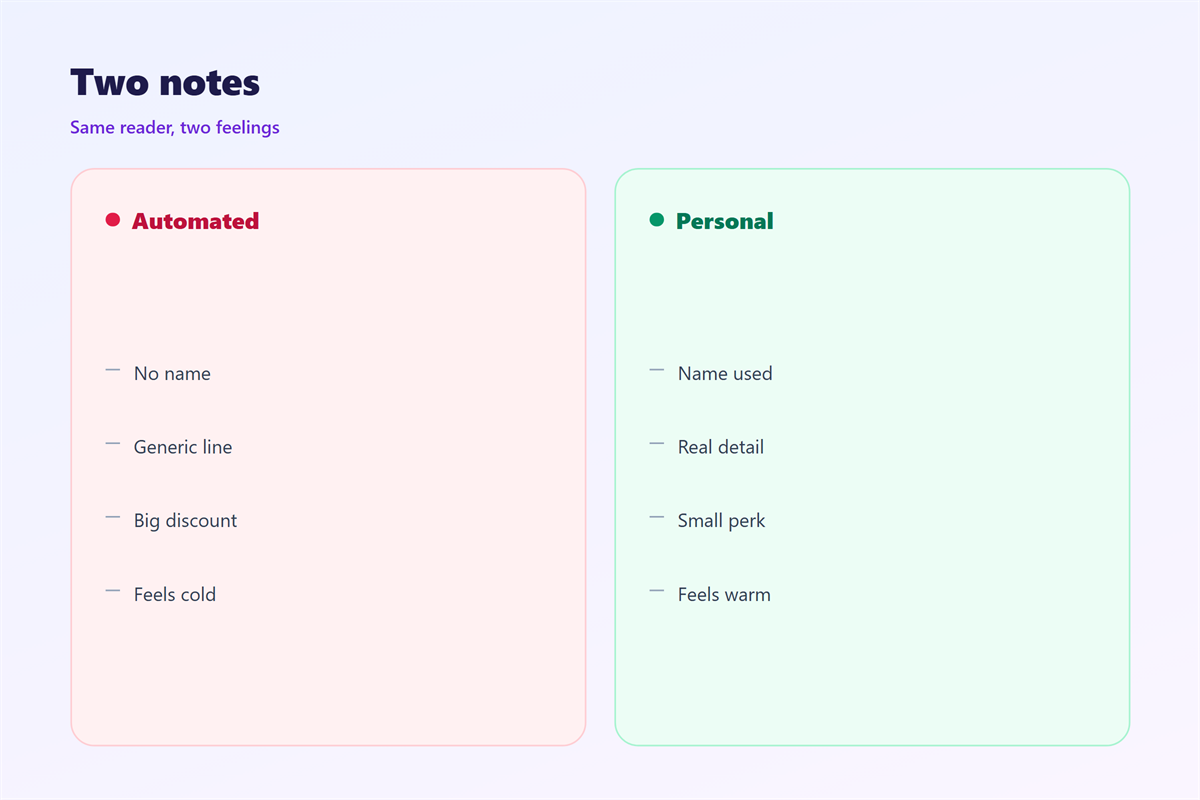
邮件生日 hurts when it is only a discount code.
The reader sees the trick in one second.
It hurts when the date is wrong.
A wrong date is worse than no note.
It also hurts when the note arrives a week late.
Late greetings feel like an afterthought.
And it hurts when every reader gets the same text.
Readers compare notes. Somebody always posts a screenshot.
A generic line becomes a public joke.
Finally, it hurts when the note asks for a review.
Let the day belong to the reader.
One ask is enough. Often none is better.
邮件生日 and real detail
Detail is what separates a note from a mailshot.
Pick one fact the reader shared.
A city, a product, or a first purchase date all work.
Then write one sentence around it.
Keep the sentence plain.
Do not stack three facts in one line.
邮件生日 only needs one true thing.
If no fact exists, use the name and stop.
A short honest note beats a padded one.
Avoid the uncanny line
Some personal details feel like surveillance.
Referencing a recent order can be useful.
Referencing a private message is not.
Ask one question before you use a fact.
Would the reader smile or flinch?
If the answer is unclear, leave it out.
How to use 邮件生日 well
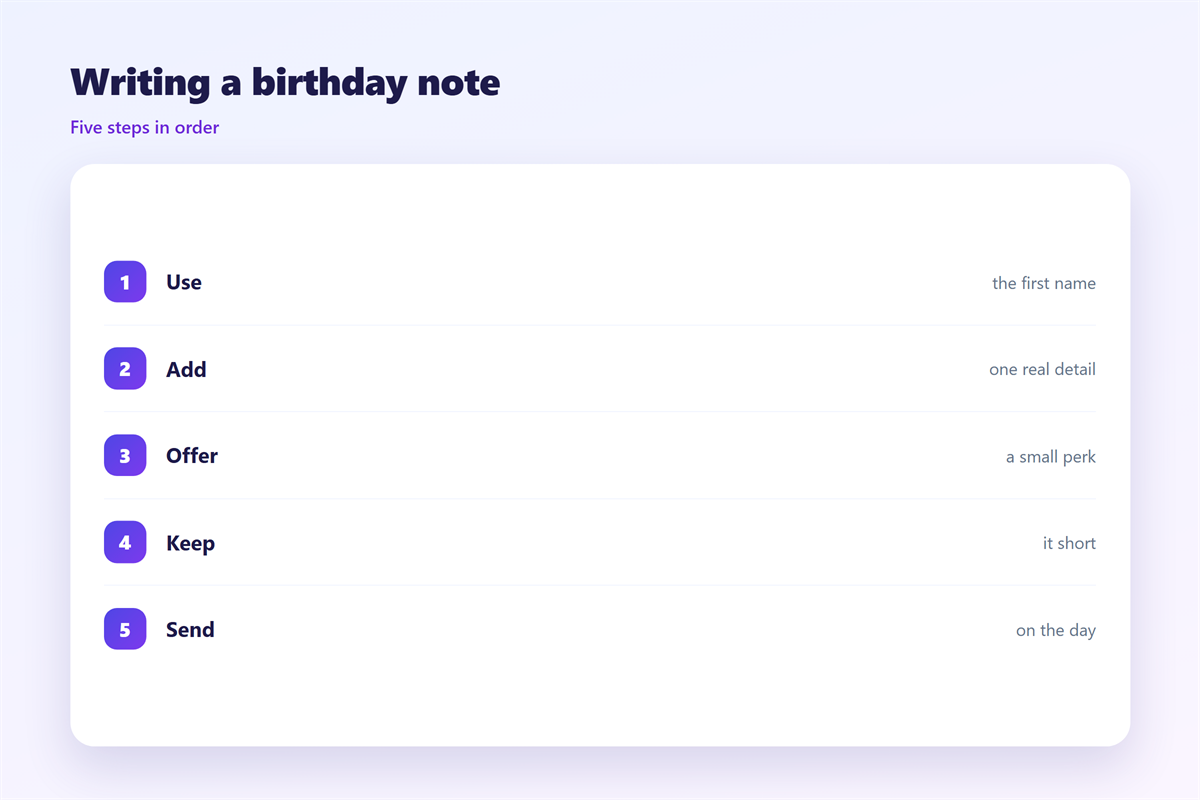
Start with the calendar.
Set the send time for the reader’s morning.
Write the subject as a greeting, not a headline.
Keep it under forty characters.
Then write three short lines.
Line one names the day.
Line two carries the detail.
Line three offers the perk, if there is one.
Sign with a human name.
Add one plain link for the gift.
A 邮件生日 with two links splits the reader’s attention.
Then test the note on a phone.
A birthday note should never need a scroll.
邮件生日 across the year
A birthday mail is one item in a longer plan.
Place it beside the welcome note and the renewal note.
Space the touches so none of them collide.
Check the month before you add a campaign.
December is crowded. February is not.
A quiet fallback matters here too.
Plan it before the busy months arrive.
If the date is missing, send nothing.
An empty field ruins the whole message.
So test the merge tags every quarter.
Keeping 邮件生日 consistent
Consistency keeps the note warm.
Use one tone across every year.
Every birthday note should use the same short sign-off.
The personal fields are covered in 邮件个性化. The wider relationship sits in 邮件客户关怀. A small gift is explained in 邮件优惠券. The yearly rhythm appears in 邮件内容日历.
Then write the template once and protect it.
Review it each year, not each month.
A stable note becomes a small tradition.
FAQ
When should a 邮件生日 arrive?
On the day, in the morning. Early is better than late.
Should the note include a discount?
Only a small one. A heavy discount makes the note feel like sales.
Can I send it without a birth date?
No. Ask for the date and wait. Guessing breaks trust.
How often should the template change?
Once a year at most. Readers notice small, steady details.
评论
还没有评论,来说两句吧。
评论功能已关闭。