 小影邮箱
邮件祝贺信怎么写?Words for Good News

Key Takeaways
- 邮件祝贺信 names the news and the effort behind it.
- Send it soon after the news arrives.
- Mention the person, not just the result.
- Keep the tone warm and free of envy.
- Short notes often feel the most sincere.
What 邮件祝贺信 means
邮件祝贺信 is a short note that celebrates someone’s good news.
It is not a card, a speech, or a formal letter.
A good note names the event and the effort behind it.
Then it adds a warm line of goodwill.
A 邮件祝贺信 keeps that message brief and sincere.
People send one after a promotion or a new job.
They also send one after a wedding, a birth, or an award.
The tone stays warm, specific, and free of envy.
Every kind note answers one simple question.
The question is whether the reader feels seen.
Short notes reach that feeling faster than long ones.
Good news deserves more than a quick like.
A note gives the moment real weight.
It marks the event and the person behind it.
Why 邮件祝贺信 matters
Good news often travels fast and fades fast.
A 邮件祝贺信 keeps the moment alive for the reader.
It shows that you noticed the effort, not just the win.
That small signal builds warmth and trust.
Without it, the news feels shared but not celebrated.
So send the note before the moment passes.
A quick note often deepens a working bond.
Warm words cost nothing and return a great deal.
A warm note also strengthens a working tie.
People remember who shared their joy.
That memory often returns as a favour later.
What a good 邮件祝贺信 proves
A good note proves you paid attention.
It names the effort that led to the result.
That detail is what the reader remembers.
When to send a note
Timing decides how much a note is worth.
Send a 邮件祝贺信 within a day or two.
After a promotion, aim for the same day.
After a wedding, wait until the couple returns.
After a birth, keep it short and calm.
A 邮件祝贺信 fits both work and private life.
Set a reminder so the note does not slip.
Morning sends often land before the inbox fills.
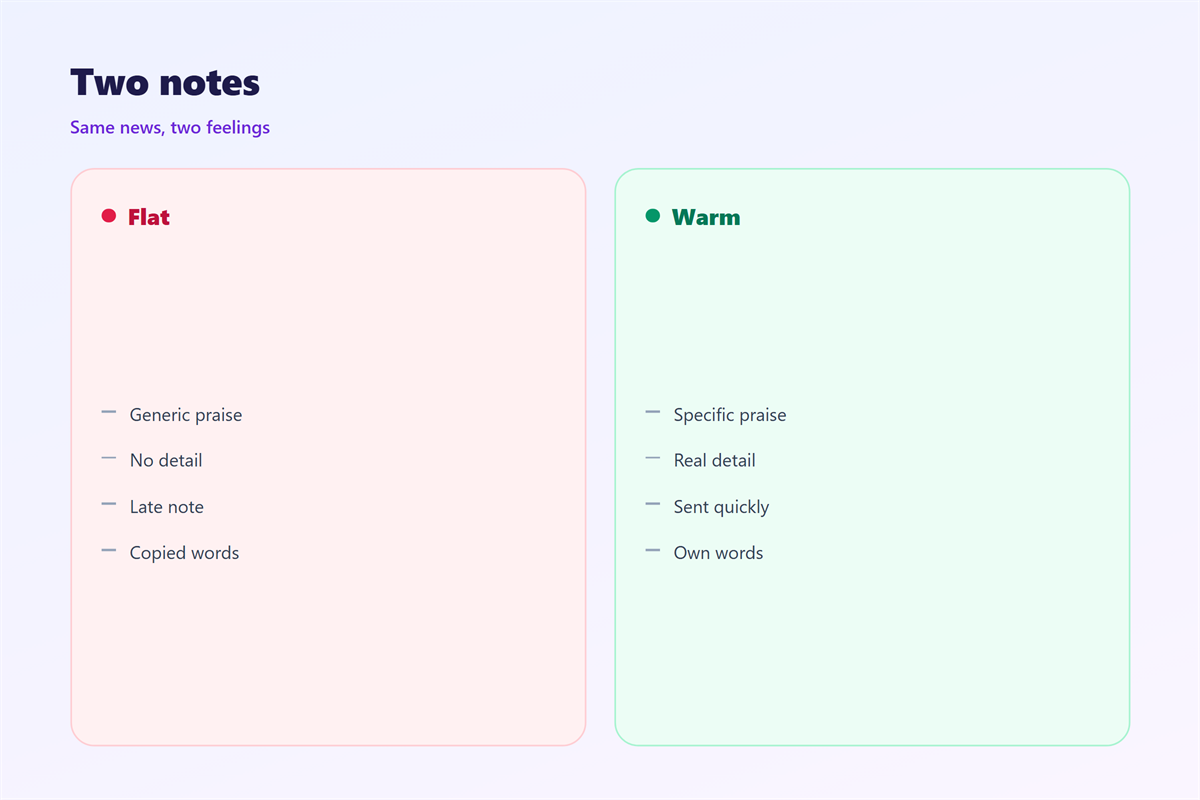
Late notes can feel like an afterthought.
Early notes show that you were glad.
Times to pause
Wait a moment if the news is still private.
Never post it in public before the reader does.
A quiet note respects the reader’s own timing.
How to write a 邮件祝贺信
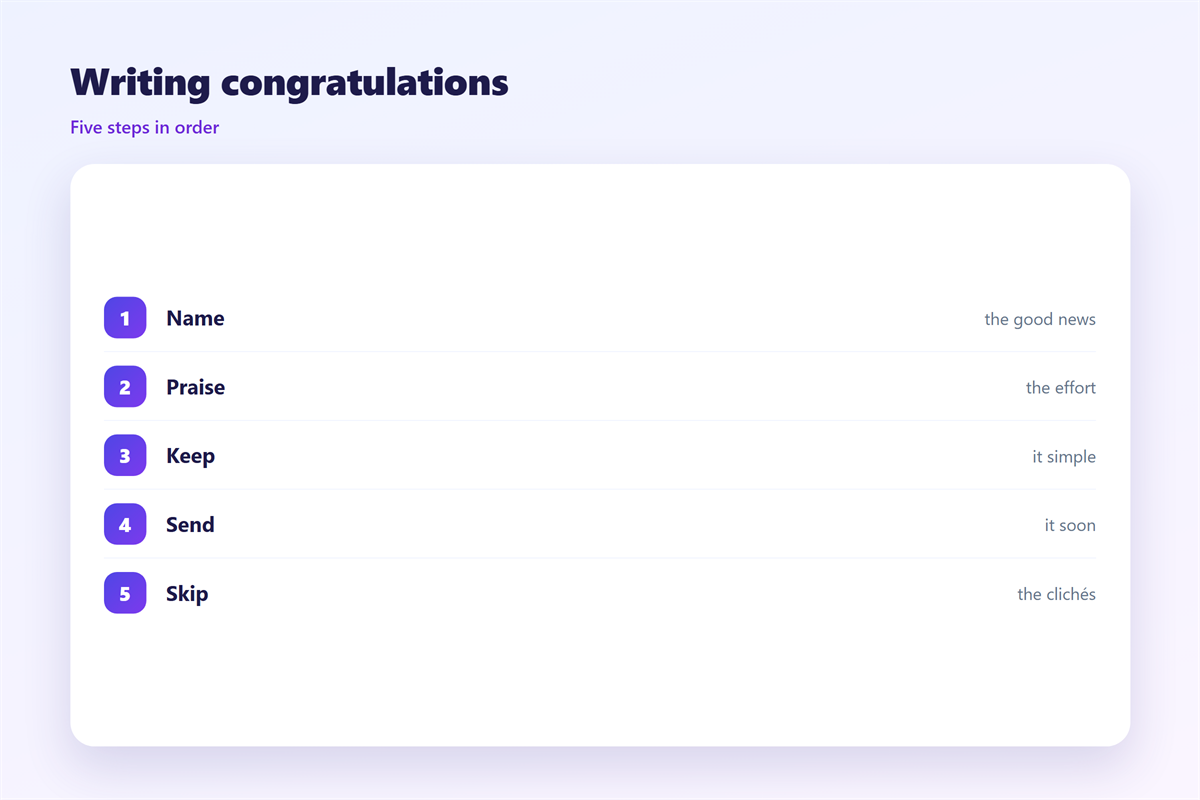
Open with the good news, not with small talk.
Name the event in one clear sentence.
Praise the effort that made it happen.
Close with a short, warm line of goodwill.
Keep the whole 邮件祝贺信 under a hundred words.
Use a subject line that states the good news.
Add the reader’s name to keep it personal.
Share one honest detail you admire.
The note should sound like a person, not a form.
Read it once aloud before you send.
Keep the tone bright and free of pressure.
Do not add a request to the good wishes.
End on a line that looks forward.
Structure that reads well
Use one line for the news and one for the praise.
Then a sign-off that stays warm and plain.
Leave out every line that is not sincere.
Words that work in a 邮件祝贺信
Plain words beat grand ones in a note.
“Congratulations on the new role” is a good start.
Add a detail that only you would know.
That detail shows the praise is real.
Avoid lines that hint at envy or doubt.
Praise the effort, not just the title.
Name one quality you truly admire.
Then let the reader enjoy the moment.
Phrases to avoid
Skip “about time” and other backhanded praise.
Skip “I always knew” if it sounds hollow.
Let the 邮件祝贺信 focus on the reader.
Common mistakes to avoid
Many notes praise the result but forget the effort.
Others turn the message into their own news.
A few copy a template and forget to edit.
Each mistake weakens the point of the note.
Keep the 邮件祝贺信 about the reader, not you.
Proofread once, then send without delay.
Long notes can bury the praise in the middle.
A copied note feels cold and careless.
A note that adds a request feels selfish.
Keep the focus on the good news alone.
Keeping 邮件祝贺信 habits consistent
A short note works best inside a wider habit.
The manners that keep praise polite appear in 邮件礼仪.
How a business keeps buyers close is covered in 邮件客户关怀.
The right level of warmth appears in 邮件语气.
The words that keep thanks kind are shown in 邮件致谢.
Hold the same standard in every 邮件祝贺信 you send.
Link each habit to the next so nothing is forgotten.
A shared habit keeps the whole team warm.
Turning good wishes into a habit
Set aside five minutes at the end of the day.
Write one note for someone with good news.
A steady habit makes each 邮件祝贺信 easier.
Over a year, those notes build real goodwill.
Keep a short list of people to celebrate.
Review the list at the end of each week.
Notice how much lighter the habit feels.
The custom soon becomes part of the day.
FAQ
Is 邮件祝贺信 the same as a greeting card?
No. It is a short digital note of praise.
How long should the note be?
Keep it to three or four short sentences.
Should I send it to a whole team?
Yes, but add a personal line for each person.
Can I mention my own news too?
No. Keep the focus on the reader’s win.
评论
还没有评论,来说两句吧。
评论功能已关闭。