 小影邮箱
邮件问卷怎么设计?Five Questions, Real Answers
Key Takeaways
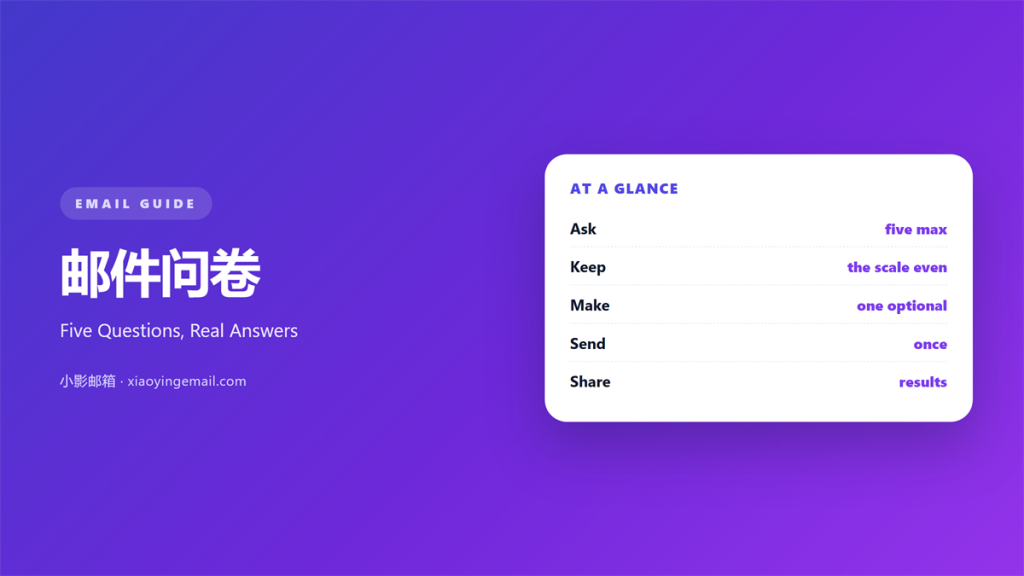
- 邮件问卷 turns a list of readers into a source of answers.
- Ask five questions at most, and make each one count.
- One idea per question keeps replies clean and usable.
- Send the survey while the experience is still fresh.
- Share what you learned and what you changed.
What 邮件问卷 means
邮件问卷 is a short set of questions sent to readers by email.
It collects opinions, ratings, or facts from real people.
The goal is to learn, not to promote anything.
A good survey respects the reader’s time above all.
So it stays short and asks only what matters.
Every extra question lowers the number of replies.
The people who finish are the ones you hear from.
Quiet readers stay invisible unless you ask well.
A tidy 邮件问卷 brings their voice into the room.
That voice guides better decisions than guesswork does.
So treat each question as a small contract.
Ask clearly and you will be answered clearly.
Two or three strong questions often beat ten weak ones.
So start small and add only when needed.
Why 邮件问卷 matters
Guessing what readers want is expensive and slow.
A short survey replaces guesses with evidence.
It shows what people value and what they ignore.
That evidence steers product, pricing, and support.
A regular 邮件问卷 also keeps readers engaged.
Being asked for an opinion makes people feel seen.
So a survey can build loyalty as well as insight.
It gives everyone a small stake in the outcome.
Readers who feel heard come back more often.
That habit compounds over a whole year.
Ask only what you will use
Every question should have a clear purpose.
If no decision depends on an answer, drop it.
Then the survey stays short and the data stays sharp.
Readers notice when questions waste their time.
They reward the ones that do not.
When 邮件问卷 helps
Send a survey right after a purchase or a fix.
The memory is fresh and the feedback is precise.
Also ask when you plan a big change.
Readers can flag problems before you build them.
And send one after support closes a ticket.
That moment reveals how the help really felt.
Each of these points captures a real signal.
Send the same survey at the same moment each time.
Then you can compare results across many months.
Timing the send
Wait long enough for real use to happen.
But not so long that the memory fades.
For most products, a few days works well.
Pick one time and keep it for every send.
When 邮件问卷 goes wrong
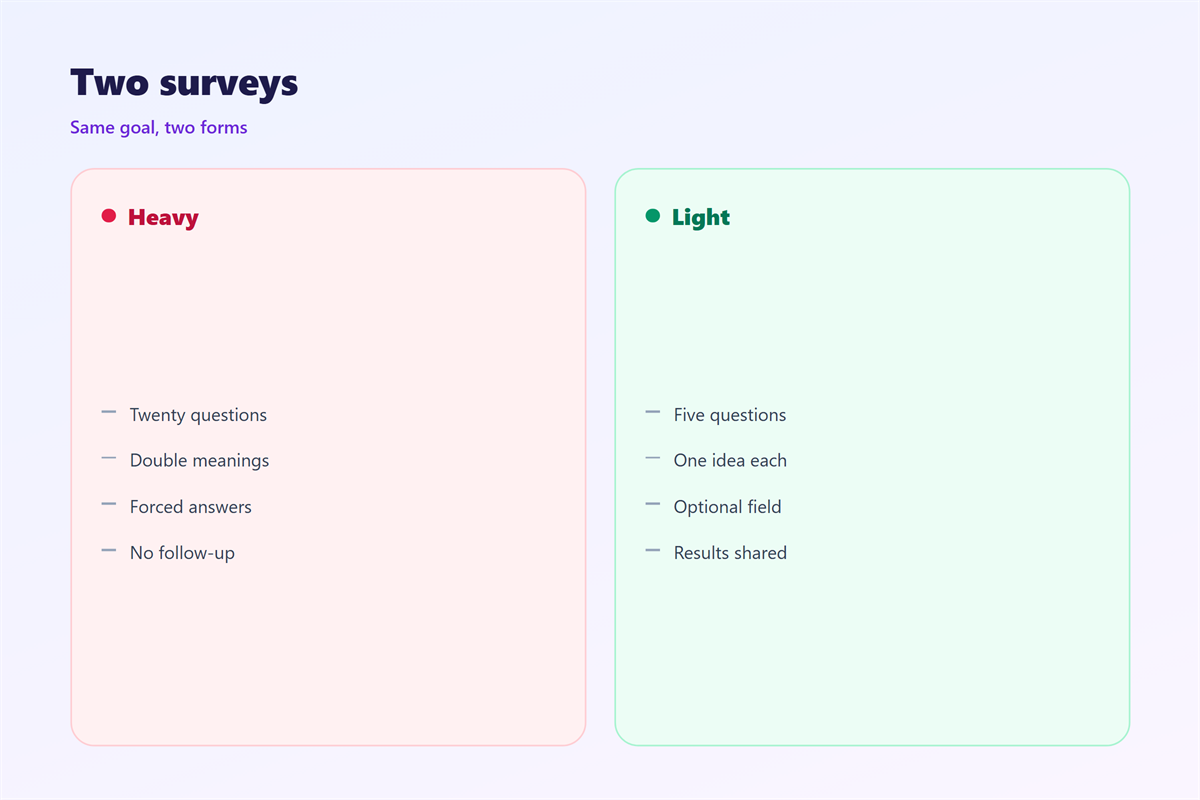
A long survey gets abandoned halfway through.
Half-finished answers are worse than none at all.
Leading questions push people toward one answer.
They turn data into a mirror of your own hopes.
Another mistake is asking for too much detail.
Most readers type two words, not two paragraphs.
So design for the short answer first.
Text boxes should never demand an essay.
Avoiding leading questions
Write neutral options that cover both sides.
Offer a “not sure” choice as well.
Then let the answer fall where it will.
邮件问卷 in plain text
Some readers open mail with images blocked.
So build the survey so it works without them.
A plain text link to the form always loads.
That link should sit near the top.
Keep a short note explaining why you are asking.
Then offer one clear button to start.
Test the whole path with images turned off.
If it works plain, it works everywhere.
Keep the first line short and specific.
Then the reader knows the ask in one glance.
How to use 邮件问卷 well
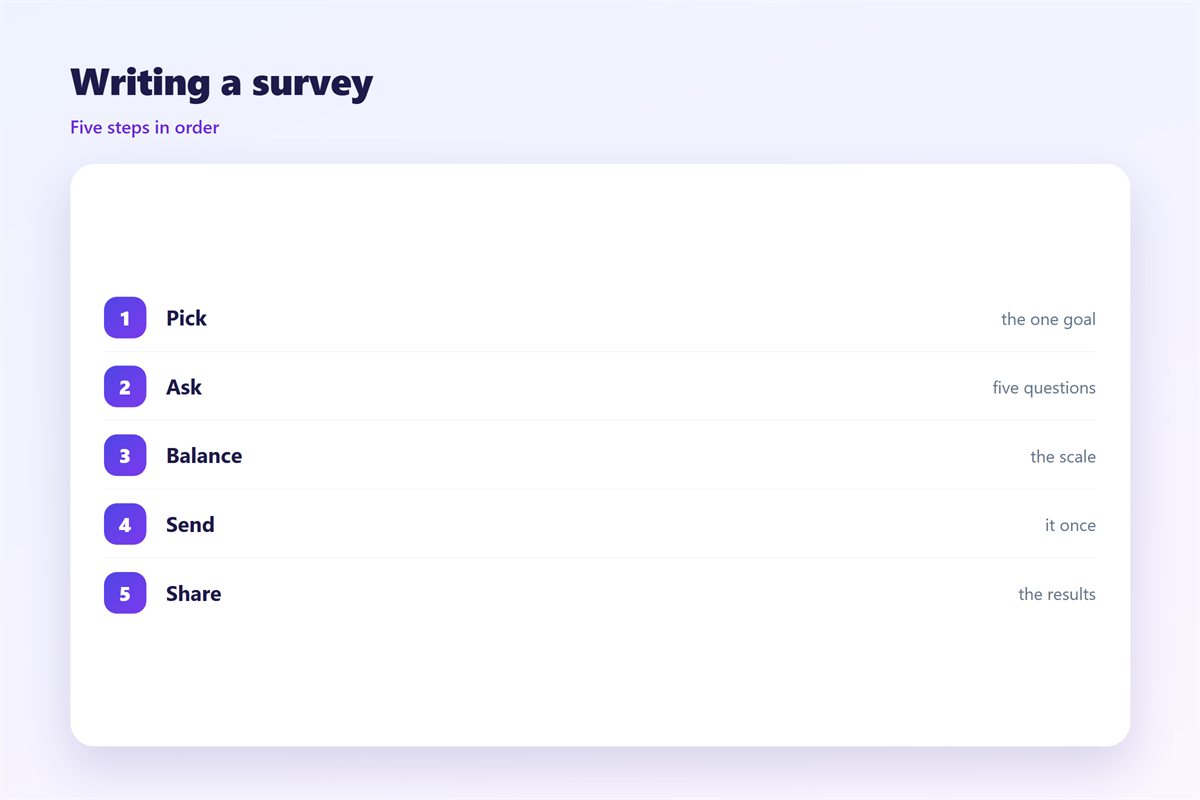
Start with one clear sentence about the purpose.
Then promise how long it will take.
Keep that promise by cutting every weak question.
Put the most important question first.
Use plain language and avoid internal jargon.
Offer a mix of scale and short text answers.
Let the reader skip anything they find hard.
Send a gentle reminder once, never more.
Then close the loop by sharing the findings.
A 邮件问卷 without follow-up feels hollow.
So tell readers what changed because of them.
That step turns a survey into a relationship.
Keep the whole note short and easy to answer.
邮件问卷 and readability
Short questions are easier to answer honestly.
Break the survey into small, clear blocks.
Keep each option on its own line.
Space the choices so tapping is easy.
A calm layout reduces drop-off rates.
Clutter makes people quit before finishing.
Test the survey on a phone screen.
Most replies arrive from a phone.
A tidy form respects the reader’s time.
That respect shows up in better answers.
A clear header also sets the right tone.
It tells the reader this survey is worth a minute.
Keeping 邮件问卷 consistent
Consistency makes each survey easy to recognise.
Asking then acting is covered in 邮件满意度调查.
Deciding one question by vote appears in 邮件投票.
The wider loop of listening sits in 邮件反馈.
How many people respond is explained in 邮件点击率.
Keep the same shape for every survey you send.
A team that agrees on 邮件问卷 learns faster.
FAQ
How many questions should a 邮件问卷 hold?
Five questions is a good ceiling. Fewer often works even better.
How do I raise the reply rate of a 邮件问卷?
Keep it short, say how long it takes, and send one reminder.
Should I reward people for answering?
A small thank-you helps, but a clear purpose matters more.
What if few people answer?
Read the answers you get and fix the survey before resending.
评论
还没有评论,来说两句吧。
评论功能已关闭。