 小影邮箱
邮件面试怎么沟通?Confirm, Prepare, Follow Up
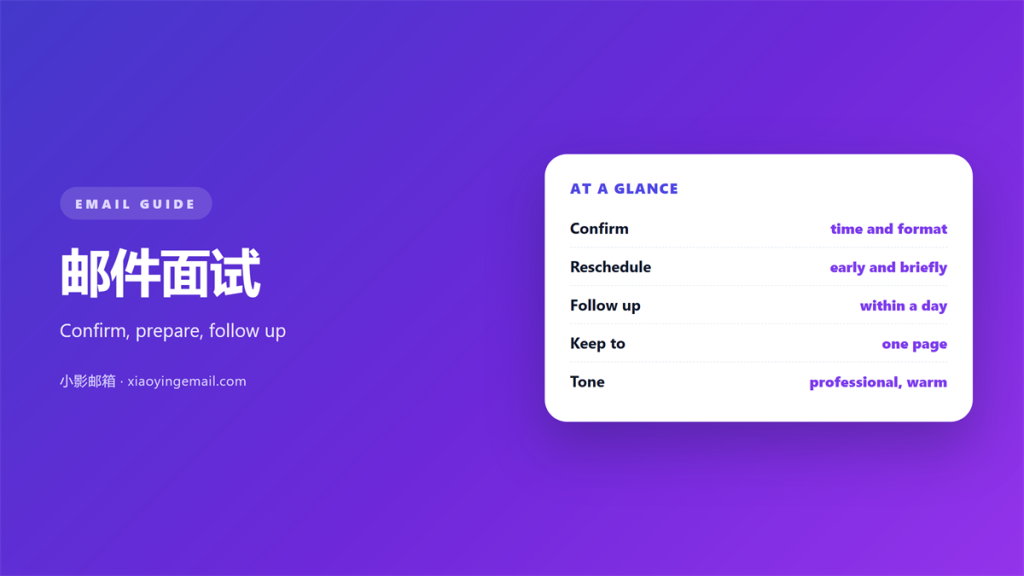
Key Takeaways
- 邮件面试 email covers everything from confirming a slot to thanking the panel.
- Reply fast, keep the thread, and never leave a proposed time unanswered.
- Rescheduling once is normal; twice starts to cost you goodwill.
- A calendar invitation and a written note serve different purposes.
- The follow-up is short, specific, and sent within a day.
What 邮件面试 messages are for
邮件面试 email is the written thread around a job interview, from the first confirmation to the final thank-you. I have been on both sides of this exchange, as a candidate and as an interviewer, and the same mistakes appear on each side. The purpose is simple: remove uncertainty about time, place and expectations.
Most candidates treat these notes as formalities. However, they are read carefully, and a clear, calm message is evidence of how someone works. Therefore, the wording matters more than the length.
A good 邮件面试 message answers the practical question first and adds warmth second. It never leaves the reader to guess the next step.
How 邮件面试 scheduling works
Scheduling looks trivial until three calendars disagree. Two tools are usually involved: the message thread itself and the calendar invitation. Keeping them aligned avoids most confusion, and a single clear thread is easier to follow than a scattered set of replies.
Confirming a slot
When you accept a time, restate it in full, including the time zone. “Tuesday at 10:00 Pacific” removes any doubt, and it also shows that you read the invitation properly. If the invitation links to a scheduling tool, confirm there instead of starting a second thread.
Rescheduling well
If you must move the meeting, propose two specific alternatives instead of asking what suits. A vague request pushes the work back onto the interviewer. Moreover, an apology without a new option just creates another round of messages.
Why 邮件面试 wording matters
Interviewers read these notes as a writing sample, whether they mean to or not. Clear sentences and correct names signal care. Consequently, a sloppy thread can quietly weaken an otherwise strong application.
Tone sits at the centre of this. A note that is too stiff reads as distant, while one that is too casual can seem careless. In other words, the register of a 邮件面试 email should match the workplace you are hoping to join.
A four-step plan for 邮件面试 email
I follow the same four steps for every interview thread. They take a few minutes and remove almost all of the guesswork.
- Acknowledge the invitation within one business day.
- Confirm the time, zone and format in a single line.
- Ask at most one clarifying question.
- Send a short thank-you after the conversation.
| Step | Goal |
|---|---|
| Confirm | Lock the time and format |
| Attend | Show up prepared and early |
| Follow up | Thank them and stay memorable |
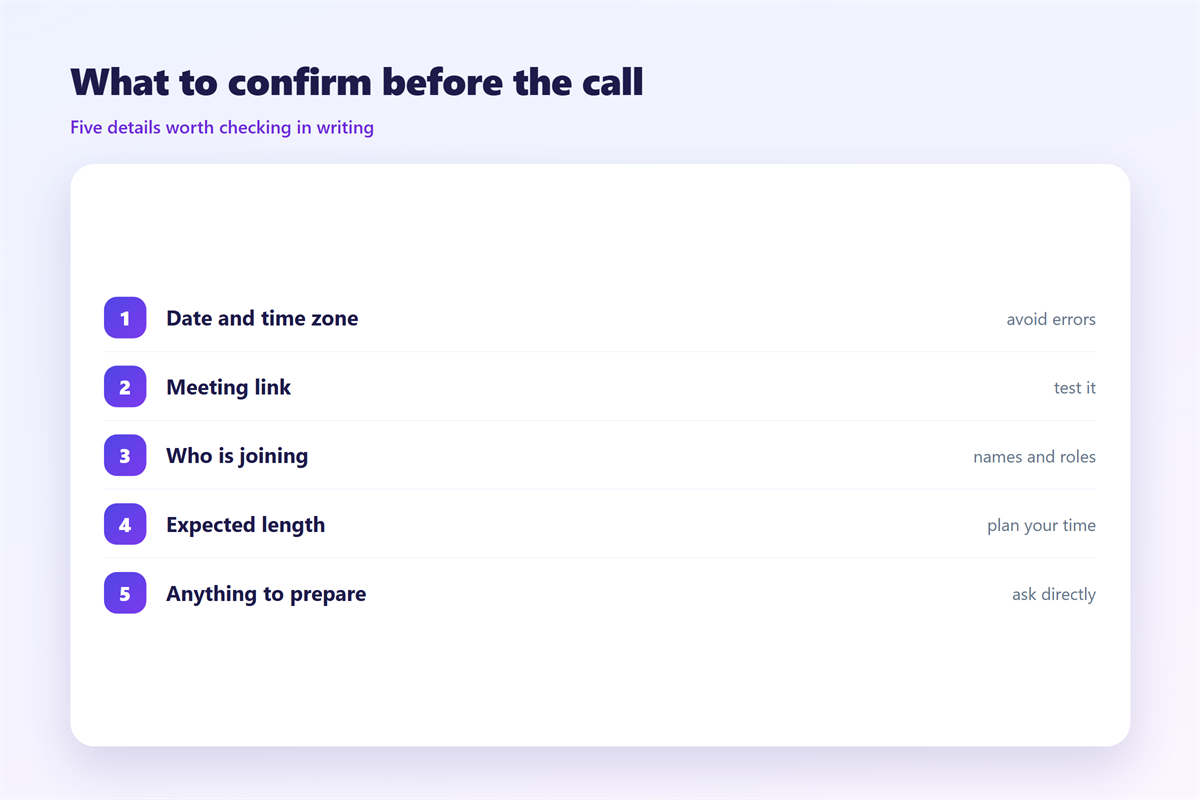
Attachments deserve a mention here. A resume is expected, but extra files sent before an interview are rarely read. Our guide to 求职邮件 covers how to send one document that actually helps. When the meeting is booked through a system, the calendar side has its own quirks, and 邮件日历邀请 explains how invitations go missing.
Where 邮件面试 messages go wrong
The first failure is silence. A candidate who never confirms leaves the coordinator chasing, and that impression is hard to undo. Notably, a one-line reply is enough to prevent it.
A second failure is over-explaining. A long apology for rescheduling draws attention to the inconvenience and makes a 邮件面试 thread heavier than it needs to be. As a result, the reader spends energy on the excuse instead of the new plan.
A third failure is a follow-up that asks for an answer. A thank-you that ends with “let me know soon” turns a courtesy into pressure. Therefore, keep the closing note free of demands.
How to handle 邮件面试 follow-up
The follow-up is one short message within a day of the interview. Mention one specific thing you discussed, then thank the reader. Avoid repeating your whole background, because they already have it. The spacing that works for most threads is set out in 邮件跟进, and it applies to interview mail as much as to sales.
If a week passes with no reply, a single polite check-in is reasonable. Beyond that, waiting is the better choice. Moreover, a calm 邮件面试 follow-up leaves the relationship intact even when the answer is no.
Keep it to a few sentences
Three sentences is plenty. One for the thanks, one specific detail, and one line that closes the note. Long notes are skimmed, and the detail you wanted read is the part that gets lost.
Match the panel, not a template
If you met three people, address the thread to the person who arranged it. They usually pass the message on, and a 邮件面试 note aimed at one reader reads better than a broadcast. A short note to the right person beats a polished message sent to everyone on the panel.
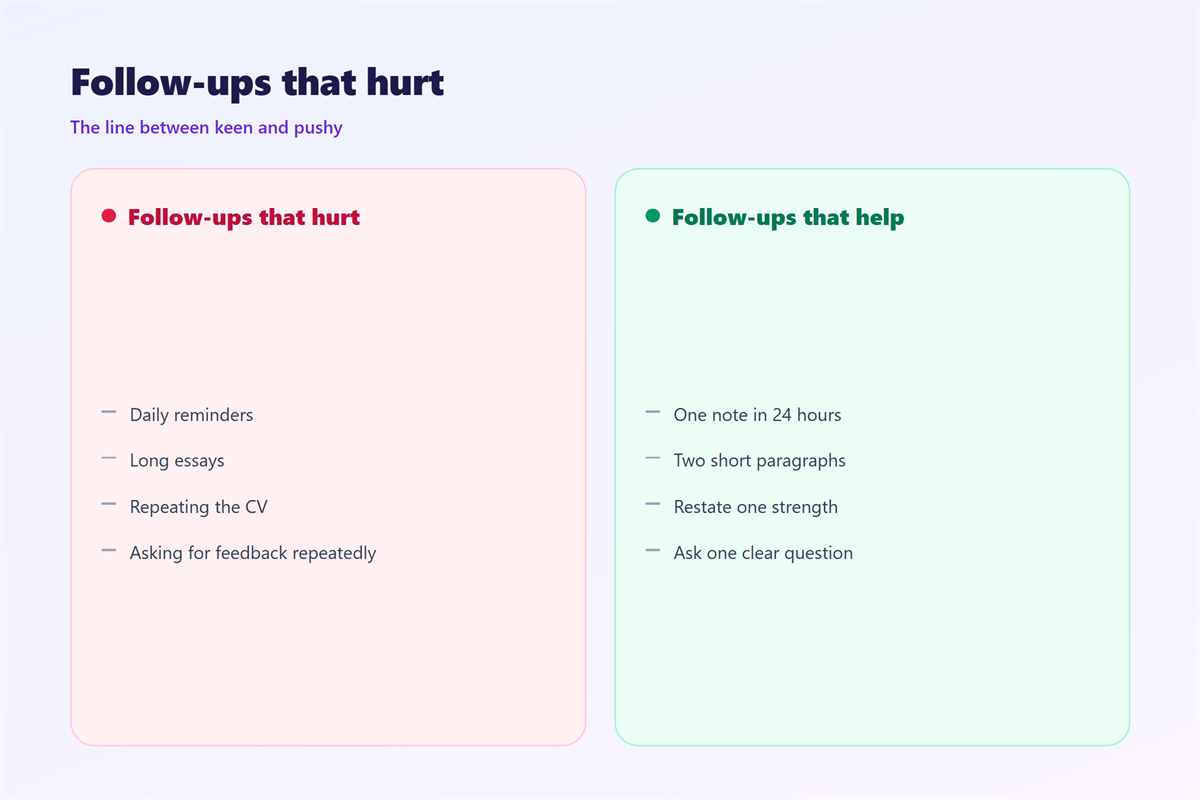
Manners travel across companies, so the general rules in 邮件礼仪 are worth reviewing before a first interview. Taken together, the confirmation, the calendar entry and the short follow-up form a single thread that a hiring team will remember.
FAQ
Should I send a 邮件面试 thank-you?
Yes, within a day. It is brief, specific, and expected in most professional settings.
How fast should I reply to an invitation?
Within one business day if you can. A slow reply is read as disinterest, even when it is only a busy inbox.
How many times can I reschedule?
Once is normal. A second time needs a real reason, and a third may cost you the slot.
What if I never hear back?
Wait a week after a 邮件面试, then send one short check-in. After that, let it rest.
评论
还没有评论,来说两句吧。
评论功能已关闭。