 小影邮箱
邮件致歉怎么写?Say Sorry and Mean It
Key Takeaways
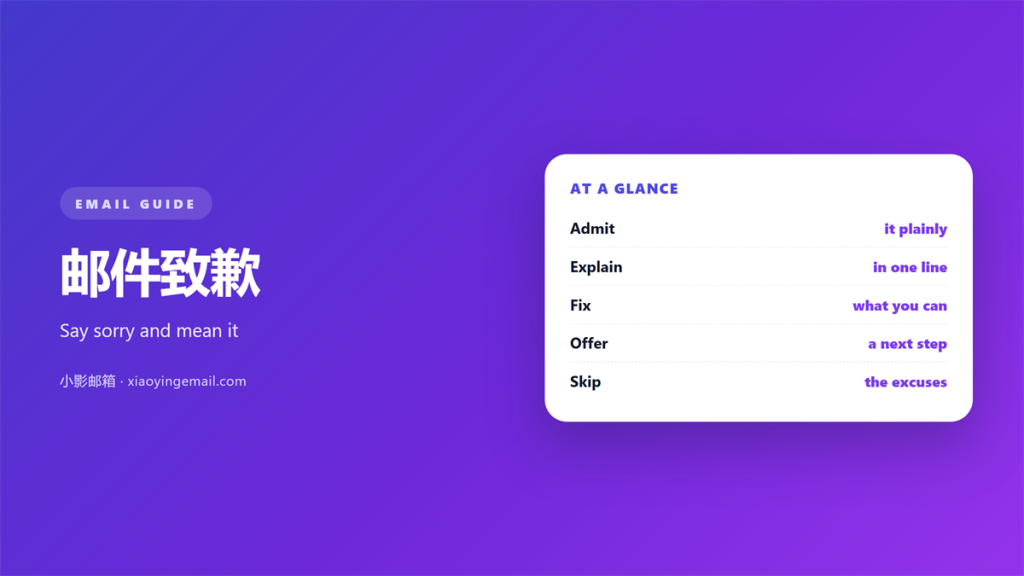
- 邮件致歉 owns the mistake before explaining it.
- Keep it short and free of excuses.
- Say what went wrong and what will change.
- Give the reader one clear next step.
- Send it once and then move on.
What 邮件致歉 means
邮件致歉 is a short note that admits a mistake and offers a way forward.
It is not a long defence of your choices.
It is not a list of excuses.
The reader wants three things from it.
They want to be told the truth.
They want to know it will not repeat.
They want a simple path back to normal.
A real 邮件致歉 names the problem in plain words.
It avoids jargon and avoids blame.
It treats the reader as a person, not a ticket.
That is the whole idea behind it.
It also keeps the record straight.
A clear note stops rumours and guessing.
It shows the reader that the issue is handled.
Why 邮件致歉 matters
Trust breaks faster than it builds.
A calm apology repairs more than the first problem.
It also stops a small issue from growing.
People forgive mistakes more often than silence.
A good 邮件致歉 also says what happens next.
It shows that you were paying attention.
It keeps the relationship alive after a bad day.
Customers remember how you handled the error.
An apology also protects your own reputation.
It tells the reader how you behave under pressure.
That memory lasts longer than the mistake.
When a 邮件致歉 is needed
Send one when you caused a delay.
Send one when you shared wrong information.
Send one when a promise was broken.
Send one when someone was left waiting without an update.
When it is not
Skip the apology when no one was harmed.
Do not apologise for a fair decision.
Do not apologise for holding a normal boundary.
Too many apologies make the sincere ones weaker.
How to write 邮件致歉
Open with the apology itself.
Do not bury it under small talk.
Say sorry in a plain, direct sentence.
Then name what went wrong.
Keep the blame on the situation, not the reader.
Explain briefly why it happened.
Stop before the explanation turns into an excuse.
Then say what you will do next.
Give one clear action and a date.
Finish with a short, warm close.
Before you write, decide the one message.
Keep that message in the first two lines.
Then read it as the reader would.
Would you accept this note if it arrived?
If not, soften one line and try again.
Own the mistake
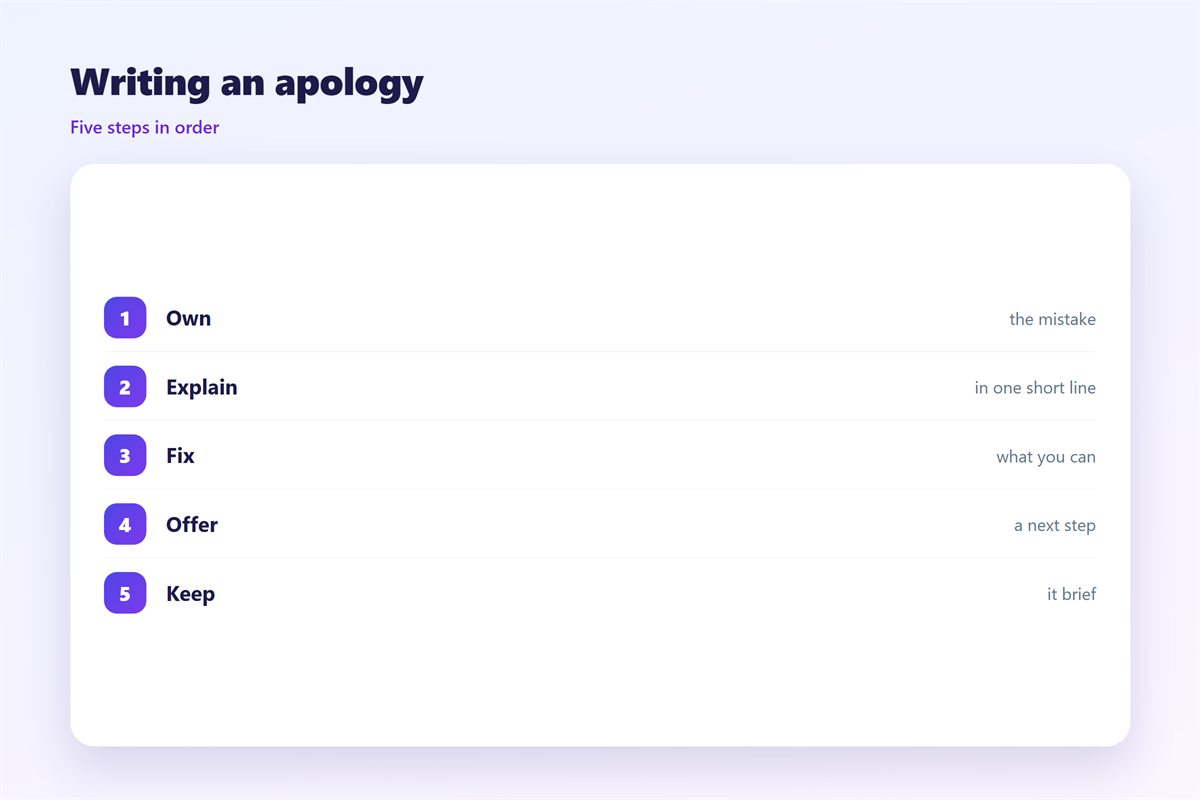
Take responsibility for your part.
Avoid passive sentences that hide the actor.
Say “I” or “we” when you own it.
That single choice changes how the note reads.
Keep 邮件致歉 short
Four or five lines is usually enough.
A long apology starts to feel defensive.
A short 邮件致歉 is easier to trust.
Cut any sentence that does not help the reader.
Timing the 邮件致歉
Send it as soon as you know.
A late 邮件致歉 feels hollow.
An early one can stop the anger growing.
If you need time, send a short holding note first.
A short sample
A simple note might read like this.
Name the problem in the first line.
Admit the part that was yours.
Say what you have already fixed.
Give one next step and a date.
Keep the structure short and clear.
It shows respect for the reader’s time.
Close with a plain thank you.
That is the whole structure.
Where 邮件致歉 goes wrong
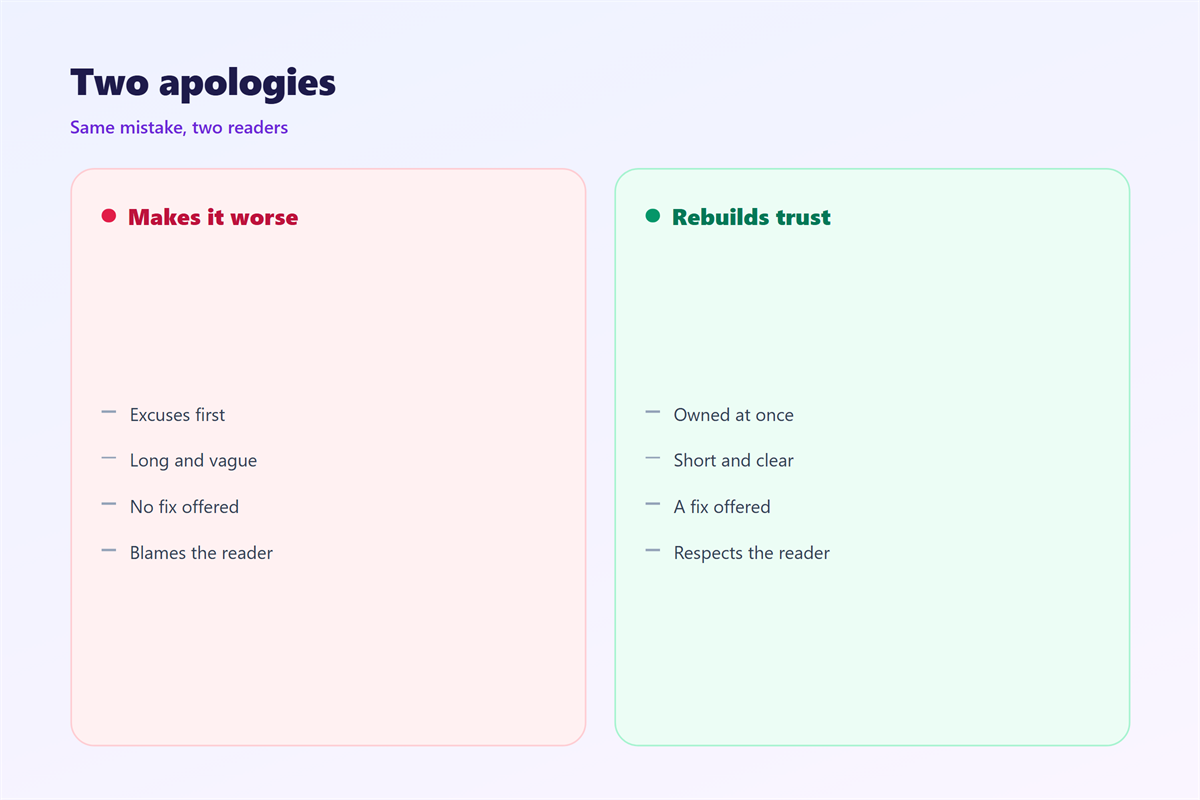
Some notes blame the reader for being upset.
Others hide behind vague and formal language.
A rushed 邮件致歉 can make things worse.
Another mistake is promising more than you can do.
A huge promise raises hope and then breaks it again.
Also avoid copying the same apology to everyone.
People notice a template that ignores their case.
Keep one honest note for each reader.
One more trap is a late apology.
By then the reader has moved on.
Another is a cold and formal tone.
After you press send
Let the reader reply in their own time.
Do not chase an answer within the hour.
Keep the thread open and calm.
A calm 邮件致歉 settles the room.
Check back later only if you promised a date.
When the fix is done, confirm it briefly.
Then close the loop and let the issue rest.
Do not keep apologising for the same thing.
Before you send it
Read the note from the reader’s seat.
Remove any line that defends your ego.
Check the facts one more time.
Make sure the next step is clear.
Then send it and let it stand.
A short pause before a reply is normal.
Do not read silence as anger.
The reader may simply be busy.
Sending and improving
Keep a short note of what went wrong.
Write down what you changed afterwards.
Read past apologies once a month.
You will spot wordings that always land well.
Reuse the strong ones with care.
Get the basics right with 邮件礼仪, then set the tone with 邮件语气. Close well using 邮件结尾, and stay warm with 邮件致谢.
FAQ
Should 邮件致歉 explain every detail?
No. Give the cause in one line. Extra detail sounds like an excuse.
How soon should 邮件致歉 arrive?
As soon as you know. A quick note beats a perfect one sent late.
Can 邮件致歉 be short?
Yes. Four or five lines often work best.
What if the reader is still angry?
Stay calm and keep it brief. Give them time to reply.
References
- Mailchimp: Email marketing benchmarks
- Litmus: Email marketing metrics and benchmarks
- IETF RFC 5322: Internet Message Format
评论
还没有评论,来说两句吧。
评论功能已关闭。