 小影邮箱
邮件备注怎么加?Small Notes That Help
Key Takeaways
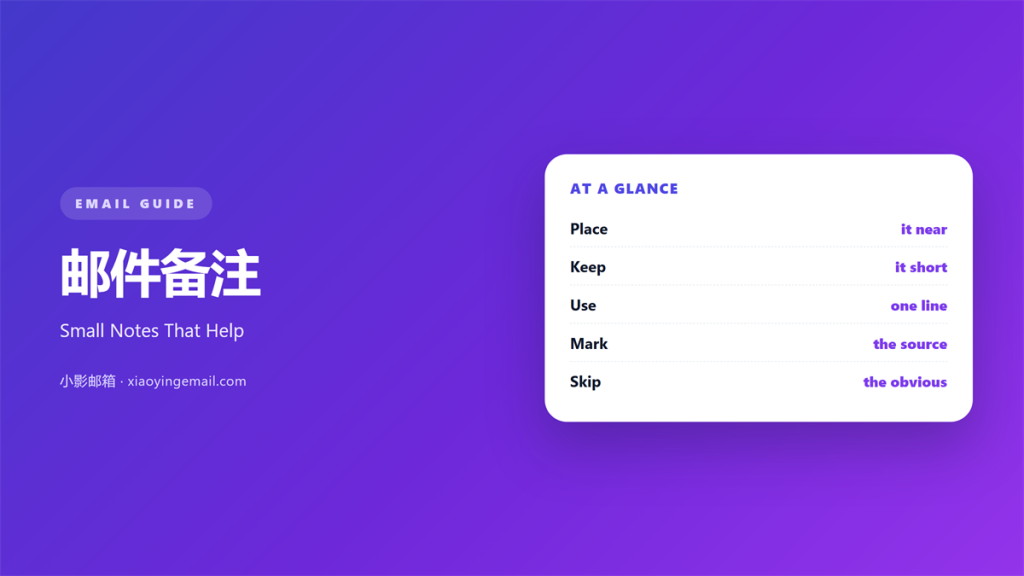
- 邮件备注 is a short note beside the point it explains.
- Place it close to the line it refers to.
- Keep it to one or two sentences.
- Never let a note replace the main message.
- Date it when the detail may change.
What 邮件备注 means
邮件备注 is a small note that adds one detail.
It can sit in the margin, at the foot, or after the sign-off.
It is not a second message.
It is a helper for the main one.
Good notes answer a question before it is asked.
They also keep the body clean.
A reader should be able to skip a note and still understand the mail.
That is the test.
If the mail fails without the note, move the detail into the body.
A clear 邮件备注 supports the message instead of carrying it.
That rule keeps notes useful.
It also keeps them rare.
A rare note gets read.
Why 邮件备注 matters
Small details cause most follow-up questions.
A date, a version, or a file name can stop a thread.
A short note places that detail where it is needed.
It also keeps the main text short.
Readers who need the detail find it nearby.
Readers who do not can keep moving.
That is good design, not decoration.
It also shows care for the reader’s time.
Care is the point of most small notes.
A thoughtful detail is easy to notice.
A note saves a question
Every question costs two messages.
A note costs one line.
Write the note when the question is predictable.
Then the thread ends sooner.
When 邮件备注 helps
邮件备注 helps when a figure needs a source.
A footnote can name the report and the date.
It helps when a file has a version number.
Put the version beside the link.
It helps when one line does not fit the body.
A short note after the sign-off keeps the flow.
It helps when two people share one address.
Name the owner beside the task.
Then no one waits for the wrong person.
Three good moments to write
First, when you cite a number from another team.
Second, when a deadline depends on a holiday.
Third, when you send a corrected file.
Each case has a natural place for the note.
When 邮件备注 hurts
邮件备注 hurts when there are too many.
Five notes turn a short mail into a puzzle.
It hurts when a note contradicts the body.
The reader then trusts neither version.
It hurts when a note carries bad news.
Bad news belongs in the main text.
It also hurts when a note sounds like a dig.
A pointed afterthought is still a criticism.
Finally, never hide a request in a note.
Requests get missed when they sit outside the body.
A missed request costs a whole day.
Keep the ask where the eye lands.
邮件备注 and placement
Placement decides whether a note is read.
A margin note sits beside the sentence it explains.
A footnote sits at the bottom of the page.
An afterthought sits below the sign-off.
An addendum follows a message already sent.
Put it near the point
Distance creates doubt.
If the note is far from its subject, name the subject.
Use the same words as the body.
Then the link is obvious.
Short labels help in a long message.
Use Note, Source, or Version.
Do not invent a private code.
How to use 邮件备注 well
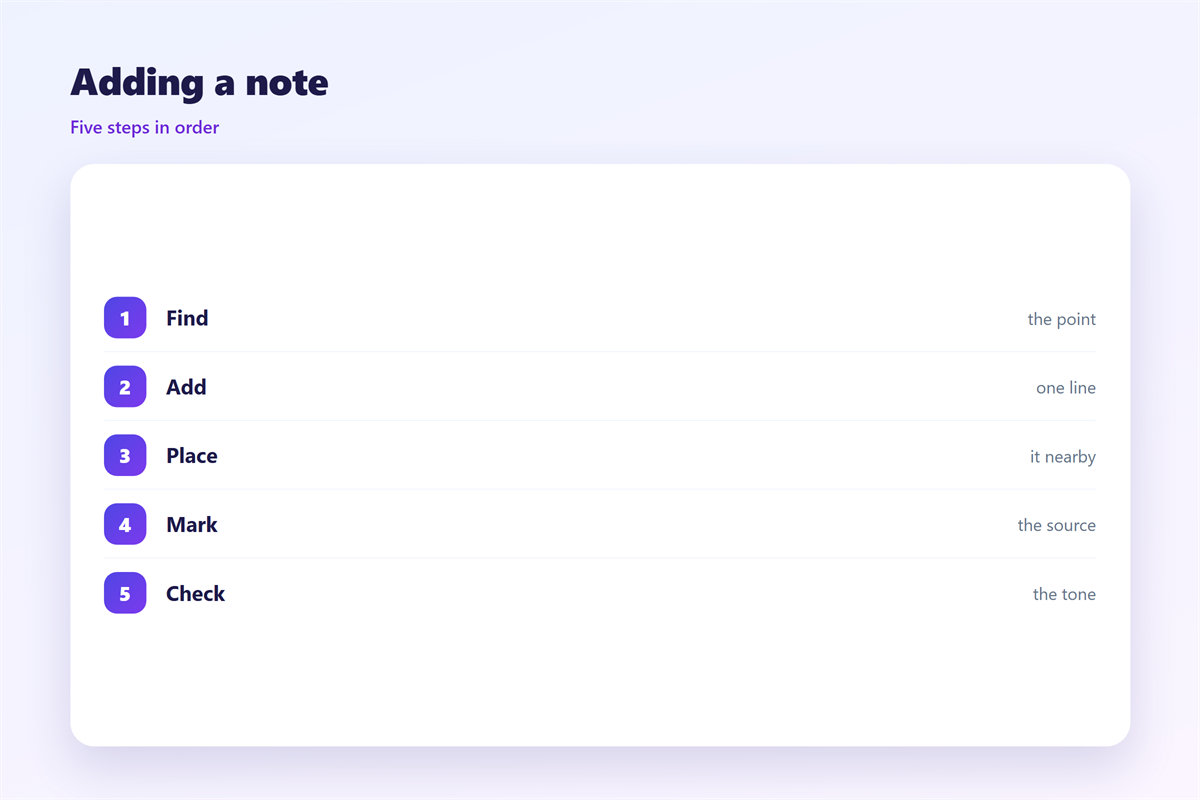
Write the body before the first 邮件备注.
Then list the questions a reader might ask.
Answer the most likely one in a note.
Keep it to two sentences at most.
Use a smaller label, such as Note or Source.
Put the date in the note if the fact can change.
Name the owner when an action is involved.
Then read the mail without the note.
Keep it short
A note is not a paragraph.
If it needs three sentences, it belongs in the body.
Cut any word the reader can infer.
A clean note looks easy to write.
邮件备注 in a thread
Threads collect notes fast.
Remove old notes when you reply.
A note about last week’s file confuses today’s reader.
Keep only the notes that still apply.
If a note changes a decision, move it into the body.
Then say what changed in the first line.
Do not stack a new note on an old one.
That habit hides the current answer.
A clean reply is easier to forward.
Forwarding is how most decisions travel.
Old notes make a forward look careless.
Clear them before you send.
Keeping 邮件备注 honest
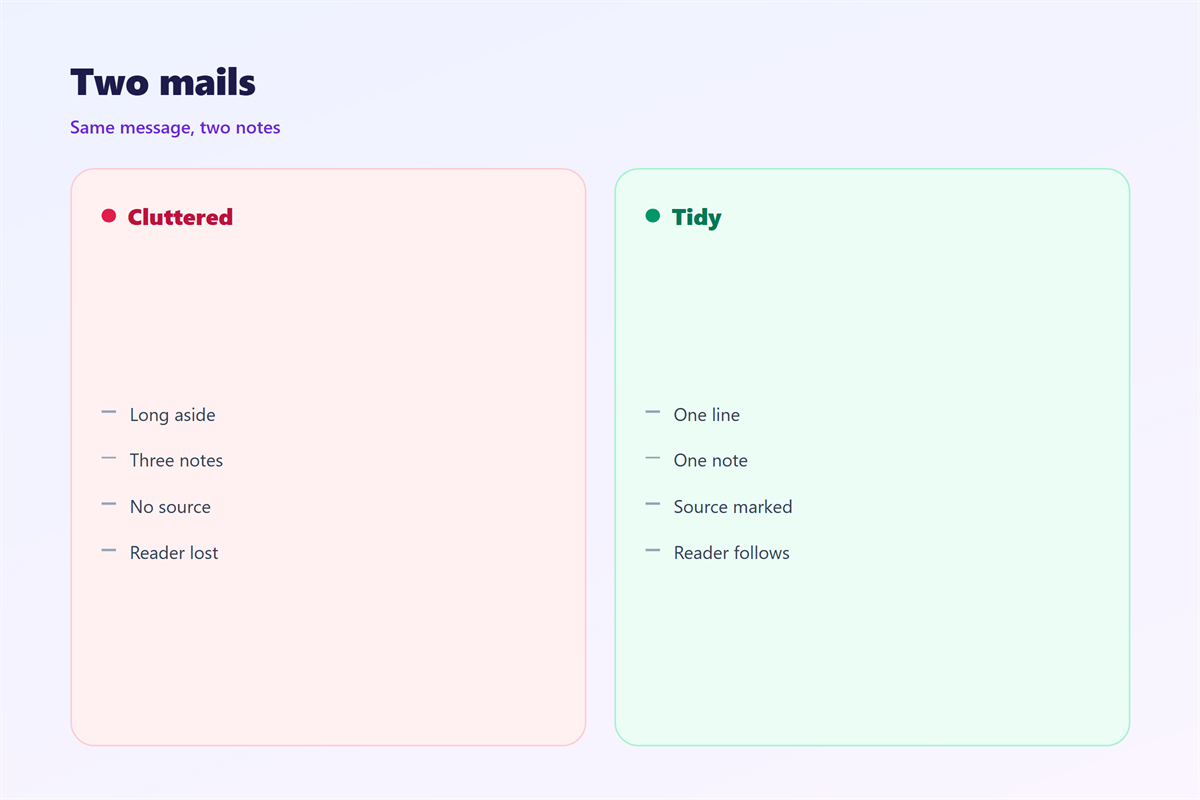
A note should add facts, not opinions about people.
Keep names out of small notes.
Margin notes are explained in 邮件批注.
Footnotes appear in 邮件脚注.
The line after the sign-off sits in 邮件附言.
A later correction is covered in 邮件补充说明.
Never use a note to soften a decision you already made.
Say the decision in the body.
Then let the note carry the detail.
That order keeps trust intact.
Keep one tone across the body and the note.
A cheerful note on a serious mail reads badly.
A 邮件备注 should never carry the decision.
FAQ
How long should 邮件备注 be?
One or two sentences. If it runs longer, move it into the body.
Where should the note go?
Next to the line it explains. If that is impossible, name the line in the note.
Can a note carry a request?
No. A request belongs in the main text, where it cannot be missed.
Should I date a note?
Yes, when the fact can change. A dated note prevents a stale answer.
References
- Nielsen Norman Group: Writing for the web.
- Plain Language: Federal writing guidelines.
- Grammarly: Business writing guides.
评论
还没有评论,来说两句吧。
评论功能已关闭。