 小影邮箱
邮件子域名怎么分?Splitting Your Sending
Key Takeaways
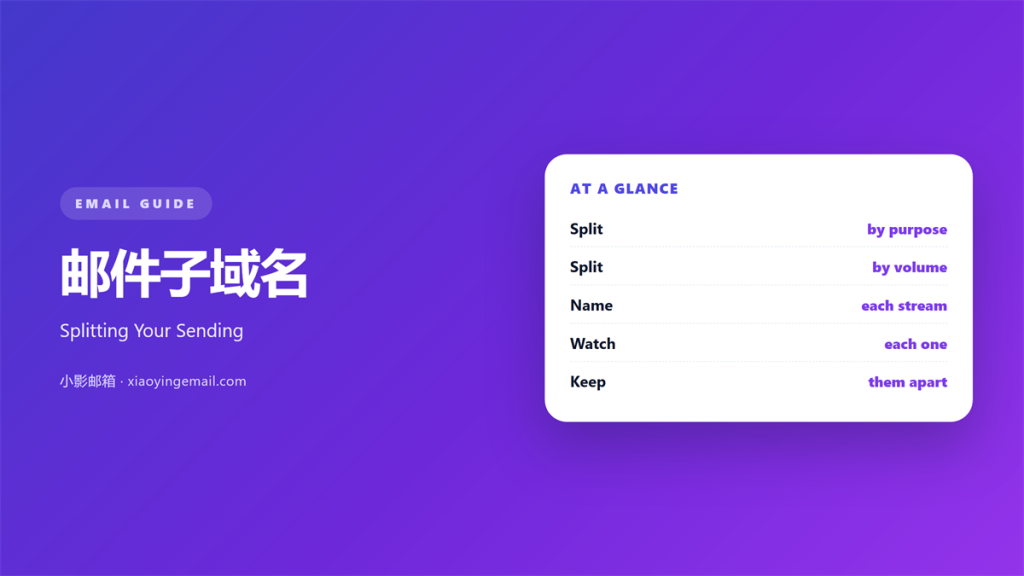
- 邮件子域名 is a second address built under your main domain.
- Split streams by purpose, not by mood.
- Give each stream its own records and owner.
- Warm every new subdomain like a new domain.
- Watch each one separately in the reports.
What 邮件子域名 means
邮件子域名 is a sending address that sits under a parent domain.
It looks like news.example.com or offers.example.com.
It shares the parent name but not the same history.
Mailbox providers score it on its own.
That makes it a useful buffer for risky streams.
It also keeps reporting clean and readable.
A subdomain is not a new domain. It inherits trust slowly.
So plan the split before you need it.
Two streams are enough to start. Add a third when the first two run clean.
Then test the records as you would for any domain.
A test costs minutes and saves a week of guessing.
Why 邮件子域名 matters
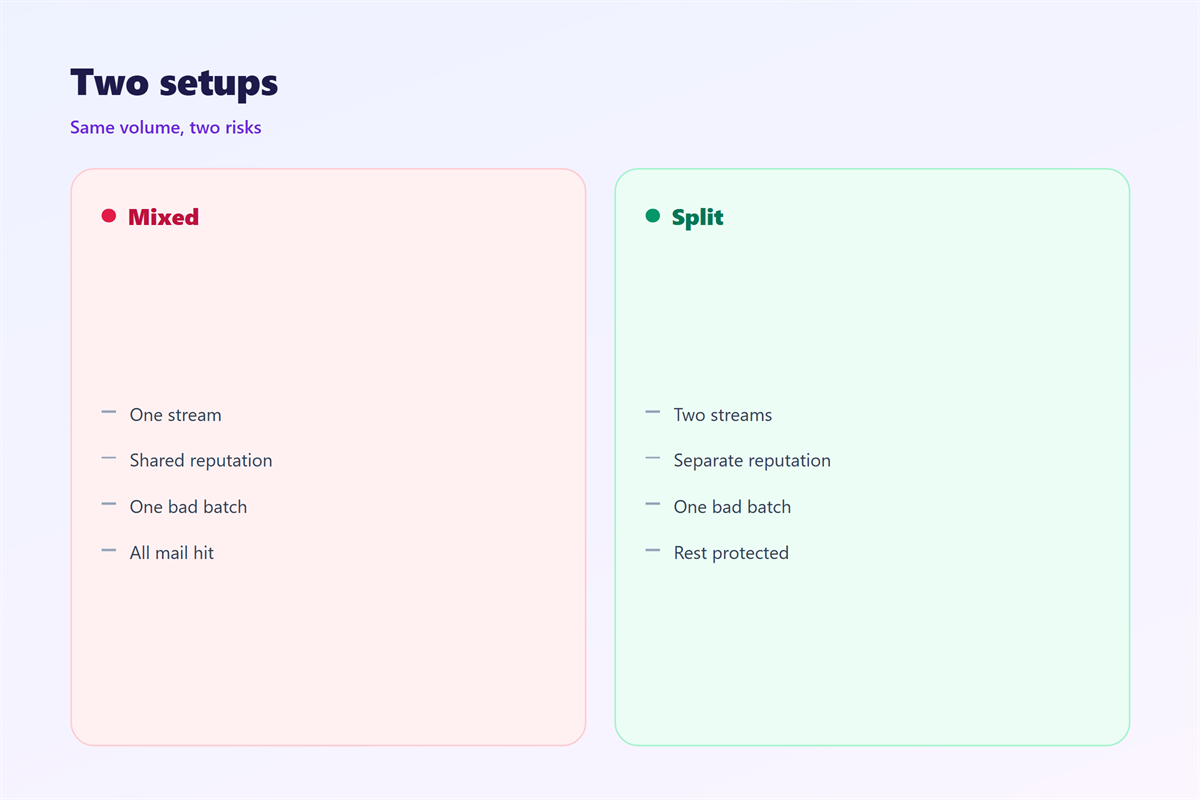
A single domain carries every message you send.
One noisy stream can lower the score for all of them.
邮件子域名 limits that spread.
Bulk mail lives in one place. Transaction mail lives in another.
A problem in the first stream leaves the second intact.
That separation protects password resets and receipts.
It also makes each report easier to read.
You can see which stream causes a drop.
Then fix it without guessing.
Clear data turns a vague worry into one task.
The cost of one mixed stream
A mixed stream hides the cause of a problem.
Complaints rise but nobody knows why.
The team then cuts volume everywhere at once.
That fix hurts the healthy stream too.
Split first, then measure.
When 邮件子域名 helps
邮件子域名 helps when you send more than one kind of mail.
It also helps when a new product needs its own voice.
And it helps when a partner sends on your behalf.
Each case gains its own records and reports.
Use it before a large seasonal campaign.
Keep the risky stream away from the core address.
A simple split
One subdomain for transactional mail.
One for marketing and newsletters.
One for partner or event mail.
Three streams cover most teams.
Add more only when the data asks for it.
When 邮件子域名 hurts
邮件子域名 hurts when the split is too fine.
Ten small streams are hard to warm and hard to watch.
It also hurts when records are copied by hand.
A missing key in one zone is easy to miss.
And it hurts when nobody owns the new address.
Without an owner, the warm-up stops early.
Then the subdomain sits cold until the next campaign.
Start with fewer streams and clear owners.
A cold subdomain can still send small test mail. That keeps the history alive between campaigns.
Add a new one only with a plan and a date.
邮件子域名 and DNS
A clean 邮件子域名 setup starts in the DNS zone.
Each subdomain needs its own DNS entries.
The SPF record must list the right senders.
The DKIM key must match the new selector.
DMARC can inherit from the parent domain.
Check that the setting is what you expect.
A parent policy may be stricter than you think.
Test one message before the first campaign.
Read the header and confirm every pass.
The parent record
Some providers publish a wildcard record for subdomains.
That can save time but hides mistakes.
Name each subdomain in the zone when you can.
A clear record is easier to audit later.
Keep a copy of every change.
How to use 邮件子域名 well
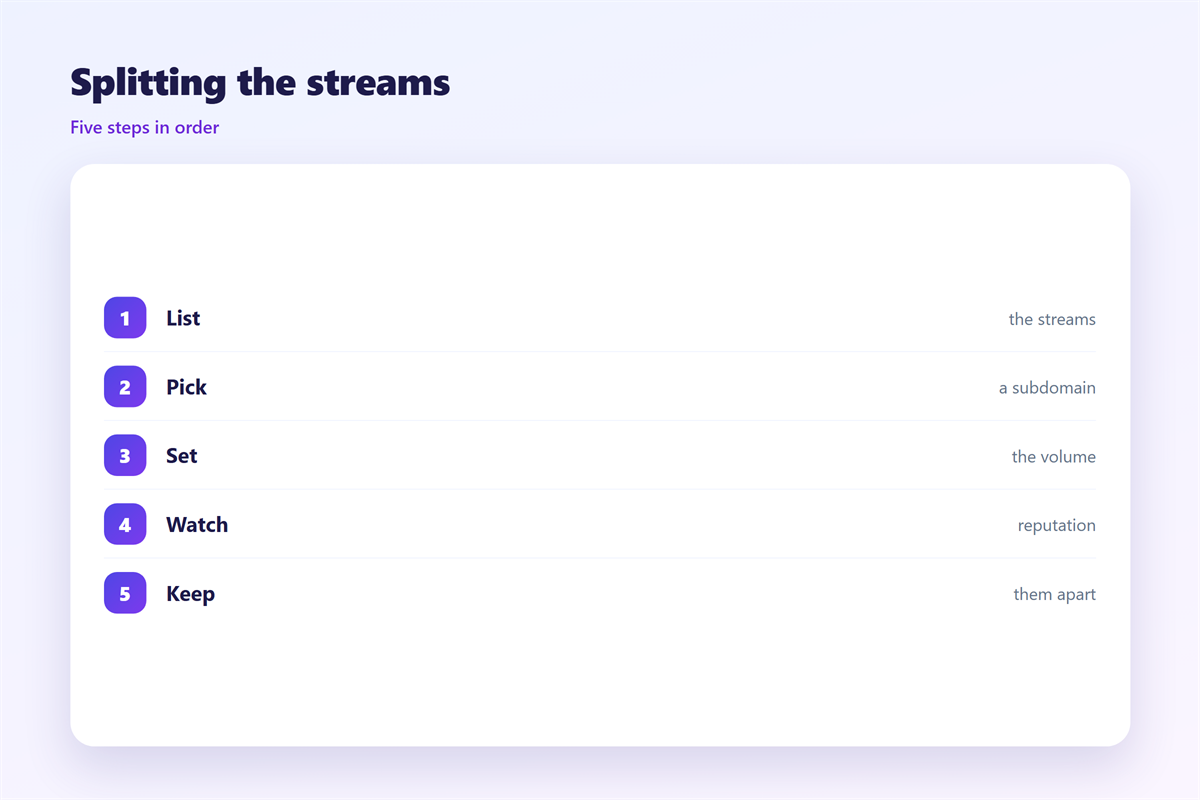
Pick the split before you pick the names.
Group mail by purpose and by risk.
Create one subdomain for each group.
Add the records and test them.
Warm each subdomain with its own small sends.
Increase volume only when the reports look clean.
Name an owner for every stream.
Review the split twice a year.
Add a review after any large campaign too.
Good 邮件子域名 design stays simple.
The first four weeks
Week one sends to your most engaged readers.
Week two adds the next group.
Week three doubles the daily volume.
Week four reviews complaints and bounces.
Move to normal volume only if both stay low.
邮件子域名 across teams
A shared subdomain needs a shared rule.
Write down who may send and how often.
Give each team its own stream when volume is high.
Then publish the calendar so sends do not collide.
A single owner still signs off on changes.
Write the send dates in one calendar. Then everyone can see the gaps.
That keeps the parent domain safe.
Reporting by stream
Open the report for each subdomain.
Compare complaint rates side by side.
Look for one stream that always sits higher.
Fix that stream before you change the others.
Keeping 邮件子域名 consistent
Keep a list of every subdomain and its owner.
Record the purpose in one line.
Related guides cover 邮件预热域名, 邮件专用IP, 邮件反向解析, and 邮件MX记录.
Review the list when a campaign ends.
Remove streams that no longer send.
Then check the parent records once more.
A dated list also shows when a stream went quiet.
A quiet stream still needs a yearly test message.
A short list keeps 邮件子域名 work honest.
FAQ
Is a 邮件子域名 the same as a new domain?
No. It sits under the parent and shares its name. Providers still score it on its own history.
How many subdomains should I use?
Start with two or three. Add more only when volume or risk requires it. Each one needs care.
Do subdomains need their own DKIM?
Yes, usually. Each selector must match the sending tool. Check the header after setup.
Can I move a stream later?
Yes, but warm the new address first. Move in small steps. Keep the old one active during the change.
评论
还没有评论,来说两句吧。
评论功能已关闭。