 小影邮箱
邮件专用IP 是什么?Your Own Lane
Key Takeaways
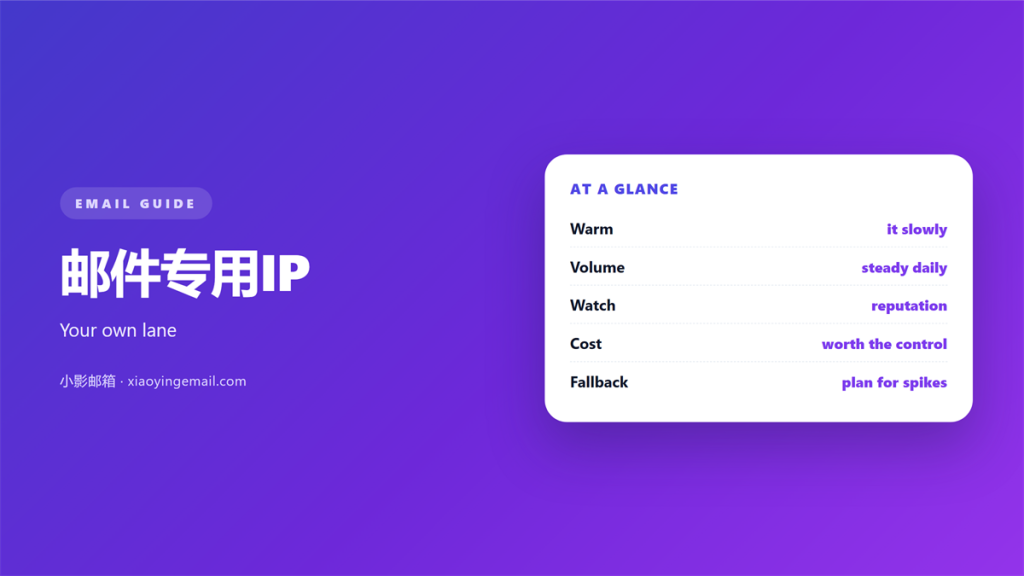
- 邮件专用IP gives one sender its own address.
- A private address keeps your reputation separate.
- It pays off only above a steady sending volume.
- Warming a new address takes weeks, not days.
- Poor habits sink a private address faster than a shared one.
What 邮件专用IP really means
邮件专用IP is a mail server address used by you alone.
A shared address hosts many senders at once. A private one carries only your traffic.
That single fact changes how filters judge your mail. Your record no longer mixes with strangers.
The idea sounds simple. The trade offs are where most teams get stuck.
An address is really a reputation carrier. It collects every complaint, bounce and spam trap hit.
So ownership is mostly about control. You decide what feeds the record and what stays away.
A cold address has to earn trust from zero. That takes time and steady volume.
Nothing here is magic. It is bookkeeping that machines read very literally.
That is why two senders can run the same tool. One thrives and the other stalls.
The name matters less than the record behind it.
A good record is built from many quiet sends.
Patience is part of the tool, not a delay before it.
Where 邮件专用IP fits
A 邮件专用IP suits senders with a steady, predictable volume.
Small or spiky senders often do better on a shared pool. Their volume never warms the record.
Volume is the first gate. Without enough mail, a 邮件专用IP stays cold.
The second gate is skill. Someone must watch the reports each week.
If neither gate is met, a shared pool is the safer start.
A dedicated address also costs more than a shared one.
So the volume must justify the price.
Many senders grow into one rather than start with it.
Shared versus private
Shared pools spread both the cost and the blame. One bad neighbor can hurt you.
A private address removes that shared risk. It also removes the safety net of a warm pool.
Pick private only when your own habits are strong. A weak sender alone is still weak.
Neither choice wins for everyone. Match the address to the way you send.
Review the choice every year. Volume and habits both change over time.
How 邮件专用IP works in practice
You lease an address and point your mail at it. The provider sets the reverse name.
Reverse DNS must match your sending domain. A missing match looks like spam at once.
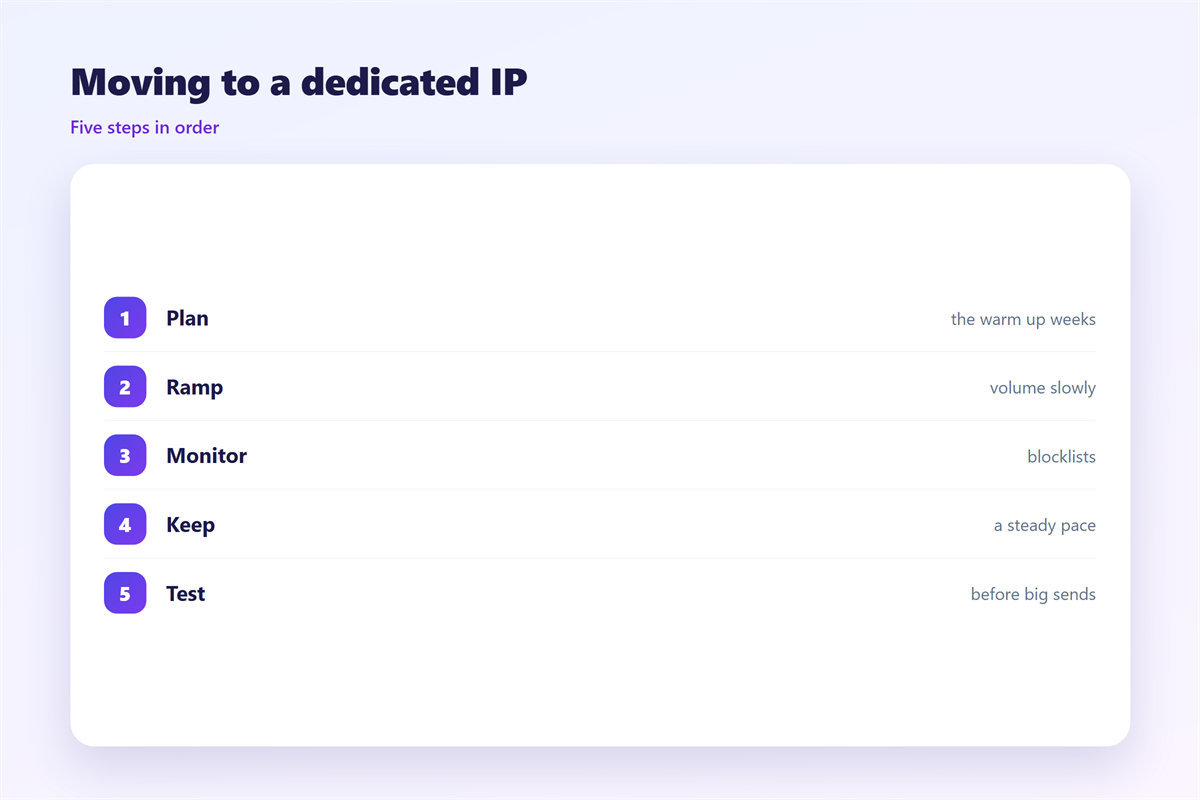
Then you warm the address with small batches. Volume climbs slowly over several weeks.
Authentication records must line up too. Mail without them rarely reaches the inbox.
What it changes
Every complaint now lands on your own 邮件专用IP record. There is no crowd to hide in.
That is the whole point of a 邮件专用IP. Praise and blame both stay with you.
Good senders gain a clean and stable base. Careless ones lose the cushion of a pool.
So the address rewards discipline. It also exposes the lack of it.
Keep a written record of every change.
A simple log helps you undo a bad week.
Common mistakes with 邮件专用IP
The first mistake is buying one too early. Volume that never arrives never warms.
The second is ignoring the reports. A silent drop in delivery is easy to miss.
The third is skipping reverse DNS. Many receivers reject mail without it.
Treat the 邮件专用IP as fragile. Early damage is slow and costly to undo.
Watch for sudden spikes in bounces. They often signal a bad list import.
A quick fix today can prevent a long repair later.
Keep notes on every change you make.
Habits that keep it healthy
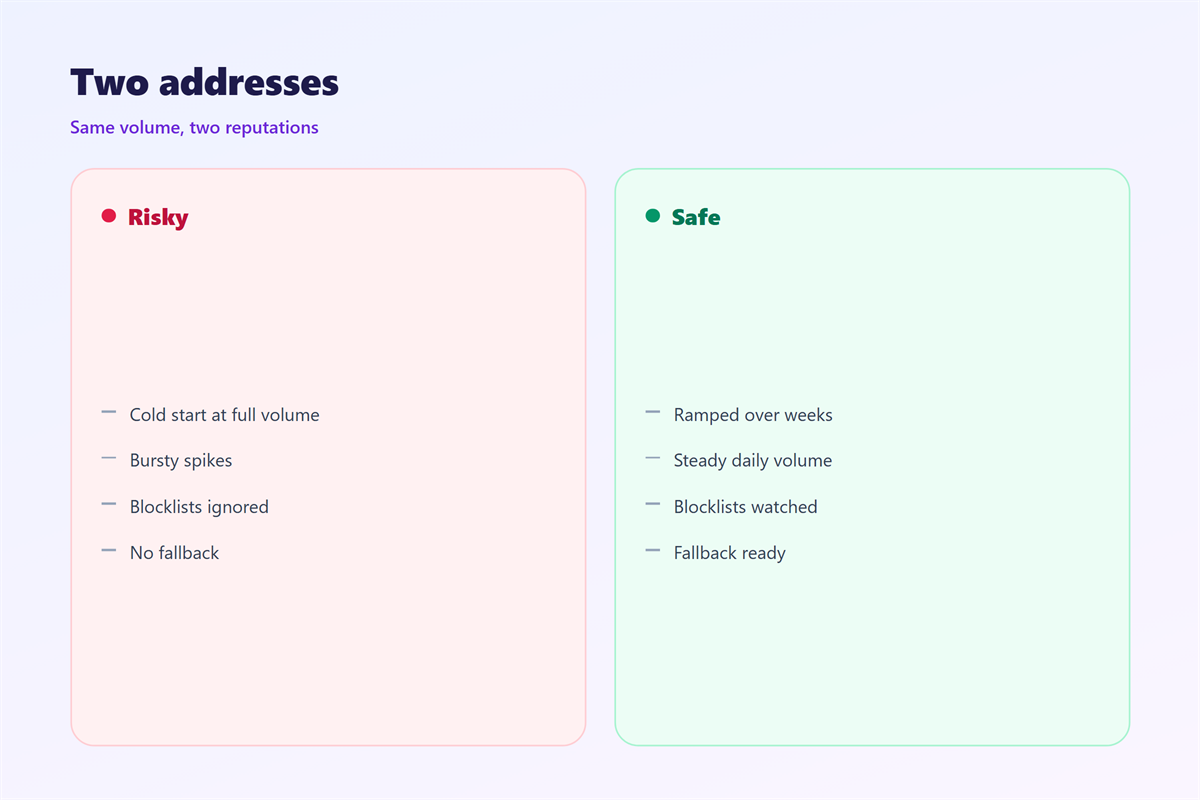
Send on a human schedule. Sudden bursts look like an attack.
Clean your list often. Bad addresses drag the whole record down.
Watch complaint rates every week. A small rise is a clear warning.
Keep a warm backup path ready. A second 邮件专用IP can save a bad week.
Confirm consent before every send. Permission is the cheapest form of protection.
Pause when quality drops. A short break beats a long repair later.
Write the rules down so the team agrees. Shared habits protect the address better than memory.
Review the whole list once a quarter.
A steady record opens more inboxes over time.
That trust is worth more than any single campaign.
So treat the address as a long term asset.
Keeping 邮件专用IP steady day to day
Set a weekly review that fits your team. A short pass catches most drift.
Know how your sending score is built. The way a record is read is explained in 邮件信誉.
Learn how to grow volume safely. A slow start is outlined in 邮件预热.
Check whether your address is listed. The status of a block is described in 邮件黑名单.
Confirm your routing is correct first. The records that direct mail are covered in 邮件MX记录.
Then keep the routine small enough to last. Calm sending keeps 邮件专用IP alive.
A calm sender rarely needs a rescue plan.
A simple weekly habit protects years of hard work.
FAQ
Is 邮件专用IP worth it for a small sender?
Usually no. A shared pool warms faster for low volume.
Does a 邮件专用IP fix a bad reputation?
No. It only isolates it. A new address still needs clean habits.
How long does warming take?
Expect a few weeks. Rushing the ramp invites blocks.
Can I share one address again?
Yes, at a cost. Reviews and re warming are both needed.
评论
还没有评论,来说两句吧。
评论功能已关闭。