 小影邮箱
邮件录用怎么写?An Offer Letter That Lands
Key Takeaways
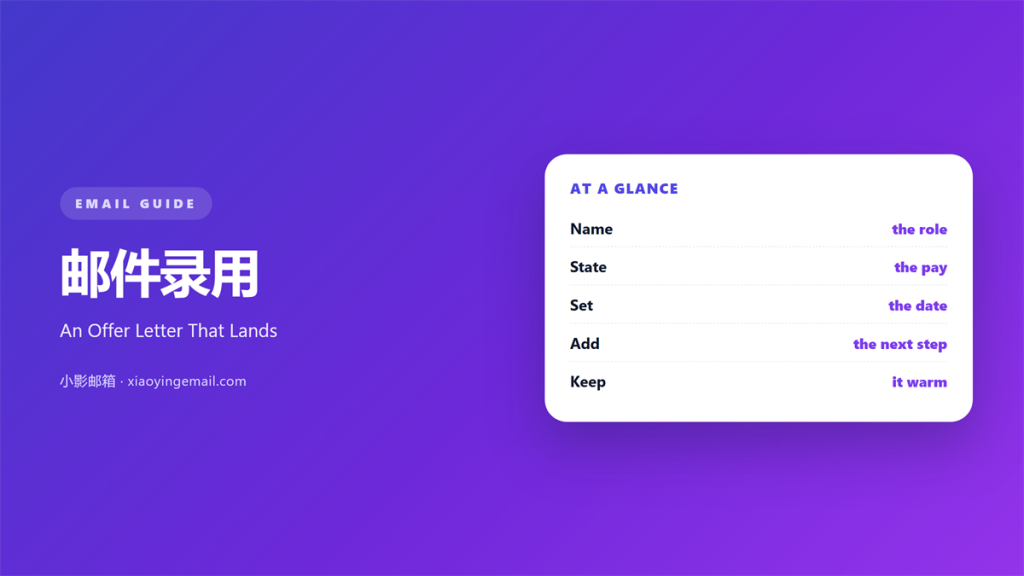
- 邮件录用 is the offer note that starts a new job.
- State the role, the pay and the start date.
- Keep the wording warm, plain and clear.
- Give a deadline for the reply.
- Follow the offer with a smooth onboarding note.
What 邮件录用 means
邮件录用 is the note that offers a job.
It confirms the role and the main terms.
It is good news, so the tone should show it.
Still, it must be exact on the facts.
The title, the pay and the date all matter.
A warm line and a clear fact can share a note.
Say congratulations in the first line.
Then give the key details right away.
Keep the reader’s questions in mind.
Answer the obvious ones before they ask.
That thoughtfulness shows respect.
It also reduces back-and-forth mail.
Why 邮件录用 matters
This note sets the tone of a new job.
A clear offer builds instant trust.
A vague one creates doubt at the worst time.
It is also the first real document.
Many candidates keep it for years.
So every line should be checked twice.
Accuracy here protects both sides.
It prevents a dispute about the terms later.
Clear terms protect the new hire.
They also protect the company.
And a warm note starts the job well.
A well-written offer feels personal.
It treats the reader as a person.
That tone carries into the first week.
Offer versus contract
The offer states the intention to hire.
The contract sets the binding terms.
Keep the two separate and clear.
A confused reader may hesitate to sign.
So label each document plainly.
When 邮件录用 helps
A good offer note helps in many ways.
It gives the candidate everything they need.
A careful 邮件录用 is worth the extra minute.
They can decide without extra calls.
It also speeds up their reply.
A clear deadline removes the delay.
And it helps the hiring team.
They start the paperwork sooner.
A strong 邮件录用 can win a close call.
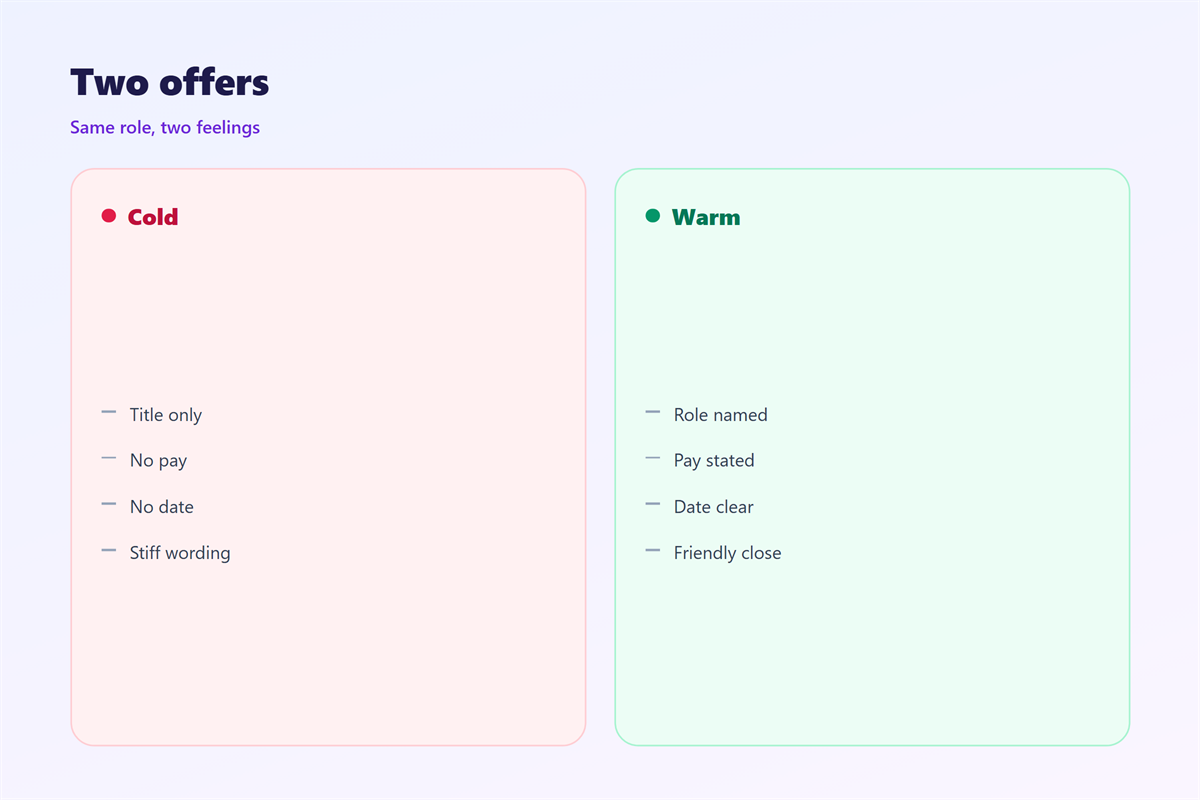
A warm note feels like a welcome.
A personal line costs nothing.
It can change a whole decision.
A cold one feels like a form letter.
Where it fits
Send it right after the final decision.
Do not let a week pass in silence.
Speed signals that you value them.
Slow replies lose good people.
A quick offer shows real interest.
When 邮件录用 hurts
A careless 邮件录用 can lose a candidate.
A wrong number raises an instant alarm.
A missing date creates real stress.
Typos in a name look careless.
A cold tone feels like a rejection.
Long blocks of legal text scare people.
So keep the bulk easy to read.
Put the formal terms in a linked document.
Keep the note itself short and human.
A rushed offer can undo a long search.
So slow down before you send.
A second reader helps catch errors.
Two pairs of eyes beat one.
The waiting window
Give a fair deadline, not an hour.
Three to five days is normal.
Offer to answer any question.
Leave the door open for a chat.
Some people need to talk it through.
邮件录用 in practice
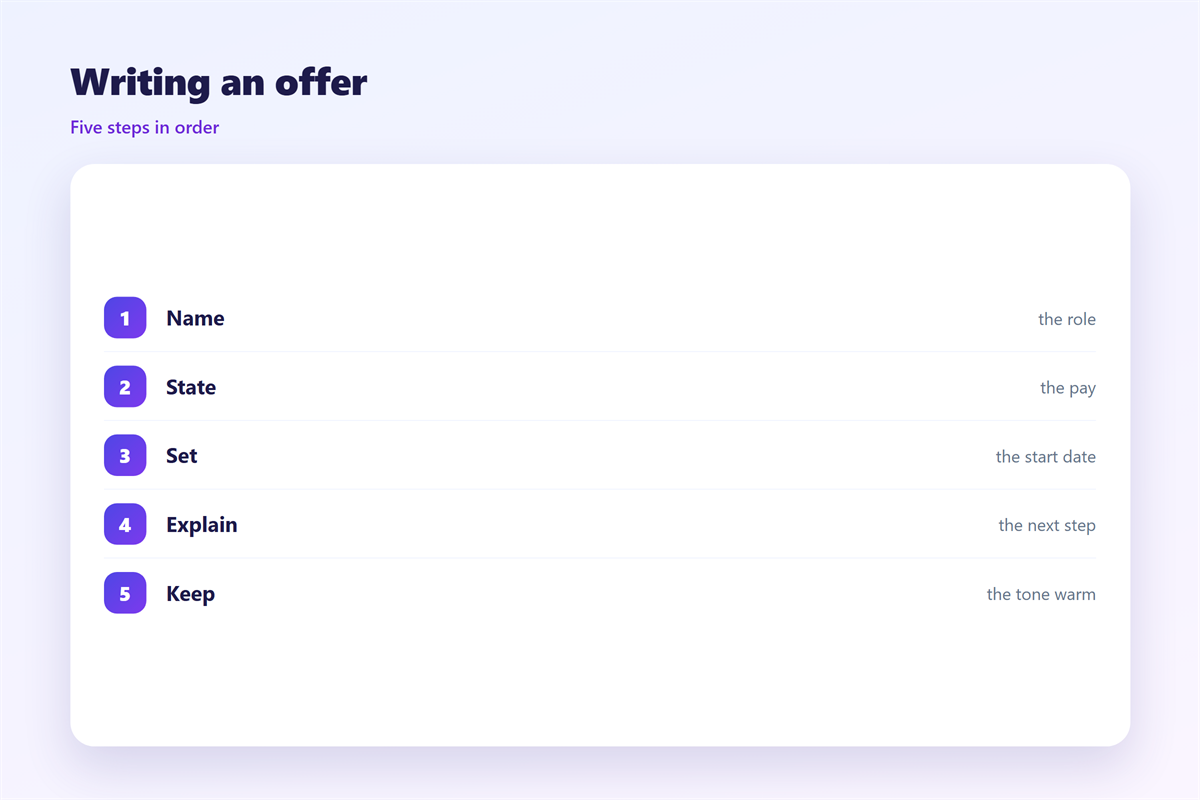
Start with the role title and the team.
Then give the pay and the start date.
Add the place and the working hours.
Name the person they will report to.
Say what comes next in one line.
Attach the full contract as a file.
The file holds the detailed terms.
The note holds the friendly summary.
Keep the note to one short screen.
Then read the whole note aloud.
Check every number once more.
Send it early in the working day.
Then be ready for a fast reply.
Candidates often respond the same day.
How to write a 邮件录用 letter
Open with a warm, personal greeting.
Congratulate them in plain words.
State the core terms in a short list.
Keep each term on its own line.
Use clear labels like role, pay, start.
Clear labels are easy to scan.
A reader finds each fact fast.
Then explain the next step simply.
Ask for a reply by a set date.
Offer a contact for any question.
Close with a genuine welcome.
Sign with a real name and title.
Then attach the formal document.
Send a copy to the team you name.
A shared copy keeps everyone ready.
It saves a second round of messages.
邮件录用 and the reader
Readers read an offer with mixed feelings.
They are happy and nervous at once.
So keep the news at the very top.
Do not bury the pay in paragraph four.
Use short lines and plain labels.
Give a phone number for quick questions.
Some people prefer to talk, not type.
A short call can settle real doubt.
Keep the deadline visible and fair.
That kindness is remembered for years.
A calm 邮件录用 respects that moment.
Pause before you send it.
Read it once as the candidate.
Then fix anything that feels cold.
Keeping 邮件录用 clear
Save a checked sample for the next hire.
The interview step before it is covered in 邮件面试.
The first week that follows appears in 邮件入职.
The binding terms behind the offer sit in 邮件合同.
The reference step before hiring is in 邮件推荐信.
Review the sample once a year.
Update the pay figures with the market.
Keep one owner for the wording.
Then reuse the same warm tone every time.
A warm tone never goes out of style.
It starts every job on a good note.
FAQ
What must a 邮件录用 include?
The role, the pay, the start date and a deadline.
Should I attach the contract?
Yes, but keep the note itself short.
Can I send a 邮件录用 on a Friday?
Better on a Monday, so they can reply calmly.
What if the candidate goes silent?
Send one polite reminder, then wait.
References
- Harvard Business Review: Hiring and onboarding
- Grammarly: Writing and clarity guides
- Nielsen Norman Group: Email usability research
评论
还没有评论,来说两句吧。
评论功能已关闭。