 小影邮箱
邮件辞退怎么写?Ending a Role Well
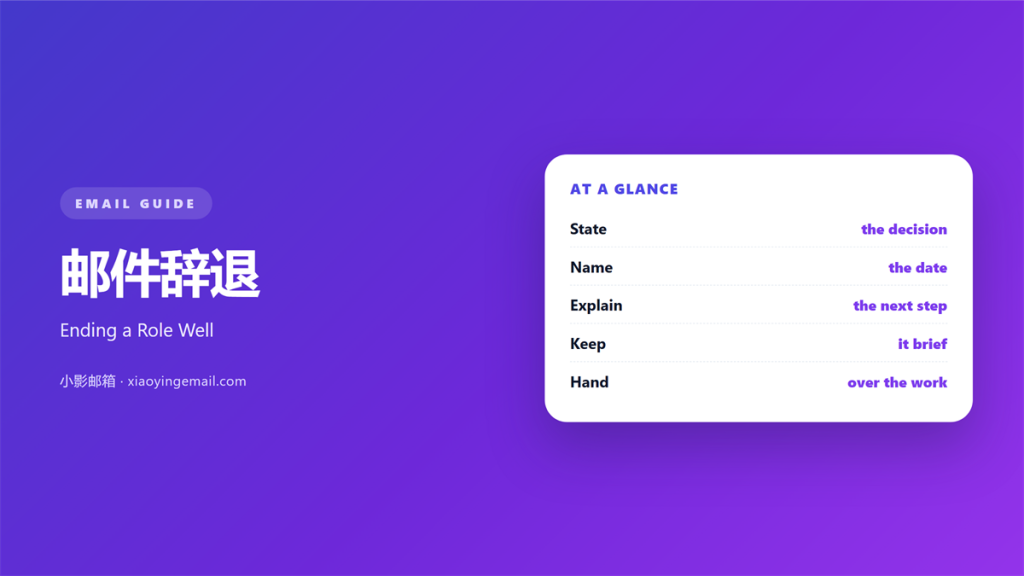
Key Takeaways
- A dismissal mail is a formal message that ends a working role.
- State the decision in the first line and never bury it.
- Give the last working day and the final pay date.
- Name one contact for questions and keep the tone plain.
- Have a second person read the draft before it goes out.
What 邮件辞退 means
邮件辞退 is the written notice that a role is ending. It is a record, not a conversation.
It covers the decision, the date, and the next steps.
The message is short by design. Long explanations create doubt.
A reader should not need a second document to understand it.
It differs from a warning. A warning asks for change.
A dismissal states a result that is already settled.
That is why the wording must be exact.
The reader will forward it to family and maybe a lawyer.
Write for that wider audience from the first line.
Every sentence should survive being read aloud in a meeting.
That test is harsh but useful. It removes pride from the draft.
Why 邮件辞退 matters
A dismissal mail carries legal and human weight.
One loose phrase can turn a clean exit into a dispute.
Good 邮件辞退 protects both sides.
It records the facts on a known date.
It also sets the tone for how people talk about the company.
People remember how they were told.
A calm, plain notice leaves less anger behind.
That matters for the team that stays.
They read the same message and draw conclusions.
Fair wording keeps trust inside the office.
The cost of a vague notice
A vague notice invites questions it cannot answer.
It also leaves the dates open to guesswork.
Each gap becomes a message and a delay.
The fix is cheaper. Write the facts once, clearly.
When 邮件辞退 helps
邮件辞退 helps when the decision is final and documented.
It also helps when the person works in another office.
And it helps when a witness should see the same words.
In those cases, writing keeps the process even.
Use it after a spoken meeting, not instead of one.
The call carries the emotion. The mail carries the record.
The three-part notice
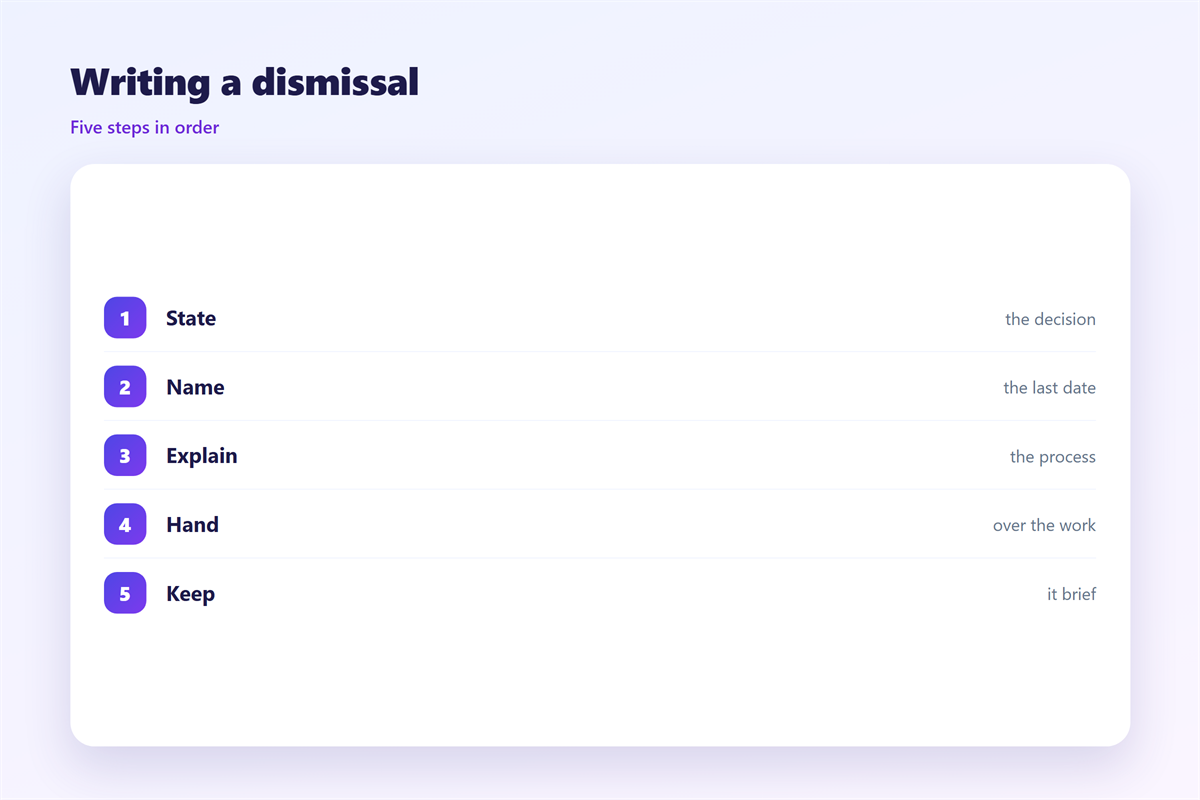
Part one states the decision.
Part two gives the last day and the pay date.
Part three names the contact for questions.
Three parts cover what most readers need first.
Anything more can wait for the reply.
When 邮件辞退 hurts
邮件辞退 hurts when it is the first sign of trouble.
A sudden mail with no prior talk feels like a trap.
It also hurts when the reason runs long.
Detailed blame invites an argument and a rewrite.
Keep the reason short and factual.
Never add a joke or a personal remark.
Humour reads as mockery in a message like this.
And do not send it late on a Friday.
Give the person time to ask questions while staff are present.
A Friday send also leaves the reader without support.
邮件辞退 and legal care
邮件辞退 is a document, so treat it like one.
Check the notice period in the contract before you write.
Name the policy that applies, not the person you dislike.
Keep a copy in the staff file.
Do not discuss the case with the wider team.
One short team note can follow later.
That note should share only what the team needs.
Less detail means fewer rumours.
Ask a manager or a lawyer to review unusual cases.
How to use 邮件辞退 well
Start with a subject line that names the topic.
Write the decision in the first sentence.
Then give the date and the practical steps.
Use plain words and short sentences.
Read each line and cut any word that adds nothing.
Keep the whole note under two hundred words.
Offer one contact and one channel for questions.
Close with a simple thank you for the work done.
Then read it once as the reader would.
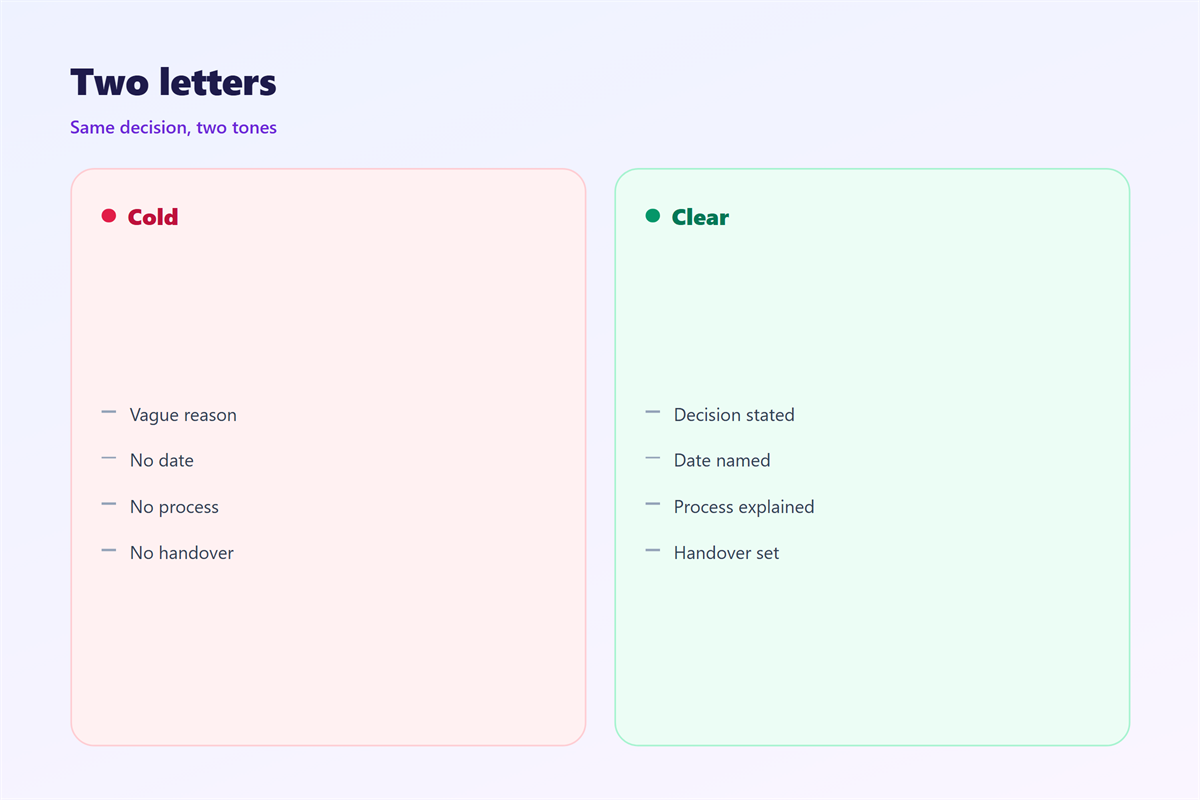
Good 邮件辞退 sounds calm, not cold.
The one-ask rule
Ask for one thing only. Here it is the return of company property.
List the laptop and the badge in one line.
Give a place and a time for the handover.
Then stop. Extra requests make the message feel punitive.
邮件辞退 across channels
The mail is only one part of the process.
A spoken meeting should come first when possible.
邮件辞退 then confirms what was said.
Use the same words in both places.
If the law requires a letter, send it as an attachment too.
Keep the email body short and the attachment complete.
Email versus a call
A call carries tone and allows questions.
Email creates a record and fixes the dates.
Most cases need both, in that order.
Skip the call only when safety or distance requires it.
Keeping 邮件辞退 consistent
Consistency protects the company and the people.
Use one template for the common parts.
Related guides cover 邮件录用, 邮件离职, 邮件交接, and 邮件绩效.
Agree on who writes the notice and who reviews it.
Agree on the order of the meeting and the mail.
Keep the template plain and free of blame.
Review it once a year against the current rules.
A shared standard makes 邮件辞退 fairer for everyone.
FAQ
Can 邮件辞退 be sent by email?
Yes, when the contract allows it. Pair it with a call or a meeting. Keep a copy in the staff file.
How long should the notice be?
Two or three short paragraphs. State the decision, the dates, and one contact. Long reasons invite disputes.
Should the reason be included?
Only if policy requires it. Keep the reason factual and brief. Never argue the case in the mail.
Who should be copied?
Copy HR and the direct manager. Avoid copying the wider team. Send a separate note to them later.
评论
还没有评论,来说两句吧。
评论功能已关闭。