 小影邮箱
邮件跟单怎么做?Order Follow-Up That Converts
Key Takeaways
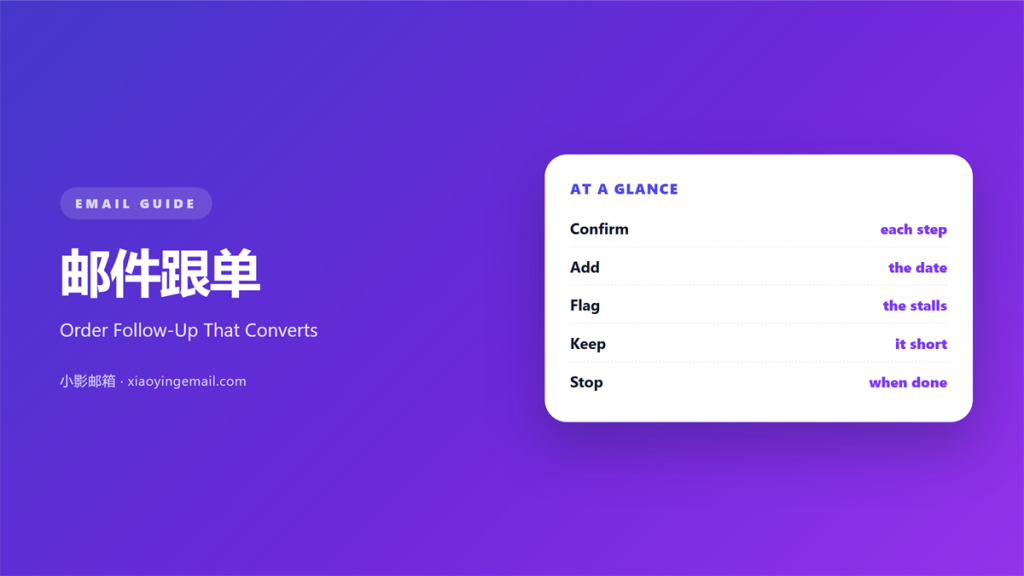
- 邮件跟单 tracks an order from quote to delivery.
- Each step deserves a short, dated note.
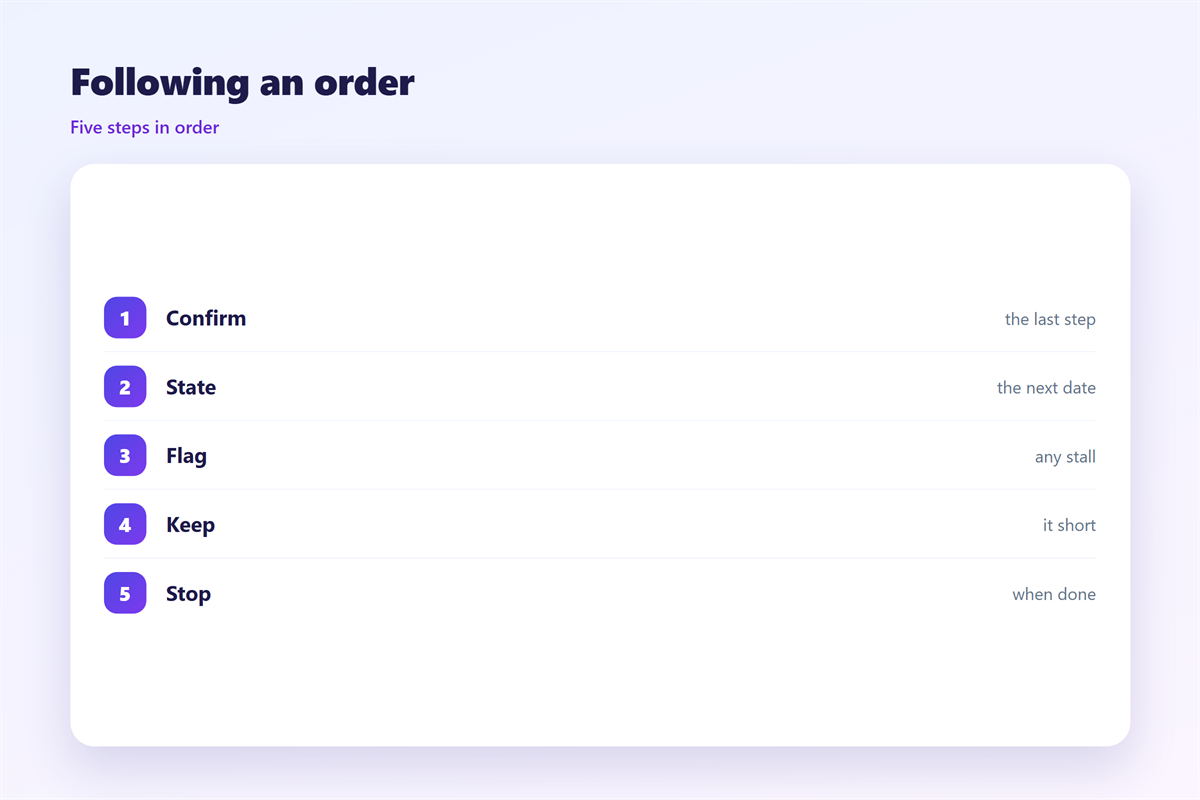
- Confirm the price and the date in writing.
- Flag a stall early, before the buyer worries.
- Keep the tone calm and the facts exact.
What 邮件跟单 means
邮件跟单 is the work of tracking an order through every stage.
It starts with the first quote and ends with delivery.
Between those two points sit many small steps.
Each step needs a short, clear note.
The note records what changed and what comes next.
So the buyer never has to ask where the order is.
That single question is the sign of weak follow-up.
Good 邮件跟单 answers it before it is asked.
It is not a single email. It is a series.
The series runs on a fixed rhythm of its own.
Pick the rhythm once and hold it.
Then the buyer learns when to expect news.
Why 邮件跟单 matters
An order moves through several hands.
Each hand can slow the next one down.
邮件跟单 keeps those hands visible.
It also keeps the buyer calm.
A buyer who hears nothing starts to worry.
Worry turns into a refund request fast.
So a steady note protects the sale.
It also protects the relationship behind the sale.
Most repeat business comes from that trust.
A quiet gap costs more than an extra email.
So treat each update as cheap insurance.
The cost of a lost order is high.
Replacing a buyer takes months of work.
So the small effort pays back many times.
Quote, order, delivery
Three stages matter most.
The quote fixes the price and the terms.
The order confirms what the buyer chose.
The delivery closes the loop.
When 邮件跟单 helps
A clear follow-up helps in several ways.
It cuts the number of any-update emails.
It makes each stage feel under control.
It also gives your team a shared record.
Anyone can open the thread and see the status.
That record ends most internal confusion.
And it makes the next quote easier.
You simply copy the last confirmed terms.
The numbers stay clean over time.
You can compare one order with the last.
Any drift shows up early and clearly.
A shared record also speeds up handovers.
New staff can read the thread and catch up.
Spotting a stall
A stall is a step that does not move.
Watch the date you promised last.
If it passes, send one short note.
Do not wait for the buyer to chase you.
When 邮件跟单 hurts
Too many notes can also hurt.
Five updates in one day looks nervous.
Buyers start to filter those messages out.
So keep each note short and worth reading.
Never send an update with no new fact.
Another risk is an unclear status.
A vague line leaves the buyer guessing.
Guessing leads to phone calls and delays.
So state the stage and the next date.
Then stop writing until something changes.
Let us look at a common mistake.
Some teams send the same note twice.
The buyer then loses trust in the update.
The one-question rule
End each note with one clear question.
One question is easy to answer.
Three questions usually get none.
邮件跟单 in practice
Start with a simple tracker.
List the order, the stage, and the next date.
Then set a note for each stage change.
Keep a template for the common updates.
Fill in the facts and send it fast.
Always confirm the promised date in writing.
A date in writing ends most disputes early.
Then follow the same steps every time.
Small and steady beats long and rare.
Write the rhythm into your weekly plan.
Then treat each note as a small promise.
Keep the promise and the order flows.
Keep the tracker in one shared place.
Everyone should read the same version.
How to set up 邮件跟单
Pick the stages you will report.
Four stages suit most orders.
Then choose who sends each note.
Keep the wording short and plain.
Write each stage in plain words.
Avoid codes that nobody understands.
Send the notes on the same beat.
After a month, read the reply rate.
If buyers still ask for updates, add one note.
If they stop replying, cut one note.
Good 邮件跟单 changes slowly.
Next, check the promised dates for clashes.
Two notes in one day should be rare.
If they collide, move the smaller one.
Then set a reminder for the next three dates.
A fixed date removes the daily decision.
邮件跟单 and the buyer
Buyers care about two things only.
They want the price and the date.
Everything else is secondary to them.
So lead each note with those two facts.
Then add the detail underneath.
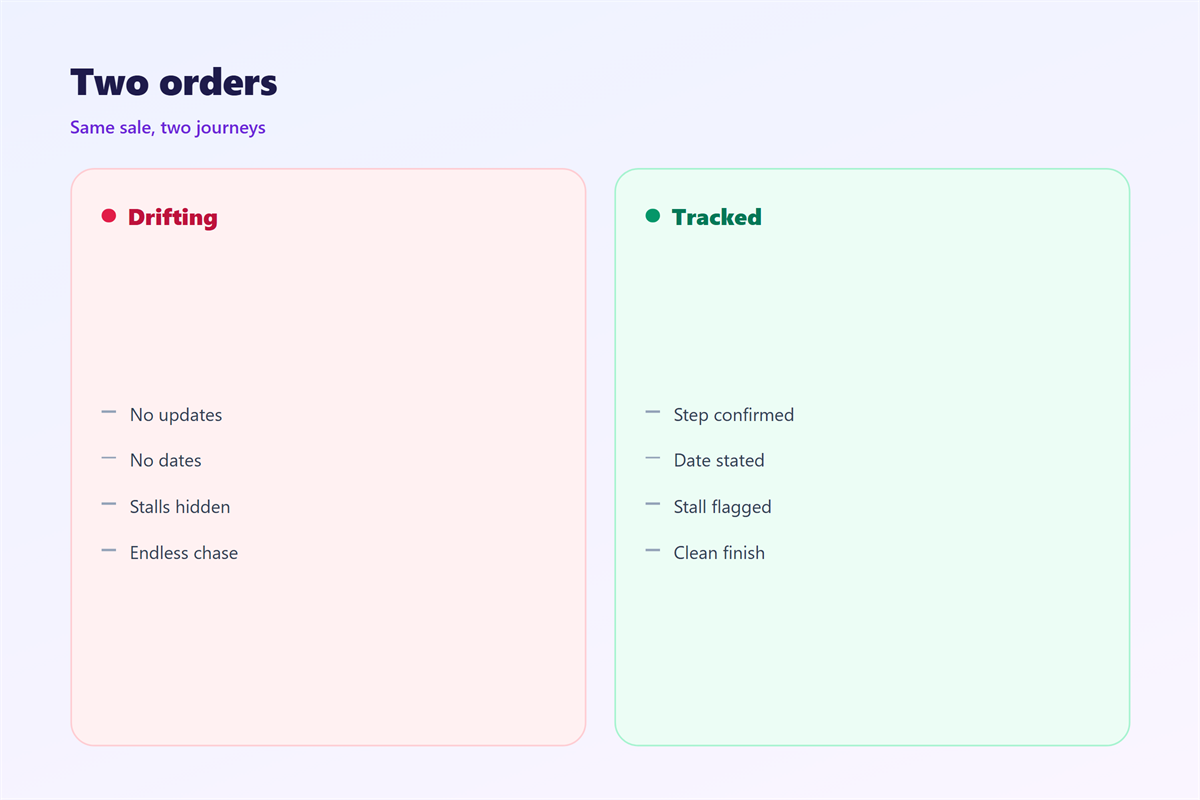
What breaks trust is surprise.
A silent week and then a price change is a surprise.
So warn the buyer as early as you can.
Early warning feels like good service.
Late warning feels like a trick.
So move any bad news to the top line.
Repeat the key numbers in each note.
Repetition is not noise when it is short.
Keeping 邮件跟单 steady
A steady rhythm turns into a habit.
The price you first send is covered in 邮件报价.
The firm reminder for a late payment appears in 邮件催款.
The receipt that starts the thread sits in 邮件订单确认.
The shipping news that ends the run lives in 邮件物流.
Review the rhythm once a quarter.
Then keep the same rule for every order.
A team that agrees on 邮件跟单 writes calmer mail.
FAQ
How many notes does good 邮件跟单 need?
One per stage change, and no more than that.
Should every order get the same follow-up?
No. Small orders need fewer notes.
Can I automate my 邮件跟单?
Yes, but check each template before it sends.
What if a buyer goes quiet mid-order?
Send one note with a date, then wait.
评论
还没有评论,来说两句吧。
评论功能已关闭。