 小影邮箱
邮件表扬怎么写?Praise That Lands
Key Takeaways
- 邮件表扬 names the exact thing a person did well.
- Specific praise lands better than a general compliment.
- Send it soon, while the work is still fresh.
- Keep it short and truthful, never overblown.
- Save the good examples to reuse later.
What 邮件表扬 means
邮件表扬 is a short note that praises one specific piece of work.
It names the action, the result and the effect it had.
It is not a vague compliment about being nice or helpful.
It points at one clear thing and then stops.
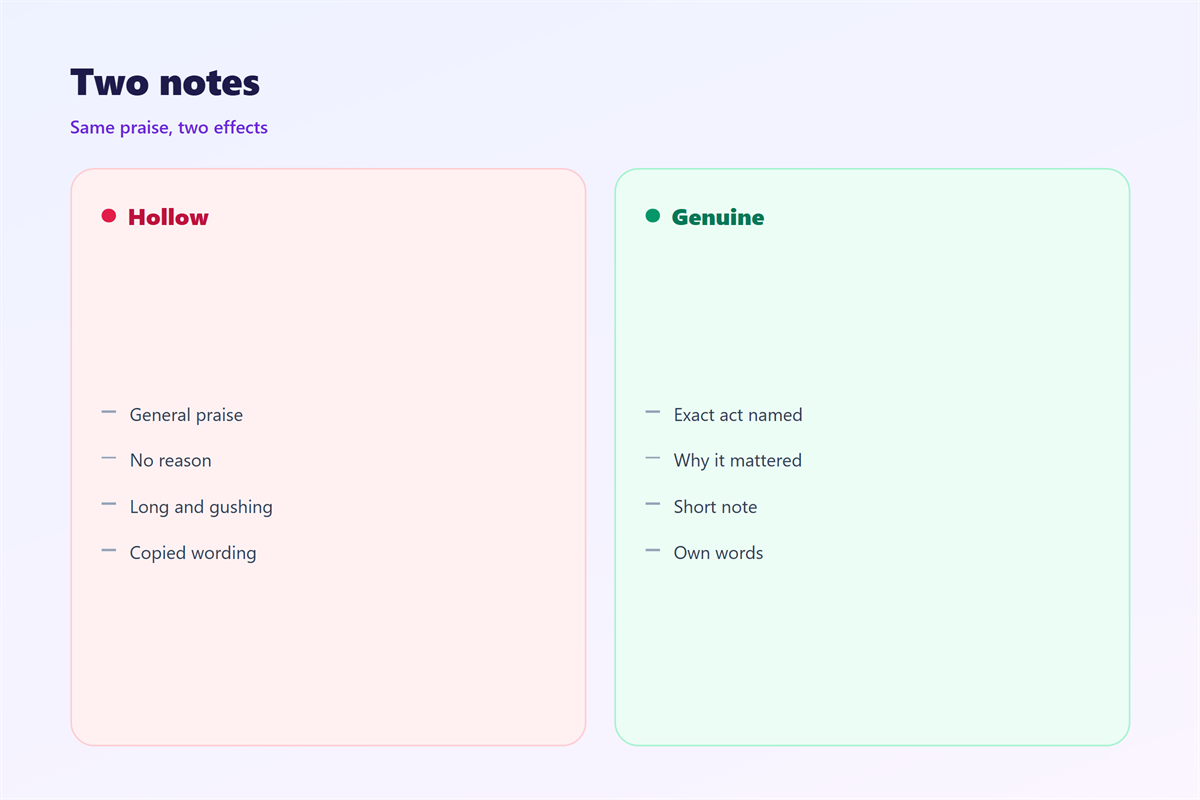
Most praise fails because it stays far too general.
A clear note takes two minutes and lasts for years.
It works for a colleague, a client or a stranger.
A short 邮件表扬 is easy to write and easy to read.
A 邮件表扬 should sound like the person who wrote it.
The note should sound the way a spoken thank you would sound in a quiet room.
It answers one simple question about a single piece of finished work.
Why a 邮件表扬 helps
People repeat what gets noticed, so praise shapes behaviour.
A quick note tells the reader which work was valued.
It also builds trust between two people who rarely meet.
A specific 邮件表扬 gives a reason, not just a feeling.
That reason can be reused in a review or report later.
Praise also softens a message that carries a hard request.
Over time, a steady 邮件表扬 builds a culture of care.
A kind word costs almost nothing and is often remembered for a very long time.
It also gives quiet people a fair share of the credit they have earned.
Keep it honest
False praise is easy to spot and hard to forgive.
Only praise what really helped, and never invent a reason.
If the task was small, praise the care behind it.
Building a 邮件表扬
Use one shape every time so the note stays fast to write.
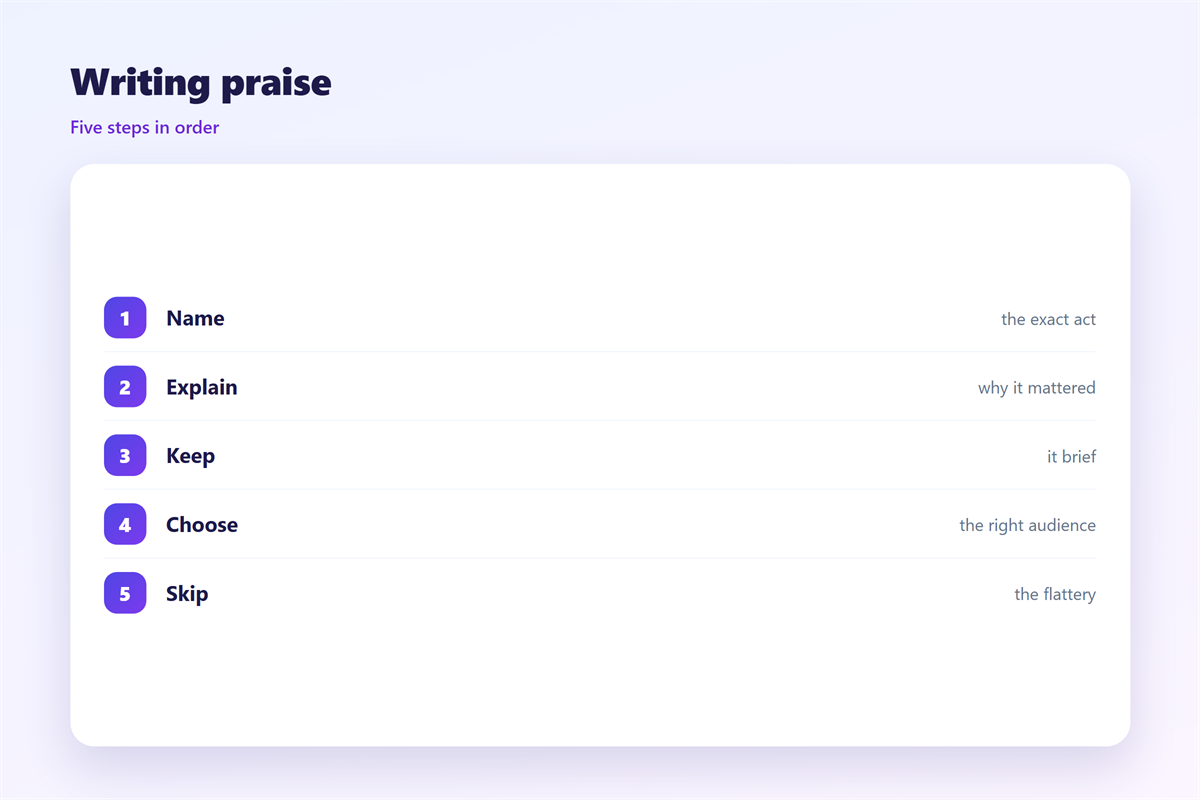
Start with the name and the one thing they did.
Then add the result, kept to a single plain sentence.
A good 邮件表扬 follows the same three steps each time.
Name the act
Say exactly what happened, in plain and simple words.
You fixed the broken export before the demo started.
That line is worth more than three lines of general thanks.
Add the effect
Explain why the work mattered to you or the team.
The demo went well because the numbers finally loaded.
The reader then knows the praise is real.
End with one line
Close with a short, warm sentence and no extra demands.
Thanks again, this helped the whole team.
Stop there, because praise does not need a follow up task.
Keep the whole note under about fifty words whenever you can manage it.
Read your draft once out loud before you press the send button.
A simple frame of three parts is easy to fill within a minute or two.
邮件表扬 for different people
The same shape fits almost every kind of reader.
Only the tone and the detail change from person to person.
A calm 邮件语气 keeps the note warm without being gushing.
Whatever the reader, a 邮件表扬 stays short.
Praise a colleague
Mention the shared goal and the part they carried.
Keep it light and specific, and copy the team if it helps.
Seeing it in public can lift a whole group.
Praise a client
Thank them for a clear brief or a fast decision.
Tie the praise to the result their team produced.
This kind of note feeds good 邮件客户关怀 over time.
A short 邮件表扬 example
Suppose a designer stayed late to fix a broken layout.
The note says: thanks for fixing the checkout page tonight.
The page loaded twice as fast after your change.
Customers can now pay without the old error.
That is three sentences and under thirty words.
It names the act, the effect and nothing else.
This 邮件表扬 names the act and the payoff.
Notice that the note never once uses the tired word great.
It points at one change and then explains the gain in plain words.
The reader instantly knows exactly what to keep doing next time.
Mistakes to avoid
The first mistake is praising everything in the same way.
When all praise sounds equal, none of it stands out.
The second is waiting a week to send the note.
Late praise feels like an afterthought, not a reward.
The third is adding a new request inside the praise.
Keep the thanks clean, then send any task separately.
A rushed 邮件表扬 can undo more good than it adds.
Copying the same praise to everyone slowly makes it look lazy.
Compare the work itself, not the person, when you choose your words.
Vague words like nice or good add almost nothing to a message.
Keeping a 邮件表扬 handy
Save the notes that worked, and they become your best templates.
The habits behind a first draft are set out in 邮件致谢.
Long term relationships grow through steady 邮件客户关怀.
The right warmth is described in 邮件语气.
Everyday courtesy is covered in 邮件礼仪.
Then reuse the strong ones and quietly drop the rest.
A small folder of praise notes saves time all year.
Group your saved notes by the kind of work they were written to praise.
A short list of openers can also speed up the very first line.
Review the folder twice a year and quietly remove the weaker notes.
FAQ
Is a 邮件表扬 good for a manager?
Yes. Praise moves upward just as well as downward.
How long should a 邮件表扬 be?
Two or three sentences. Longer than that looks forced.
Should I copy the team?
Only when the work was shared or the praise is genuine.
Can I send it late?
Better late than never, but sooner always feels warmer.
References
- IETF RFC 5322: Internet Message Format
- Harvard Business Review: Writing email with precision
- Atlassian: Productivity and writing habits
评论
还没有评论,来说两句吧。
评论功能已关闭。