 小影邮箱
邮件批评怎么写?Feedback That Lands
Key Takeaways
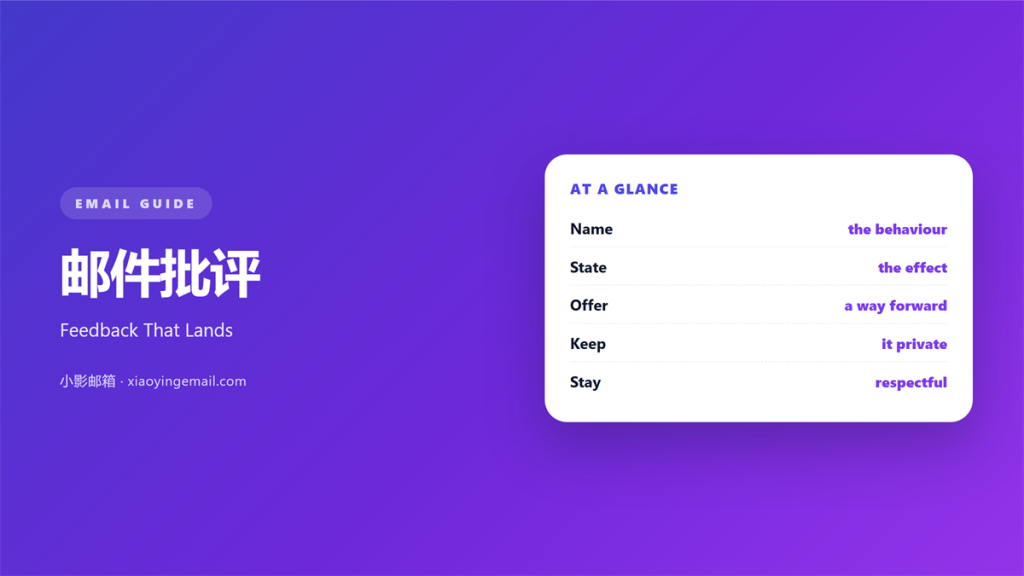
- 邮件批评 is feedback about a problem, not a person.
- Name the behaviour and the effect it had.
- Offer one clear way to do better next time.
- Write it when you are calm, not angry.
- A fair note protects the work and the relationship.
What 邮件批评 means
邮件批评 is written feedback about work that went wrong. It points at an action, not at a character.
That difference matters more than any other rule.
A good note describes what happened and why it mattered.
It then asks for a specific change.
It does not list every small fault of the person.
One issue per message is usually enough.
Clear feedback is a gift, even when it stings.
Most writers confuse criticism with a verdict on the person.
That confusion makes the note longer and harsher.
Keep the question simple: what should change?
Why 邮件批评 matters
People cannot fix what they cannot see.
Silence lets a small habit grow into a large problem.
A written note makes the expectation visible.
It also creates a record that both sides can check.
That record protects the sender from later claims.
And it protects the reader from vague blame.
Feedback given early is cheaper than feedback given late.
Unspoken expectations are the root of most conflict.
A short note turns an expectation into a clear request.
That clarity helps the reader and the sender alike.
The cost of vague blame
“Be more careful” tells the reader nothing.
It invites worry without a way out.
A named behaviour gives the reader a next step.
When 邮件批评 helps
邮件批评 helps when a mistake affects other people.
It helps when the same problem happens twice.
It helps when a deadline was missed without warning.
It also helps when a client noticed the error first.
In each case, the note should arrive soon.
It helps when a new process was not followed.
It helps when the same fix keeps getting undone.
A note makes the rule visible for the next person.
Three good moments
After a repeated error, a missed date, or a client complaint.
Write while the facts are still clear.
Wait until your first anger has cooled.
When 邮件批评 hurts
邮件批评 hurts when it becomes a list of faults.
A long list reads as an attack, not as help.
It hurts when the note arrives in public.
Praise belongs in public. Correction belongs in private.
It also hurts when the reader has no chance to reply.
A one-way message feels like a verdict.
And it hurts when the tone is sarcastic.
A joke at someone’s expense is not feedback.
Criticism by email also hurts when it is forwarded.
The reader learns that the note was shared.
Trust drops and the next correction gets harder.
邮件批评 and tone
Tone is the difference between a lesson and an insult.
Use plain words and short sentences.
Keep the focus on the work, not the worker.
Say “the report” instead of “your report”.
That small change lowers the temperature at once.
Neutral, not cold
Neutral does not mean unfriendly.
One calm sentence at the start sets the frame.
Then state the problem without extra adjectives.
End with a clear offer of support.
Remove words like always and never.
They turn one event into a pattern.
Describe the single case you can prove.
How to use 邮件批评 well
Start with the purpose in one sentence.
Describe the action and the result it caused.
Ask for the reader’s view before you close.
Then suggest one concrete change.
Set a date for the next check.
Keep the whole note under ten lines.
Save the draft for an hour before sending.
Read it as if you were the reader.
Name the standard the work did not meet.
That link makes the request fair.
Then say what good work looks like.
A four-step pattern
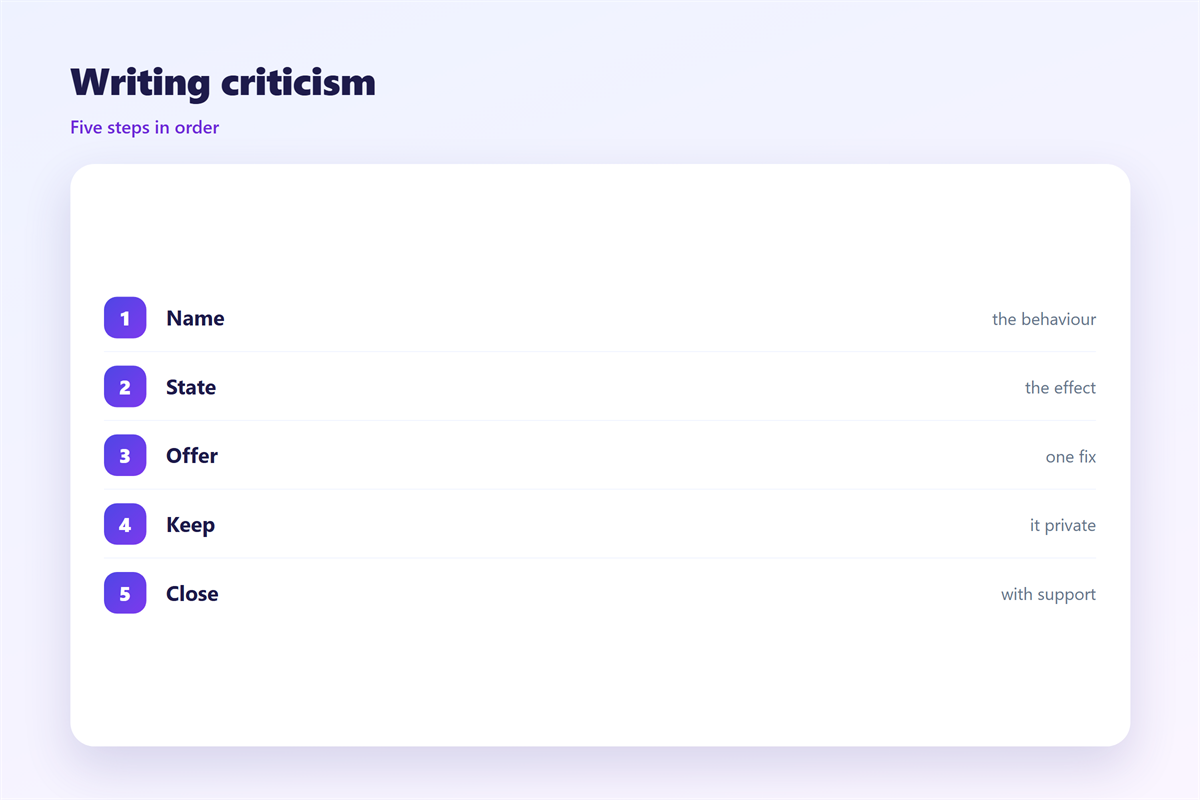
Step one: name the fact.
Step two: name the impact.
Step three: ask for a fix.
Step four: offer help.
That pattern keeps the note fair and short.
邮件批评 after the reply
Feedback does not end when you press send.
The reader may disagree, and that is useful.
Read the reply before you defend your note.
Ask one question instead of writing a second argument.
Then agree on the change together.
Close the loop with a short confirmation.
A resolved note builds more trust than a perfect one.
A short call can save a long exchange.
Offer one if the thread grows tense.
Then write the result back into email.
When the feedback was wrong
Sometimes the reader shows a fact you missed.
Say so plainly and correct the record.
That honesty costs little and earns a lot.
It also makes your next note easier to trust.
Keeping 邮件批评 consistent
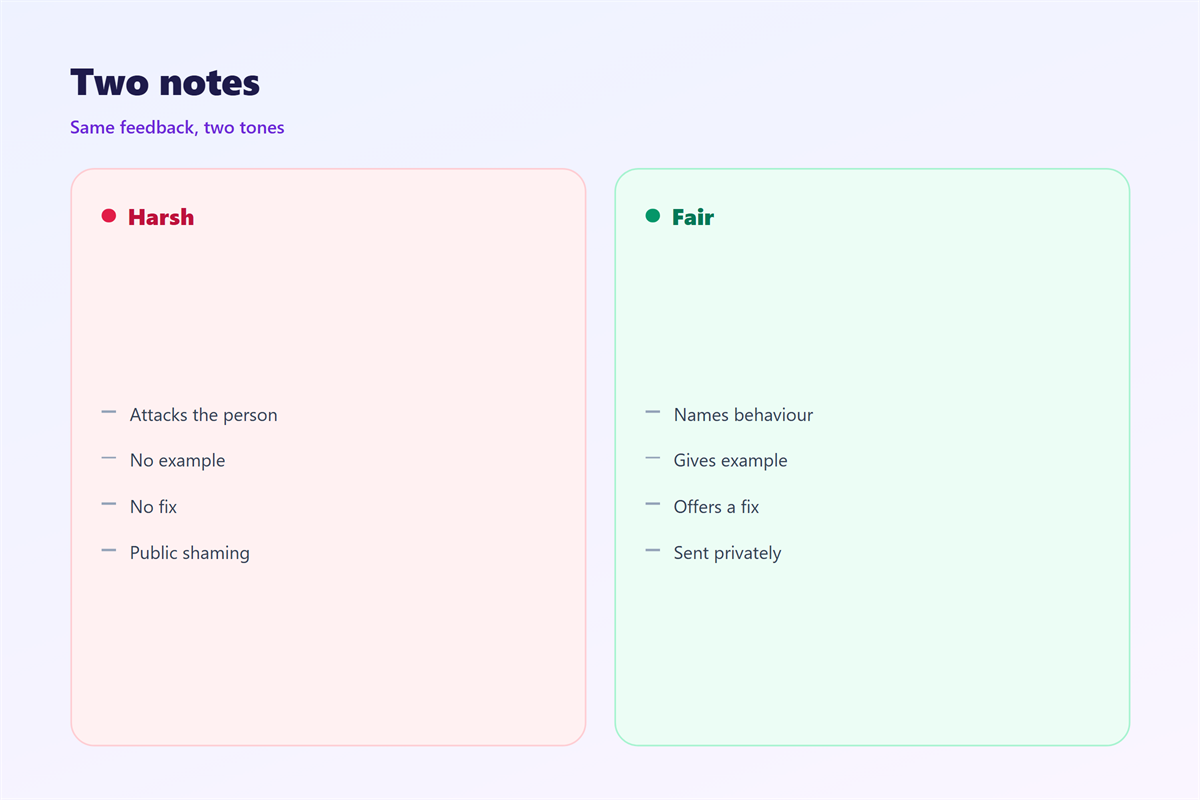
Consistency makes criticism easier to hear.
Agree on a four-step pattern for the team.
Agree on who gives feedback and when.
Agree that correction stays private.
The wider feedback habit is covered in 邮件反馈. The opposite skill appears in 邮件表扬. The results conversation is explained in 邮件绩效. The wording itself sits in 邮件语气.
Then review one hard note together each month.
A shared style makes 邮件批评 fairer for everyone.
FAQ
Is 邮件批评 always negative?
No. It can name what worked before the problem. That context makes the fix easier to accept.
Should I send criticism by email at all?
Yes, for simple and factual issues. For emotional topics, talk first and confirm by email.
How do I start 邮件批评?
With the shared goal, not the fault. One line about the work sets a calm frame.
What if the reader reacts badly?
Stay factual and offer a call. A calm reply usually lowers the heat.
评论
还没有评论,来说两句吧。
评论功能已关闭。