 小影邮箱
邮件述职怎么写?Reporting on Your Work
Key Takeaways
- 邮件述职 records what you did and what comes next.
- Lead with the result, not the effort.
- Numbers work best with one short context line.
- Keep it to a page a manager can skim.
- End with a clear ask or a next step.
What 邮件述职 means
邮件述职 is a short written record of your own work.
It covers a fixed period, usually a month or a quarter.
You list what you finished, what slipped and what comes next.
It is not a boast and not an apology. It is a clear account.
Many people confuse it with a daily note. The scope is far wider.
Others treat it as a formality and rush it at the last hour.
The best versions read like a short story. They have a start, a middle and a clear end.
A strong 邮件述职 answers one question. What changed because you were here?
Why 邮件述职 matters
Managers carry many threads. They rarely remember your quiet wins.
A written record survives the busy weeks. It becomes the source of truth.
It also helps you. Writing forces you to see your own pattern.
Good 邮件述职 makes review season calmer. The facts are already on file.
The quiet benefit
A record protects you when a project is questioned later.
It shows steady progress that a single meeting would miss.
Over a year, these notes become a map of your growth. It also sets the tone for the next review talk.
That map is useful when you ask for a raise or a transfer. When the numbers are written down, the talk turns to plans.
How to structure 邮件述职
Keep one shape every time. A familiar shape is easy to skim.
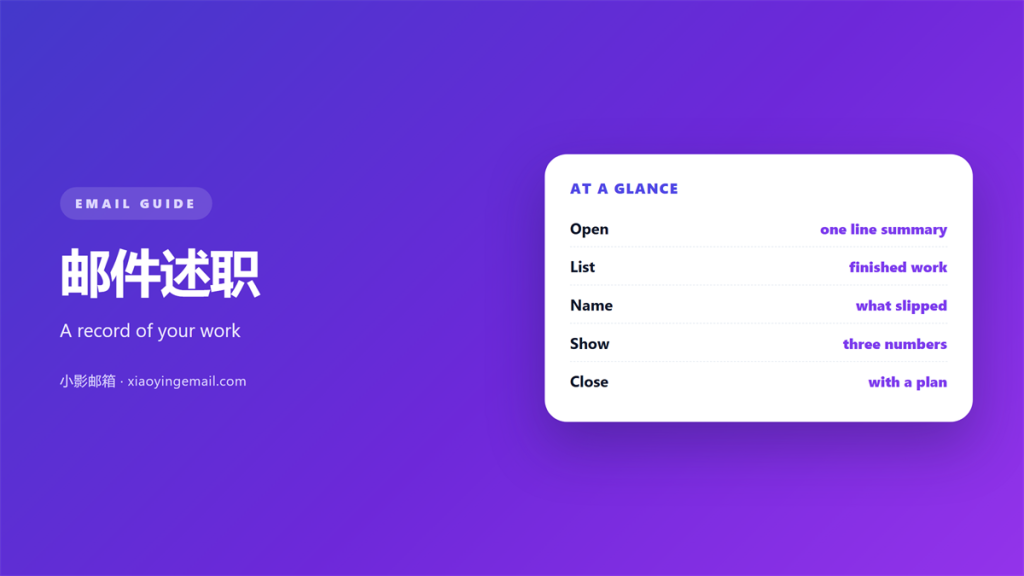
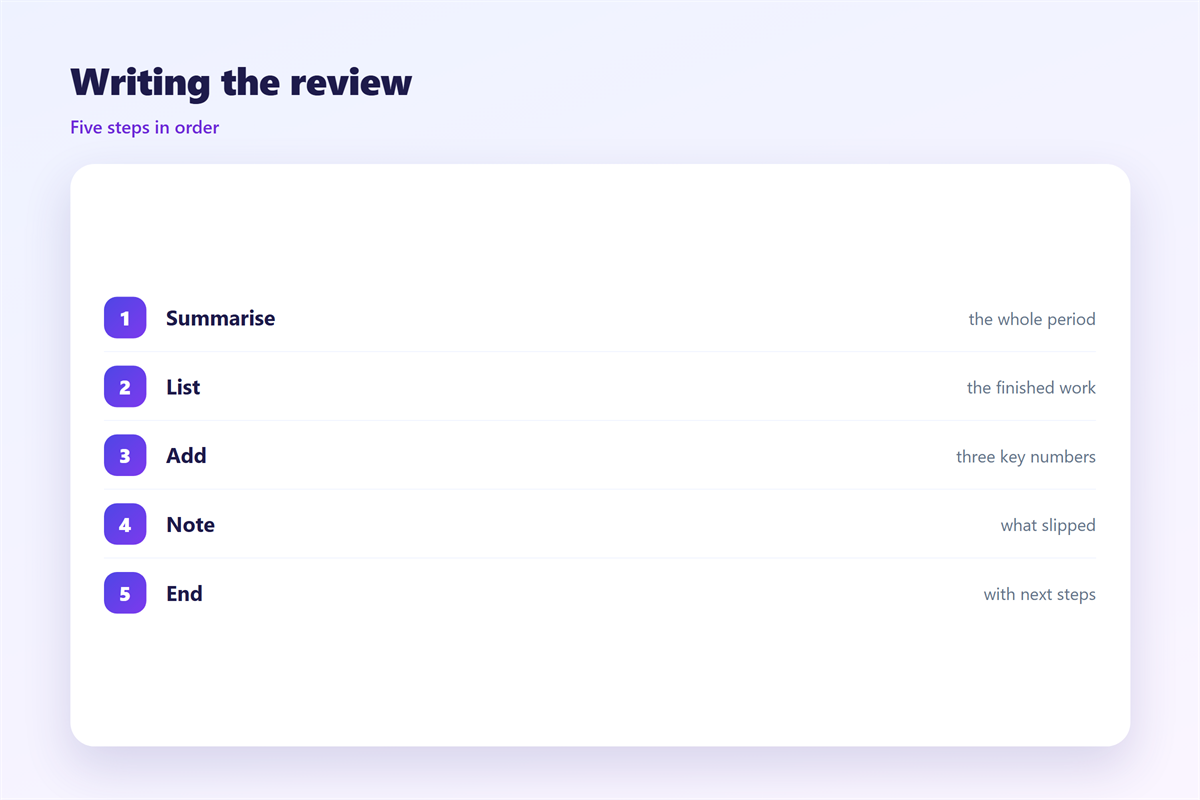
Open with one line of summary. Say how the period went.
Then list the finished work. Group it under clear headings.
Next, name what slipped and why. Honesty here builds trust.
Close with your plan for the next period. Keep it short.
That order works for almost every role. Try it before you invent your own. Save your template so the next period starts from a good place.
A steady structure also saves you time. You stop staring at a blank page.
What to include
Start with results, not tasks. A finished task is not the same as a result.
Name the outcome and the number behind it.
Results first
Say what changed. Say by how much. Say over what period.
One clear number beats a paragraph of effort.
Context second
A number alone can mislead. Add one line about the conditions.
Was the quarter quiet or frantic? That line changes the reading.
Then the plan
End the list with what you will do next.
A small forward plan shows you are still thinking ahead. It turns a vague hope into a clear next step.
Keep each heading short. Long headings slow the reader down. Short headings let a busy reader jump to the part they need.
Numbers that help 邮件述职
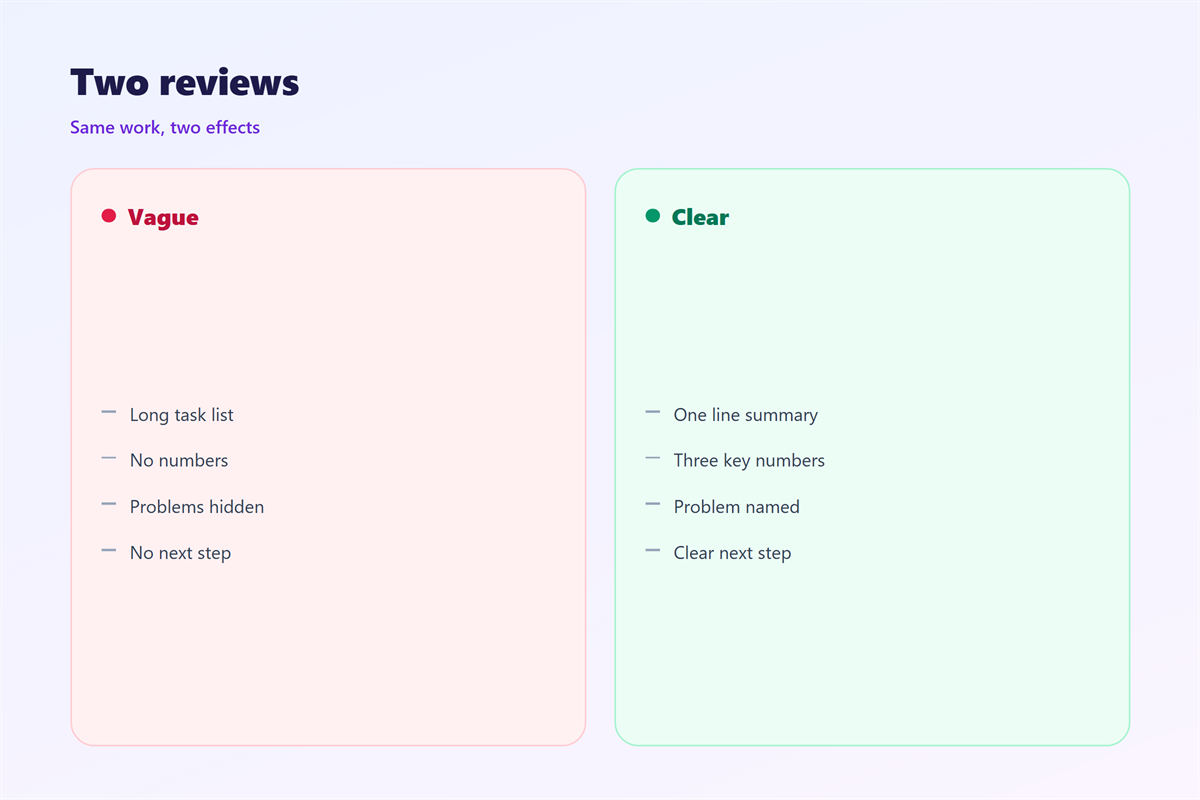
Too many figures bury the point. Pick three that matter.
Round them. “About a third” is often clearer than a long decimal.
Compare against something. Last quarter, last year or the target.
A number with no baseline means little to a reader.
Keep a running file through the period. Do not rebuild it from memory.
That habit turns a hard task into a ten minute edit.
A calm 邮件述职 is usually one written as it happened. Update the file at the end of each week.
Closing a 邮件述职
The last lines are the ones people remember.
Restate the headline result in one sentence.
Then make one clear ask. A resource, a decision or a review.
Without an ask, the message just ends. An ask gives it a purpose.
Thank the reader only once. Repeated thanks reads as filler.
A short close respects the manager’s time. Keep it short enough to read in one breath.
Mistakes that weaken 邮件述职
The first mistake is listing every task. It hides the real result.
The second is hiding a problem. Bad news ages badly.
The third is copying last month’s note. Readers notice the stale lines.
Another is writing for yourself, not the reader.
Finally, do not send it late. A report after the deadline loses its use.
A steady 邮件述职 beats a brilliant rare one. Read it aloud once before you send.
Sending and improving 邮件述职
Send it on the same day each period. Predictable notes are easy to plan for.
Keep the format steady so changes stand out. The habits behind a weekly note are set out in 邮件周报.
The same skills carry over to a status update. See 邮件汇报 for the structure.
Reuse your best phrasing. A good skeleton is described in 邮件模板.
Let the tone stay plain and warm. The rules are gathered in 邮件礼仪.
Then improve one part each period. Small edits beat a full rewrite.
Keep a copy of every note. A folder of 邮件述职 is a quiet career asset.
FAQ
Is 邮件述职 the same as a weekly report?
No. A weekly note covers days. A review covers a longer period and looks forward.
How long should it be?
One page is enough. If it runs longer, cut the tasks and keep the results.
Should I mention failures?
Yes, briefly. Name the cause and the fix. Skip the excuses.
How often should I send one?
Match your review cycle. Monthly or quarterly fits most teams.
References
- IETF RFC 5322: Internet Message Format
- Harvard Business Review: How to write a good status update
- Atlassian: Productivity and status update templates
评论
还没有评论,来说两句吧。
评论功能已关闭。