 小影邮箱
邮件转正怎么写?Confirming the Role
Key Takeaways
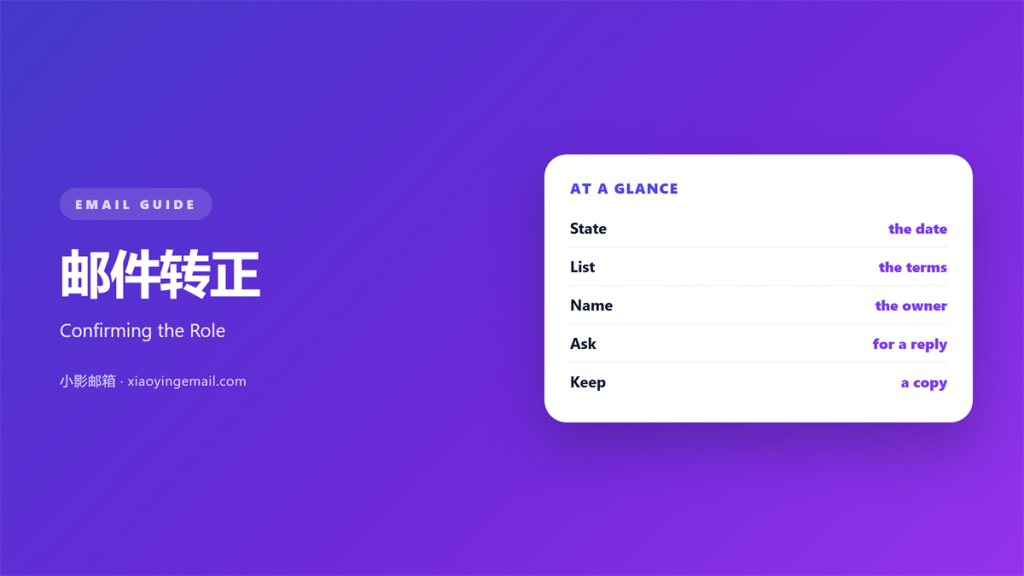
- 邮件转正 confirms a change from trial to a full role.
- State the start date and the new terms clearly.
- Keep the tone warm but always accurate.
- List any next steps as short bullet points.
- Save the note for your own records too.
What 邮件转正 means
邮件转正 is the note that confirms a move to a permanent role.
It records the date, the title and any change in pay.
It often follows a review of the first few months.
The message should be short and easy to check.
A clear 邮件转正 protects both sides of the deal.
A plain 邮件转正 is easier to trust than a grand one.
It is a record, not a speech.
Write it once and keep the facts exact.
The note should read as a calm record rather than a warm speech.
It usually lands right after a short talk with the manager.
It answers the one question everyone asks first.
Why a 邮件转正 matters
A written note removes doubt about the new status.
It gives the person a date to point to later.
It also shows that the decision was deliberate and fair.
A warm 邮件转正 builds loyalty at a key moment.
A clear 邮件转正 also helps the manager stay consistent.
The same care appears in a good 邮件述职.
A sloppy note can make a fair decision feel rushed.
A clear note also protects the manager if questions arise later.
It gives both sides one shared version of the same facts.
Small kindnesses in the wording are noticed and remembered.
A kind note at a key moment is remembered for years.
Set the record straight
Two people often remember a talk differently.
The note is the version both can rely on.
Keep it factual and free of vague promises.
Building a 邮件转正
Use a fixed shape so nothing important is missed.
Open with the decision, then the terms, then the next step.
A good 邮件转正 uses the same parts every time.
Keep the whole note short enough to read in half a minute.
A tidy layout helps the reader find each fact at a glance.
Name the benefit before you mention any extra work.
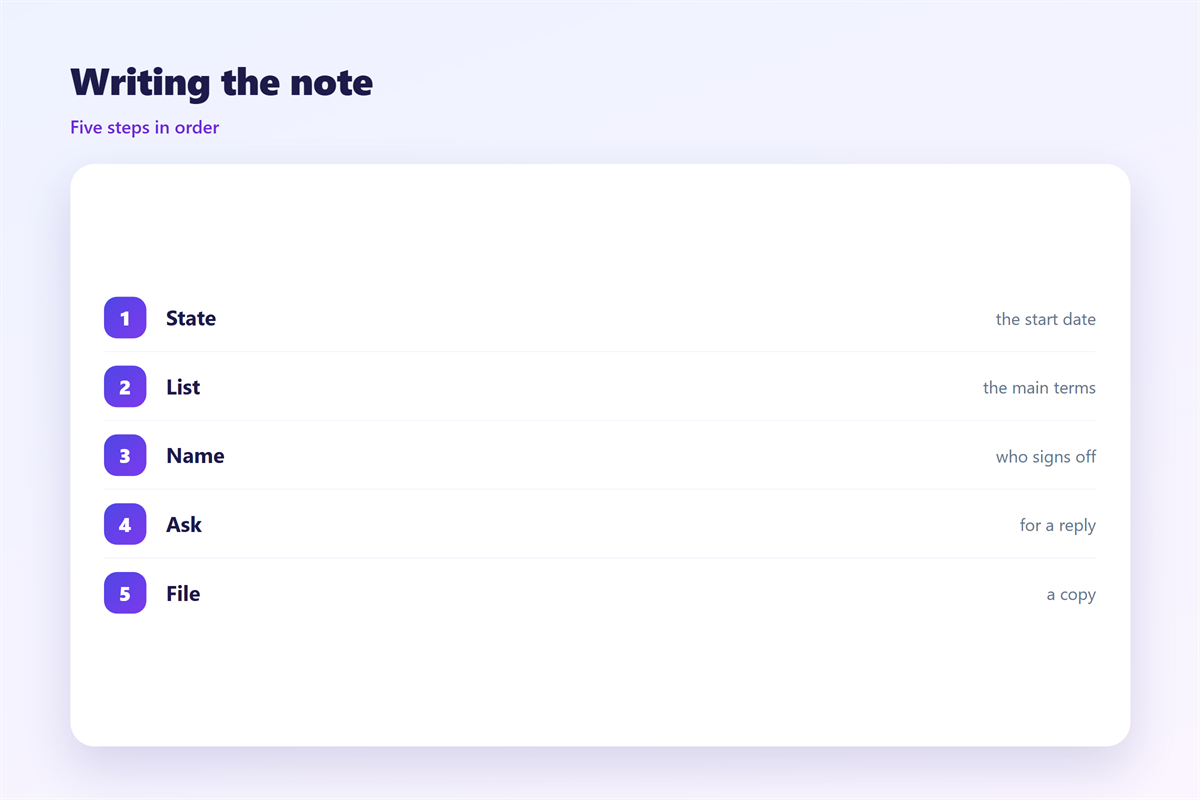
State the decision
Say plainly that the role is now permanent.
Give the date the change takes effect.
Name the exact title they will hold.
List the terms
Add pay, hours and any new duties.
Keep each point on its own short line.
Numbers should be exact, never rounded off.
Name the next step
Tell them what happens after this note.
A form, a meeting or a simple reply will do.
Then thank them for the work so far.
邮件转正 and the review
Most confirmations follow a short performance review.
The review sets out progress against the first goals.
Any approval for the change should be clear.
A short note about 邮件审批 keeps the chain honest.
Once approved, the 邮件转正 simply confirms the result.
Send the 邮件转正 only after the review closes.
Never send the note before the approval is real.
Read the review once before you write the final note.
Name the goals that were met and thank the person clearly.
Keep the approval on its own line so nobody misses it.
A short note keeps the decision clear for everyone.
Keep it separate
The review and the confirmation are two things.
Send the review first, then the formal note.
That order avoids confusion about the outcome.
A short 邮件转正 example
Suppose a designer finished a three month trial last week.
The note might open like this.
I am glad to confirm your role is now permanent.
The change takes effect on the first of next month.
Your title stays the same and the pay rises slightly.
A short 邮件转正 like this is clear and kind.
Notice that the note gives a date and a clear title.
It never buries the good news under long, formal phrases.
The reader can act on the news the same day.
Mistakes to avoid
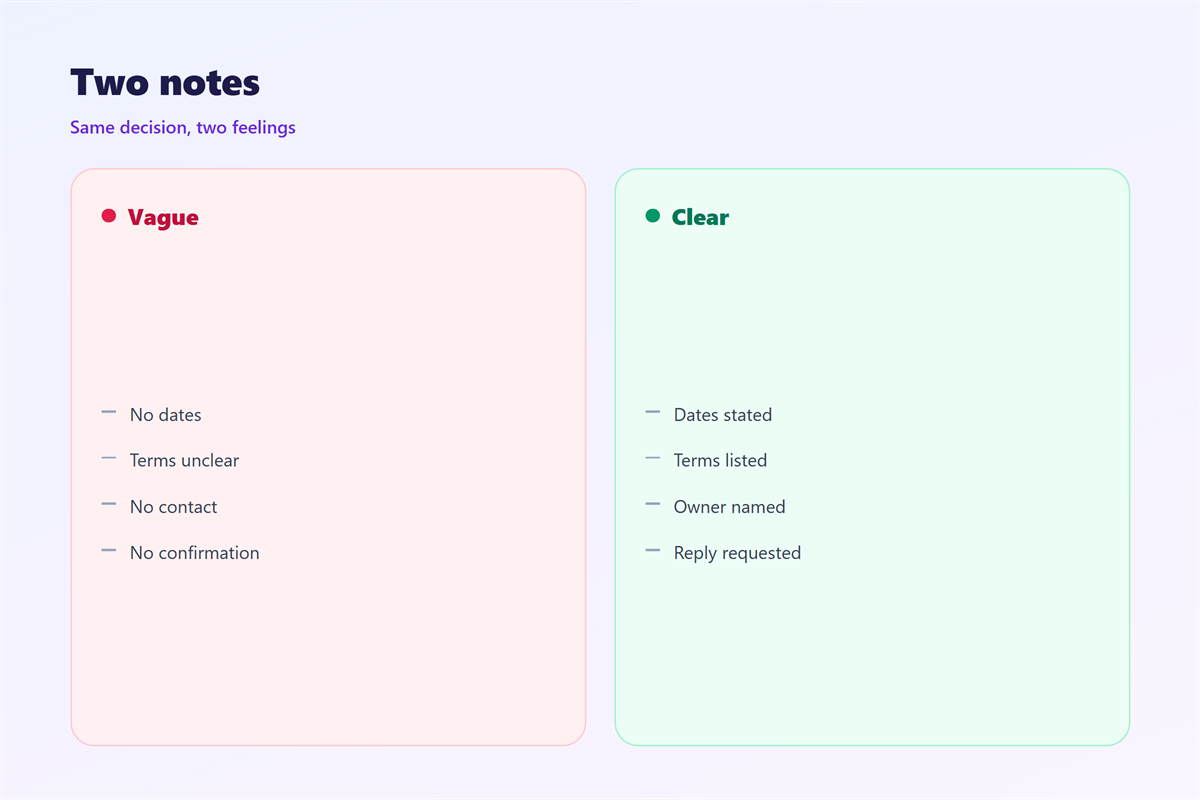
The first mistake is leaving out the effective date.
Without a date, the note raises more questions than it answers.
The second is mixing the review into the confirmation.
Keep the two messages separate and simple.
The third is a cold or overly formal tone.
A little warmth costs nothing and means a lot.
A rushed 邮件转正 can spoil a happy moment.
Copying a standard note without checking names looks careless.
Compare the promised terms with the actual ones twice.
Short, exact lines are far easier to trust than long ones.
Short words carry more weight than long, formal ones.
Keeping a 邮件转正 handy
Save the note for your records and for the future.
Progress updates are covered in 邮件述职.
Requests that need a yes are set out in 邮件审批.
Reusable wording is gathered in 邮件模板.
Everyday courtesy is covered in 邮件礼仪.
Then reuse the good parts and drop the rest.
A single template saves time on every hire.
Group your saved notes by role and by department.
A short list of openers can speed up the first line.
Review the folder twice a year and drop the weaker notes.
A good record today saves a long search tomorrow.
Keep one master copy in a place the whole team can reach.
Good wording is worth keeping and reusing often.
FAQ
Who should send a 邮件转正?
The direct manager usually sends it to the employee.
What should the note include?
The date, the title, the pay and any next step.
Can it be sent before the review?
No. Wait until the approval is final and clear.
How long should it be?
Five or six short lines are usually enough.
References
- IETF RFC 5322: Internet Message Format
- Harvard Business Review: Writing email with precision
- Atlassian: Productivity and writing habits
评论
还没有评论,来说两句吧。
评论功能已关闭。