 小影邮箱
邮件排班怎么做?Handover Without Gaps
Key Takeaways
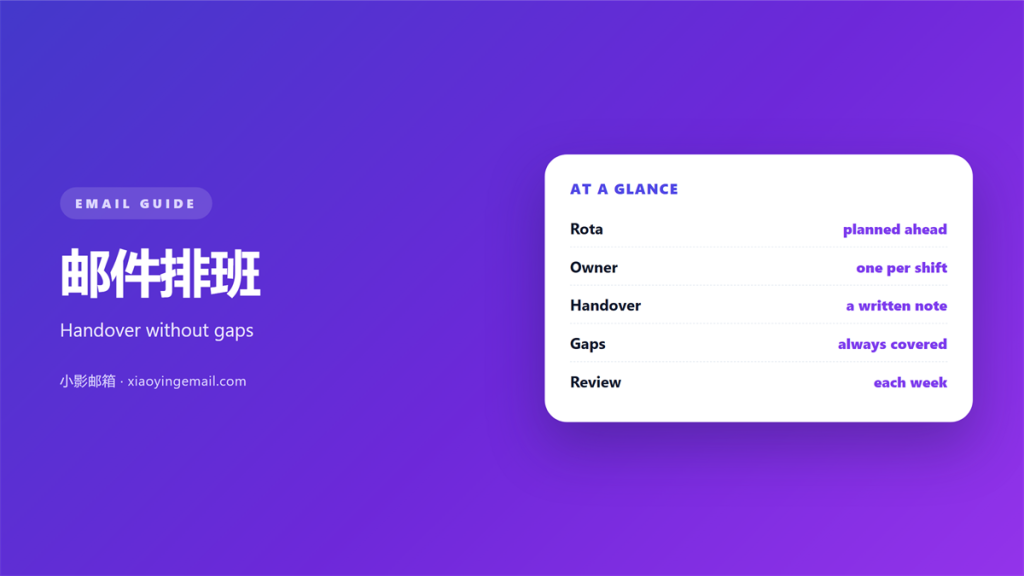
- 邮件排班 gives every shared message a named owner.
- A written rota beats hoping someone is watching.
- Cover the gaps where no one is on duty.
- Record the handover so nothing slips away.
- Review the schedule when the volume changes.
What 邮件排班 solves
邮件排班 decides who watches a shared inbox and when.
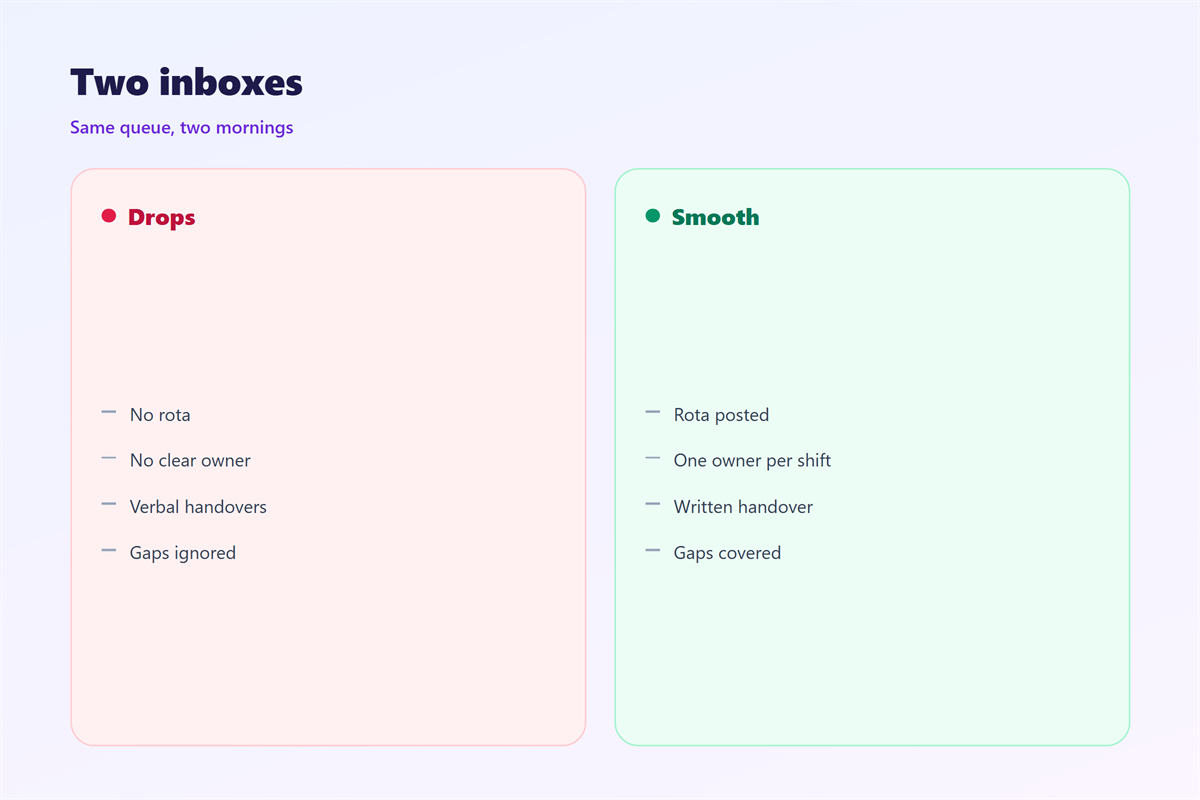
Without it, everyone assumes someone else has replied.
That quiet gap is where customers learn to give up.
A clear rota turns a crowd into a small team.
Each person knows the hours they must cover.
The rest of the day, the inbox is not their worry.
So a simple 邮件排班 removes a lot of daily doubt.
It also stops the same message being answered twice.
Customers do not care who is on duty today.
They only care that someone replies in good time.
A rota is the promise that someone always will.
Good cover also lowers the stress of each person.
Nobody must refresh an inbox on a day off.
A rota also protects people from long term burnout.
Fair cover keeps good staff from leaving.
Write the rota in plain words anyone can follow.
Keep the same rules for every member of the team.
Building the rota itself
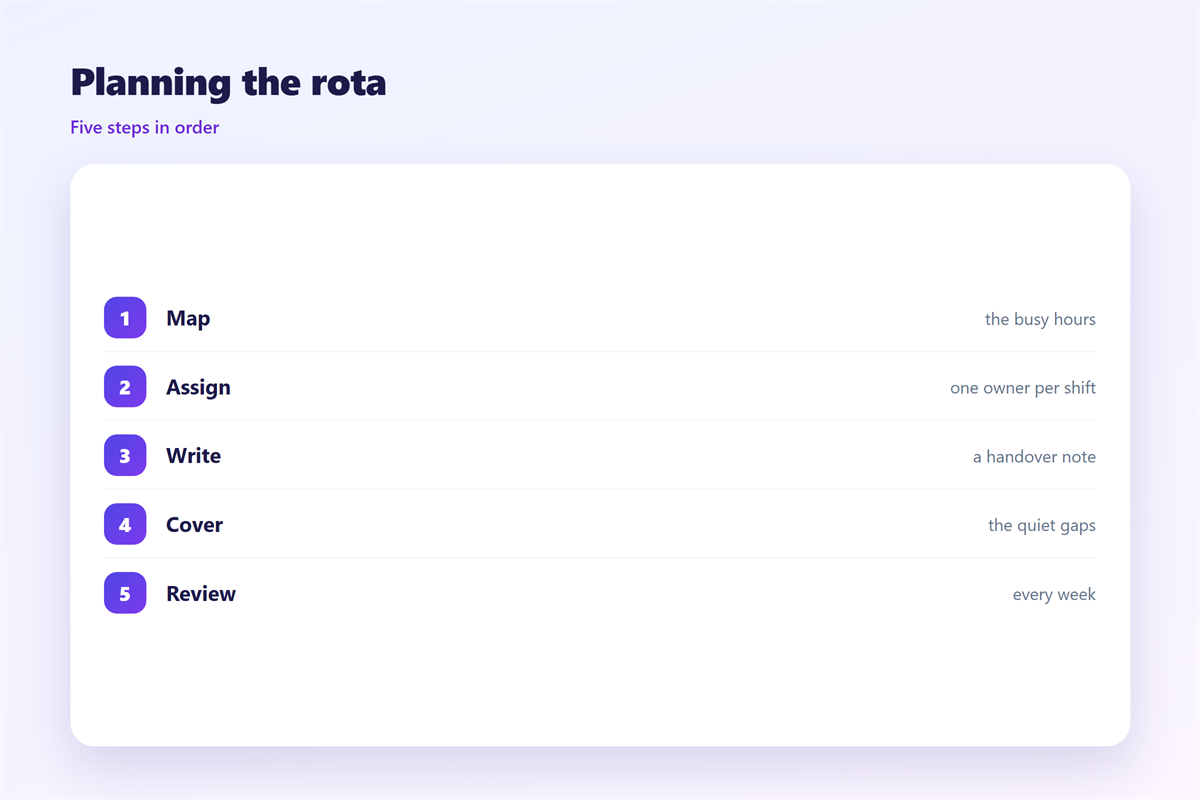
Start by measuring when messages really arrive.
Most inboxes have two busy bands each day.
Cover those first, then spread the quieter hours.
Give each shift one owner, never two.
Name a backup for holidays and sick days.
Keep the shifts short enough to stay alert.
Matching people to shifts
Pair a fast typist with a heavy morning.
Put a patient writer on the hard cases.
Give new staff a light shift with a mentor.
Print the rota where the team can always see it.
Update it the moment a shift changes hands.
Keep a copy the whole team can reach from home.
Name the tool where the rota lives for good.
A written 邮件排班 removes the daily guesswork for everyone.
Start with the hours that hurt the most.
Then fill the easy hours around them.
Covering the gaps
Publish an after hours rule everyone can follow.
Agree what counts as urgent overnight.
Set one person as the weekend contact.
Keeping 邮件排班 fair
Rotate the unpopular late shifts between people.
Publish the rota a week ahead so plans are safe.
Let people swap, but keep the final list firm.
Count the hours each person actually covers.
A fair 邮件排班 lasts far longer than a forced one.
Ask the team once a month what feels wrong.
Small fixes early prevent a larger revolt later.
Write the rules down so memory is not needed.
Ask each person which shifts they prefer most.
Honour a request when the cover still works.
Explain clearly when a request cannot be met.
A public rota removes most quiet resentment.
Ask for feedback before you publish the list.
Handover between shifts
Every shift should end with a short written note.
Name the open threads and the people still waiting.
Flag anything that needs a decision from a lead.
Keep the note in one place the next shift can find.
A tidy 邮件排班 makes that handover quick to read.
Five lines are usually enough for most days.
The next owner starts with a clear and calm list.
Nothing important rests on a spoken promise.
What the handover should hold
The unread threads that still need an answer.
The promises you made and their due times.
The one thing most likely to go wrong.
Write the note before you leave, not after.
Read the last note before you start your shift.
Ask a question in the note when something is unclear.
Five clear lines are worth a long conversation.
A missed 邮件排班 step shows up as a silent customer.
Mark the thread as owned by the next shift.
Keep the same note format every single day.
Speed comes once the format feels familiar.
Habits that keep 邮件排班 working
Review the rota whenever volumes shift a lot.
Trim the email load before adding more shifts.
Close threads that no longer need a reply.
Keep one dashboard the whole team can trust.
A living 邮件排班 is never finished for good.
Celebrate the quiet weeks and note what worked.
Teach every new hire the rota on day one.
Then the schedule can survive a busy season.
Train the rota as part of normal onboarding.
Check the plan after any long holiday break.
Keep a spare person ready for sudden absences.
Measure the worst wait time each week.
A shared 邮件排班 keeps the whole team aligned.
Thank the people who cover the hard shifts.
A fair plan is the quiet base of good service.
Keeping 邮件排班 intact day to day
Decide who owns each shared thread. The rules are set out in 共享邮箱.
Agree how the team works together. The basics sit in 邮件协作.
Route each message to the right person. The method is explained in 邮件分配.
Pass open work on cleanly. The steps are described in 邮件交接.
Then keep the whole plan short and visible. A clear 邮件排班 protects every customer.
FAQ
How many people does a 邮件排班 need?
Two can begin. You need one owner and one backup at all times.
Do small teams really need a 邮件排班?
Yes. Even three people lose messages without a named owner.
How often should the rota change?
Review it monthly. Change it sooner when volumes move sharply.
What if a shift is missed?
Have a backup rule ready. Then note why the gap happened.
References
- M3AAWG: Messaging best practices
- IETF RFC 5322: Internet Message Format
- EFF: Email privacy and user trust
评论
还没有评论,来说两句吧。
评论功能已关闭。