 小影邮箱
邮件退信分析怎么做?Reading a Bounce
Key Takeaways
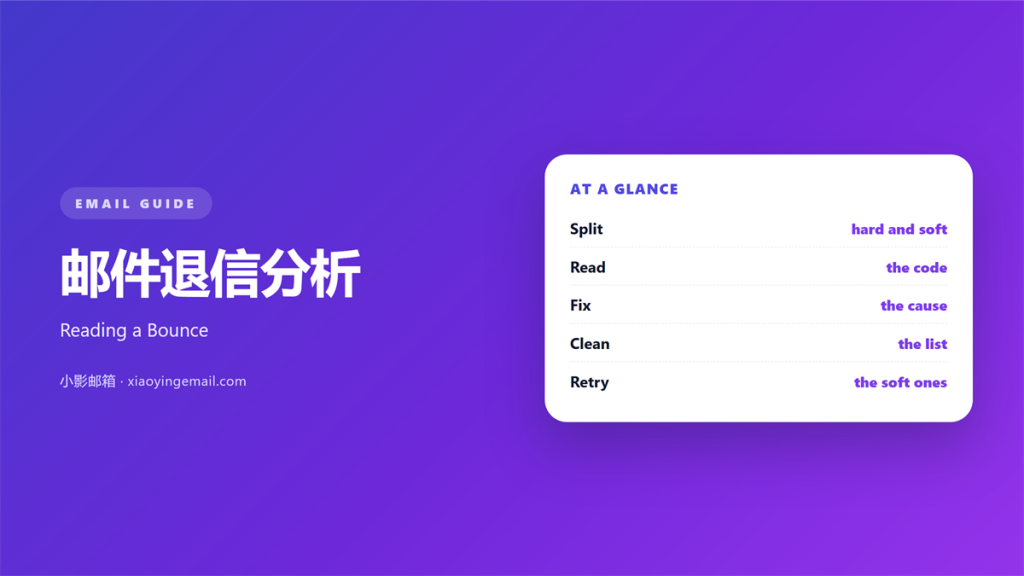
- 邮件退信分析 reads the mail that never arrived.
- Split hard bounces from soft ones.
- Remove dead addresses before the next send.
- Retry a soft bounce, but never a hard one.
- A steady habit keeps the list healthy.
What 邮件退信分析 means
邮件退信分析 is the study of mail that never arrived.
A bounce is a message the server refused.
Each bounce carries a code and a reason.
The analysis turns those codes into a plan.
Some reasons are permanent and some are not.
Reading them apart is the whole skill.
The report is short but very useful.
It shows which addresses are dead.
It also shows which ones are just busy.
So treat each bounce as a signal.
A signal you read is a problem you can fix.
The report never blames the reader.
It simply records what the server said.
It is a record, not a judgement.
Why 邮件退信分析 matters
A list decays on its own.
People leave jobs and close accounts.
Old addresses turn into dead ends.
Sending to them hurts your reputation.
A high bounce rate can block your mail.
So the report protects the whole program.
It also saves money on wasted sends.
And it keeps the metrics honest.
A clean list reaches the people who matter.
The bounce report is the first warning.
It also shows how fast a list ages.
A younger list usually performs better.
A fresh list also lowers the cost per send.
Hard or soft
A hard bounce is permanent.
A soft bounce is usually temporary.
Treat them in different ways.
When 邮件退信分析 helps
The report helps after every big send.
It helps when a campaign goes quiet.
It helps when an address looks wrong.
A single dead address is easy to fix.
A pattern of dead addresses is a warning.
So read the report as a whole.
Then fix the biggest cause first.
Small fixes add up over time.
So run a 邮件退信分析 after every send.
That habit turns a chore into a routine.
It also catches a bad send early.
Read it even when the numbers look fine.
When 邮件退信分析 is ignored
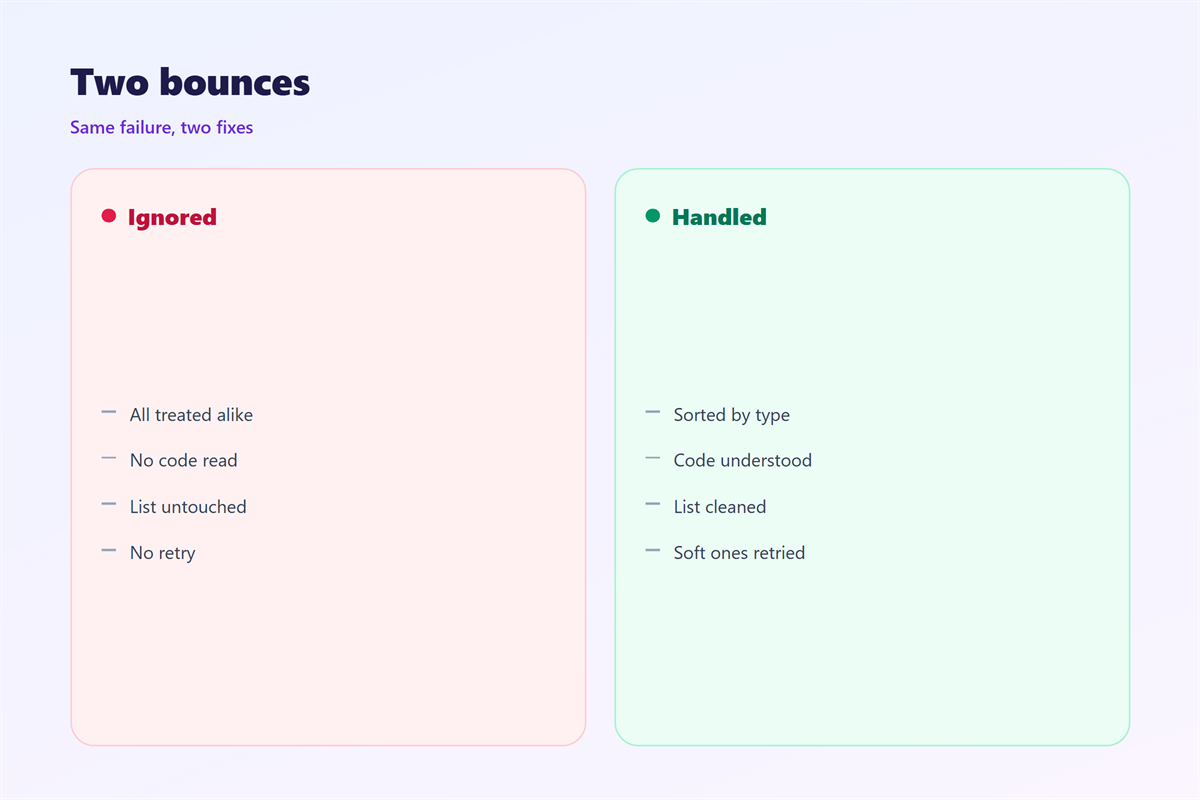
Ignoring the report lets problems grow.
Dead addresses pile up in the list.
The bounce rate climbs without a sound.
Then a provider may slow your mail.
A blocked sender loses the whole audience.
The damage is hard to undo.
So never delete the report unread.
A two minute look prevents weeks of trouble.
The cost of reading is almost nothing.
An unread report hides a growing gap.
By the time it shows, the harm is done.
Where the report comes from
The 邮件退信分析 report comes from your sending tool.
It lists the address and the code.
The code tells you why the mail failed.
A five hundred series code is usually hard.
A four hundred series code is usually soft.
The text beside the code adds detail.
Names like a full mailbox are clear.
Names like user unknown are final.
Read the text, not just the number.
Together they explain the whole story.
Some tools translate the code for you.
Others leave the raw text in place.
A clear code is easier to act on.
The number alone can hide the cause.
How to run a 邮件退信分析
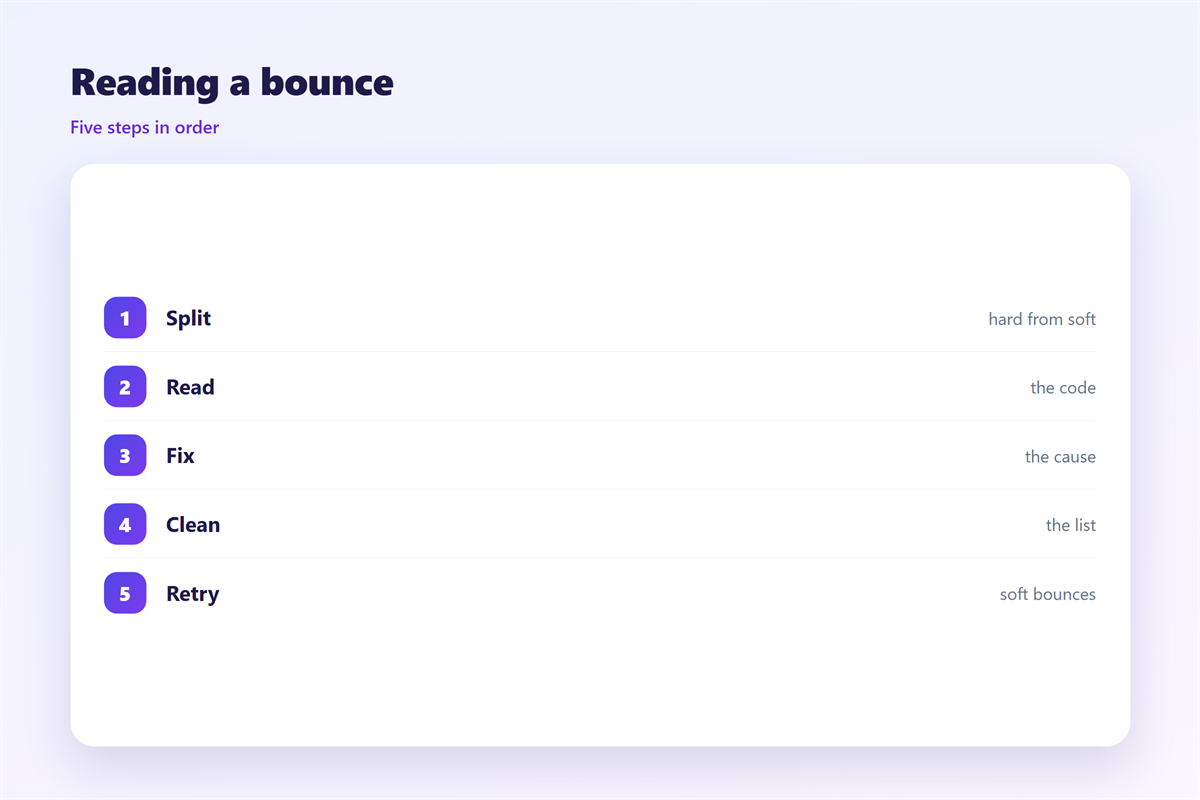
Start by grouping the bounces by type.
Count the hard ones and the soft ones.
Remove the hard ones from the list.
Keep the soft ones and try again later.
Then look for patterns by domain.
One domain may reject a whole block.
Note it and check your settings.
Repeat the check after every send.
Then measure the change over time.
Keep a short note of each cause you find.
The notes reveal a pattern after a month.
Then you can fix the root, not the symptom.
A short 邮件退信分析 routine
Group, remove, retry, and review.
Keep the routine under one hour.
邮件退信分析 and list hygiene
The 邮件退信分析 feeds straight into list hygiene.
Removing bad rows lifts deliverability.
So clean the list on a schedule.
Review the oldest addresses first.
Then re-check the addresses you kept.
A gentle retry can wake a soft bounce.
But never retry a hard bounce forever.
The trend matters more than one send.
A falling line means the cleanup works.
Remove the dead rows without delay.
Then the next send reaches more people.
A clean list also costs less to run.
Small habits protect a large audience.
Watching the trend
Chart the rate across the last few sends.
Compare it with the week before.
Keeping 邮件退信分析 simple
A simple routine beats a deep audit.
Pick one hour a week for the job.
Group the bounces, then act.
Write the steps down for the team.
Then the task survives a busy week.
Assign one owner for the weekly check.
A named owner keeps the habit alive.
Then the list stays healthy for years.
The difference between the two kinds is explained in 邮件退信.
The share of failed sends is tracked in 邮件退信率.
The permanent kind is described in 邮件硬退信.
The temporary kind is covered in 邮件软退信.
A steady 邮件退信分析 keeps the list worth writing to.
FAQ
What is a 邮件退信分析?
It is the reading of bounce codes to explain failed sends.
How often should I run a 邮件退信分析?
After each large send, and once a week at least.
Should I delete a soft bounce?
No. Keep it and retry it on the next send.
Can a bounce hurt my reputation?
Yes. Too many bounces lower your sender score.
评论
还没有评论,来说两句吧。
评论功能已关闭。