 小影邮箱
邮件发送频率怎么定?How Often Is Too Often
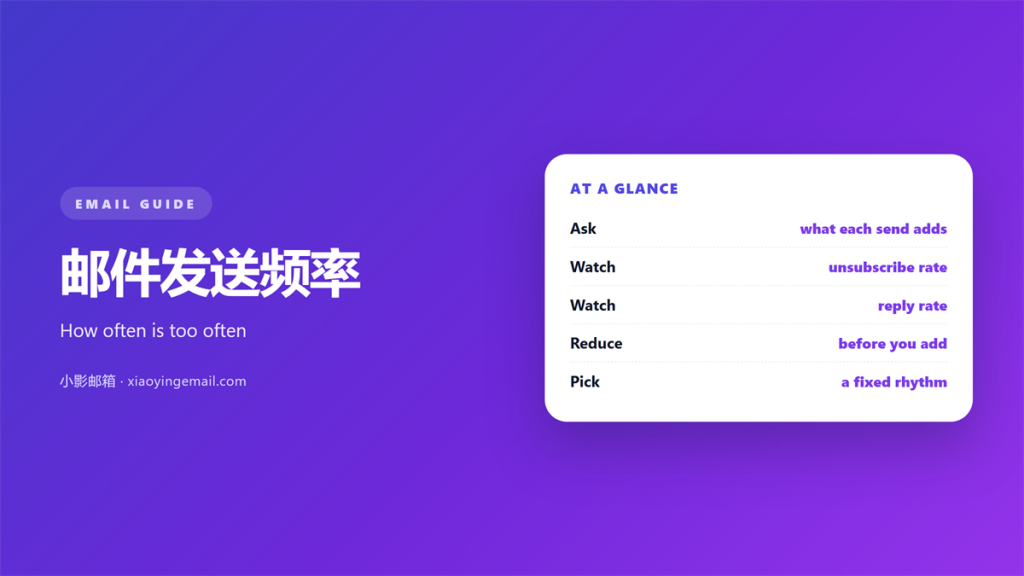
Key Takeaways
- 邮件发送频率 is about trust, not volume.
- A steady 邮件发送频率 beats a burst.
- One useful message beats three thin ones.
- Watch replies, not just open rates.
- Let readers choose the pace when you can.
What 邮件发送频率 really decides
邮件发送频率 is the number of messages you send one person over time. It shapes how they feel about your name.
Send too rarely and people forget you. Send too often and they stop reading.
Neither failure is about a single email. Both are about the pattern.
Frequency is a promise. It tells the reader how much attention you expect.
The right pace depends on the relationship. A team update can be daily. A sales note cannot.
Ask why the message exists before you ask when to send it. A weak reason gets worse with repetition.
Set a 邮件发送频率 you can keep for a year. Spikes are hard to undo.
Quality and frequency travel together. Rare mail is assumed to be considered.
That assumption works in your favor. Use it while you have it.
Frequent mail makes every message cheaper in the reader’s eyes.
Once messages feel cheap, even the good ones get skipped.
Finding the rhythm readers tolerate
Start from the reader’s side. How often would you want this message?
Then cut it in half. That number is closer to right than your first guess.
Your 邮件发送频率 should match the topic. Fast news supports a faster pace.
A weekly note is a common ceiling. Monthly works for slower subjects.
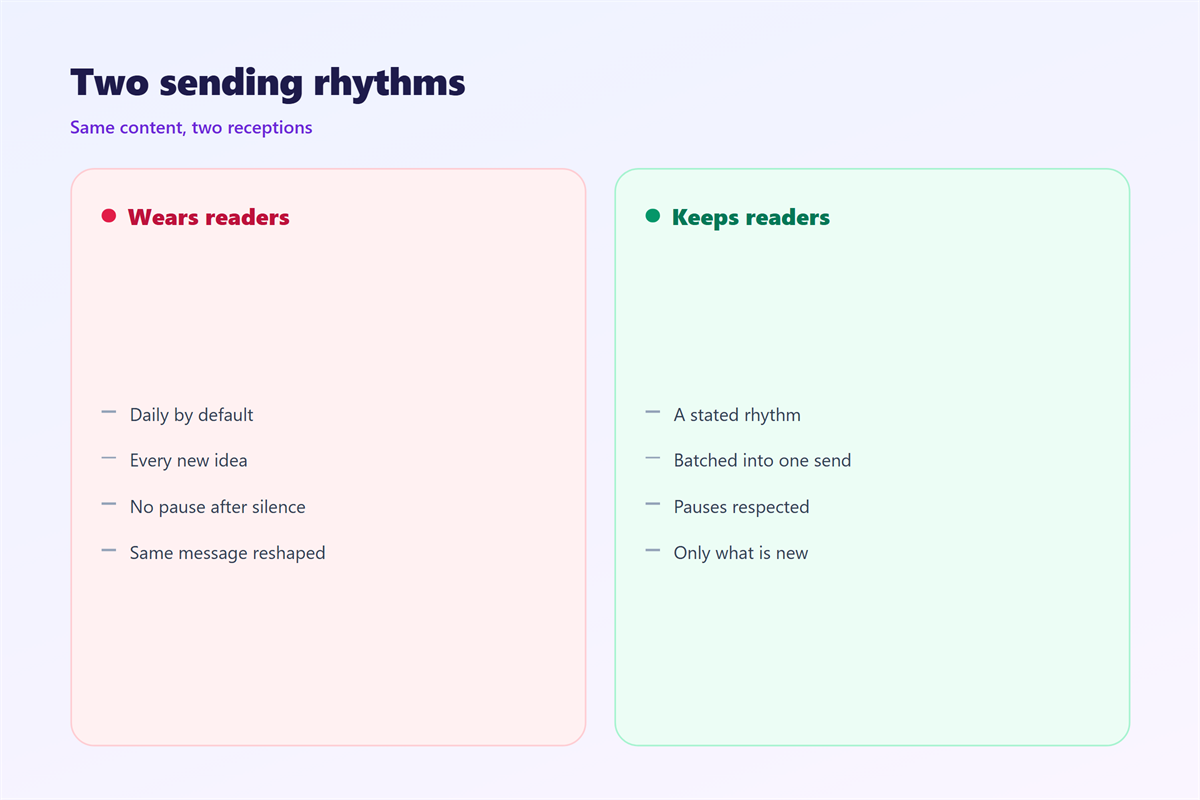
Consistency matters more than the exact number. Readers learn a rhythm and trust it.
One strong message a week beats four partial ones. Each send draws on attention.
A gentle 邮件发送频率 keeps readers reading. Push too hard and they tune out.
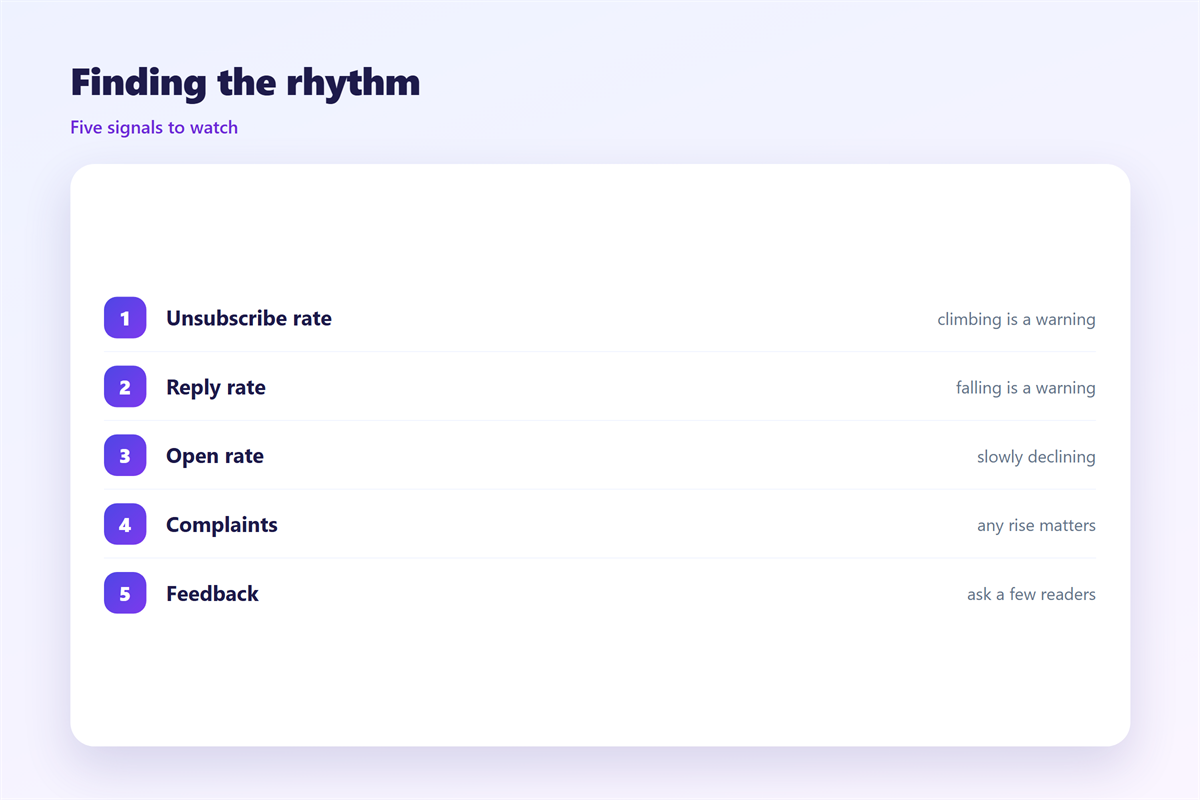
Watch replies, not opens. A reply proves the message landed.
Track unsubscribes too. A rising rate is the clearest signal to slow down.
A calendar helps more than memory. Put the next send on a fixed date.
Readers notice a missed week. They almost never notice a skipped one.
Pick a day and keep it. Tuesday is as good as any.
A seasonal topic may break the rhythm once. Announce it when you do.
Then return to the usual pace. Readers forgive a pause, not a flood.
Why more mail lowers your 邮件信誉
Mail providers watch how people react to your messages. Complaints and silence both count.
A high 邮件发送频率 raises the chance of a complaint. Enough complaints and the inbox rejects you.
That is a 邮件信誉 problem, not a content problem. The fix is fewer, better messages.
Volume is the wrong lever for 邮件发送频率. It raises risk without raising trust.
A sudden jump in sending looks like spam to a machine. Warm up slowly when you must send more.
Send to your most engaged readers first. They are the least likely to complain.
Pruning a list helps here. Remove people who never open anything.
A smaller list with real interest beats a large, cold one.
Reputation builds slowly and drops fast. One bad burst can undo a year.
Watch your bounce rate as well. Bad addresses drag the whole list down.
Clean the list before every large send. Removing dead contacts lifts delivery.
Slow down when you add new contacts. A cold list is the classic trap.
Ask people to confirm once. A confirmed address complains far less often.
Signs your 邮件发送频率 is too high
- Replies dry up while sends continue.
- Unsubscribes rise for a month.
- Complaints appear in your reports.
- You reuse the same angle twice a week.
Any one of these is a reason to pause. Do not add a new campaign on top.
邮件发送频率 problems rarely fix themselves. They get louder with every send.
Read the replies you do get. They often explain the drop.
“Too many emails” is honest feedback. Treat it as a gift.
Look at your own inbox too. What would you want from a sender like you?
That question is a better guide than any benchmark.
Resetting a sending habit
Pick one channel first. Change its 邮件发送频率 and nothing else.
Tell readers what to expect. A short note about the new pace rebuilds trust.
A new 邮件发送频率 needs a month to settle. Watch replies before you judge it.
Then adjust once, not every week. Constant tuning looks like noise.
Give people control where you can. A preference page beats a guess on your side.
Our guide to 邮件订阅 covers simple preference options.
Permission decides how much mail you may send. Our notes on 邮件营销 start there.
Respect the caps your provider sets as well. Our page on 邮件发送限制 explains the limits.
Our notes on 邮件信誉 show how providers score you over time.
Cut one send a month until replies return. Small steps are easy to reverse.
Tell your team about the change. Consistency needs more than one person.
Then hold the new pace for a quarter. Give trust time to rebuild.
Measure at the end, not in the middle. Early numbers always look worse.
FAQ
What is a safe 邮件发送频率?
There is no single number. Weekly is often the ceiling for marketing. Daily suits operational mail.
Judge by replies, not by a target number.
Does sending more help reach?
No. More volume raises complaints and lowers trust. Fewer, better messages reach further.
Relevance decides reach more than volume does.
Should 邮件发送频率 change by season?
It can. Announce the change first. Surprises feel like spam even when the content is good.
How fast should I cut back?
Slowly. A sudden stop confuses readers. A gradual drop looks deliberate.
A slow shift looks planned. A sudden one looks like panic.
References
- IETF RFC 5322: Internet Message Format.
- Google: Email sender guidelines.
- FTC: CAN-SPAM Act compliance guide.
评论
还没有评论,来说两句吧。
评论功能已关闭。